My religious position is clear enough: I am a High Church atheist. I like church music and church architecture, but that doesn’t mean God exists. You could say I was Anglican by temperament but not by belief.
I had many good friends when I was doing my first degree, but in those days I was something of a professional atheist. I saw it as part of my job as a Philosophy student. In particular, I found the arguments of the Christian Union (CU) simplistic and its habit of appealing to the emotions of lonely or immature young people unattractive. Interestingly, in view of what follows, my impression is that the majority of keen CU types were studying science subjects.
Over the years, though I find the Evangelical style of Christianity that the CU represented distasteful to this day, I have lost my enthusiasm for arguing with religious people. As you get older you come to realise that we all live by beliefs that we cannot possibly prove – in politics quite as much as religion.
And even when I was at university and sending for humanist publications, I resented the idea that if you were an atheist then you automatically embraced a whole range of predetermined positions on social issues – what you might call today ‘the full Evan Harris’. Then and now I had more doubts about the morality of abortion than are fashionable amongst Liberal atheists, though today I am a stronger support of assisted dying than I used to be.
Times moves on and I find the modern proselytising atheist movement unattractive – unattractive in the way that I used to find the CU unattractive, and often for the same reasons.
The version of atheism that attracted me as a student had Bertrand Russell and David Hume as its leading figure and it shared its best qualities: it was wise, witty and sceptical. This philosophical atheism gently but firmly pointed out that Christians were making claims about the universe that they could not begin to prove.
Russell was certainly an atheist, whereas Hume probably believed that there was a deity of some sort, but that there was little we could sensibly say about him. This philosophical form of atheism, you will see, was a broad church.
Today’s atheism is different. It does not deal in scepticism but in certainties.
I do not underestimate the brilliance of Darwin: everyone should read The Origin of Species, if only for the quality of the prose. Why isn’t scientific writing like that now? I suggest it is because of the emphasis on ‘publication’: papers are written to be published, not read.
And Darwin was a wonderful liberator of human thinking. If you read William Cobbett, an intelligent but not conventionally academic writer from the early 19th century, you will see that he cannot make sense of nature without God. (I remember using a quotation from Rural Rides in an essay on miracles to make just this point. Some linguistic philosophers would see the cry “it’s a miracle”” as an expression of joy but to Cobbett – I was rather proud of this phrase – it was an explanation, not an exclamation.) But after Darwin we could explain nature without God. The world looked different.
Yet somewhere this modern scientific atheism has hardened into a dogma. Just take a look at Twitter, where the stars of the movement spend their time mocking those who do not share their views and their acolytes send them links giving new names to laugh at. It does feel remarkably like a religious movement.
Such an approach does not accord with the view of science I learnt from the works of Karl Popper, where what characterises it is precisely a willingness to see its hypotheses refuted. The modern atheist does not entertain the possibility that he or she may be wrong.
Take the recent court case involving prayers before meetings of Bideford town council. Our modern atheists have rejoiced over this: to me it looks like an unreasonable demand that everyone else must share their views.
The strongest argument against prayers at such meetings is that they may discourage people from standing for the council in the first place. But I am not convinced.
I became a member of Harborough District Council at the age of 26 and a year later found myself part of a sizeable Liberal Alliance group with two member who were younger than I was.
Not surprisingly, we found many of the council’s ways of doing things stuffy and old fashioned. Some we tried to change (successfully or not), some we put up with, some we ignored and some we came to see the wisdom of.
In all of this, the existence of prayers at the start of full council meetings was the least of our concerns. But if they had worried us we would have sought to change things in Harborough, not looked for outside help to fight a court case in London.
And that is at the heart of my distaste for modern atheism. My Liberalism is sceptical and thus is happy to tolerate local difference: philosophical atheism could live with that, but I am not sure this new scientific atheism can.
Thursday, February 16, 2012

Heritage Heroes on the Stiperstones
My favourite Shropshire hills were featured on Heritage Heroes yesterday as John Craven and Jules Hudson met the people restoring old lead-miners' cottages on the Stiperstones. You can watch this episode on BBC iPlayer.
The programme mentioned that a book about these lost settlements on the Stiperstones is to be published. I suspect that it has already appeared and they were talking about is Once Upon a Hill: The Lost Communities of the Stiperstones.
You can read about the restoration of the cottages on the Natural England site.
The programme mentioned that a book about these lost settlements on the Stiperstones is to be published. I suspect that it has already appeared and they were talking about is Once Upon a Hill: The Lost Communities of the Stiperstones.
You can read about the restoration of the cottages on the Natural England site.
The Surprises: Jeremy Thorpe is Innocent
We've had Lembit Opik (sort of), Sarah Teather and David Laws. Pausing only to note the enthusiasm of Norman Lamb for MC Dot Rotten, let's conclude this short series with Jeremy Thorpe.
The Surprises were a Birmingham punk band. One of their members, Janice Connolly, is now better known as the comedian Barbara Nice.
The Surprises were a Birmingham punk band. One of their members, Janice Connolly, is now better known as the comedian Barbara Nice.
Wednesday, February 15, 2012
Department of Health helps 25 senior staff avoid tax
Continuing a recent theme of this blog, tomorrow's Guardian reports:
The Department of Health has apologised after documents sent to the Guardian showed that contrary to assurances given to parliament, more than 25 senior staff employed by the department are paid salaries direct to limited companies, with the likely effect of reducing their tax bills.
In some cases, the documents show the named individuals are being paid more than £250,000 a year, as well as additional expenses.
The department claimed the 25 were not civil servants, or technically even staff, although a large number have been employed by the department for many years and hold very senior positions. It said the arrangements will be subject to review by the Treasury.
One Whitehall source said: "We cannot defend these arrangements, but it may be it is very common in Whitehall and this is just the tip of an iceberg."
Police confiscate football fanzine
Mick Hume writes on Spiked:
Greater Manchester Police (GMP) took the unprecedented step of impounding thousands of copies of a magazine on the street on Saturday morning. Was it hardcore porn? Did it contain bomb-making instructions?
Hardly. It was a football fanzine on sale outside Old Trafford before the Manchester United / Liverpool game.
A chief superintendent in the GMP decided that a satirical joke image on the back cover was ‘potentially offensive’. Because of that, police impounded every copy they could find and warned that anybody caught selling the magazine or ‘provocatively displaying the image in public’ would be arrested and prosecuted.
It seems the GMP has now taken on the role of comedy police, and assumed the authority to decide the acceptable level of satire in its city.
Six of the Best 226

"While many in the Tory party despise some of the positions Cameron has taken such as bashing the bankers, this isn’t because of an influence by Mr Clegg but because that is what they think the voters want. The Daily Telegraph quotes one Tory Cabinet member who said: “David would be doing all this even if Nick Clegg wasn’t. Differentiation is a sign of weakness. By embracing the Lib Dems, we place ourselves where the public is. And that is where we stand our best chance of winning in 2015." Solution Focused Politics lays Conservative strategy bare - and what we should do to counter it.
In Vanity Fair Donald L. Barlett and James B. Steele look at Monsanto's way of operating as the company attempts to broaden its domination of American food production into milk production.
Mrs Shorties Mind is looking for blog posts for the next Mental Health Carnival.
"Until then, I had not quite noticed how the old school antique shops have been vanishing from the world. In Kensington Church St and in the Portobello Rd, in streets formerly lined with antique dealers – where once I used to wander, window shopping at all the beautiful old things I would never buy – such businesses are thinning out and becoming sparser. Similarly in Fulham and Chelsea, part of the accepted landscape of London is quietly dissolving away. Spitalfields Life has some memorable pictures of one such shop as it was left on its owner's death.
Elsewhere in London, Blood and Property was photographing Hackney's canals in the snow.
Calder of the Month
Once again, I have been passed over.
But congratulations to Professor Muffy Calder from the University of Glasgow. She has just been appointed as the Chief Scientific Adviser for Scotland.
But congratulations to Professor Muffy Calder from the University of Glasgow. She has just been appointed as the Chief Scientific Adviser for Scotland.
Karl and the Marx Brothers: The Relative Innocence of David Laws
Yesterday it was Sarah Teather. Today it is a song about David Laws. This is actually quite good, sounding both sad and rather beautiful.
You can read more about the song and the band in an article on This is Somerset.
You can read more about the song and the band in an article on This is Somerset.
Tuesday, February 14, 2012
Polling stations in schools: Will no one think of the children?
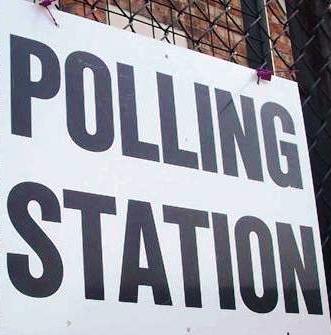
He reports the decision of the Warrensburg Central School District not to allow the use of one of its schools for a primary election in April. This, says Tingley, is because board members thought it would be "too dangerous":
Of the seven members on the school board, not one even cleared their throat to say this is all just a bit silly.
Voting at local schools and firehouses is a tradition that goes back generations. I can't remember the last time I did not vote in a school. And the greatest calamity I can ever recall was complaints over long lines in Lake Luzerne one year.Once we would have laughed at America over a report like this. But if such a decision has not already been made somewhere in Britain, I am sure it soon will be.
The good news, as a footnote to the Free-range Kids post says, is that the Warrensburg decision has now been reversed.
Dancing boys and state schools
In my day job yesterday I wrote a short news story for our website about a proposal for a new 'free school' aimed at boys aged 11 to 16 who have taken ballet classes while at primary school and want to continue dancing in their teens. You will see my story owes an indecent amount to the original BBC News report that it links to.
I wrote this up because it was a nice anti-stereotype story (I know what my readers like) and because I thought I had just the right person to comment on it. But it also set me thinking politically.
Why do we never hear of innovative ideas like this in the conventional state system? I am sure there are a lot of original work going on there, it's just that the defenders of that system do not seem interested in talking about it.
The Campaign for State Education puts itself forward in the media as the defender of that system, but always comes over as being against innovation and as being concerned with equality over anything else. (The prominence given to socialism and the Labour Party on the front page of its website may give you a clue as to why.)
And for years the Liberal Democrats' greatest fear in education was a "two-tier system". This seemed to come down to the belief that if a reform could not be introduced everywhere, all at once, then it should not be introduced at all. In practice, of course, that is a recipe for sclerosis.
Oh, and since you ask, I disliked Billy Elliot.
Gophers!
Vince Cross, who wrote the music for Gophers!, has left a comment on my post about this wonderful children's TV series from 1990.
Read more about it on Classic Kids TV.
Monday, February 13, 2012
Nora Logan and Maud MacCarthy
Last summer I reported my discovery that Nora Logan, daughter of my hero J.W. "Paddy" Logan, Liberal MP for Harborough from 1891 to 1904 and 1910 to 1916, had been a suffragette and had gone to prison for her beliefs.
My original source was a debate in Hansard and the story is confirmed by her appearance (as "Norah Logan") on a Roll of Honour of Suffragette Prisoners 1905-1914 held by the Women's Library at London Metropolitan University.
So I set out to discover more about Nora Logan. It has nothing to do with the fight for women's suffrage, but I have made an interesting discovery.
The Sydney Mail for 12 February 1898 carries a story about Maud MacCarthy, a 13-year-old Australian violin prodigy who was then living and playing in England. Its writer ("Leipsic") says:
My original source was a debate in Hansard and the story is confirmed by her appearance (as "Norah Logan") on a Roll of Honour of Suffragette Prisoners 1905-1914 held by the Women's Library at London Metropolitan University.
So I set out to discover more about Nora Logan. It has nothing to do with the fight for women's suffrage, but I have made an interesting discovery.
The Sydney Mail for 12 February 1898 carries a story about Maud MacCarthy, a 13-year-old Australian violin prodigy who was then living and playing in England. Its writer ("Leipsic") says:
I have been privileged by her father Dr. Charles MacCarthy, to see a letter which is singularly interesting, which will grow in value year by year, and which is a perfect revelation of the writer. It is 200 pages long, this wonderful letter, arid was begun on September 2 and finished on November 5, 1897, and it is Maud MacCarthy’s record of her days during that period sent to her father.
With the letter are three copies of a magazine, “ For Father, from the Editress.” The editress is Miss Maud MacCarthy, and the magazine is entitled “Maud’s Journal, a Monthly Magazine - Art, Literature, the Drama, &c." The imprint is “Nora Lgan, East Langton Grange, Market Harborough.”
Miss Logan is described in the letter as “my greatest girl friend,” and she is the little daughter of the M.P. for Market Harboough. “ Maud’s Journal” is a record of Maud’s doings and views, of her visits to crncerts and picture galleries, of her little London garden, books she reads, and so on, with her views of them ...
This is how she announces the journal to her father :- " I keep (for fun) a journal called ‘ Maud’s Journal.’ Nora Logan, my great friend, has a printing machine and prints it for me. She does not do it very regularly - in fact, though it is now nearly the middle of September, she has only done the March and April numbers."And what happened to Maud MacCarthy? Wikipedia is your friend:
In 1905 she was forced to give up her ambitions as a concert soloist by the onset of neuritis and went to India as a companion of Annie Besant, where she studied Indian music, collecting manuscripts and instruments, learned Indian singing and also studied Indian mysticism. She returned to England in 1909 following the death of her younger brother. In 1911 she married William Mann, a fellow Theosophist and they had a daughter, Joan, in 1912.
The marriage was short-lived, as Maud soon met and fell in love with the composer John Foulds in 1915. Despite strong opposition from family and friends, Maud and John Foulds left their respective spouses and lived together from 1918 onwards. They had two children, John Patrick (1916–2009) and Marybride (1922–1988). They finally married in 1932. She compiled the text for his World Requiem which was performed at the Albert Hall on four consecutive Armistice Nights between 1923 and 1926 ...
In 1929, while living in the East End of London, they met a young man at a local social event whom they commonly referred to as 'The Boy'. A quiet yet powerful figure who worked at the local gas works, his real name was William (Bill) Coote. 'The Boy' almost instantaneously began to channel a group of beings known as 'The Brothers' who gave profound spiritual teachings through him for the next 26 years.
Maud returned to India with John Foulds and William Coote in 1935 where 'The Brothers' continued their teachings through 'The Boy', making a profound impact on thousands of people in search of spiritual meaning. John Foulds died suddenly in 1939, and Maud married 'The Boy' in 1942.
She founded an ashram and published poetry under the name Tandra Devi. She took the name Swami Omananda Puri after her husband's death when she took sannyas (or renunciation of worldly life).
It was under this name that she published her autobiography of her experiences with 'The Boy' in the The Boy and the Brothers (London: Gollancz, 1959). A second book was posthumously published as Towards the Mysteries (London: Neville Spearman, 1968) which further expanded on The Brothers' teachings and message.Maud MacCarthy died in 1967. Those interested in connections between Liberal MPs for Harborough and mysticism are referred to the career of Frieda Harris. The wife of Sir Percy Harris (who sat for Harborough between 1916 and 1918) and the great grandmother of Matthew Taylor (as was revealed a few years ago), she was a friend of Aleister Crowley and provided the designs for his Tarot deck.
Executive pay: The need for economic liberalism
Back in December I wrote a post calling for a free market in boardroom pay:
Stumbling and Mumbling expanded on this view of executive pay, and of executive bonuses in particular, in a recent post:
To believe that the existence of all these bonuses is a result of the free market, you have to believe that all these run-of-the-mill executives are always on the point of departing for highly paid positions abroad. It is only the existence of bonuses, you will have to argue, that keeps them in the country.
Such an argument would clearly be nonsense, and we need a proper free market in executive pay to sweep this corrupt system away.
Launched yesterday, Liberal Reform dedicates itself to:
he threat of a strike, a committee of the good and the great would be convened to decide what people engaged in a particular trade or profession should be paid. Invariably, they recommended a substantial increase.
Nowadays that is pretty much how pay for executives in the private sector is decided. A committee considers ponders the questions and comes up with the recommendation that they should be paid much more.This impression was strengthened by the threat of the directors of the Royal Bank of Scotland to resign if they were not allowed to pay bonuses of £1.5bn to staff on its investment side. Granted the directors were not the potential recipients of those bonuses, but this was still militancy to maintain the status quo.
Stumbling and Mumbling expanded on this view of executive pay, and of executive bonuses in particular, in a recent post:
Although CEOs [chief executive officers] might not be able to reliably affect corporate value on the upside, they can assuredly affect it on the downside through deliberate vandalism and theft. In this sense, bosses are paid a fortune not so much to motivate them to great performance, but to buy off terrible performance. It’s just an extreme manifestation of the efficiency wage argument.
And this might partly lie behind Hester’s bonus. Robert Peston says the Treasury feared that Hester and the board would have resigned if it had vetoed a bonus. Now, whether this threat was serious or not, and whether the resignations would have been anything worse than a short-term inconvenience, are separate questions. The point is that this shows that bonuses are a reward for power, not performance.This does much to explain why quite mundane executives now expect substantial bonuses over and above their salaries. And bonuses have appeared in the public sector because of the Thatcherite and Blairite distrust of the public-service ethos. Unless you motivate managers with the prospect of bonuses, they will not perform.
To believe that the existence of all these bonuses is a result of the free market, you have to believe that all these run-of-the-mill executives are always on the point of departing for highly paid positions abroad. It is only the existence of bonuses, you will have to argue, that keeps them in the country.
Such an argument would clearly be nonsense, and we need a proper free market in executive pay to sweep this corrupt system away.
Launched yesterday, Liberal Reform dedicates itself to:
promoting an all-round Liberal ideology in Lib Dem policy, including the economic liberalism that the founding members feel is lacking a voice in the grassroots of party.But will its interpretation of economic liberalism see it calling for a reform of bonuses or emerging as another champion of the status quo?

Leighton Andrews at the BBC

On Friday I blogged about the way that John Birt was employed on a freelance contract while Director General of the BBC to allow him to avoid tax.
A reader has sent me this Private Eye cutting from that era. It dates from 23 August 1996 and features Leighton Andrews, former Liberal parliamentary candidate and Gillingham Town supporter and current Welsh education minister and Cardiff City fan.
I don't know if there were any tax implications to this move, and there is certainly no suggestion that Andrews acted improperly, but it is interesting to be reminded of how the BBC operated then. I wonder if it is so different today?
Sunday, February 12, 2012
British Monopoly Championships 1977: A letter to the Guardian
It seems I have a letter in tomorrow's Guardian. The contents will be familiar to anyone who read yesterday's post about the 1997 British Monopoly Championships, which were held on the nuclear pile cap at Oldbury-on-Severn:
I was one of the schoolboys who took part in the Monopoly championships on top of the nuclear pile cap at Oldbury-on-Severn in 1977. Whether I rubbed shoulders with bricklayers and merchant bankers I do not recall, but I did win a couple of games and reached the last dozen competitors. In the next game I had built several houses on Park Lane and Mayfair and my rival was heading for them fast. I had visions of making the final and then a trip to Monaco. Instead he went to jail before he got to my properties and went on to win the game. It was a lesson in the economic system that was to develop in the 1980s.Another letter on the subject reveals the name of Waddington's "live-wire public relations man" who was behind this remarkable stunt.
The Cure: Boys Don't Cry
I enjoyed the BBC4 series How the Brits Rocked America less as it went on. Though the first part was necessarily dominated by the Beatles (I am not convinced they were best, but they were certainly first), other bands like the Zombies got due credit too.
And who could resist a clip of Graham Nash haranguing Peter Noone for not supporting Donovan's ideas for bringing about world piece, watched by a young Graham Gouldman?
But watching part 2 I began to suspect that the argument of the series was determined by the clips they had clearance to use. There was no Traffic and no Blind Faith. And the music got smaller too, as the presence of A Flock of Seagulls in part 3 demonstrated.
Still, this Cure track sounded great and you would never guess that it came from 1979. But perhaps that is because the Cure influenced a whole generation of guitar-based bands from the 1990s?
Saturday, February 11, 2012
Six of the Best 225

Strange Thoughts detects a whiff of conspiracy about the opposition to Professor Les Ebdon becoming the new director of the Office for Fair Access.
Greg Farrell on Bloomberg Businessweek dissects what happened on the fateful night last May when Rupert Murdoch decided how News Corporation would manage its phone-hacking scandal.
The novelist Elizabeth Taylor shared a name with one of the greatest female movie stars of her age. In the New York Times Christopher Beha examines her career.
Disgruntled Radical provides our Sign of the Day.
"Mr Bond grew up in Reading and says the character of the polite bear from 'darkest Peru' was inspired by his childhood and watching newsreels of children being evacuated from the capital. 'When I was small, I had memories of children being evacuated from London with a label around their necks and all their possessions in a suitcase, and this became part of Paddington as well.'" Michael Bonds reveals the origins of Paddington to Emma Midgley on BBC News Berkshire pages.
Subscribe to:
Posts (Atom)