Michael Nyman's music makes me happy. Certainly, the only word for this performance by the Netherlands Wind Ensemble and friends is "joyous".
Showing posts with label Peter Greenaway. Show all posts
Showing posts with label Peter Greenaway. Show all posts
Wednesday, March 11, 2026

Thursday, December 28, 2023
Beneath the Surface: Peter Greenaway on Drowning by Numbers
On holiday in Southwold years ago, I wondered why the town seemed oddly familiar. Then I realised it's because Peter Greenaway's film Drowning by Numbers was shot there.
Greenaway had a vogue in the 1980s but seems rather forgotten today. I think that's a shame. Here he talks about Drowning by Numbers and about his approach to making films more generally.
Wednesday, August 02, 2023
The Joy of Six 1150

Pen Hemingway on the horrors of the prison hulks: "By the turn of the 20th century, it was thought the hulks were a ridiculous concept; degrading, repellent, best sunk in the past. Who'd have thought they'd make a comeback."
"The UK's division of government powers and functions between the centre and local government has for decades been recognised as a major source of our inefficiency. Germany, where the massive powers reserved to the Lander have long been one of the reasons for its economic pre-eminence, is seen as the example to follow. France, despite its Napoleonic inheritance, has followed suit and devolved considerable powers to its regional governments and town councils." Power in Britain is too centralised, argues Peter Wrigley.
Mindfulness in schools doesn’t improve mental health and the best way to find effective interventions for young people is to work with them, says Willem Kuyken.
Peter Greenaway is interviewed about his career as a film director: "Yes, I had an agent after the success of The Cook, the Thief, His Wife & Her Lover. There were people knocking on my door all the time. And looking back, do you remember a film called Who Framed Roger Rabbit? I was the first director asked to actually film that. Would you believe that?"
Amy Boucher takes us to Shropshire to tell the story of the phantom monk of Linley Hall.
Thursday, November 10, 2022
The Joy of Six 1088
Adam Bienkov asks if the Conservatives have chosen another duff leader: "Sunak’s promise to lead a morally impeccable government didn’t even last a week. Having resigned from Boris Johnson’s government just four months ago over his handling of similar scandals, Sunak appears to be making exactly the same mistakes as the man he so recently abandoned."
"Constituency names are getting longer, and although this is less measurable, they are uglier and often less historically resonant." Lewis Baston on the Boundary Commission's latest proposals.
"The royal family’s problems around the merging of fact and fiction are partly of its own making." Philip Murphy says that if the Palace wants to complain about The Crown then it must be more open with its own records.
Ammar Kalia on the documentary that reflected his own experience of transracial adoption: "I didn’t want it to be a clickbait story of a white family with a black kid; I wanted to make the film that the 15-year-old me needed to see - acknowledging the difficulties, but also showing that how you started in life doesn’t have to dictate your present or future."
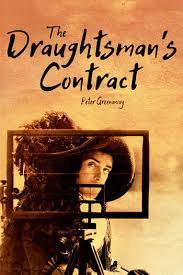
"The sheer, bizarre vehemence and intensity of The Draughtsman’s Contract confronts the viewer now in the same way as it did then, and whatever its indulgence, this is a movie which (rather magnificently) refuses to dumb anything down, always demanding the highest pitch of attention." Peter Bradshaw is dazzled by the re-release of Peter Greenaway's breakthrough film.
Monday, June 20, 2022
Angela Carter discusses Peter Greenaway's The Draughtman's Contract in Channel 4's first week
This is television gold from the first week of Channel 4 in November 1982: the novelist Angela Carter discusses Peter Greenaway's The Draughtsman's Contract.
Starting with this film, Greenaway enjoyed a vogue in the 1980s. Some thought him pretentious, but his concern for images in their own right gave his work a distinctive, Continental flavour.
Yet you could also say his films were very English. Drowning by Numbers, for instance, brings out something sinister that lies just below the surface of genteel Southwold. In fact, I had been on holiday in the town for a couple of days before I worked out why it felt so familiar.
The Draughtsman's Contract is a mystery film, though whether you can really solve that mystery from a study of the drawings made by the hero I don't know. Greenaway's original cut of it ran for three hours - and I would gladly watch it - so any loose ends can be attributed to the way this had to be whittled down.
When he went out of fashion it was partly because of a strain of cruelty that people saw in his films - you can see it here in the scenes from The Draughtsman's Contract.
That strain worries me more today than it did in the 1980s - there seems something crass and adolescent about it. But then, perhaps because I had seen so few films as a teenager, I had my own cinematic adolescence to catch up on.
The other thing that made Greenaway's films stand out was the music of Michael Nyman. His near-frantic reworkings of Baroque masters fit particularly well in The Draughtsman's Contract. These include Chasing Sheep is Best Left to Shepherds, which was one of the pieces of music my mother enjoyed in the last weeks of her life.
Angela Carter was a novelist, known for her feminist and magical realist approach. When she died in 1992, aged only 51, her reputation with both critics and the reading public stood extremely high.
It's my impression that she suffered little of the collapse of interest in their work that almost all writers suffer in the years after their death, but I've not read enough of her to tell you much more than that.
Besides, there is something else about her that cannot be ignored: that accent. She sounds extraordinarily posh and like someone from three decades before. It's how you imagine Princess Margaret must have sounded. At the same time, the odd word gives a hint that the accent is not entirely secure.
Carter's biographer Edmund Gordon was asked about the subject in an interview by Caleb Sivyer for Angela Carter Online:
CS: I remember being quite surprised by the particular sound of Carter’s voice the first time I encountered it. Although her voice changes quite a lot, I was surprised at those moments when she appears to adopt, perhaps self-consciously, an educated-sounding voice.
EG: Absolutely. I think it’s partly a generational thing. As Martin Amis says somewhere in his memoir Experience, "it used to be cool to be posh". I think there is partly that.
But you know, she was not entirely un-posh. She had working-class roots but she was one generation removed from them. Her father was a Fleet Street journalist, she was very middle-class and she went to a private school. But what is extraordinary about her voice is that it suddenly shifts between registers, and indeed between accents.
Last night [at the British Library celebration of Carter] when they showed two clips of her, she sounds sort of Northern sometimes and south London sometimes and very genteel and posh sometimes. It is an odd voice.
But then I also think that in her work, there’s so much about performance and she obviously was a highly self-conscious person, and it is the voice of someone who’s quite self-conscious, somebody who is very aware of how they sound and how they’re coming across.
Perhaps unfairly to both women, I am reminded of what someone said about Allegra Mostyn-Owen, who had the misfortune to become the first Mrs Boris Johnson, at Oxford:
"She speaks to you as though she were launching a ship."
Sunday, April 05, 2020
Michael Nyman: Drowning by Numbers (Finale)
The group playing is the Nederlands Blazers Ensemble (NBE) - or Netherlands Wind Ensemble. Thanks to automatic translation and their website, I can tell you:that it
is a group of more than 20 top musicians who come together about 80 times a year to play special programmes at home and abroad. ...
A thirst for adventure drives the NBE to create theatrical music programs that can seldom be captured under one musical heading; the NBE combines contemporary and early music of all shapes and sizes that stimulates the senses and imagination.
The music is taken from Michael Nyman's score for Peter Greenaway's 1988 film Drowning by Numbers.
Subscribe to:
Posts (Atom)