Showing posts with label Pontesbury. Show all posts

Thursday, January 01, 2026

New Year's Day morning in Shropshire

In his The Folklore of Shropshire, Roy Palmer quotes a letter by a John Noakes recording the belief that it was unlucky to have a female come first into your house of New Year's morning:

So generally does this absurdity prevail, that in many towns young lads "make a good thing of it" by selling their services to go round and enter the houses first that morning.

The folklorists Iona and Peter Opie noted in the 1950s that a boy of about 10 banged on a door at Pontesbury and recited:

Happy New Year! Happy New Year!
I've come to wish you a happy New Year.
I've got a little pocket and it is very thin,
Please give me a penny, to put some money in.
If you haven't got a penny a halfpenny will do.
If you haven't got a halfpenny, well God bless you.

A decade later in the Clun Valley, Michael Rix found small boys still going "gifting":

On New Year's Day as early as possible they visit outlying farms and cottages to recite versions of the poem:

The cock sat up in the yew tree,
The hen came chuckling by.
Please give us some pudding or a mince pie.
We wish you a merry Christmas and a cellar full of beer,
A good fat pig in the sty to last you all the year.
Please to give us a New Year's gift.

The first boy to reach the house got silver (a sixpence), all later comers got coppers.

Saturday, November 15, 2025

Pollution from Shropshire lead mines still reaches the Severn


This information from an Environment Agency page will come as no surprise to regular readers:

There is evidence of lead mining in the Minsterley area of the Shropshire Hills since pre-Roman times. The importance of lead mining grew during the medieval period and had become a major part of the economy of Snailbeach and Minsterley by the late 16th and 18th centuries, respectively. 

This continued to grow throughout the 17th and 18th centuries, until the 19th century, when the mining activity was at its peak. During the 1870s the Stiperstones area was one of Britain’s main sources of lead.

But the page goes on to say that these long-abandoned mines still present a significant pollution problem:

Minsterley Brook is polluted in its headwaters by cadmium, however after the input of a mine water discharge known as Wood Adit at Gravels, the watercourse is polluted along its length for cadmium, lead and zinc down to the confluence with Rea Brook. 

Hogstow Brook is polluted along its length by cadmium, lead and zinc from its source at the outflow of the Boat Level mine drainage tunnel. Further metal polluted inputs enter the watercourse from Snailbeach. 

After the confluence of Rea Brook and Minsterley Brook, Rea Brook is still polluted at the sampling point at Hook-a-Gate Bridge near Bayston Hill. However, Rea Brook is not polluted, when assessed as an annual average, approximately 8km downstream of Hook-a-Gate Bridge at Coleham in the centre of Shrewsbury. 

Rea Brook flows for 25 miles from Marton Pool near the Welsh border to the Severn at Shrewsbury, passing Minsterley, Pontesbury, Hanwood, Hook-a-Gate and Bayston Hill on the way. 

It is joined at Minsterley by the Minsterley Brook, which rises on Stapeley Hill and runs through the wooded Hope Valley. The Hogstow Brook is a smaller stream that joins the Minsterley Brook shortly before its confluence with the Rea Brook.

There is another page on the pollution of these rivers on Restoring Europe's Rivers, but it's 10 years old and I don't know its provenance.

But, for what its worth, it says:

The mines were worked for mainly lead ores, but also zinc ore and latterly barites until closure in the 1940s, leaving spoil deposits and drainage adits which discharge to Minsterley Brook at various points. The mines are a significant source of heavy metal pollution in the catchment, and the discharges from them represent one of the longest continuous sources of pollution in the whole Severn River Basin.

Environment Agency routine monitoring found there were high levels of zinc in Minsterley Brook over most of its length, exceeding the Environmental Quality Standards (EQS) for the brook (75ug/l). As a result, the watercourse isn't achieving the 'Good status' for water quality as set out in our Severn River Basin Plan. 

The Boat Level adit discharge is the main source of the zinc (around 3000kg per annum) and other heavy metals, such as cadmium and lead, and discharges these pollutants into the Hogstow Brook. Immediately downstream of the Boat Level adit the zinc concentrations are up to 47x the EQS. 

At Minsterley, the zinc concentrations are 8x the EQS. Downstream of the mines, concentrations exceed the EQS for over 15km, until the Rea Brook reaches Hanwood and dilution from other rivers lowers the concentration to below the EQS.

Ecological surveys of the brooks have found aquatic insects were suffering as a result of these heavy metals, which can settle in river sediments. There is also a lower than expected population of small fish species.

To end on a happier note, the pretty little bridge in the photograph above crosses the Minsterley Brook in the churchyard of Holy Trinity, Hope.

Monday, November 03, 2025

Heather Kidd welcomes project to restore habitats at old industrial sites in rural Shropshire

A new nature recovery project, the Rescuing Rocks and Overgrown Relics scheme, is will restore natural habitats at four sites in the Shropshire Hills. The locations involved include Poles Coppice in Pontesbury, Snailbeach and The Bog.

The work will include scrub management and coppicing to expose rocky habitats that support species like slow worms, grayling butterflies and bird's-foot-trefoil. 

It will be carried out by Shropshire Council's outdoor partnership team and the Shropshire Hills National Landscape team, with help from volunteers.

Heather Kidd, the Liberal Democrat leader of Shropshire Council, told BBC News she is delighted by the project:

"Bringing these historic sites back to life for both nature and people is a fantastic example of partnership working in the Shropshire Hills.

"It's especially welcome that this important work is being funded by Defra, supporting our shared commitment to nature recovery without placing additional pressure on local council budgets."

Sunday, October 26, 2025

For Central Bylines: The forgotten Shropshire tragedy that inspired The Mousetrap


I met the editor of Central Bylines for coffee while I was on holiday in Shrewsbury. "Did you know that The Mousetrap was inspired by a real-life case that took place in Shropshire?" I asked.

So that's what my second article for the site is about.

Too often victims of crime are seen only as victims, so I was pleased to be able to include this from a news report of the trial:

Mrs Connop, who had previously fostered them and their younger brother Freddie in Herefordshire, described them in her evidence as "happy-go-lucky and harum-scarum, but nothing else" and Dennis himself as a "forgiving and sweet boy".

On which note, the photo below, which must be copyright to the O'Neill family, shows (from the left) Terry, Dennis and Freddie O'Neill in their days with Mrs Connop.

I've written before for Lion and Unicorn about the influence of this case on an earlier play: No Room at the Inn. And also about its uncanny parallels with what is now my favourite Malcolm Saville story Seven White Gates.

Monday, September 15, 2025

The death of 12-year-old Dennis O'Neill shared front pages with news of the war in early 1945


Back in July, I wrote that the death in 1945 of Dennis O’Neill, a child in public care who’d been fostered with his younger brother at a farm in Shropshire, had caused a national scandal and shared newspaper front pages with the last stages of the war in Europe.

I've not seen a more striking illustration of this than the Daily Mirror's front page for 14 February 1945.

The text of the story runs:

Reginald Gough, farmer, and Esther Gough, his wife, were at Pontesbury, near Shrewsbury, yesterday committed for trial at Salop Assizes on a charge of the manslaughter of thirteen-year-old Dennis O'Neill, placed in their care by Newport Education Committee. 

Both pleaded not guilty and reserved their defence. Bail was refused. 

When Mr. Gough Thomas, defending, asked for bail Mr. Maddocks, prosecuting, said he could not possibly consent. The Justices had to consider the gravity of the case and the evidence that had been given, he said. 

"There is another matter to be taken into consideration. A tremendous amount of indignation has been aroused, and it might be for their own safety if they were not allowed bail," he added.

When Mr. Thomas pointed out that Mrs. Gough would have to go to Winson Green Prison, Birmingham, the chairman said that that point had been considered. 

Mr. Thomas: In the interests of decency and justice, will you give some indication to the ladies and gentlemen, as I will call them, at the back of the court, that in England we have British justice and not German justice? 
The chairman made no comment in reply, and Gough and his wife left the court in complete silence.

And the photograph caption says:

Terence O'Neill was 4½ hours in the witness box, Tuesday and Yesterday, telling about life on the Gough farm, where his brother died.

When the trial took place, it was held in Stafford because feeling was running so high in Shropshire. Reginald Gough was given six years for manslaughter and Esther Gough six months for neglect.

Though all the contemporary press reports say Dennis O'Neill was 13 when he died, he was in fact 12.

The photograph below shows the old police station and court in Pontesbury. For as long as I can remember, the building has been the offices of an insurance company, but when I saw it in the summer it appeared to be empty and was looking rather run down.

I imagine Dennis's brother Terry, who was the chief prosecution witness, is standing in the left-hand doorway of this building in the newspaper photograph.

Friday, August 01, 2025

The cast iron monument commemorating the Revd Hamlet Harrison in Pontesbury churchyard


Having found many Bishop's Castle businesses closed on Tuesday, I went back today and was able to visit both the Poetry Pharmacy and Yarborough House. The former has opened since I last visited the town a few years ago, but the latter was going strong when I first went there in 1989.

I broke the journey back to Shrewsbury at Pontesbury, and came across this Listed cast iron monument in the churchyard. Its page on the Church Monuments Society site says it was cast at the Baldwin Foundry in Madeley.

Sunday, July 27, 2025

The four coalfields of Shropshire (with help from a cat)

 As the blurb on YouTube explains, there are four coalfields in Shropshire:

  • The Denbighshire field, which stretched from Chirk to below Oswestry.
  • The Shrewsbury field, which included the town of Shrewsbury, Hanwood, Cruckmeal, Condover, Leebotwood, Pontesbury and Westbury.
  • The Coalbrookdale field, which focused on Arleston, Dawley and Madeley but ran to Oakengates.
  • The South Shropshire field around Highley and the Clee Hill, but running into the Wyre Forest.
The Shrewsbury field provided the coal that powered the lead mines of South Shropshire and, while I knew that coal had been mined on Clee Hill during the second world war, I didn't realise there had been opencast working there so recently.

The commentary sounds authoritative, but at various points a cat takes strong exception to it. It's worth a listen just for him.

Monday, February 17, 2025

More outreach post offices closed in the Shropshire hills


Keeping up this blog's practice of covering "random news items from Shropshire (where he doesn’t live) - New Statesman", here is Shropshire Live:

Post Office Limited has announced the unplanned closure of hosted outreach services in Minsterley, Hope, and Shawbury.

They say the closure, from this week, is due to unforeseen circumstances preventing the Pontesbury postmaster from continuing to operate these outreach locations.

Last year,  nearby Marton, Longden, Stiperstones and Wentnor lost their weekly outreach post offices.

Reader's voice: And the rather plain building above?

Liberal England replies: That's Hope village hall, where the outreach post office was housed. Find me another blogger - or podcaster, come to that - who has a photo of it.

Thursday, June 06, 2024

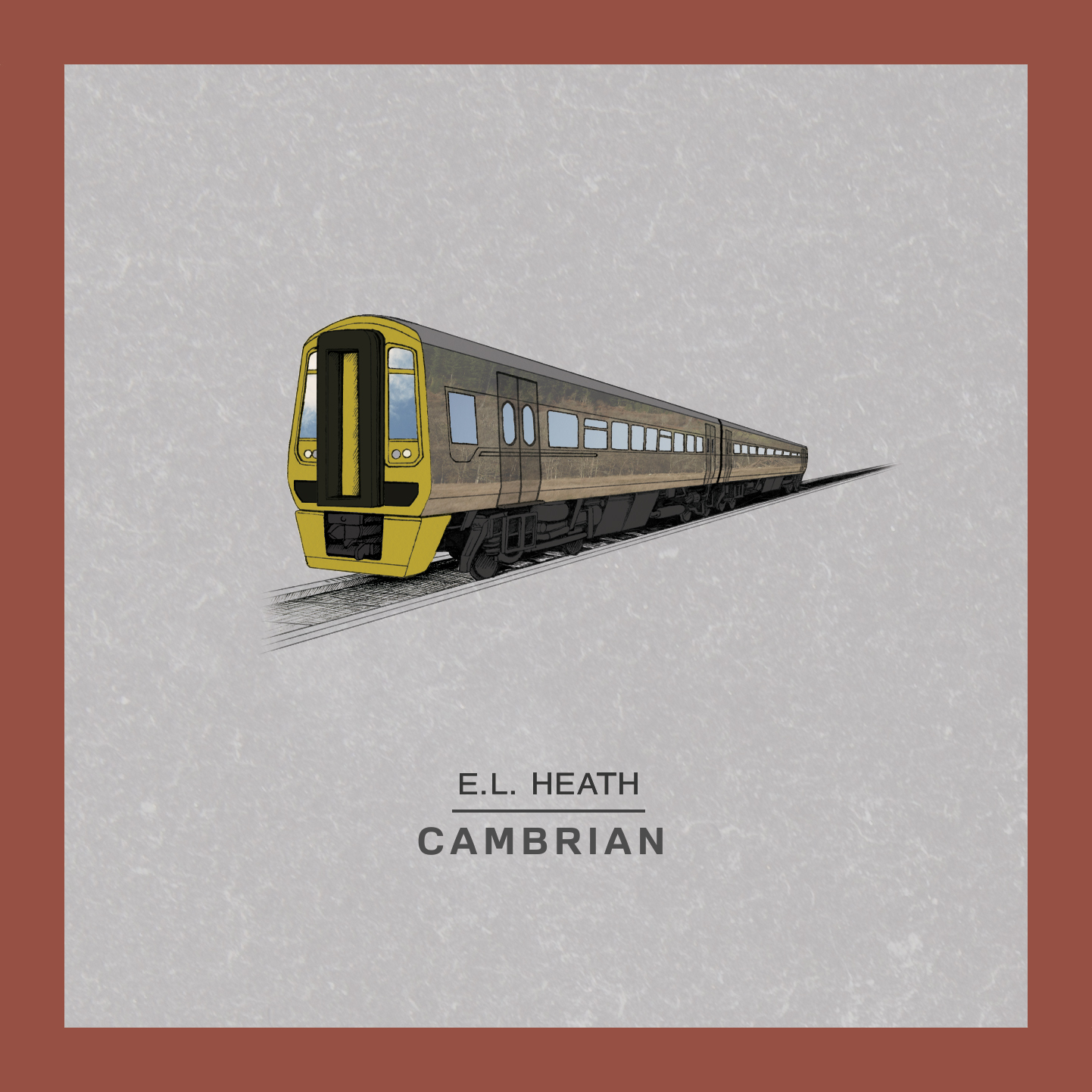
GUEST POST Singing the songs of the Cambrian Railway

Eric Loveland Heath has turned his fascination with the Cambrian Railway into a CD of songs.

I’ve lived near to railways much of my life. As a young child, I remember crossing a bridge near to my home in Clapham, south London, which spanned a fair number of lines, each running strictly parallel. I was fascinated by these, and the trains which ran along them, often running up to it if I heard a train coming, or standing for a while trying to catch sight of one before it passed underneath, the first seeds of a lifetime interest in railways and their trains.

When my family moved to Snailbeach in rural Shropshire, our gardenponte backed onto the old Snailbeach District Railways line, which was by then little more than a track down towards a field. Originally it linked the lead mine at Snailbeach with the main line at Pontesbury, however by 1950 all traffic had ceased, with the remaining locomotives cut up for scrap. 

Some 10 years later, we moved down into the valley, and once again I could hear the trundle of passing trains, looping through Yockleton only a mile or so in the distance, on their way to Shrewsbury or Mid Wales. I sometimes used to run or ride my bike down to the crossing there, the vision of every child who has seen public information films on the matter – STOP LOOK LISTEN – and what would happen if you did not.

Where I live now, the same line passes along the other side of the valley from my house. This is the ‘Cambrian Line’, which splits at Dovey Junction and leads either to Aberystwyth or along the Cambrian Coast Line to Pwhelli. It’s an epic journey (around 3 ½ hours) with much of it spent facing the sea, the huge curve of Cardigan Bay ever present as it bends towards the LlÅ·n Peninsula. For much of this journey, the line remains exposed, and while flooding is a common issue, occasionally the line itself is washed away. 

Only recently it was closed for a number of months in order to renovate the famous viaduct at Barmouth. At these times, as with much of life around the communities which span this line’s route, journeys are made by bus. 

At best, the line itself has a bi-hourly service, which is less conducive to travel than hopping on and off a bus. A proposed hourly timetable for the summer months only has brought little cheer, as it gives the impression that such a service is only needed when the tourists come.

I’ve been fascinated by this line whenever I’ve travelled along it. You can walk from Barmouth, across the viaduct, passing the pretty station at Morfa Mawddach (formerly Barmouth Junction) which stands at the head of the Mawddach Trail – itself a former railway line – which leads down the estuary, terminating at Dolgellau. 

If you decide to continue along the coast, you’ll reach Fairbourne, a village built by an Englishman where no Welshman would. Currently the inhabitants of this low swept village find themselves in a quandary, as the piles of giant stones placed to protect it from the sea are not seen as viable, with the suggestion that the entire place could be “decommissioned” and returned entirely to the salt marsh.

Often journeys along the ‘Cambrian’ give glimpses into the lives lived through these trains (currently Class 158 DMUs which are due to be replaced in the coming years). I’ve seen someone get on with a pig, and another with a chicken. I’ve watched a schoolkid get off the train at one of the tiny halts along its route, get into her dad’s Land Rover and power up the side of a hill. 

In the summer the trains are hot and crowded with tourists, in the winter you can watch solitary seabirds feed amongst the marshes. At Dovey Junction, on the Aberystwyth line, you can observe an Osprey on its perch at the nearby Dovey Osprey Project.


When I learned that the Class 158s were to be replaced, in the midst of lockdown, my heart sank somewhat. I’ve watched these old workhorses more than half my life. I’ve sat on countless and watched a few (in their green Arriva Trains Wales livery) blend into the distant landscape, lit only by their tail lights, and wanted to capture this feeling, and this curious and tenuous line along which these trains run.

Eventually this formed into a collection of songs, marrying these thoughts with the harsh reality of coastal erosion, with its effects on landscape and community, entitled ‘Cambrian’. It’s something I’m incredibly proud of, from the artwork to the songs themselves, it was pieced together at home with my partner Victoria over the last few years.

‘Cambrian’ is released tomorrow, Friday 7 July, on Wayside & Woodland Recordings, available through their Bandcamp site on CD (in a beautifully printed digipak sleeve) and as a digital download. 

On Friday they will also be premiering the official video for the title track ‘Cambrian’, drawn from archive Hi8 footage recorded over many years at locations along the line.

You can follow Eric Loveland Heath on Twitter and Instagram.

Sunday, January 22, 2023

The Joy of Six 1104

"I believe that the leadership is making a serious mistake. Our policy on rebuilding trade and cooperation in Europe can be popular – if only we let people know about it. There is no credible answer to the challenges Britain faces without it. And, even better, it distinguishes us very clearly from Labour, which is running scared of Brexit." Duncan Brack asks why Ed Davey never talks about Europe.

Andy Boddington reports that Shropshire is to receive no 'levelling up' money to revitalise its bus services: "The operating costs of bus companies have increased significantly over the last year following the increase in fuel prices. Passenger numbers have also not recovered since the pandemic. We are in danger of losing many of our services. Two routes under threat are the 435 service between Ludlow and Shrewsbury and the 553 Bishop’s Castle Shrewsbury service."

Merve Emre fears that academia has ruined literary criticism.

Emily Brontë acted with pragmatism, courage and kindness in her last illness and the received wisdom that she was a 'stubborn', self-destructive patient is grossly unfair, says a new account discussed by Mark Bridge.

"Let me now be your guide to the five most horror-inflected Crown Court cases.  Witchcraft, demonic possession, folk horror and, er, imaginary killer robots, they’re all here (and I’ll finish up with a rundown of the series’ other mildly spooky-flavoured stories)." Ivan Kirby discovers the dark side of the afternoon programme Seventies children watched if they were off school ill.

Sarah Weinman on Sandy Fawkes, the journalist and Soho character who met a stranger at a hotel bar and agreed to a road trip across America. Her companion later turned out to be a serial killer.

Thursday, October 27, 2022

Why is the constituency called Shrewsbury and Atcham?


I have solved one of the mysteries of Shropshire politics: why is the constituency called "Shrewsbury and Atcham" when Atcham is only a small village?

The solution is that the constituency does not cover just the town of Shrewsbury, but also takes in a swathe of countryside to its south that stretches from the Severn to the Welsh Border. This includes the Stiperstones and the nearby large villages of Minsterley and Pontesbury.

And until 1974 the local authority covering that countryside was Atcham Rural District Council.

Atcham RDC was merged with the Borough of Shrewsbury in 1974. The new authority was expected to be named merely Shrewsbury, but when councillors met they decided to call it the Borough of Shrewsbury and Atcham. 

The parliamentary constituency adopted the name Shrewsbury and Atcham in time for the 1983 general election, even though it kept the boundaries of the old Shrewsbury seat.

The Borough of Shrewsbury and Atcham disappeared in 2009 when Shropshire became a unitary authority. And under the 2016 Boundary Commission proposals, the constituency, while remaining largely unchanged, will revert to the name of Shrewsbury.

When that happens, the benign ghost of Atcham Rural District Council will have been laid to rest.


Friday, August 26, 2022

World War II munitions found on Pontesbury building site

Last time we visited Pontesbury this large village on the Shrewsbury to Bishop's Castle road there had been a snake on the lose.

This week Shropshire's snake problem has moved to the north of the county, with two boa constrictors being found near Baschurch.

If you live in North Shropshire and have snake problems, contact its Liberal Democrat MP Helen Morgan. I'm sure she'll be happy to handle them.

But that doesn't mean Pontesbury is in the clear. For the past two days military personnel have been in the village dealing with second world war munitions found on a building site there.

As far as I can make out from news reports, the site is at the very south of the village, across the road from the Horseshoe Inn.

A note on the pub's Facebook page assures us it is open as usual today. I'm delighted to see the Horseshoe is open at all. Last year it was up for sale and planning permission had been granted to replace it with houses.

But you will want to see some action...

Monday, April 25, 2022

Snake on the loose in Pontesbury is finally captured after teenager spots it in car park

The Shropshire Star wins our Headline of the Day Award.

My photograph shows a) a different car park in Pontesbury and b) a cat not a snake.

And, yes, the cat has just caught something. As I explained at the time:

For reasons I may explain one day, I was in Pontesbury photographing its former police station and magistrates court. In the car park behind it was a black and white cat with a rodent it had just caught and killed.

Though I had never met it before, when the cat saw me it began to make that odd chirruping "come and see what I've got" noise they make in such circumstances - and never at any other time.

I think it just wanted someone to show off to.

Saturday, February 26, 2022

Malcolm Saville and the death of Dennis O'Neill

The death of 12-year-old Dennis O'Neill on a farm in the Shropshire hills in 1945 created a national scandal and led to the reform of the law on the fostering of children.

It was also the genesis of Agatha Christie's famous play The Mousetrap and of No Room at the Inn, a play and film I recently came across.

But did the boy's death make a mark on the work of Malcolm Saville, my favourite author as a child, who set many of his books in just this part of the world?

I discussed this question in an article in the latest issue of the newsletter of the Malcolm Saville Society.

"You have shocked the world and shocked England"

Jonathan Calder

The older I get, the more I think Seven White Gates is my favourite Lone Pine book. It is set in the Stiperstones, the Malcolm Saville landscape I like best, and benefits from the prominence given to Peter. Saville generally wrote better about girls than boys, and here he gives us a heroine who is good but not in the slightest dull. As a child I probably found it disappointing there was no crime for the Line Piners to fight, but today I find this story of family reconciliation appealing.

Though I have grown to love the book over the years, I have also become haunted by a real event that took place in the Stiperstones at just the same time.

Seven White Gates was published in September 1944. Earlier that summer two young brothers in the care of the local authority in Newport, Monmouthshire – Dennis O’Neill, aged 12, and Terry, who was 9 – had been fostered at a farm in the Stiperstones.

By September things were becoming difficult for them as they were made to do farm work before and after school and punished for the most trivial offences. As the winter closed in their lives became impossible: they were barely fed, inadequately clothed and beaten every day. A doctor called to the farm on 9 January 1945 found Dennis dead, refused to sign a death certificate and called in the police.

The farmer Reginald Gough and his wife Esther were both charged. The committal proceedings focused the nation’s attention on the tiny court at Pontesbury. News about the progress of the war shared the front pages with reports like this:

Women in tears as Terence sobs out story of beatings

There was an awed silence in the tiny police court at Pontesbury, near Shrewsbury, yesterday when Mr H.H. Maddocks, prosecuting counsel, said: “I call the witness Terence O’Neill.”

A small fair haired child of ten was then led through the crowd of villagers who packed the court.

For two days they have listened to the case against Esther Gough, a former child’s nurse, and Reginald Gough, farmer, accused of killing Dennis O’Neill by negligence and violence.

This was the dead boy’s brother and the most important witness for the crown – a child so small that he could not even peep over the witness box. He had to sit on a bench in front of the court.

Slowly and often in a tearful whisper he told of life at Bank Farm, Hope Valley.

The Goughs were committed for trial, which took place in Stafford because feeling in Shropshire was running so high. Terry again gave evidence and both defendants were convicted. Reginald Gough was sentenced to six years imprisonment and Esther Gough to six months.

Passing sentence, the judge told Reginald Gough: “You have shown beastly cruelty and your behaviour has, I think rightly, shocked the world and shocked England.”

******

It’s a terrible story, but what does it have to do with Malcolm Saville beyond the coincidences of time and place with Seven White Gates? After all, children’s books were pretty cosy in the 1940s weren’t they?

But there was nothing cosy about the early Lone Pine books. For all we know, Mrs Thurston was hanged as a traitor after the end of Mystery at Witchend and it is certain that the Ballinger was happy to leave Penny and the Twins to drown in The Gay Dolphin Adventure. 

And think of the readers of those books. Bombed, evacuated, orphaned… they are the last generation of children we should patronise.

Besides, I believe Dennis O’Neill’s death did find its way into a Malcolm Saville book, though it was not one set in Shropshire and not in the Lone Pine series.

******

Strangers at Snowfell, the third of the Jillies books, was published in 1949 and, like many good thrillers, is set on a train. Our young heroes, having just foiled kidnappers in Two Fair Plaits, are on their way to Scotland to see in the new year, but heavy snow means they are delayed at Shap on the Cumbrian fells.

By helping his son evade an obvious villain on the train, the Jillies, Guy and Mark have become caught up in the affairs of a Professor Thornton, who is carrying out scientific research of extraordinary importance at a farm near Shap.

Desperate to telephone London and finding the lines from the village out of action, the professor calls at a half-ruined house nearby. There he encounters a girl called Mary:

She was leaning against the broken-down gate, and could not have been much more than eleven, although her face looked older than her thin, shabbily-dressed little body.  … She was a lonely and pathetic little figure, and her lips trembled as she said, “Hallo! Are you kind?”

I remember finding this an unexpectedly bleak passage when I first read it as an adult. Now when Thornton notices that Mary’s hands are “chapped and blue with cold” I think of the O’Neill brothers and suspect that Saville was thinking of them too. Among their torments in the bitter winter of 1945 were chilblains and chapped legs.

Sure enough, Mary soon tells Thornton:

“All the time she’s at me for something or other, shouting and arguing, and then she hits me if I run away – she’ll hit me now ‘cos I’ve come up here.”

Though we are told she is thin, there is no mention of Mary being starved, but that motif soon makes an appearance. The house turns out to be the base of the villains who are after Thornton’s research, and when he refuses to sell it to them he is locked up without food or water to encourage him to change his mind.

All ends happily, with the abused child carried away from the house on the shoulders of a policeman. There was no such rescue for Dennis O’Neill.

******

I first came across the story of Dennis and Terry O’Neill from a passing reference in a book on the history of the care system. The mention of ‘a lonely farm in Shropshire’ intrigued me and I looked up some contemporary press reports.

In 2005 I was asked to write a chapter on the history of concern about child abuse. I used the fact that the death of Dennis O’Neill had been largely forgotten to argue that this history is one of forgetting and rediscovery, not one of steady progress.

Dennis’s death is no longer forgotten. Today you will find it in all the social work textbooks. A major reason for this is that in 2010 Terry O’Neill published a book about his and his brother’s ordeal at Bank Farm. 

I am not usually one for trigger warnings, but Someone to Love Us is harrowing. The same is true of The Mousetrap and Me, an award-winning documentary about Terry and his childhood experiences that can be found on the BBC website.

If you are wondering about its title, Agatha Christie wrote The Mousetrap after reading of events at Bank Farm. The murders in the play soon turn out to be connected with the death of a child at a farm and its first audiences in 1952 would have been familiar with the story of the O’Neill brothers.

So Malcolm Saville was not the only author moved by the death of Dennis O’Neill.

*****

The O’Neill brothers should never have been at Bank Farm. They were to be fostered by a family in Pentervin, a hamlet on the other side of the Hope Valley near Bromlow Callow. When they arrived, however, the family was already looking after a girl for Shropshire County Council, so other arrangements had to be made by the official accompanying them.

He tried a farm nearby, but the woman there was expecting a baby and could not take the boys, so he placed them with the Goughs at Bank Farm.

The name of the farm near Pentervin where they could not stay? 

White Gates.

Jonathan Calder is a former editor of Acksherley!


This article first appeared in issue 75 (Winter 2021) of Acksherley!, the newsletter of the Malcolm Saville Society.

Saturday, July 04, 2020

The remains of the Snailbeach District Railways


My photograph was taken at the old lead mine at Snailbeach in Shropshire and shows the remains of the Snailbeach District Railways.

This line ran from the mine to transshipment sidings near Pontesbury, which was on the GWR branch to Minsterley.

The line to the mine had ceased working by 1947 and its three locomotives were cut up there in 1950. It continued to serve a quarry nearer Pontesbury until 1961, but latterly a tractor was used as motive power on uphill journeys.

Tuesday, April 28, 2020

Government scraps 1946 safeguard for children in care

The removal of protections in 10 sets of regulations relating to the care of looked-after children in England, with no public consultation or parliamentary debate, must be seen for what it is: an attack on their rights.
So begins the editorial in tomorrow's Guardian.

And an article in the paper gives details of these worrying proposals:
One of the key relaxations, which came into force last Friday, is the removal of the requirement for a social worker to visit – or even telephone – a child in care every six weeks, reducing it to 'as soon as is reasonably practicable'. 
The requirement for a six-monthly review of a child's care, introduced following the manslaughter of the 12-year-old Dennis O'Neill by his foster carers in 1944, has been similarly relaxed, and adoption and fostering panels which allow for independent scrutiny have become optional. 
The government says the measures are temporary – expiring on 25 September – and will allow overstretched children’s services greater flexibility, but there are fears that the coronavirus crisis is being used as an excuse to relax children’s social care duties and the expiry date could be revoked.
Open Democracy calls the proposals 'England’s bonfire of children’s rights' and illustrates its article with an image of a Daily Mirror front page reporting the committal proceedings against Dennis O'Neill's foster carers in February 1945.

It is hard to decipher, but concerns the evidence given by Dennis's younger brother Terence.

Terence O'Neill published a book about his experiences in 2010 and I was in touch with him at that time. I discussed his brother's case myself in a book chapter I wrote back in 2005.

And the photograph above shows the former Pontesbury Magistrates Court in Shropshire where the committal proceedings took place.

Now read my second post on this subject.

Friday, May 04, 2018

Saucers over the Stiperstones


Despite the local elections, there has been proper news this week too.

Take the Shropshire Star, which prints a photograph of mysterious lights in the sky:
The image was captured by a Shropshire Star reader in Habberley, near Pontesbury, on Monday evening. 
He said: "They were not aircraft of any kind and having served in the forces for over 30 years I can bet my pension they are not known to the military. 
"They moved slowly around the back of Pontesbury Hill and out towards Eastridge Woods and the Stiperstones."

Saturday, April 15, 2017

Shropshire Hills bus service started today


I may struggle to get there this summer, but the Shropshire Hill shuttle buses started running today.

You can find full details and the timetable on the Shropshire Hill AONB site.

Once again, spending cuts mean that only the service being provided is the core one from Church Stretton over the Long Mynd to Pontesbury, Minsterley and the Stiperstones is running.

It's not so long since you could reach Much Wenlock, Bishop's Castle and Knighton on these buses.

Friday, February 17, 2017

The Shrewsbury to Bishop's Castle bus is under threat


Let's move to Bishop's Castle, says the Guardian today:
Hang out at… What a choice. The Castle Hotel, with log fires, beams, leather chairs and a lovely garden? The Three Tuns? The cheery Six Bells? Or coffee, cake and classical music at Yarborough House?
I'm slavering already, though I don't suppose I will move there. Deep Shropshire does not seem a sensible place to retire to, though the genteel Church Stretton gets more than its share.

These days my family situation makes it hard for me even to visit there, though I have hopes of getting away this summer.

Trouble is, it may soon be much harder to get there without a car.

The other day South Shropshire Greens tweeted a cutting of a letter to the Shropshire Star by Steve Hale.

It began:
Shropshire Council has issued its latest findings on the viability of a number of bus routes within the county. 
Out of 29 routes, the 553 Bishop's Castle to Shrewsbury is rated as 27 (one being the most viable) thus strongly suggesting that, whatever consultation people engage in, it will be axed by Shropshire Council to save subsidy money.
You can find those ratings in Appendix 2 to Appendix A of the council's Shropshire Bus Strategy 2016-2021.

Will there be a rising? Or will Treasury cuts to local government mean the end of rural bus services across England?

Friday, April 29, 2016

The Long Mynd and Stiperstones shuttle bus starts tomorrow


Running every Saturday, Sunday and Bank Holiday Monday until 2 October, this service connects Church Stretton with the remote country around the Long Mynd and Stiperstones - and with some very good pubs too.

A sad paragraph at the bottom of the Shropshire Hills Shuttle Buses page says:
Unfortunately, Castle Connect, which ran between Ludlow, Knighton, Clun and Bishop’s Castle will not be running in 2016. This route was set up three years ago as part of Shropshire’s Sustainable Transport Project. Now that funding has ceased, the cost of running this service for another year was in danger of putting the future of the Long Mynd & Stiperstones Shuttle at risk. Thank you to all who supported this route over the last couple of years. We are looking at other options to better link the towns with the hills, and will be applying for new grants to support this.
My photo shows the shuttle bus near the car park beneath the summit of the Stiperstones, with the Long Mynd in the distance behind it..