Showing posts with label Wistanstow. Show all posts

Tuesday, August 06, 2024

Shropshire: It's more like it was now than it was then


As my Twitter followers may have gathered, I've made it back to Shropshire for a few days.

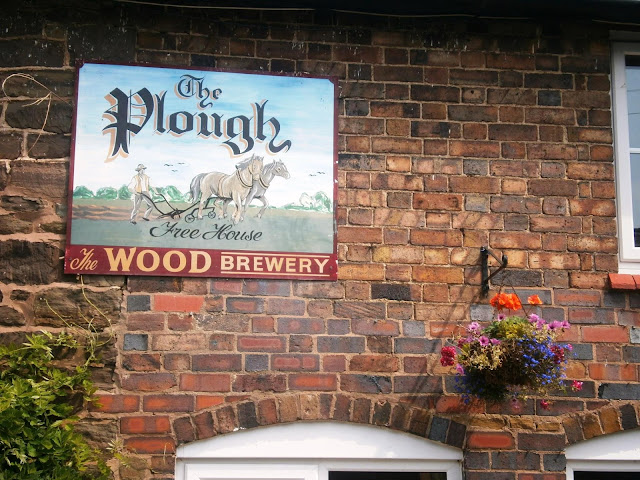
Of course, there have been changes. The Plough at Wistanstow has closed. You can't have tea in the courtyard at Stokesay Castle any more. The Land of Lost Content museum at Craven Arms really has gone.

But then I decided I was looking at things the wrong way. My memories of exploring the Shropshire hills cover nearly 30 years from the late 1980s - I first encountered Snailbeach and the Stiperstones on the day we won an important qualifying-group game against Poland on our way to Italia 90.

As a result, what I have is a jumble of memories that I sometimes struggle to put together into a single holiday or even a single day. 

Where, for instance, was I walking to or from when I discovered the little Catholic chapel at Plowden? I think it was on a walk from Church Stretton to Bishop's Castle - the first time I saw the latter town - but I may well be wrong.

So I decided to stop hankering for a past that may never quite have been and make some new memories. I went to look for Halford church on the other side of the Onny from Craven Arms. 

Not only did I find the church, I also found an agricultural village that long predated the founding of the town. I won't share the photos with your today - this is, after all, meant to be a holiday - instead, the photo above shows the Plough in its pomp

I shall leave you with a thought from the Shropshire-based sitcom The Green Green Grass. In one episode, an American returned to the county, where he had been stationed in the Sixties, and wondered if it had changed.

"Oh no," a local reassured him, "It's not changed. If anything, it's more like it was now than it was then."

Monday, February 28, 2022

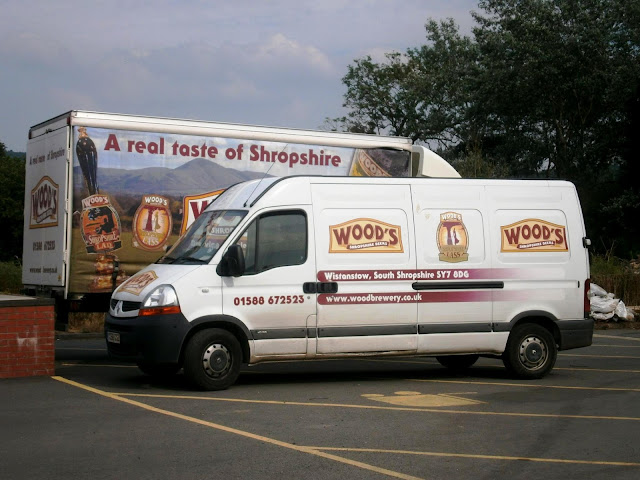
Wood's of Wistanstow has ceased brewing

Sad news from the Shropshire Star:

Real ale drinkers in Shropshire are ruing the closure of a renowned county brewery in Wood's.

Its closure has been confirmed by a message on the company's answering machine.

A sad-sounding message says that the company's demise was "forced" on to it due to "unfavourable trading conditions."

The recorded message apologises for not being able to answer - but it points out that the brewery pub, the Plough Inn, remains open and trading.

Wood's began brewing in 1980 and their most famous beer was the bitter Shropshire Lad. 

This was originally to be a limited brew to celebrate the centenary of Housman's collection of poems in 1996 - and I have happy memories of drinking it that year - but it proved so popular that it became a fixture in their range of beers.

Tuesday, December 08, 2020

Brexit is the fools' revenge on Harold Macmillan

Visiting Julian Critchley's grave at Wistanstow in Shropshire, I quoted an interview he once gave to Naim Attallah:

"I had two heroes in politics: Macmillan and Roy Jenkins. Macmillan, because he controlled to a very great extent Britain’s decline in power and was responsible for our adjustment in straitened circumstances – something he managed despite a party of fools. 

"My admiration for Roy Jenkins was based on the fact that as a young Labour MP he would advocate the cause of Europe in cross-party meetings, and he advocated brilliantly."

One way of seeing the whole Brexit episode is as the fools' revenge on Macmillan.

The average Conservative MP has not an ounce of Macmillan's statesmanship or his realistic view of Britain's place in the world. 

Or at least, that MP has learnt not to get on wrong side of colleagues with these negative qualities.

Nor does that average Tory MP have any of Macmillan's concern for the poor. They believe that the good things of the earth should be kept for them and their neighbours and that is about as far as their political philosophy goes.

No doubt the Tories have always had dozens of MPs like this, it's just that they used to have the sense not to have too many of them in positions of power.

As Julian Critchley died 20 years ago and is now largely forgotten, I had better introduce him to younger readers. 

He was Conservative MP for Rochester and Chatham between 1959 and 1964, and for Aldershot between 1970 and 1997. He became a sort of internal dissident under Margaret Thatcher, winning him admiration from people in other parties but from few in his own.

There was a good obituary of him in the Guardian by John Biffen.

Saturday, December 14, 2019

The crypt beneath St Wystan's, Repton


Repton is a village in Derbyshire whose church is dedicated to St Wystan.

As we have seen, both Wistow in Leicestershire and Wistanstow in Shropshire claim to be the site of Wystan's original burial and the subsequent miracle,

What is sure is that young Wystan's bones were later moved to Repton and lay in the crypt beneath the church that is now named after him. The crypt dates from the early eight century.

Early in the 11th century his bones were moved to Evesham, whee they were lost when the town's abbey was sacked at the Reformation.

The remarkable crypt at Repton remains, even if it tries its best to defeat photographers.


Thursday, January 31, 2019

Shropshire: Don't drink the water and mind that huge rock

Calder’s blog is an eclectic mix of musical choices, random news items from Shropshire (where he doesn’t live), and political news and views.
So said the New Statesman back in 2008.

Well, it's been a good week for random news item from Shropshire. Following the Bishop's Castle poetry pharmacy we have two more today.

Item:
People in south Shropshire have been told not to drink tap water after an "unauthorised connection" was attached to the water network. 
Severn Trent Water said it had issued 69 'do not drink' orders to people in the Craven Arms area after finding the private connection, and Shropshire Council announced the Wistanstow Church of England Primary School was closed today due to a "water supply issue".
You can see the school in the photograph above.

Item:
It is a mystery to rival those of the pyramids and Stonehenge - just how did a huge rock end up on the Long Mynd? 
The seven foot long by three foot wide rock was first spotted six months ago by National Trust rangers wandering the south Shropshire hills. 
But the question is how did it get to the remote spot and why? 
Despite signs being put up around the stone urging the pranksters to come forward and reclaim it, no one has stepped forward, so now the trust has taken matters into its own hands to remove the giant rock.
Thanks, inevitably, to the Shropshire Star for both stories.

News stories over here in the East Midlands somehow seem more conventional - unless I generate them myself.

Monday, December 10, 2018

The Shrewsbury to Ludlow Railway part 2


As promised, here is the second and final part of this video - you can watch part 1 here.

Marshbrook is the Onnybrook of Malcolm Saville's Lone Pine stories, while its signal box may be the oldest one on the British railway network that is still operational.

Sunday, April 16, 2017

Theresa May is the opposite of Harold Macmillan


Writing about Julian Critchley after visiting his grave at Wistanstow, I quoted an interview he gave to Naim Attallah:
I had two heroes in politics: Macmillan and Roy Jenkins. Macmillan, because he controlled to a very great extent Britain’s decline in power and was responsible for our adjustment in straitened circumstances – something he managed despite a party of fools. 
My admiration for Roy Jenkins was based on the fact that as a young Labour MP he would advocate the cause of Europe in cross-party meetings, and he advocated brilliantly.
Leaving Roy to one side, it strikes me that Theresa May is doing the precise opposite of what Macmillan did. She still has a party of fools to contend with, but she is allowing them to indulge their fantasies of glorious isolation or Empire 2.0.

Macmillan came to power because of Suez. Will it take a similar national humiliation to bring the Conservative leadership to its senses?

Saturday, October 18, 2014

A puppet theatre at Marshbrook

The other day I blogged about the new Radio Times database.

One of the first things I did with it, of course, was search for my favourite places in Shropshire. This threw up some fascinating (and no doubt long wiped) regional radio broadcasts on folklore and farming from the early years of radio. And it confirmed that Down Your Way and Gardeners' Question Time visited every settlement in the kingdom twice.

But it also threw up something unexpected. Because in 1969 Home This Afternoon ("A family magazine introduced from the Midlands by David Stevens") included this item:
Hand-in-glove at Fiddler's Folly: Keith Ackrill has been to see Shropshire's only permanent Puppet Theatre, run by Douglas Ward, in a valley near Church Stretton.
A puppet theatre in a valley near Church Stretton? It sounds unlikely, but there really was one.

I found it on the Beresford's Puppets website:
We had heard about Fiddler's Folly, which was over the other side of Shropshire, so we phoned and made a date to visit. It was run by Doug Ward, who had inherited his parents large house along the old road (now just a rutted track, superseded by the A49) from Shrewsbury to Ludlow near Church Stretton. When he was just a lad, his parents had let him use the small, empty, derelict cottage in the garden for a puppet workshop and later a theatre. It was - and still is - a beautiful and quiet site, with very few houses close by and on the edge of the Long Mynd (Mynd - mountain). The picture shows the cottage being renovated; Doug's house was the white house behind. 
Doug's assistant was Hilda Cross who had her own puppet show with which she toured schools and was responsible for the schools side of Fiddler's Folly. She, with the help of her husband Harry, made many of the Folly's puppets. Doug produced and directed the shows and was a good pianist and singer. The cottage was two storied and had a twenty five seat theatre downstairs and an exhibition room upstairs. School classes would visit and half would see the show whilst the other half looked at puppets and had pop and biscuits. ... 
Doug came into some money and decided to renovate the cottage theatre. Much of the work was self help. Son, Chris and I doing a lot of the rewiring and designing of the staging. Chris's then girlfriend, Helen, also helped as a labourer. The raked seating was improved and the staging completely rebuilt so that it extended into the upper floor. 
Many of the summer, public events were held in the garden.
Fiddler's Folly was at Marshbrook, the Onnybrook of Malcolm Saville's Lone Pine books for children.

The estate agent's particulars do not say exactly where the house is, but I suspect it stands on the lane that runs parallel with the railway. This follows the route of a Roman road, and when the lane peters out you can follow the Roman road as a footpath over the hill to Wistanstow.

Sunday, January 20, 2013

Julian Critchley's grave at Wistanstow

The churchyard at Wistanstow is probably not the site of the martyrdom of St Wystan, but it does contain the grave of one of my favourite MPs.

Julian Critichley sat for Rochester and Chatham between 1959 and 1964, and for Aldershot between 1970 and 1997. As his Guardian obituary by John Biffen suggested:
The broken Westminster service between 1964 and 1970 was crucial to Critchley's political career. He was a liberal Tory, supporting one-nation social policies, membership of the European Community, and a defence policy based on Nato and a nuclear strategy. He would have been a natural and able young ally for Edward Heath, campaigning for him against the Conservative right, which was increasingly hostile to the Rome Treaty and current levels of public spending. No one can say how Critchley would have handled his opportunities had he remained in Westminster between 1964 and 1970 ... 
He was always vulnerable because of his irreverent humour, which could lead to incautious and overt disrespect. If he had been able to reign back this, and with application surely he could, then opposition service during the parliaments of the 1960s could have ensured office in the 1970-74 Heath administration. This was not to be. Soon, he was politically marginalised by the triumph of Margaret Thatcher. He doubted her policies and even more the self-righteous way in which they were promoted.
His political ambitions thwarted, Critchley became increasingly popular as a journalist and broadcaster on politics.

Critchley's biography A Bag of Boiled Sweets is one of the most human political memoirs I know and also expresses his love of Shropshire.

He also gave a revealing interview to Naim Attallah:
I had two heroes in politics: Macmillan and Roy Jenkins. Macmillan, because he controlled to a very great extent Britain’s decline in power and was responsible for our adjustment in straitened circumstances – something he managed despite a party of fools. My admiration for Roy Jenkins was based on the fact that as a young Labour MP he would advocate the cause of Europe in cross-party meetings, and he advocated brilliantly.

Saturday, January 19, 2013

Haile Selassie in Craven Arms

A couple of days ago, while looking at Wistanstow Village Hall, I quoted from 'Reminiscences of Wistanstow' by Michael Coles. Here is another extract from that book:
In 1936 the Italians invaded Abyssinia and the Emperor Haile Selassie had to flee, He was given refuge by this country and one day whilst I was at Craven Arms railway station he arrived with his entourage to stay at Walcot Hall on the way to Lydbury North, which was a mansion owned by the Stephenson Ink people.
In stature, he was a small man, very swarthy and black-bearded, with striking features. His helmet had big white feathers on top and his military uniform was well-decorated with a sash and medals. How long he stayed locally I have no idea, but that is my memory of Haile Selassie, Emperor of Abyssinia, also known as the 'Lion Man'.
When I first visited Shropshire I imagined that Craven Arms would be a medieval town like Much Wenlock or Church Stretton. Not a bit of it. It is a Victorian town, named after a pre-existing hotel and built around a cattle market and railway junction, which has somehow always failed to thrive. My picture shows Craven Arms' derelict Temperance Hall.

At least when Haile Selassie saw it the railway station had refreshment rooms and was not the wasteland of bus shelters you see today. And maybe the Shropshire tourism people can use this story to bring Rastafarian tourists to the area.

Wednesday, January 16, 2013

Wistanstow Village Hall - a palace built on chamber pots


Wistanstow, says the Shropshire Tourism website, has probably the best village hall in the world:
Mrs Harriett Greene completed the black and white mock medieval hall in 1926 from the Grove estate as a memorial to her husband who died 11 years previously. It was built by estate workers using local timber, stones and bricks. Not a nail was used, only wooden pegs. When first built it included a projection room for silent films, slipper baths costing 1d a go, library and billiards room. The bungalows in the corners were for the caretaker and the district nurse.
Harriet's husband, Henry David Greene, was Conservative MP for Shrewsbury between 1892 and 1906.

As to where the Greene family's money came from, 'Reminiscences of Wistanstow' by Michael Coles enlightens us:
The Greenes of the Grove made their money, I believe, in pottery: they had a factory in the Midlands, which made mainly "under-the-bed" pots (also known as "goesunders"). However, flush toilets soon began to put "potties" out of fashion, and the Greenes did not diversify so closed up, but their fortune had already been made.

Saturday, May 26, 2012

St Wistan's, Wistow


Two years ago I was at Wistanstow in Shropshire, one of the candidate sites for the martyrdom of St Wystan and the subsequent miraculous growth of golden hair from his first resting place (his remains were later taken to Repton in Derbyshire).

But Wistow in Leicestershire has the strongest claim to be the site - when the Church appointed a commission to investigate the claimed miracle, its members all came from the East Midlands - and that is where I was today.

St Wistan's, Wistow, has Norman fabric but a pleasing Georgian interior, complete with box pews and plain glass. No burials have taken place in the churchyard since 1873 because of the risk of flooding from the neighbouring River Sence. And the grass had just been mown, so the lad would have got a short back and sides if he had tried any recent miracles.

Wednesday, May 25, 2011

Reviving village shops


As I have mentioned before, in my current excursions to Leicestershire and Northamptonshire villages I am often retracing journeys I made on my bike 30 or more years ago.

In those days I was too young and stupid to appreciate half of what I was seeing, but I do recall that I never took a drink with me because I took it for granted that when I reached a village of any size I would be able to buy one in the shop.

Times have changed. The picture above shows what used to be the shop and post office in Clipston. Like many other village shops it has long since closed, though most have been converted to houses a little more elegantly.

All economics is against them - a fact that even Ambridge has caught up with - but some shops do manage to cling on. Wistanstow in Shropshire is one example I have come across.

Like a lot of surviving village shops it is run on a voluntary basis and supported by the Plunkett Community Shop Network. See there website for more about this trend.

Tuesday, June 15, 2010

St Wystan and Holy Trinity, Wistanstow


Three years ago I wrote about the three villages which contend as the site of the martyrdom of St Wystan. Today I visited one of them - Wistanstow in Shropshire.

The guidebook for Holy Trinity, Wistanstow, describes the stained glass in the boy saint's honour:
St Wystan stands in a window as a golden haired boy in a red cloak taking the crown from his mother, who is dressed in blue, white and gold. Below is the scene of his martyrdom. Above is a group of buildings by a river which may be to investigate his home and final resting place in Repton.
After that it would be churlish to point out that Wistow in Leicestershire has a much stronger claim to be the site of his martyrdom.

Saturday, October 27, 2007

Another resting place for St Wystan

In March I noted that there are three villages that claim to be the resting place of St Wystan: Wistow in Leicestershire, Wistanstow in Shropshire and Wistow in Cambridgeshire.

Now English Buildings has suggested a fourth site for his burial. Writing of St Wystan's church at Repton in Derbyshire, the blog says:
It’s quite unusual for a parish church to have a crypt. You usually find these underground spaces beneath large cathedrals, where they housed sacred items such as the remains of saints. Parish churches didn’t often run to such precious relics, but monasteries sometimes did, and the church at Repton began as a monastic church, and an important one, that became the burial place of the kings of the Saxon Midland kingdom of Mercia. King Ethelbald of Mercia, who died in 757, was buried here; so was King Wiglaf (died 840). When Wiglaf’s grandson Wystan was murdered, he was laid to rest here too. When Wystan was canonized, Repton became a place of pilgrimage.