Showing posts with label Gumley. Show all posts

Tuesday, March 03, 2026

Mercia rediscovered: The Synod of Gumley and Brixworth church

Reviewing Max Adams's The Mercian Chronicles: King Offa and the Birth of the Anglo-Saxon State AD 630-918 for the London Review of Books, Tom Shippey wrote of the difficulty in recovering the history of the kingdom of Mercia:

Adams’s title is deliberately ironic. There are no ‘Mercian Chronicles’, the fact of which has caused historians headaches for centuries. 

For Northumbria we have Bede’s History of the English Church and People, written in Jarrow and finished in 731. For Wessex we have The Anglo-Saxon Chronicle, first compiled under the aegis of King Ælfred in the 890s, but including much earlier information and then kept up in various locations year by year. 

But for the land in between we have nothing: or rather, "no independent narrative", apart from a short interpolation into two manuscripts of The Anglo-Saxon Chronicle known as ‘the Mercian Register’ and covering only the years 902-24. For the rest, the historian has to work from often biased, often hostile enemy sources, and from indirect evidence: coins, charters, archaeology and, on occasion, suggestive silences.

For this reason, Mercia does not perhaps enjoy the prominence in our early medieval history that it deserves.

I looked at Adams's book, and its index in particular, in Waterstones and knew I had to buy it. It discusses the Synod of Gumley of 749, held close by that slightly village near Market Harborough, and also the magnificent Saxon church down the road at Brixworth.

Here is Adams on Gumley:

Two years after the second Clofesho council, in 749, Æthelbald convened a further council at a place called Godmundesleach. This time the site can be identified with satisfying precision. 

The small village of Gumley, lying on a back road between Market Harborough and Leicester, is surrounded by once-tilled arable lands now turned over to grazing for sheep and horses. A couple of hundred yards south-west of Gumley's single, house-lined street, in steeply undulating park lies a natural amphitheatre containing a pond known as the "Mot", overlooked by a prominent tree-covered mound. By general acceptance 

This is the site of the council of 749 and to further royal councils held in 772. and 779. Its present obscurity may be misleading: It lay close. to one of the sources of the river Welland, which may have formed a significant Middle Anglian boundary in the eighth century.

The location of Clofesho is not known. Adams favours a location near Hertford, while other candidates include Brixworth in Northamptonshire.

When Adams does get to Brixworth, he says:

the scale and evident expense of the church here strongly implies royal, possibly episcopal patronage: it is public architecture of the highest order.

He also says that the stone for the bulk of the church originated from quarries near Leicester, implying that it was indeed repurposed after being taken from the ruins of Roman Leicester.

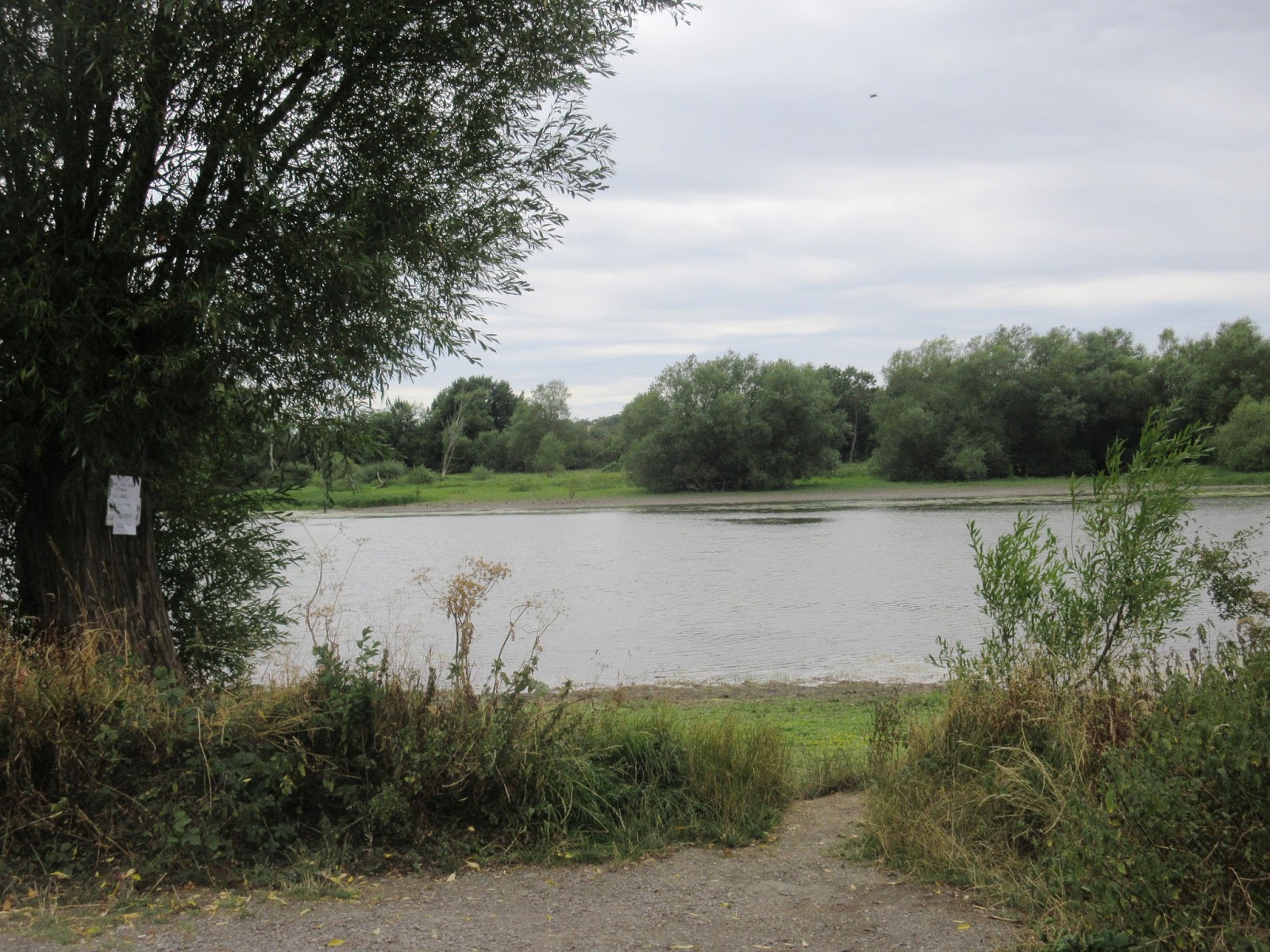
Reader, I bought the book. You can see my photos of Gumley and above and All Saints', Brixworth, below.

Wednesday, February 25, 2026

Fighting breaks out at Kibworth vs Gumley cricket match in 1873

At Kibworth library today in connection with a thing, I came across this report from the Leicester Chronicle (2 August 1873):

The cricket match which took here on Saturday between the Kibworth and Gumley Clubs was wound up with a scene - we might almost say a tragedy - which, with the exception of occasional poaching affrays, is happily seldom heard of in the rural districts.

It appears that a quarrel arose through some objections taken as to the fairness of certain individuals engaged in playing quoits. High words were soon followed by blows, and the pugilists were speedily reinforced by their friends on either side. The fight went on for some time until at length a perfect riot took place, and bats which for some time had been flourished in the air, began to alight on the nasal organs of the combatants.

Seven or eight men are reported to have been on the ground together and the disputants ultimately became so fighting or thrashing mad as to rush into the melee and knock down irrespective of friend or foe any person who came within reach.

The scene which beggars description went on until all appeared to have had enough, the office bearers of the Kibworth club utterly powerless to restrain the "dogs of war". Those who figured most conspicuously in the fracas we are told were from Gumley and Smeeton. Kibworth was also fairly represented. 

The greater proportion of the rioters were apparently maddened by drink; and their conduct will probably induce the members to forswear the future admission of intoxicating drinks on the ground.

I like to think that Kibworth vs Gumley remains a needle match to this day. Gumley cricket ground, incidentally, has a feature that must disconcert visiting teams.

Friday, March 29, 2024

BOOK REVIEW Noble Ambitions: The Fall and Rise of the Post-War Country House by Adrian Tinniswood

We think we know the history of the English country house in the 20th century. Their heyday was in the Edwardian era, but death duties and then requisition during the second world war led to mass demolition, until the tide turned when an exhibition - The Destruction of the Country House - staged by the V&A in 1974 alerted people to what was still being lost.

The trouble is that, as Adrian Tinniswood shows in this endlessly entertaining book, every part of this version of events is questionable.

By 1900, the owners of large country houses were already finding it hard to maintain the large staffs necessary to run them. You may recall that Nevill Holt Hall, held by many to be the model for Bonkers Hall, had already been vacated by the Cunard family when Suffragettes tried to burn it down in 1914.

Where it remained possible to continue to operate on the 19th-century model, it was often because an American bride brought a new fortune across the Atlantic with her. There's a 1 in 20 chance that the first Lady Bonkers was American.

Death duties were indeed a heavy burden on country estates, particularly during the first world war when more than one set of them might have to be paid, but then we Liberals brought them in precisely to reduce the economic and social dominance of the landed interest.

But before 1950 the solution most houseowners came up with was to sell off part of the estate and perhaps to demolish unwanted wings of the main house - no doubt to their architectural advantage in many cases.

The worst period for country houses was the 1950s, when many were demolished after failing to find buyers. There's a Malcolm Saville story from 1958, The Secret of the Gorge, which pictures the demolition gangs moving in on a country house. 

The same landscape - the Teme Gorge on the Shropshire and Herefordshire border - features in Tom Sharpe's Blott on the Landscape, as does an attempt to demolish a house. That's because both Sharpe and Saville's eldest son were pupils at Lancing, which was evacuated to Downton Castle during the war. This was another indignity that befell such houses at the time, but Downton Castle is very much still with us. 

Around Market Harborough, both Gumley Hall, which became a training centre for agents to be dropped into Nazi-occupied Europe and was then home to Leonard Cheshire's first community for service veterans, and the Lutyens house Papillon Hall near Lubenham were demolished. But Nevill Holt Hall survived by becoming a prep school, which lasted until it closed following a police raid that included helicopters.

The mood of despair at the future of country houses was captured by Evelyn Waugh in Brideshead Revisited, which was published in 1945. But events moved on, and in his preface to its 1960 edition he wrote that the novel had proved "a panegyric preached over an empty coffin", but who reads prefaces?

They do watch television - or they did in 1981, when the ITV adaptation was screened. I enjoyed it, just as I enjoyed the novel when I went through a Waugh phase at university, but I have never found a more profound message in either than the thought that old money is nicer than new money.

The damage wrought upon a whole generation of Oxford-educated politicians by the TV version, however, is enormous, and the damage they have wrought upon the country as a result probably incalculable.

Yet even in the Fifties new country houses were being built, and their precursors were about to experience a revival thanks to a new phenomenon of the Sixties: the rock god. The Beatles did not live together in four knocked-through terraced houses: they had a country house each. So did several members of the Stones and the Who.

In his own quiet way, Steve Winwood is worth notice here too. He bought a Cotswold house when he was 20, in an area where only rock stars and royalty can afford to live. The result was that one of his daughters married the nephew of Camilla Parker Bowles and his grandson was one of the Queen's pages at the Coronation.

And that exhibition at the V&A? Tinniswood paints it as, in large part, an attempt to ward off Denis Healey's plans for a wealth tax. But then it's often been hard to distinguish where calls for the maintenance of the country house end and calls for the maintenance of their owners begin. 

The current controversy over the National Trust, for instance, must surely be born of impatience with those of us who insist on asking awkward question about where all this affluence came from. Why can't we do the house and gardens, have a scone in the café, buy some out-of-the-way chutney in the gift shop and then leave them in peace?

With so many memoirs and diaries of upper-class eccentrics, Tinniswood had loads of enticing material and made good use of it. What I want to do now is read The Last of Uptake, a 1942 satire by Simon Harcourt-Smith that he draws on. It ends with Titmarsh the gardener burning the old pile down.

Sunday, May 01, 2022

Harborough District Walking Festival, 26-29 May 2022

"Come and discover an often overlooked part of England," says the website for this month's Harborough District Walking Festival:

The Harborough district is an area of rolling countryside, ancient pastures and farmland, streams, woodland spinneys and beautiful villages. Canals, battles and buried treasure are all there to be explored – not to mention local characters and ancient customs.

All the Festival walks are led by two experienced guides, so your walk will be enhanced with fascinating details of the local area and its history

Thursday 26 May

Morning walk: Rolleston and Noseley (no stiles)

Afternoon walk: Tugby, Rolleston and Skeffington

Friday 27 May
Morning walk: Claybrooke Parva and Fosse Way

Afternoon walk: Brampton Valley Way (wheelchair friendly)

Saturday 28 May
Morning walk: Hallaton, Cranoe and Slawston

Afternoon walk: Saddington, Gumley and Laughton

Sunday 29 May
The Langtons

There is a charge for each walk and places are limited. You can book via the Festival website.

James Carpenter, one of the Festival guides, runs an extensive programme of public guided walks based around Market Harborough and Lutterworth. Full details can be found online.

Wednesday, July 01, 2020

The legacy of Saxon Leicestershire


Time for the third of Jim Butler's Hidden Histories videos.

This one explores the legacy of Saxon Leicestershire, through archaeological finds, place names and the lives of two remarkable ladies of Mercia.

Saturday, June 29, 2019

Foxton Locks in the sun


Living in Market Harborough, my instinct on a hot day is to head for Foxton Locks.

I did it today and even managed a mad-dogs-and-Englishmen walk across the fields to the Bell at Gumley.

Foxton, of course, is where the 1985 Liberal Assembly was organised from. The green track in the last photograph here was then the road access to the bottom of the locks.


Tuesday, September 04, 2018

Gumley's archaeology from above

Having recently spent a couple of afternoons exploring the landscape around Gumley, I was pleased to come across these two tweets by Jošt Hobič.

His map and animation show the Motte and the medieval remains beside the cricket ground. They also show there are more remains of the old village to explore.

Intriguingly, Jošt suggests there may be a later castle or landscape mound close to the site of Gumley Hall.

Sunday, September 02, 2018

Remains of a medieval village and warren at Gumley


Gumley Hall was demolished in 1964. It stood on what is now a large open space between the church and the stables at the top of the hill.

Its construction in 1764, and in particular the landscaping of its grounds, brought changes to the village.

Today its houses are all sited on the long road running up to the church, but before the Hall was built there was a settlement at the top of the hill.

The land it occupied is now a scheduled Ancient Monument. There remains there include the remains of a medieval settlement and of a medieval rabbit warren.

Its southern boundary is the gated road from Gumley to Laughton - the one that runs across the modern village's cricket ground.

This means that the war memorial and cricket pavilion are part of the protected site, but not the wicket.

After exploring the Motte last week I too some photographs of the intriguing humps and hollows to be found at the top of the hill.


Friday, August 31, 2018

Finding the Motte at Gumley


Gumley, I wrote, is historic and a little mysterious. So I went back there.
I found the Motte, which some say is an early Norman castle and others dismiss as a relic of 18th-century landscaping.

Either way, it is a low mound with trees growing on it. It is also home to badgers setts.

I felt that I had wandered into M.R. James's A Warning to the Curious, but if there were historical relics to be found there, I am sure the King of the Badgers had them long ago.

Having tired myself out exploring this landscape, I am not convinced that the Motte was constructed as part of the landscaping of the grounds of the vanished Gumley Hall.

The best views here are those from the high ground looking down the valleys. The Motte is at the end of a natural ridge halfway down the hillside.

My money's on the Normans.

And all the time I explored the war memorial and sight screen were just in sight - tantalising glimpses of authority and civilisation.


Friday, August 17, 2018

Gumley: Historic and a little mysterious

Gumley lies eleven miles south-east of Leicester at the eastern end of a ridge of hills which runs from Husbands Bosworth through Mowsley and Laughton, north of the Welland valley.
So says the Victoria County History of Leicestershire.

That hill is impressive in itself, but there is all sorts of history up there too.

There are the remains of a motte castle (though its precise age and purpose are debated), somewhere here too a synod took place in 749, called by King Aethelbald of Mercia.

And round about 1800 the village was reshaped to please the owners of the now-demolished Gumley Hall. The main street once ran to the doors of St Helen's church and, says the Victoria County History, there were houses on the land beside it now occupied by woods.

Somewhere to explore more closely - if they don't scrap the 44 bus to Foxton.


Wednesday, August 15, 2018

Gumley is Leicestershire's Bishop's Castle

I have worked out why I like Gumley so much: it reminds me of Bishop's Castle in Shropshire.

Both settlements have a long main street that runs uphill to a building that is no longer there.

In Bishop's Castle it is the castle: in Gumley it is Gumley Hall.

When I was in Gumley on Saturday I noticed that a couple of the large houses on its only street were looking run down.

That is a shame, but it gives it something else in common with its Shropshire cousin.

One of the things I have always liked about Bishop's Castle is that it is not too perfect.

You will get a run of chocolate-box 18th-century houses and then there will be one patched up with corrugated iron. My mother says this is what Bath was like in the 1950s.

Another of the things I like about it is its pubs. And Gumley can complement that too.

In past years The Bell in Gumley has not seemed welcoming. It was always closed when you passed it and had signs up telling you all the things you couldn't do there. But on Saturday it was open, friendly and appeared to be thriving.

And there is one thing Gumley has that Bishop's Castle doesn't: a green telephone box.

Monday, August 13, 2018

Waiting for the end of an over at Gumley


When you follow the lane past Saddington reservoir you climb a wooded hill and emerge above the village of Gumley.

On that high ground you will find the village cricket ground, which I blogged about nine years ago.

There was a match in progress, allowing me to show you the measures used to control traffic on the very minor road that crosses the field of play.

The way the ground blends into the open countryside, and the village war memorial beside it, give you the feeling that you are looking at a painting. It would fall halfway between the Symbolists and David Inshaw.

Saturday, August 11, 2018

Saddington reservoir, the 44 bus and Richard Jefferies


What to do this Saturday? Now we have reasonable weather again, a country walk sounded like a good idea. One by water even more so. But where to walk?

Yesterday the idea hit me. I have seen Saddington reservoir from the garden of the village's pub, the Queen's Head, and remembered a very minor road that went past it from a cycle ride decades ago.

Saddington reservoir was built to supply water to the Leicester line of the Grand Union Canal and now has a sailing club. Despite the many minatory notices, it was possible to walk the length of its dam.

There were no yachts out on the water, only anglers. And, inevitably, I was reminded of Richard Jefferies and Bevis.

After the reservoir, I climbed up to Gumley, walked down the main street of the village (finding its pub open) and then across the fields to Foxton locks.

One sad note: this walk was only possible because the 44 bus took me out to Saddington and home from Foxton. It is one of the routes under serious threat because of cuts to council spending.