"Well written, funny and wistful" - Paul Linford; "He is indeed the Lib Dem blogfather" - Stephen Tall "Jonathan Calder holds his end up well in the competitive world of the blogosphere" - New Statesman "A prominent Liberal Democrat blogger" - BBC Radio 4 Today; "One of my favourite blogs" - Stumbling and Mumbling; "Charming and younger than I expected" - Wartime Housewife
David Howarth knows how to make the BBC less afraid of Nigel Farage: "Proportional representation would free the BBC from fear, but more than that, since under PR many parties would enjoy a reasonable prospect of entering government and so of supplying the secretary of state for culture, the BBC would have better incentives to maintain impartiality among democratic parties."
"Calling Andrew entitled is beside the point. He was raised with no economic purpose and now he finds himself as a connector to whom no one wants to be connected. 'I have no idea who he will socialize with,' one Norfolk grandee told me. 'All his friends are Chinese spies.'" Tina Brown claims to have the inside story on how King Charles pulled the plug on Andrew.
AI is supercharging abuse against women journalists, but Megha Mohan argues that it doesn’t have to be that way.
"For a period beginning in the 1960s and ending around the turn of this century, the preferred form of the homicidally inclined was the drawn-out danse macabre of serial murder. This was especially true in America’s Pacific Northwest, where an astonishingly large number of serial killers, from Ted Bundy to Israel Keyes, from the Green River Killer to the Shoe Fetish Slayer, from the Werewolf Butcher of Spokane to the Beast of British Columbia, grew up or operated." James Lasdun on the serial killers of Seattle.
Stephen Prince introduces us to the 1970 book Filming the Owl Service (1970), which is "long out of print and rare as hens' teeth to find second hand, which is a shame as it is a fine companion piece to the series, full of rather lovely photographs, artefacts, anecdotes, background story, prop sheets and designs from the filming and the series itself".
Robert Hartley explores the Leicestershire connections of George Stephenson, the father of railways.
"I remember being disappointed by Elidor," writes Adam Mars-Jones in his essay on Alan Garner for the London Review of Books.
Well, I remember loving Elidor and still admire it, in part because reading it, in contrast to some of Garner other work, does not make you feel as though you're being hit over the head with a compendium of folklore. He is disgraced beyond rescue, but William Mayne used to handle such material with a lighter touch - see his treatment of the legend of the Richmond drummer boy in Earthfasts for an example.
Mars-Jones's central complaint about Elidor is that, having invited comparisons with C.S. Lewis by packing four children off to a magic kingdom, he treats the story differently in every way:
It turns out that in their role as (exiled) champions of Elidor they must wield magical implements known as the Treasures, but these are issued with little ceremony. C.S. Lewis would have taken at least thirty pages to unite the children with the Treasures; Tolkien might have taken three hundred. In Elidor there’s a gap of only three pages between the news that the Treasures exist and the children acquiring them. It’s not much of a quest – barely a trip to the toy shop.
It's not a quest at all, and it's not a trip to a toy shop either. There is a strong sense that the children are being used: given the Treasures and then bundled back into their own world to face danger when other beings from Elidor try to force their way in.
What Garner does is force the reader to question the deepest assumptions of this sort of story.1 Did the children really visit Elidor or just imagine it? Is Malebron, the only being they meet there, as good as they found it natural to assume?
C.S. Lewis has his moments - I loved the scene early in Prince Caspian where the boy is told that the legends about a golden age of Narnia and talking animals are all true, and I loved reading the scene from The Magician's Nephew where Jadis drives a London cab like a chariot. But that latter scene, like much that is good in the book, is a pastiche of Edith Nesbit.
So when Mars-Jones commends Lewis to Garner as someone to study on how to write about relationships between brothers and sisters, you feel he has missed the mark. It would be more economical to send him straight to Nesbit.
But then I have always been puzzled by the reverence with which Lewis is treated as a children's writer and, in America in particular, as a religious thinker. Whatever is good about the Narnia books is progressively throttled by allegory until we arrive at the final book in the series, The Last Battle, which is positively unpleasant to read.
While his religious thought, and treatment of the Problem of Evil in particular, combine the faux mateyness that George Orwell complained of, with a near thuggishness. It's like reading theology written by Kenneth More.
"Since the Truss debacle, the UK has had to pay a substantial premium over other G7 countries to borrow in the bond markets. In other words, it has to pay a higher rate of interest on its gilts than it normally would. A similar message is being sent by the stock market where, since Brexit, UK shares have traded at a huge discount to European and US shares." Simon Nixon says Rachel Reeves' misfortune is to be the teller of hard truths in a country only interested in easy answers.
Emily Kenway asks why carers are so often made to feel invisible: "To be an unpaid carer is to be deemed not credible, according to Mary, Ada and several other carers in this study. Mary feels this is especially apparent higher up the professional ladder. The community-based staff listen to her, perhaps because they see what she does for her son on a daily basis. But of consultants and doctors, she said: 'I’m lucky if they’ll even look at me.'"
"The big problem with the DfE’s campaign to improve attendance is that no-one – really, no-one: not a single person – truly believes that attendance at school is the most important factor determining an individual’s attainment or lifetime earnings. Class, status, income, connections, quality of educational provision, home circumstances, breadth and depth of experience… there are a hundred and one reasons why private schools can achieve good academic outcomes without being bound to the 190 day school year which everyone else has to operate." John Cosgrove on government's repeated attempts to improve school attendance.
Ben Cornwell reports that two of the UK’s biggest outdoor media owners have blocked a youth-led anti-junk food advertising campaign, despite its full regulatory approval and recent national acclaim.
Adam Mars-Jones surveys the writing career of Alan Garner: "Even when Garner started writing, it was hard to keep modernity at bay. It must have been unusual as late as 1960 for a dairy farmer like Gowther Mossock to get about in a horse and cart."
"You climb the stairs at Old Street station, hauling a cumbersome cricket bag into the east London sunshine. The hipsters and creatives barely give you a cursory glance, presumably unaware of what lies a five-minute walk away. Take the left bend on Old Street, veer down City Road, past some corner shops and the Bunhill Fields burial grounds where William Blake now rests, and there, through a black iron gate, you find an oasis." Daniel Gallan takes us to the ground of the Honourable Artillery Company Cricket Club.
"Yes it’s been applied all across Europe but it’s as British as a stick of Blackpool rock or a carefully constructed Chris Tavaré half-century. If you hate Britain, if you hate what Britain stands for and what makes Britain special, if you hate what other Britons value then you probably hate the National Trust, the NHS and the BBC. You’ll also hate the European Convention on Human Rights because a swivel-eyed libertarian Think Thank told you so." Matthew Pennell identifies the six British heroes who gave us the ECHR.
"The two-year study, conducted 2018-2020 in the Netherlands with students aged 5 to 13, monitored carbon dioxide levels in classrooms and collected data on student test scores. The results were clear: the higher the CO2 levels, the lower the scores on standardized tests." Want to increase children's test scores? It could be as easy as opening the window, argues Brandon Kochkodin.
Samir Jeraj asks if it's last orders for British curry houses: "The £4.2bn industry as a whole is in labour crisis. In recent decades, the children and grandchildren of pioneering Bengali restaurateurs have opted not to join the family business, going instead into professional jobs supported by access to university."
Sophie Atkinson discovers why George Orwell hated Sheffield.
"Kind words from US celebrity critics Gene Siskel and Roger Ebert also proved helpful.'It's one of the rare movies that has the courage to admit that some teenagers can be immature and insecure,' enthused the latter. 'It remembers adolescence, it observes it lovingly with sympathy and good humour and, with what teenage boys probably need most, compassion.'" Richard Luck celebrates the unlikely triumph of Gregory's Girl.
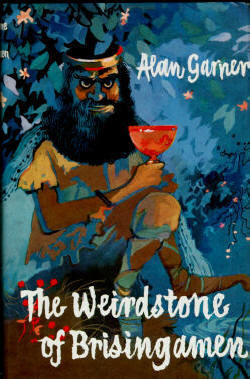
James Wright descends the West Mine under Alderley Edge in search of locations from The Weirdstone of Brisingamen.
"a flinty little fable about a convalescent boy visited by a rag-and-bone man, reads like a perfect distillation of his long-worked themes: mythology, archaeology, childhood, the transient rhythms of vernacular speech, deep time and inner visions."
And you can listen to a special edition of the podcast Backlisted devoted to it.
Garner first found fame as a children's writer in the 1960s and I suspect his best work of all, a young adult novel called Red Shift, appeared in 1973, but it's great to see him getting the recognition he deserves.
The news about Garner sent me to an interview he once gave to the archaeologist Mike Pitts. There he mentioned the opening of his first children's story The Weirdstone of Brisingamen, which turns out to run:
The guard knocked on the door of the compartment as he went past. "Wilmslow 15 minutes!"
"Thank you!" shouted Colin.
So we have nicely behaved children of on an adventure by train. On reading that I immediately thought of three things.
The first was this blog's hero Malcolm Saville, whose first children's book Mystery at Witchend (1943) begins with the line:
They changed trains at Shrewsbury.
The second was the observation by Victor Watson in his Reading Series Fiction that children's "camping and tramping" fiction grew out of the agricultural depression at the end of the 19th century, which made the countryside a playground for middle-class children, and was killed off by Common Market farming subsidies.
He adds:
And at about the same time the Beeching cuts closed down the branch lines that had taken so many fictional children by steam to their favourite holiday destinations.
And the third was how much Garner hated the limitations of this variety of fiction when he found himself writing it.
"I could not go on. The book was within a few pages of its end, but I'd had enough," says Garner. He had come to "loath" the characters, describing them as "zeroes", the novels as "drivel". He brought the story to a swift, unexpected conclusion. He pauses: "Wait, I think I can do it", and he recites from memory. "'We wins!' said the Morrigan from the rhododendron bushes. And when the moon came out and the house reappeared, she went up to the room where Colin was and wrung the little bugger's neck."
Garner twinkles ferociously as he recites the lines. But he forced himself to find a more suitable ending, finished The Moon of Gomrath by the age of 27, and vowed – despite entreaties from a publisher – not to cash in on his now-established name and turn the hugely popular novels into a series.
Then I thought of Susan Cooper, who set of to write a conventional holiday adventure and, as she tells in the part of this video I have selected, found something different happening,
And how does Over Sea, Under Stone begin?
"Where is he?"
Barney hopped from one foot to the other as he clambered down from the train, peering in vain through the white-faced crowds flooding eagerly to the St Austell ticket barrier. "Oh, I can't see him. Is he there?"
I have long regretted choosing 'Six of the Best' as a name for a feature on this blog. I mentioned this in a recent post and, thanks to a suggestion there by Epictetus, I have my new title.
At least I can be confident that I will never come to regret using one based on a naff Seventies sex manual.
So on we go...
Shev Fogarty blames the Jersey government's new licensing system for the current fishing dispute.
"Having spent time in 2005 asking people around Scotland how they planned to vote, and why, the most common answer to the second question was ‘that’s how we’ve always voted’, often with an invocation of a father. ... These days, the most common answer is 'I’ll see what they have to say'. The SNP didn’t become a part of people’s identities in the way their old parties used to be. It just convinced them to be open-minded." Adam Ramsey explains how the Scottish political landscape has changed.
James Kirkup says education, not class, is Britain's real political divide.
Amanda Perkins talks about her experiences working with farmers, ornithologists and volunteers in the Shropshire hills on curlew conservation.
"By the time he wrote The Owl Service, [Alan] Garner was subverting both the style and the narrative structure of fantasy, creating a distinct voice and a numinous experience. Garner’s fantasy novel focuses on the angst, loves and rivalries of its teenage protagonists: what is at stake is the home and the family. And what disrupts them (but also offers the possibility of redeeming them) is a coherent mythological tradition: in this case, Welsh legend." Dimitra Fimi celebrates a novel that broke the rules of fantasy.
Ben Clifford takes us on six walks that encompass Croydon’s boundaries and history.
feels more like a beautiful, art-house essay film, full of folklore and landscape, and soundtracked by Malcolm Clarke of the Radiophonic Workshop. It not only puts Red Shift completely into perspective (having been made a whole six years earlier) but it is also an essential viewing for fans of Garner.
Entering a disused church makes me think of Alan Garner's Elidor, but St Barnabas was not like that. It was bright and charming and had reached the end of the road.
It was August 2013 when I found its door open. Inside was an electrician making the building safe before it was handed to its new owners. He invited me in to take photographs.
There was something moving about the photographs of the choir of men and boys once drawn from the streets around, but I find that I missed recording the plaque to Bernard Vann VC, who was once a curate here.
"With the local elections, the Lib Dems were finally completely clear in their messaging. “Stop Brexit” – that’s easy to understand. “Bollocks to Brexit” has the added bonus of having a slightly risqué element to it, meaning it will be discussed and thus picked up on." Nick Tyrone says the Bollocks to Brexit slogan is just what the Liberal Democrats need:
Rachel Andrews takes us to the former Bessborough mother and baby home on the outskirts of Cork. Nine hundred children died here, but few graves have been found.
Jonathan Webber introduces us to Simone de Beauvoir's views on parenting.
"Mr Eliot has asked me to tell you how much he personally enjoyed the poems and to pass on to you his congratulations on them." tseliot.com looks at the relations between T.S. Eliot and Ted Hughes.
Ken Andrews watches Joseph Losey's 1963 film The Servant: "One of the delights of The Servant is marveling in Bogarde's depiction of Barrett’s effortless slides in and out of his Manchester accent and contrasting his 'on the job' fussiness with his louche behavior when 'off the clock'."
"The hill was my playground, school and world." Alan Garner on Alderley Edge,
"If the Brits are serious about securing access to the Single Market for goods, they will have to begin negotiations with, essentially 27 other countries after March, each of which will have a veto, as will the new European Parliament. What happens to the £100 billion or so worth of services the UK sells to EU countries every year is anyone’s guess. Services are not usually included in trade deals and 'passporting' is due to end." Edward Robinson says the prospect of Brexit gives him the shivers.
"A little less aggression and a little more listening and Rory Kinnear might’ve been the star of the recent Brexit drama on Channel 4." James Millar on the failure of Cameron, Osborne and Craig Oliver to learn from the referendum of Scottish independence.
Who owns England? In many cases, explains Anna Powell-Smith, it is impossible to find out.
Sam Knight joins the search for England's forgotten footpaths.
"At the end of the book, he still has nobody to love, and nobody to love him back, but he knows who he is: a grasping, arrogant, ambitious coward who would rather accept the job of Deputy Postmaster General, and the rather remote prospect of a Cabinet job when he’s proved his worth, than change." Ray Newman reviews No Love for Johnnie, a 1959 novel by the Labour MP Wilfred Fienburgh.
"The behaviour in the party at the moment is such as to raise the question of whether a group of people who cannot behave in an inclusive way could really do so if they were in positions of power." Tom Harney comments on a Lib Dem Voice by former MP Adrian Sanders (which is itself worth reading).
Courteney J. O’Connor reviews a new book on surveillance and society: "It is possible to engage in extreme surveillance that would be popularly considered a horrific breach of social etiquette, personal privacy and security without ever contravening the law."
To tackle children's mental health we must transform school culture, argues Natasha Devon.
"Yerevan, to a greater extent than most other cities anywhere in the world, exists with the burden of history on its shoulders." Ido Vock visits the Armenian capital.
"In The Stone Book, a young girl is taken by her father down a series of mine shafts and through a small crack in the rock only large enough for a young child to fit through. Beyond this crack she discovers some ancient cave art. Her father had previously been taken there as a boy by his father." Corse Present reads Alan Garner's miraculous quartet The Stone Book Quartet.
The Gentle Author understands the loneliness of his cat: "When the church offered Schrodinger a refuge, he spent long nights patrolling the empty building in the dark. Whenever he drew unwanted attention from dogs in the churchyard, he could escape through a metal grille into the crypt and sleep among the dusty coffins."
"At many junctures in the book, the ability to think historically deserts its author. He describes men such as Hitler as 'short' when their height (5ft 8in in his case) exactly matched the average height of European men at the time; and he describes Churchill as a 'Victorian Whig', though the Whigs’ attitude to the state in legislation such as the 1834 Poor Law was entirely different to Churchill’s." In 2014 Richard J. Evans wrote an enjoyable scathing review of Boris Johnson's study of Winston Churchill.
Oz Katerji looks at the reaction to Israel's rescue of the White Helmets from Assad's Syria.
"Susan and Colin of the Weirdstone Trilogy walk the same paths that Garner walked with his father; around the Edge, up to Stormy Point and past the various wells that litter the path." Adam Scovell looks at the use of landscape in Alan Garner's fiction.
Being Donald Bradman's son was such a burden that for a while John Bradman changed his surname to Bradsen. Belinda Hawkins and Wendy Page meet the family of the greatest batsman cricket has seen.
Philip Wilkinson has found another tin tabernacle. It's at Halse near Brackley.
An Egyptian city built for Cecil B, DeMille is emerging from the Californian sand. Katya Cengel reports.
With the film, I wanted to try and surmise two things that seem inherent to Garner’s work. The first is the special relationship Garner has with the landscape of his native Cheshire, of Alderley Edge and the surrounding rural locations. Tying into this was the second aspect, of how this landscape allows the questioning of the role of time, its effect on space and the philosophy behind it
"The new Southern and Thameslink trains ... look as if they have been designed to be hosed down after use." However you organise the railways the Treasury always wins, argues David Boyle.
Elizabeth Ammon explains how scoring cricket games during the miners' strike made her political: "I saw a portly offspinner break down in tears when asked for his match subscription. He didn't have it. He couldn't scrape together the five pounds he was being asked for. It made me angry."
Donald Trump's wall would do great damage to life and landscape along the Rio Grande, says Nick Paumgarten.
A famous scene in Blow-Up features David Hemmings and a Yardbirds line up with both Jimmy Page and Jeff Beck. It also features Janet Street Porter, who remembers how it was filmed,
"Plenty has been written about the greatness of Odessey and Oracle’s individual songs, but I want to focus on what seems to be an under-appreciated facet of the album: Its implicit suggestion that DIY music can be just as refined as high-budget, professionally produced music." Alasdair P. Mackenzie celebrates the 50th anniversary of the Zombies' superb album.
"There is no doubt in my mind that Brexit will leave the country poorer, and sadder, and it will hurt the vulnerable among us the most. As I see the thinkpieces and columns start to trickle out about how we must rally behind Corbyn even if we oppose Brexit, I find myself surer than ever: I will not vote purple just because it’s half red." Katie has seen through Jeremy Corbyn.
Dan Atkinson takes us back to the summer of 1975 when retired generals were drilling their private armies in case, as they saw it, they were needed to restore public order.
Samira Ahmed on the way Britain feels about Joe Orton: "The house on the Saffron Lane estate is gone. Joe’s sister Leonie told me she’d pleaded with the council to keep just that one house. The replacement bungalow has a tiny shabby blue plaque easy to miss and almost too high to read. As I look at it I think with frustration of the lucrative tourist industry around Paul McCartney’s National Trust owned council house in Liverpool. I wonder why the councillors of Leicester didn’t see that too?"
Kevin Keegan is something of a forgotten figure, but Barney Ronay shows that he blazed the trail for today's football multi-millionaires.
Brass Eye's satire holds up 20 years on, argues Tom Gatti.
"Garner’s novel doesn’t learn from history or its landscapes, it becomes such history and landscapes." Adam Scovell celebrates the 50th birthday of Alan Garner's novel The Owl Service.
"It is as if UK politicians regard their failure to propose anything new as a demonstration of their fitness for office. It makes them safer from Paxman of course, but also perhaps insulates them from each other. They are dull enough to be safe. It is the besetting sin of the British political elite." David Boyle explains why Paxo's encounters with Cameron and Miliband were so dull.
Smart meters are a government IT disasters waiting to happen, warns the Institute of Directors.
Dorothy King shows that "Early depictions of the Passion of Christ tended to omit the crucifixion, and there are very few representations of it in the Early Christian and Early Byzantine period."
"Thunderbirds spoke of the 1960s British mindset that all problems, no matter how apparently intractable, could be solved through the application of technology by boffins." The Beauty of Transport looks at the technology of the original Thunderbirds.
Somebody's Flung the Cat Again hates it when politicians talk about "hard-working families" - and has some good news from Tim Farron.
"Lives have been ruined by priests who pretend to be godly. Those priests have been knowingly, deliberately and persistently protected by others who pretend to be godly. We have even seen an abuser of children ordained as a priest, despite four bishops and an archbishop knowing the truth about him." A Comfortable Place on the publication of the report of an inquiry by the Archbishop of Canterbury's office into two decades of child protection failures in the Diocese of Chichester.
Top of the Cops looks at the slow-motion car crash of this November's police and crime commissioner elections, with particular reference to the Conservative selection in Cambridgeshire.
"Killing a learner’s natural curiosity doesn’t happen overnight. It can take as long as 12 years, and in some rare cases even that isn’t long enough." TeachThought helps you hasten the process with its 12 easy steps.
Love and Liberty looks forward to the publication of Alan Garner's Boneland and back to The Weirdstone of Brisingamen.
On his Guardian blog, Jonathan Jones cuts Damian Hirst in half and pickles him: "1970s Blue Peter was worthy – "too middle class", it might be called by a modern TV executive – and promoted intelligence as well as fun. It was definitely the bookish kids at primary school who won Blue Peter badges. So young Damien Hirst, like me, sat watching Valerie Singleton narrate illustrated biographies of Grace Darling ... So what does Hirst do? He goes on today's Blue Peter and mocks the educational values of 70s Britain and the traditional BBC that he and I both benefited from."
GamesMonitor, writing before today's news broke, welcomes us to The Security Games: "Since 2010, the number of security personnel required by Olympic organisers has risen sharply to an overall estimated 23700 on the busiest days, more than double the original predictions. As well as up to 12000 police from forces across the country, the Ministry of Defence has provided more troops deployed (in uniform) to work during the Games than are currently stationed in Afghanistan. More CCTV has been installed in a part of London already awash with cameras and around £80 million has been spent on the construction of an an 11-mile long 5000-volt electric fence around the Olympic zone."
In the last couple of weeks three major UK political figures have spoken about drugs and drug policy for a variety of reasons. Ewan Hoyle is not surprised that they have demonstrated hypocrisy, ignorance and an irresponsibly casual disregard for evidence and expertise.
Politics is for young people insists Victor Chamberlain, elected as Manchester's youngest ever councillor, in a guest post for the ALDC.
You know those thousands of 'never-worked' families living on what have been termed the 'Shameless estates' of Britain? FullFact.org presents evidence that suggests they are a myth.
"It was a warm, pleasant evening when I checked myself into the mad house. The irony of my situation wasn’t lost on me. Everything was back to front. As a psychology PhD, I fully expected to see the inside of such an institution in a professional capacity. But I now sat on the other side of the clinical transaction: a patient, tremulous and anxious, in the small admissions room of a large, gloomy psychiatric hospital." Darragh McCausland writes (and reads) for The Racket.
Richly Evocative takes us to Granville Road Spinney, a short walk from Finsbury Park tube station - and namechecks Richard Jefferies and Alan Garner.