Showing posts with label Hemel Hempstead. Show all posts

Tuesday, June 24, 2025

Two frogs fell into a pail of cream - You won't believe what happened next

At Boxmoor County Primary School we had only two pieces of music: Morning by Grieg and Vaughan Williams' Tallis Fantasia. And, as far as I recall, the headmaster, Mr Staten, had only two stories.

That was me writing in 2009, when I found one of those stories repeated in Roger Scruton's Gentle Regrets, where he reports hearing it from Monsignor Alfred Gilbey, who was the Catholic chaplain at Cambridge during his undergraduate days.

As Mr Staten told it, a great artist was painting scenes from the life of Christ. Having begun with the Nativity many years before, he was on the home stretch and tackling the Last Supper. He searched and searched for someone with the right looks to be his model for Judas. He eventually found a beggar who was perfect, only to learn that this beggar had been his model for the infant Christ years before.

These days this story is all over the net, but it's told about Leonardo da Vinci's The Last Summer, with the same man being the model for both Judas and Jesus, which seems less powerful to me. And it's not true, of course.

But what about the other story? This, as I wrote back in 2009:

One involved two frogs who fell into a pail of cream. One swam around for a bit, but then gave up the struggle and drowned. The second frog swam and swan until his strength was almost exhausted. Just when he thought he could swim no more, he found that the cream had turned to butter and he climbed out.

The reason for this post is that I have found the source of this second story. In his book Lost Worlds, Michael Bywater quotes from Robert Baden-Powell's Scouting for Boys:

Two frogs were out for a walk one day and they came to a big jug of cream in looking into it they both fell in.

One said: "This is a new kind of water to me. How can a fellow swim in stuff like this? It is no use trying." So he sank to the bottom and drowned through having no pluck.

As you're all sniggering now, let me end with Colin MacInnes's description of the ideology of Scouting, as found in Baden-Powell's works:

the weirdest blend of ritual, non-sectarian religiosity, nature and beast worship, and a passion for peoples (Red Indian, Australian aborigines, African tribesmen) whom Christian imperialism had tried for centuries to destroy.

Friday, June 20, 2025

What was the children's book involving Bourton-on-the-Water?


That news story about Bourton-on-the-Water, which provided a recent Headline of the Day, was everywhere. Not least, it provided liberal Bluesky with a target for the day's Two Minutes Hate.

But Bourton-on-the-Water put me in mind of a book I read at primary school. And a big of googling showed that I'm not the only one with that memory. Over to Mumsnet:

I read this book at primary school, when it was at the back of a dusty "free reading" cupboard and would love to find it again.

The story is, a group of children are out on holiday by themselves and someone offers to drop them off at an unknown destination so they can play at being explorers. They make their own names up for the towns they pass through and draw up maps etc. After a while they decide to pretend the "natives" are hostile and travel at night and/or hide in trees whenever someone comes past. One of the towns they went through they named "Million Bridges" At the end of the book we discover they've been walking through the Cotswolds (so I assume it was really Bourton on the Water or somewhere). ...

Anyone have the least idea what I'm talking about?

I remember it as "Hundred Bridges" or "Thousand Bridges", and am sure it did turn out to be Bourton-on-the-Water at the end of the story, but this is clearly the same book.

What I now wonder, given that our class library was also housed in a cupboard, is whether the writer was a fellow pupil at the old Boxmoor Primary School in St John's Road.

But what was the book called and who wrote it?

Thursday, February 13, 2025

Nowhere to Go: Maggie Smith's first credited film role

Yesterday we saw the first television appearance by Julie Walters. Tonight it's Maggie Smith's first credited film role, which was in 1958.

Being Maggie Smith, she received what we'd today call a BAFTA nomination for it.

Talking Pictures TV showed it a couple of days ago, but it's not found its way to their catch-up channel TPTV Encore.

Nowhere to Go was the penultimate film made by Ealing Studios. With its jazz soundtrack and refusal to spell everything out for the viewer, it looked forward, not back.

You could call it 'Ealing Noir', and that's not a ridiculous concept. One of the best Ealing films, It Always Rains on Sunday, has a claim on the Noir label too.

In this trailer look for a brief glimpse of Andrée Melly, then Harry H. Corbett in the back of the car in his days as the British Brando (again, this is not a joke) and then we see Maggie Smith. Playing a rich girl looking for kicks, she lights up the screen.

You can find Nowhere to Go on a dodgy Russian site if you ask Google Videos, but I didn't tell you that, right?

If you watch it, here are three notes on the locations.

The disused railway platforms at the start are long since demolished. They were on the still operating North to East curve at Kew Bridge station.

When the villain and Maggie Smith arrive in Wales we see, not the Brecon Beacons, but Ivinghoe Beacon in Buckinghamshire. The chimneys do not belong to a steelworks in the valleys but to the old Tunnel Cement works at Pitstone.

And the big house is Gadebridge House, which was in Hemel Hempstead in Hertfordshire. It was demolished long ago, and its grounds now form Gadebridge Park in the new town.

Tuesday, January 14, 2025

The Joy of Six 1312

Emma Burnell on the new Conservative leader's poor start: "Badenoch is going to have to do something reasonably soon to show that she has a grip on at least one of the three roles she has. Because the Tories may have made it harder to get rid of her but, as the manoeuvrings of Robert Jenrick show, not all of her party believes it is impossible to do so."

"The coronarvirus outbreak showed the dangers of an inadequate sick pay system. Lots of frontline workers were forced to choose between falling into poverty because they got no or little sick pay, or continue to work and risk spreading the virus." Tim Sharp calls on ministers to act on their expressed view that no one should be faced with such a choice.

Tegwen Haf Parry says the similarities between police uniforms and those worn by people working in many other fields can create confusion about the powers they wield.

"Heinlein filled his fiction with loudmouthed men who claim to be accomplished polymaths. They boss everyone around, make decisions on a whim and ignore advice regardless of the consequences." Jordan S. Carroll argues that Robert Heinlein's Sixties SF novel The Moon is a Harsh Mistress is the key to understanding Elon Musk's politics.

Ray Newman finds the post-war British new town, as presented in the films of that era, is an uncanny space - heaven, hell or somewhere between, but certainly not quite real.

"How long before the red-ball game becomes properly marginalised by those top-down forces? How long before Ashes cricket is essentially a kind of morris dance meets the Ryder Cup, an exhibition event staged off to one side in strange traditional dress?" Barney Ronay asks if next winter's Ashes series could be the last.

Saturday, October 05, 2024

GUEST POST No sign of an end to defections in local government

Thanks to Augustus Carp for his latest bulletin on local councillors changing parties, though I'll have him know that I lived in Hemel Hempstead between the ages of 3 and 13.

Well, it's been three months now since the General Election, and in Parliament we have seen several expulsions from the Labour Party together with a rather sudden resignation. In my innocence I had assumed that people would have left their political parties before the election, rather than in the immediate aftermath, but the evidence shows that resignations have continued apace amongst our local councillors.

Since July, there have been 17 defections from the Conservative Party, 13 from Labour, 17 from the Lib Dems and 6 from the Nationalists. The net beneficiaries have been the Greens (up 3) and Reform UK (up 12). The balancing figure is described, perhaps not accurately enough, as 'Independents', who have picked up the remaining 37.  

If I had more time and patience I would no doubt try to do a bit of analysis of the various independents. I am using the category to cover ratepayers, residents associations, localists, single-issue hobbyhorse jockeys and people who are incapable of working within any sort of group structure, and many more besides.  

Some councils have one or more competing groups who fall into the Independent category. Note that councillors sometimes become Independent as a sort of casualty clearing station, where they reside after resigning from A before seeing the light and joining Party B.  

Of the 103 defections, only five councillors have made a direct swap between parties - 2 from Labour to Green, 1 from Tory to Green, 1 from Lib Dem to Labour and 1 from Labour to Lib Dem.  

One trend that seems prevalent at the moment is a disproportionately high number of defections in Wales. Since July, 14 councillors have changed their colours – 5 from Labour, 4 from the Conservatives, 3 Independents (who have transmogrified into a Reform group in Torfaen) and a Liberal Democrat.  The situation is similar in Scotland – 4 each from the Tories and the Nationalists, 3 from Labour and 1 Independent. 

The dramatic move for the Lib Dems was the mass defection of eight female councillors in Dacorum, over allegations of sexism and bullying. 

It's a matter of conjecture whether personal grievances or political ideologies are the main reason for councillor defections – there might be a doctoral thesis in it for someone with a high pain threshold.  

Incidentally, the reason the local authority is called Dacorum is to prevent the residents of Berkhamsted from having to say that they live in Hemel Hempstead.

Augustus Carp is the pen name of someone who has been a member of the Liberal Party and then the Liberal Democrats since 1976.

Thursday, September 26, 2024

Lib Dems lose control of Dacorum after eight female councillors resign from group

From Hemel Today:

Eight female councillors in Dacorum have left the Liberal Democrat group after accusing the council leader of “failing to deal with allegations of bullying and harassment, including sexual harassment”.

It means the Liberal Democrats have lost their majority on the borough council, which has now moved into no overall control.

The councillors, who included two cabinet members and will now sit as independents, announced they were leaving the group during a full council meeting yesterday (Wednesday, 25 September). They remain members of the Liberal Democrat party.

The report goes on to quote a statement from the eight women and give some of the background to the affair.

Dacorum Council is based in Hemel Hempstead. The borough also includes the towns of Berkhamsted and Tring and surrounding villages. 

Friday, March 15, 2024

Braunston Historic Narrowboat Rally, June 2023

Here's some canal goodness: last summer's Braunston Historic Narrowboat Rally.

I was at Braunston the day before the rally took place and chatted to the people on board Raymond, who must be the people who made this video.

One of the last commercial cargoes to be carried on the Grand Union Canal was coal from Atherstone to the Kearley & Tonge jam factory at Southall in Middlesex. I was told at Braunston that this run ended in 1969, though the Friends of Raymond website dates the end to 1970.

Whichever is correct, I have a clear memory of Raymond coming through Boxmoor and, in particular, of the important thump thump thump of the diesel engine of Nutfield, the boat that towed her. On a misty day you would hear it long before you saw the boats coming.

Below is a still showing Nutfield and Raymond from the 1967 children's television series Flower of Gloster.

Thursday, February 29, 2024

We were Vikings once: British primary schools in the Sixties

A few years ago it was the French who had the secret of parenting: their children ate up their vegetables and didn't get ADHD.

Now it's the Scandinavians, hitherto envied by the British for their tasteful interior design and more adventurous sex lives.

The other day Helen Russell wrote a piece for the Guardian to promote her book How to Raise a Viking – The Secrets of Parenting the World’s Happiest Children.

Those secrets, it seems, include lots of outside play, family meals and singing together in schools.

The more I read Russell's article, the more the enlightened world of child-raising she described reminded me of my own primary school days in the Sixties - particularly of my first primary, which was one of those post-war Modernist schools that Hertfordshire went in for and had enormous playing fields, and seems to have been demolished without leaving a photograph to show it was ever there.

I don't think it is just nostalgia that makes me say that this was one of those rare decades when the English rather liked their children.

Ever since Jim Callaghan's 'secret gardens' speech at Ruskin College in 1976, education has been at the mercy of politicians. Reform has followed reform, with many of them deserving scare quotes.

The right attacks progressive ideas because that's what the right does. While the left's lack of confidence in its own economic ideas has led them to intervene in schools instead.

It's easier to propose yet another reform of the curriculum than to talk about the need to restructure the economy, which is what the left used to do.

Saturday, January 27, 2024

In praise of Ladybird Modernism and classless aspiration


I think it was those parodies from a few years back - some of them published by Penguin, who would once have looked down their beak at the idea - that cemented a false idea of Ladybird Books in the public mind.

The truth is rather different:
Since I first wrote about the Ladybird books obsession with modernism (article here) I've become increasingly fascinated by the role they played in fostering a spirit of excitement in Britain's postwar schemes to modernise. Picking up copies in second hand bookshops I've started to see a much more concerted effort to portray a positive image of the rebuilding of Britain in these books than even I'd given them credit for. 
With their warm and sensible illustrations and no-nonsense prose, Ladybird has an incredible knack of bringing together the historical and the contemporary, the fairy-tale and the starkly realistic, taking the fear out of everything and showing a unified, positive and optimistic vision of life. 
That's John Grindrod writing on his imagined Ladybird Book of Post-War Rebuilding. He presents much the same material in the video above.

Before I moved to Leicestershire at the age of 13, I lived in the new town of Hemel Hempstead. In many ways it was, for the reasons Grindrod gives, like living in a Ladybird Book.

I am tempted to use the term 'Ladybird Modernism' for the sort of humane, pre-Brutalist variety of modernism that flourished for some 25 years from the end of the war. Examples of this include Hertfordshire's postwar primary schools, Coventry Cathedral and the University of York's original campus.

Another criticism of Ladybird, and of their Key Words reading scheme in particular, is that they presented a middle-class lifestyle as the ideal to aspired to.

It may be here that the Key Words scheme was unfortunate in being launched in 1964. Because from my observation of crowd photographs, 1965 was the year everything changed in Britain.

Take the crowds thronging the platforms of obscure railway stations after on railway enthusiasts' excursions. Before the change, the men were in sports jackets and flannels, and the boys were in short trousers. Then suddenly everything changed and everyone was wearing jeans and anoraks.

So it was that Ladybird felt it necessary to commission new illustrations for the Key Words books. The 1964 Peter was dressed as the young Prince Charles had been: the 1970 version got to wear jeans and had longer hair and a cheeky grin.

And there is a danger in dismissing these books as designed to make the working class aspire to a middle-class lifestyle. Because any group taken up by the left is in danger of losing agency as part of the bargain.

Where is the evidence that working-class aspirations are different from those of the working class? Aren't a bigger house and a garden things that everyone would like to be able to afford? Or do they really crave a larger bath to keep their coal in?

The social position of Ladybird is well described in a brochure created to accompany an exhibition of  Ladybird illustrations by Harry Wingfield held at the New Art Gallery, Walsall, from 1 February 2002, which was shortly before Wingfield died:
They were aimed at the (predominantly white) families who were moving from the back-to-back terrace housing of their childhood to the newly built, green-field council and private estates of the 60s and 70s. 
Peter and Jane and their family supplied aspirational role models, intended to represent happiness and family unity, as well as teaching children how to read.
The brochure 
Follow that link to admire Wingfield's work and see what Ladybird gained by commissioning leading commercial artists to produce illustrations. His alarm clock is a work of art.

Looking at the Ladybird website, it appears that the Key Words books are now illustrated with cheap cartoons. Can't we do better for out children today than that?

Thursday, June 29, 2023

Braunston: the centre of England's inland waterways


Its position close to the junction of the Grand Union and Oxford Canals has always given Braunston a strong claim to be the centre of England's inland waterways.

I visited it several times on family canal holidays between 1966 and 1971, but until last week I'd been back only once since.

Here some of the photos I took last Friday. I arrived on the first day of a festival of vintage canal boats, so there was plenty see.

Raymond was one of the last working boats on the Grand Union and I remember the thump-thump of its and engine as it passed through Boxmoor when I was a boy.

One day I shall dig out some family photos of the canal at Braunston more than 50 years ago.


Wednesday, May 10, 2023

Lib Dems gain Dacorum, but where is it and why is it called that?


Dacorum local election 2023 results in full as Liberal Democrats earn majority with six seats gained while Tories fall

says the headline.

Below it is a picture of Ed Davey driving a tractor and demolishing a blue wall of straw bales. Let no one tell you that our now-traditional cheesy media stunts don't work.

But the headline also invites two questions; where is Dacorum and why is it called that?

Those of you who follow the minutiae of Lib Dem campaigning will remember that Ed's stunt was filmed in Berkhamsted. So Dacorum is in West Hertfordshire.

And one answer to the question of why this district council is called Dacorum is: "So that people in Berkhamsted don't have to say they're from Hemel Hempstead." Because Hemel Hempstead is by far the largest town in the district, but for some reason has not lent its name to it.

Though I lived in Hemel as a boy, I've always assumed that Dacorum was a name made up during Edward Heath's reorganisation of local government. 

In fact, it's the name of the hundred covering the west of the county - it's much larger than today's Dacorum District Council. 

Flags of the World says that at the time of the Domesday Book there were two hundreds here: Danais and Tring. They were merged (presumably by an ancestor of Heath's) and the name Hundred of Dacorum was first recorded in 1196.

As to that name, the same site says:

The name Dacorum is thought to mean the 'Hundred of the Dacians' in Medieval Latin. Daci was mistakenly used for 'Danes' in the Middle Ages. According to legend certain tribes from Dacia migrated first to Denmark, then to Angleland in the 9th and 10th centuries. 

And Dacia, says Wikipedia, roughly corresponds to the present-day countries of Romania, as well as parts of Moldova, Bulgaria, Serbia, Hungary, Slovakia, and Ukraine.

Well, you did ask.

Returning to more local matters, I'm pleased to see that the Lib Dems hold Boxmoor, where I spent the brief middle-class period of my childhood. Warners End and Chaulden, the ward we lived in before that, remains Conservative.

Wednesday, April 12, 2023

Lib Dems choose their candidate for the new Harpenden and Berkhamsted constituency


The Liberal Democrats have chosen local entrepreneur and environmental campaigner Victoria Collins as their prospective parliamentary candidate for the new Hertfordshire seat of Harpenden and Berkhamsted.

The Herts Advertiser reports that she has named her priorities as:

  • saving chalk streams and our canal from sewage discharges
  • cutting ambulance waiting times
  • tackling the cost of living and supporting local businesses.

She told the newspaper

"I am proud to stand for Parliament for my local area and am determined to give this constituency a strong voice in Westminster.

"The towns and villages in this new constituency have been taken for granted for too long by Conservative MPs.

"It is time we had a local champion who will fight to protect our waterways, save our health services and support local businesses.

"We have Liberal Democrat MPs in neighbouring constituencies who are delivering every day for local communities, and I want to follow in their footsteps."

You can see the boundaries of the new seat on Electoral Calculus, and it does indeed border both St Albans (held by Daisy Cooper) and Chesham and Amersham (held by Sarah Green).

Talking of water pollution in this part of the world, when I lived in nearby Boxmoor as a boy there were still commercial water cress beds along the River Bulbourne. Would that be possible today?

Thursday, December 22, 2022

Jonathan Lemalu and Winchester Cathedral Choir: Three Kings from Persian Lands Afar

This is a 19th-century German carol by the composer Peter Cornelius. It became increasingly popular in Britain as the 20th century progressed.

It was the only slightly unusual track on the album of carols that the family owned when I was a child, and it reminds me of a late winter afternoon at Hemel Hempstead School where, aged 12, I was taking part in a play with songs, put on by pupils from the first two years. As we left the rehearsal, somewhere else in the building the school choir was practising this piece.

Our play, incidentally, was The Charcoal-Burners' Son, a sort of spoof fairy tale. It was written by L. Du Garde Peach, who once fought Derby for the Liberal Party and wrote most of the Ladybird history books.

Monday, November 14, 2022

Television footage of the old Boxmoor Primary School


I have blogged before about the old Boxmoor Primary School in Hemel Hempstead, which I attended between ages of 9 and 11, and even found a photograph and a drawing of it to post.

Now I have found it on a clip of archive television film too.

Put online to celebrate the BBC's centenary, the Rewind site makes available thousands of previously unavailable films reflecting life in Britain.

Searching for one about Boxmoor, I came across a 1987 film about the election of trustees of the Boxmoor Trust, which looks after a substantial area of common land in the Bulbourne Valley.

It's rather a silly report if I'm honest, but my ears pricked up when it mentioned The Steamcoach pub, which was almost next door to the school.

And then they showed the polling station for the elections. St John's church hall really was next door and where we had our dinners and put on fetes and nativity plays.

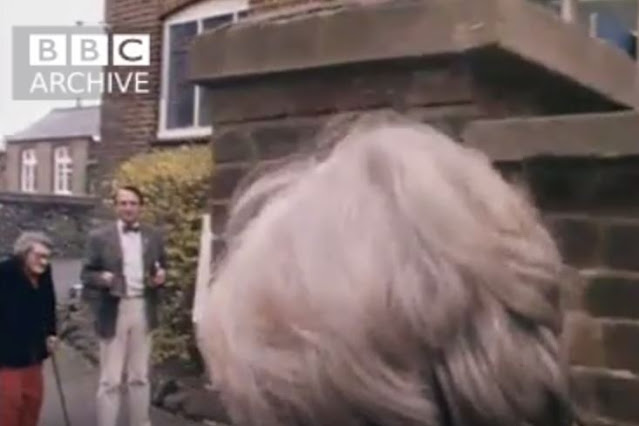
Even better, for a couple of seconds you can see the school. It had been closed for some years by 1987, but was still standing.

The school is to the left of the church hall - now The Boxmoor Playhouse - and the other side of the wall in the still above. Click on it to watch the whole report on Rewind.

Tuesday, November 01, 2022

The Bargee: The last days of commercial narrow boat traffic on the Grand Union Canal

The Bargee - described by one writer as one of the three great canal movies - is one the Talking Pictures TV Encore site at the moment.

Written by Galton and Simpson, it stars Harry H. Corbett as a canal boat skipper with a girl at every mooring and his mate is Ronnie Barker. Beyond that, Eric Sykes is miscast (couldn't they get Nicholas Parsons?) and Hugh Griffith is as scary as ever. Miriam Karlin is scary too when crossed.

The real stars here are the canalside locations. In particular, the swing bridge at Winkwell, by the Three Horseshoes pub, was the goal of family walks when I was a little boy living on Boxted Road in Hemel Hempstead.

Take away those locations, and its just another not particularly funny British film comedy. But I'm glad I've seen it.

The Bargee was released in 1964 and the last working boats on the Grand Union tied up for good in 1970.

Wednesday, October 12, 2022

Today is the 150th anniversary of Ralph Vaughan Williams's birth


Ralph Vaughan Williams was born 150 years ago today.

The Fantasia on a Theme by Thomas Tallis, one of his undoubted masterpieces, was first performed in Gloucester Cathedral as part of the Three Choirs Festival of 1910.

As far as I can recall, at BoxmoorPrimary School we had only two records to listen to: this and Morning by Grieg. Luckily, I fell in love with the Tallis Fantasia.

It was also one of the pieces of music - this very recording - that my mother enjoyed listening to in her final days.

Wednesday, September 21, 2022

Hemel Hempstead modernism in Market Harborough


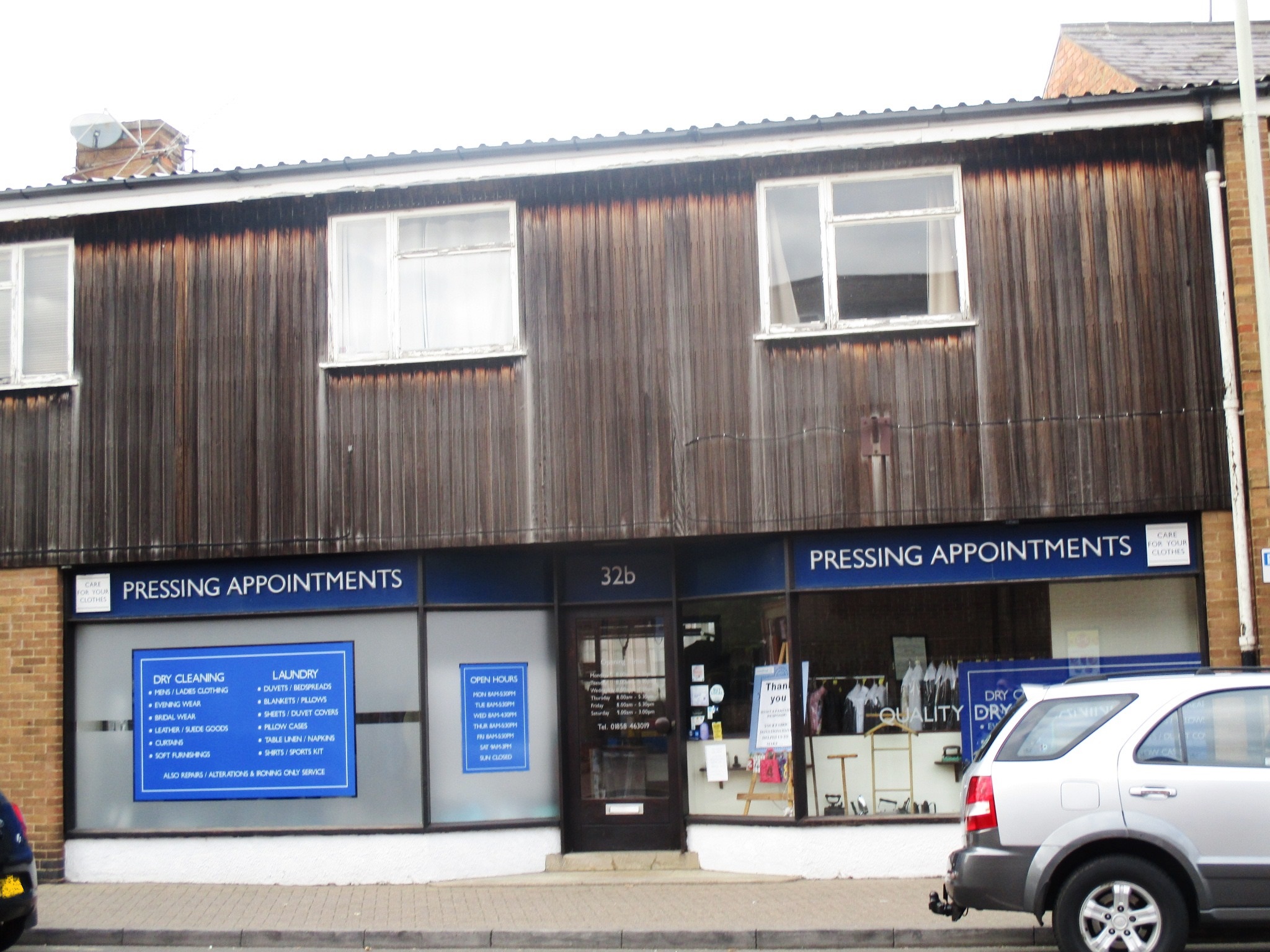
I mentioned yesterday that as a little boy I lived in the new town of Hemel Hempstead. That has left me with an affection for the humane modernist style of architecture that predominated there.

There is at least one building in Market Harborough in that style. The wooden boards on the upper floor of this dry cleaners in the Coventry Road are typical of it.

Tuesday, September 20, 2022

In defence of Peter, Jane and Ladybird's history books

As a video recently posted here went a long way to demonstrate, Ladybird Books were about the most progressive post-war publishers of children's books.

Yet misapprehensions about their publications abound. The other day someone on Twitter was convinced that Peter and Jane exclaimed "I say!" to one another.

The illustrator of these books, Harry Wingfield, explained their social position to the Guardian in 2002 when he was 91:

Wingfield is dismissive of claims in another national newspaper that the model for the real-life Jane has been unearthed in Shrewsbury. There was no real-life Jane. Or Peter, for that matter. Their images were forged from any number of photographs of local children, some taken on the new council estates that were springing up in the late 50s and early 60s.

"They were the sons and daughters of respectable workers," he says, "and they were well dressed. You didn't want dustbin kids. But they weren't as middle-class as everyone made out."

My mother taught me to read from these books before I went to school. We were living in a new town, Hemel Hempstead in Hertfordshire, at the time, and nothing about them felt alien to me.

Ladybird's Adventures from History series is also controversial. Otto English, with his repeated use of the term "Ladybird libertarians" seems to blame it for Brexit. But Ladybird's market was local authority primary schools, not the prep schools that the proponents of leaving the European Union attended.

And L du Garde Peach, the man who wrote the bulk of that series, was no Tory, if only because he fought Derby for the Liberal Party at the 1929 general election.

David Perkins writes of him in History Today:

There was more to Peach than a mere producer of patriotic homilies. As a radio dramatist, he did not shy away from controversial issues, including war, the arms race, and pacificism: Patriotism Ltd (1937) was subject to BBC internal censorship and pulled from the air, a decision that was reported around the world; Night Sky (1937) sought to bring home the realities of modern warfare. Peach also wrote a play about the First World War with no men in the cast: Home Fires (1930). 

He became known, too, for hard-hitting radio dramas: Bread (1932) was a family farming saga of poverty and emigration from the agricultural depression of the 1840s to the Great Depression. Three Soldiers (1933) highlighted the predicament of ex-soldiers from the Great War who had been thrown on the dole. 

Several of Peach’s radio plays touched on racial issues. His stance on the subject was more nuanced than that of many contemporaries and his attitudes ahead of his time. In Ingredient X (1929) he wrote about the corporate exploitation of Africa, spurring a journalist to complain that the play was ‘Bolshevist in tendency’. 

In John Hawkins – Slaver (1933) Peach adapted Hakluyt’s 16th-century account of the notable voyages and made a point of showing how Hawkins – like other Elizabethan explorers – made profits from slave trading to secure the monarch’s support. In The Cohort Marches: An Episode of the Roman Occupation (1937), Peach recast contemporary issues of colonialism in the context of Roman Britain. 

You can watch a lecture on L. du Garde Peach by Perkins in the video above.

Thursday, August 06, 2020

Berkhamsted to Guildford by narrow boat in 1965


Another video from the heroic age of canal cruising.

This one starts in Berkhamsted but soon moves on to scenes that are familiar from my childhood.

So at 1:43 you will see the swing bridge at Winkwell, which was the goal of many family walks when we lived in Warners End.

Then at 3:18 it's on to Boxmoor and the Fishery Inn, where the shop sold ice cream and fishing nets. With some friends, I had a den somewhere behind the pub, but when I went back years later I found it had been lost to the expansion of its car park.

And at 3:48 I think we see Foster's Saw Mill, which later burnt down and became the site of our house in Boxmoor

After that we travel south through Watford to the Thames at Brentford. You will see that the canalside industry, which made use of the waterway for transport, was in the process of dying out, though I do remember working boats coming through Boxmoor.

Then we travel upstream on the Thames through Richmond and Kingston, before joining the River Wey to reach Guildford.

Friday, March 27, 2020

The sudden recovery of disturbing memories

Embed from Getty Images

I used to be sceptical of the idea that traumatic memories could suddenly resurface.
But in recent years I have had some experience of this myself as two memories – not traumatic but a little disturbing – reappeared without warning.

The first dates from my days as a student at York. There was not much to do on campus on Sunday afternoons, so I got into the habit of walking to the next village and buying a meal from the one shop that was open there.

I remember these Sunday afternoons as being always foggy with an almost violet light. “Fog in the Vale of York” was a recurrent theme on the radio weather forecast in winter.

One afternoon I was taking this walk, and as I passed a house I saw a body bag being carried out.

The second takes me back to Boxmoor primary school. When you moved on to secondary school there were two choices. You either went to Hemel Hempstead School, which had just gone comprehensive after being a very traditional grammar school, which is what I did. Yes, reader, I once wore a school cap.

If you didn’t get a place there, you went to the former secondary modern Bourne Valley, which was seen as being second best by a distance.

The top class at Boxmoor was not large, even though some children had been moved up to it early to balance numbers, so only three boys were given a place at Bourne Valley.

Two were good friends of mine and the parents of both appealed, trying to get them a place at the former grammar.

One was the son of a doctor and, as my parents forecast, he duly won his appeal. The other boy didn’t and the memory that resurfaced was of him sitting in the boys’ cloakroom at Boxmoor crying at the unfairness of it all and of the rest of us standing around awkwardly not knowing what to do.

An interesting thing about the reappearance of these memories is that in neither case could I find any reason why it should have happened when it did. There was no connection with what I had been doing or thinking at the time.

It makes me worry a little about what might bubble up next.