Wednesday, March 30, 2022

The Art Deco Railway: The Chessington Branch

This video from Jago Hazzard reveals that what we know as the Chessington Branch was originally meant to be a secondary main line to Leatherhead.

Some work took place beyond Chessington South, as Wikipedia explains:

Work to extend beyond Chessington was halted by the outbreak of World War II, with track laid beyond Chessington South as far as Chalky Lane, and preparatory works continuing further south. 

This included an embankment built by the Royal Engineers as a military exercise from Chalky Lane as far south as Chessington Wood, close to where the next station at Malden Rushett would have been built. 

A second station to serve Ashtead, namely at its northern extreme, was also planned. 

After the war green belt legislation put a stop to any resumption because Ashtead Common was given protective status.u

You can support Jago's videos through his Patreon page.

Saturday, March 26, 2022

The Joy of Six 1044

"Water companies have left our rivers in an appalling state. Pumping raw sewage into them has done untold damage. Only 14 percent are considered ecologically 'good' and over half have failed cleanliness tests." Tim Farron says water companies must be held accountable for this mess.

Peter Olusoga examines the adultification of Black children and the case of Child Q.

"Most of the Gustloff’s estimated 10,000 passengers - which included U-boat trainees and members of the Women’s Naval Auxiliary - would die just hours after they boarded on January 30, 1945. The stories of the survivors and the memory of the many dead were largely lost in the fog of the closing war, amid pervasive devastation and in a climate where the victors would be little inclined to feel sympathy with a populace considered Nazis - or at the very least, Nazis by association." Francine Uenuma explains why the worst ever disaster at sea has been forgotten.

Academia must take account of the rise of audible research content such as podcasts, argues Mark Carrigan.

John Cooper pays tribute to the children's writer and illustrator Shirley Hughes.

Dermot Kennedy celebrates the art deco pubs of Nottingham.

Wednesday, March 02, 2022

Secrets of the East: John Rogers takes us along a hidden river to a medieval shrine in Ilford

From the YouTube blurb:

Our walk today takes us once again back into the past, where the landscape reveals the deep history of this area and tells us its stories. We start by exploring two Possible Prehistoric ditches on Wanstead Flats near Centre Road/north of the Jubilee Pond and running Southeast to Centre Road. 

And then we pass through the uncanny suburb of Aldersbrook to pick up the River Roding. We follow the Roding as it runs beside Ilford Golf Club and find the mysterious little Alders Brook, a mysterious rivulet that for some of the year is little more than a muddy ditch hidden in the undergrowth. The recent floods and high tide have filled the Alders Brook with water and revealed it as a flowing river. 

We follow the Alders Brook as it passes beneath the railway bridge and then runs parallel to the Roman Romford Road and returns to the River Roding at Ilford Bridge beneath the North Circular flyover.

The final stretch of our walk takes us up Ilford Hill to the Hospital Chapel dedicated to St Mary and St Thomas of Canterbury. The Chapel was established around the year 1140 by the Abbess of Barking as a leper hospital. It became a stopping place for pilgrims and medieval travellers passing through the area. It's a wonderful hidden location. 

John Rogers has a Patreon account to support his videos and blogs at The Lost Byway.

Mike Brearley turns in another great index

One of the charity shops had a copy of Mike Brearley's book On Form, so I have another good index to celebrate.

As I said when looking at an earlier index of his, Brearley's willingness to bring wider intellectual interests into his cricket writing leads to some wonderful juxtapositions.

And On Form does not disappoint, its index offering:

Bowlby, John
Boycott, Geoff

Burke, Edmund
Burns, Neil

Carter, Angela
Cartwright, Tom

Gower, David
Gramsci, Antonio

Hutton, Richard
Huxley, Aldous

Lillee, Dennis
Lincoln, Abraham

Thomson, Jeff
Thorndike, Sybil

Titmus, Fred
Tolstoy, Leo

Tuesday, March 01, 2022

Insight into the new Royal Opera House production of Peter Grimes

Members of the cast and creative team discuss Deborah Warner’s new production of Benjamin Britten’s opera Peter Grimes ahead of its opening at Covent Garden on 17 March. Tickets from the Royal Opera House site.

It's a wonderful opera, but weren't the Borough gossips right about Grimes?

The Joy of Six 1043

"Failures of investigation and enforcement by the National Crime Agency and other UK state bodies have led to flawed judgments by UK courts, especially regarding post-Soviet elites. Capable and expensive lawyers (hired by members of transnational elites or their advisers) defeat or deter the regulators’ often weak and under-resourced attempts to prosecute politically exposed persons." A Chatham House briefing paper by John Heathershaw et al. details how the UK is ill-equipped to assess the risk of corruption from transnational kleptocracy, which has undermined the integrity of important domestic institutions and weakened the rule of law. 

Tarjei Svensen finds that some of Ukraine's chess grandmasters have take up arms to defend their country.

Patricia Clarke says the "epidemic" of spiking with needles in clubs and at parties in autumn 2021 revealed something important about women’s lives in Britain, but it wasn’t what we thought.

"For borough librarian George F Vale and his deputy, Stanley Snaith, the underground village that had developed at Bethnal Green station was the perfect opportunity to set up a makeshift library and provide the local community with access to free books once more." Kate Thompson explains how working-class East Enders had access to books, entertainment and culture in an underground library during the Second World War.

The Corn Poppy on learning sea shanties at school.

"If you ever visit Easthope, you may be struck by how quiet the place is- But if the ghosts are anything to go by- It’s an area alive with the hum of the past." AmyNearlyKnowledgeable investigates a village on the slopes of Wenlock Edge.

GUEST POST The Bielsa dream is over

Stuart Whomsley
mourns the sacking of Leeds United's manager and what it means for the club's future

Leeds is a smaller place today. The big metropolitan sprawl of the city will be shrinking in on itself; the dark brooding moors looking down upon it in contempt; the dark satanic mills, more satanic than ever. The armour in the Royal Armouries will be tarnished. Leeds faced a test, and Leeds failed that test. Marcelo Bielsa is gone. 

Leeds should have shown more respect for Bielsa and what he did for them. Not only did he get Leeds up, but he brought joy in the way his teams play. Leeds should have shown more loyalty; not blind loyalty, but loyalty with an evidence base. 

Evidence base, part one: just look at the March fixtures that Leeds will face; they include Aston Villa and Norwich at home, and Leicester away. On 10 March Garth Bamford and Kalvin Philips return from injury, and just look at the form of Norwich, Watford, Everton and Brentford. Leeds were likely to stay up. 

Evidence base, part two: if you look through the Leeds results of the season so far, only the losses to Everton and Newcastle were bad results in terms of points. If you lose 10-0 or 1-0 against Liverpool and Man City it is the same in points. The very best sides would always hammer a Bielsa Leeds, particularly one with key players injured. Those were not the games that mattered. 

So heart and head should have said stay with Bielsa. But he is gone and Leeds are no longer special. They are sort of a Southampton, a Crystal Palace.

Being brought up as a Nottingham Forest supporter it may seem odd that I was showing an interest in another club, and in Leeds of all clubs. Leeds, The Damned United. But it was always a Marcelo Bielsa, not a Leeds thing. Now I return to my natural state of hating Leeds. Dirty Leeds. I hope they go down.

However, as someone whose introduction to football was Brian Clough it is perhaps not hard to see the appeal of Bielsa to me: both men who as a football manager had a vision for the game which went beyond results. Both football managers who had an ethos for life that went beyond the game. Both men are legendary for their many, usually unseen, charitable acts. Both men who could make you smile, could make you laugh. 

I once found my wife in bed laughing hysterically. It turned out that she was reading some of the things that Bielsa had done and said in the past: how after a loss he had asked another coach if at such times he did not think of suicide, how he challenged some angry fans outside his home with what looked like a hand grenade, his retreat to a monastery.

So the painting of Marcelo Bielsa is still above the mantlepiece and the statue of Bielsa is still on it. I guess we too shall show some adjustment and they will move elsewhere in the house. 

Last Saturday I was bouncing up and down in the Trent End at Nottingham Forest as the new Nottingham Forest manager, Steve Cooper, gave us his now famous fist pump after a win. Yes, thank goodness for Steve Cooper.

You can follow Stuart Whomsley on Twitter.

Monday, February 28, 2022

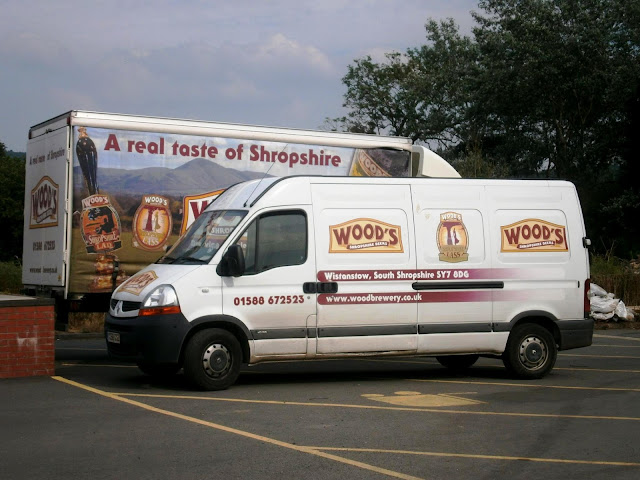
Wood's of Wistanstow has ceased brewing

Sad news from the Shropshire Star:

Real ale drinkers in Shropshire are ruing the closure of a renowned county brewery in Wood's.

Its closure has been confirmed by a message on the company's answering machine.

A sad-sounding message says that the company's demise was "forced" on to it due to "unfavourable trading conditions."

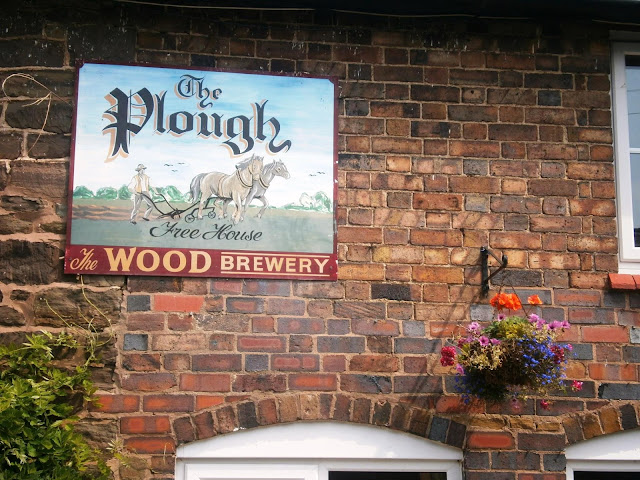
The recorded message apologises for not being able to answer - but it points out that the brewery pub, the Plough Inn, remains open and trading.

Wood's began brewing in 1980 and their most famous beer was the bitter Shropshire Lad. 

This was originally to be a limited brew to celebrate the centenary of Housman's collection of poems in 1996 - and I have happy memories of drinking it that year - but it proved so popular that it became a fixture in their range of beers.

Gerrard Winstanley and the oligarchs of St George's Hill

The warning to rich Russians linked to Putin that the UK government “will come after you” and ensure oligarchs have “nowhere to hide” is likely to hit hard at the gated luxury housing estate in Surrey dubbed “Britain’s Beverly Hills”.

writes the Guardian's wealth correspondent.

Russians and those from former Soviet states own more than a quarter of the 430 luxurious homes in St George’s Hill, a heavily guarded 964-acre estate near Weybridge, Surrey, where mansions have changed hands for more than £20m each.

If St George's Hill sounds familiar, it may be because you have read The World Turned Upside Down, Christopher Hill's thrilling study of radical ideas in the English civil war and Cromwell's Commonwealth.

Gerrard Winstantley, leader of the Diggers or True Levellers, is the most prominent figure in that book. In 1649 the Diggers occupied an area of common land near Weybridge, planted vegetables and invited everyone to join them.

That land was on St George's Hill.

Perhaps Winstanley has a message for its current occupants, for in his The New Law of Righteousness he asked:

Was the Earth made to preserve a few covetous, proud men to live at ease, and for them to bag and barn up the treasures of the Earth from others, that these may beg or starve in a fruitful land; or was it made to preserve all her children?

28 February in Liberal England history

So what has this blog been concerned with on what is usually the last day of February?

2021

Rosalind Franklin, the neglected pioneer of our understanding of DNA, turned out to be the great niece of the Liberal Party leader Herbert Samuel. 


2020

This was, I had worked out, the 51st anniversary of my only West End appearance in the Danny La Rue show Queen Passionella and the Sleeping Beauty - I was one of the children asked up on to the stage halfway through::
My strongest memory of the evening, apart from my own performance, is of Danny La Rue coming out in front of the curtain, as himself, and announcing that someone had died and singing his own signature tune "On Mother Kelly's Doorstep" as a tribute to him. 
I have tried to make sense of this memory in recent years, assuming that the person who had died was the writer of the song. But on investigation he turned out to be George Stevens, and he died in 1954. 
Then a few days ago I heard Barry Humphries on Desert Island Discs. One of the records he chose was "On Mother Kelly's Doorstep, as sung by Randolph Sutton. 
Sure enough, Wikipedia tells us that Sutton made a famous recording of the song and died on 28 February 1969. Which dates my first and last West End performance to within a day or two.
In fact, as I say at the end of this post, it dates it exactly to 28 February 1969, when I would have been eight years old.


2019

Francis Young wrote a guest post on the undiscovered treasure trove that is the work of forgotten Victorian folklore collectors:
The digitisation of local newspapers and Victorian pamphlets, making them searchable, is bringing much lost folklore recording to light, and we are currently living through a golden age of folklore research – not because there is still traditional folklore to be collected (in most cases there is not), but because folklore collected over a hundred years ago is finally emerging from the shadows.

2018


I did not post on 28 February, but the day before I had posted a picture of the wonderful Musical Ruth in sharing the news that there would be no Arts Fresco street theatre festival in Market Harborough in the summer.


2017

Good news! I had found another video about the disused railway from Oswestry to Welshpool.


2016

I compared The Boy in Striped Pyjamas with I Am David - a book that I read as a child in the 1960s:
The Boy in Striped Pyjamas reflects the modern belief that moral education involves the young being taught about the Holocaust and being able to recite the correct lessons from it. It also reflects the high status we give to victimhood. ...

I am David was written in a different era. It is not about death, but about escape, moral growth and the finding of happiness.

2015


Dangerous Minds had posted a new documentary on Nick Drake and his music. In posting it on here I quoted them:
Other than a few childhood home movies, no film footage of Nick Drake exists. So director Berkven had to create a sense of Drake through other means. That he succeeds is quite remarkable. 
He is enormously helped by Nick’s mother Molly. Her own music uncannily evokes her son’s and creates a deeply emotional dimension to A Skin Too Few.

2014


Cat of the Day came from here in Little Bowden.


2013

Richard Ingrams believed Ian Hislop  had been editing Private Eye for too long and I agreed with him:
Perhaps part of the Eye's appeal is precisely that it is the same every time. But while I still value its reporting and gossip, its humour pages do seem stale. Perhaps it needs some new contributors, if not a new editor?
But he ignored both of us.


2012


I remembered a ghost story from Much Wenlock in Shropshire:
This photograph shows Raynalds Mansion in Much Wenlock, where I went several times in the 1990s for the Festival at the Edge. The half-timbered front dates from the 17th century, but the building behind it is much older.

One year I joined a guided walk around the town. Outside Raynalds Mansion we were told the story of some children who were evacuated to the town and housed here during World War II.

On the first morning they came downstairs and demanded to know who the children in funny clothes they had been playing with were.

2011

These were the days when blogging still seemed important and Liberal Democrat Voice ran interviews with party bloggers. Today was my turn:

I realised that I was not a Socialist ... when Boxmoor County Primary School demanded a letter from your parents before you were allowed not to have custard with your pudding.

2010

28 February fell on a Sunday this year, so I posted a music video. And a rather good one too.


2009

This was the era of blog carnivals, including the Carnival of Modern Liberty, which I once hosted here.

This time it was the turn of Liberal Conspiracy and James Graham.


2008

And this was the era when the Liberal Democrats had their only weekly newspaper and I wrote a column for it.

This week it was about Michael Martin, the Commons speaker who was undone by the scandal over MPs' expenses:
Labour backbenchers broke the modern convention that the position should alternate between the Labour and Conservative parties to install him. In 2000 there was a strong feeling amongst them that a house with a large Labour majority should have a Labour Speaker. Such a partisan launch to his career was never going to make things easy for him when the time came to rule on contentious questions.:

2007

I had gone all intellectual, contributing the entry on Karl Popper to the newly published Dictionary of Liberal Thought.


2006


It was time for an anecdote about Sir Alan Ayckbourn, who is famous for living in Scarborough and opening all his plays there:
Ayckbourn was walking along the front there one day, when he was accosted by a stranger.

Mr Ayckbourn, isn't it?

It is.

I was looking at the paper the other day and I noticed that you have two plays running in the West End.

Yes, that's right.

I hope you don't mind me saying so, but you must be doing quite well out of that.

Yes, I suppose I am.

Mr Ayckbourn, there's one thing that's always puzzled me. If you got all this money, why don't you live in Bridlington?

2005

I had been to the Commons press gallery:
On the way I passed the Fathers 4 Justice demonstrators (Batman, Robin and Captain America) who had found a perch on the Foreign Office building in Whitehall.

My taxi driver said he supported their cause but not their tactics. He said that if everyone just ignored them they would have to stop this sort of stunt.

He also pointed out that Robin was wearing a coat over his costume, so he was not as heroic as all that.

Sunday, February 27, 2022

President Zelensky was the voice of Paddington

The historian Andrew Roberts has compared Volodymyr Zelensky to Winston Churchill as a wartime leader, and we know he won the Ukranian equivalent of Strictly Come Dancing.

But that is not the end of his talents.

Because President Zelensky provided the voice of Paddington when the two recent films about him were dubbed in Ukranian.

"Crikey!" said Jonathan.

Thanks to Michael Idov on Twitter.

Freight Train: The Chas McDevitt Skiffle Group

Skiffle was the punk of the 1950s. Suddenly anyone could form a band and play - you didn't need any formal musical education,

Chas McDevitt was the biggest name in skiffle after Lonnie Donegan, but look at the forces here. Yes, his bass player has a proper instrument when most made their own from a tea chest, but the four guitars are all about rhythm not melody and there is no drum kit, just the inevitable washboard. 

Even the vocal backing - humming and whistling - is home made.

This is a great record - the video comes from the 1957 film The Tommy Steele Story - and that greatness owes much to its singer, Nancy Whiskey.

Researching Freight Train, I discovered that she had moved to Melton Mowbray in the 1960s and could be found performing in clubs around the town until shortly before her death in 2002.

If you doubt the importance of skiffle to the music that came after it, have a look at a 14-year-old Jimmy Page.

And do read about the remarkable writer of Freight Train, Elizabeth Cotten.

Saturday, February 26, 2022

Malcolm Saville and the death of Dennis O'Neill

The death of 12-year-old Dennis O'Neill on a farm in the Shropshire hills in 1945 created a national scandal and led to the reform of the law on the fostering of children.

It was also the genesis of Agatha Christie's famous play The Mousetrap and of No Room at the Inn, a play and film I recently came across.

But did the boy's death make a mark on the work of Malcolm Saville, my favourite author as a child, who set many of his books in just this part of the world?

I discussed this question in an article in the latest issue of the newsletter of the Malcolm Saville Society.

"You have shocked the world and shocked England"

Jonathan Calder

The older I get, the more I think Seven White Gates is my favourite Lone Pine book. It is set in the Stiperstones, the Malcolm Saville landscape I like best, and benefits from the prominence given to Peter. Saville generally wrote better about girls than boys, and here he gives us a heroine who is good but not in the slightest dull. As a child I probably found it disappointing there was no crime for the Line Piners to fight, but today I find this story of family reconciliation appealing.

Though I have grown to love the book over the years, I have also become haunted by a real event that took place in the Stiperstones at just the same time.

Seven White Gates was published in September 1944. Earlier that summer two young brothers in the care of the local authority in Newport, Monmouthshire – Dennis O’Neill, aged 12, and Terry, who was 9 – had been fostered at a farm in the Stiperstones.

By September things were becoming difficult for them as they were made to do farm work before and after school and punished for the most trivial offences. As the winter closed in their lives became impossible: they were barely fed, inadequately clothed and beaten every day. A doctor called to the farm on 9 January 1945 found Dennis dead, refused to sign a death certificate and called in the police.

The farmer Reginald Gough and his wife Esther were both charged. The committal proceedings focused the nation’s attention on the tiny court at Pontesbury. News about the progress of the war shared the front pages with reports like this:

Women in tears as Terence sobs out story of beatings

There was an awed silence in the tiny police court at Pontesbury, near Shrewsbury, yesterday when Mr H.H. Maddocks, prosecuting counsel, said: “I call the witness Terence O’Neill.”

A small fair haired child of ten was then led through the crowd of villagers who packed the court.

For two days they have listened to the case against Esther Gough, a former child’s nurse, and Reginald Gough, farmer, accused of killing Dennis O’Neill by negligence and violence.

This was the dead boy’s brother and the most important witness for the crown – a child so small that he could not even peep over the witness box. He had to sit on a bench in front of the court.

Slowly and often in a tearful whisper he told of life at Bank Farm, Hope Valley.

The Goughs were committed for trial, which took place in Stafford because feeling in Shropshire was running so high. Terry again gave evidence and both defendants were convicted. Reginald Gough was sentenced to six years imprisonment and Esther Gough to six months.

Passing sentence, the judge told Reginald Gough: “You have shown beastly cruelty and your behaviour has, I think rightly, shocked the world and shocked England.”

******

It’s a terrible story, but what does it have to do with Malcolm Saville beyond the coincidences of time and place with Seven White Gates? After all, children’s books were pretty cosy in the 1940s weren’t they?

But there was nothing cosy about the early Lone Pine books. For all we know, Mrs Thurston was hanged as a traitor after the end of Mystery at Witchend and it is certain that the Ballinger was happy to leave Penny and the Twins to drown in The Gay Dolphin Adventure. 

And think of the readers of those books. Bombed, evacuated, orphaned… they are the last generation of children we should patronise.

Besides, I believe Dennis O’Neill’s death did find its way into a Malcolm Saville book, though it was not one set in Shropshire and not in the Lone Pine series.

******

Strangers at Snowfell, the third of the Jillies books, was published in 1949 and, like many good thrillers, is set on a train. Our young heroes, having just foiled kidnappers in Two Fair Plaits, are on their way to Scotland to see in the new year, but heavy snow means they are delayed at Shap on the Cumbrian fells.

By helping his son evade an obvious villain on the train, the Jillies, Guy and Mark have become caught up in the affairs of a Professor Thornton, who is carrying out scientific research of extraordinary importance at a farm near Shap.

Desperate to telephone London and finding the lines from the village out of action, the professor calls at a half-ruined house nearby. There he encounters a girl called Mary:

She was leaning against the broken-down gate, and could not have been much more than eleven, although her face looked older than her thin, shabbily-dressed little body.  … She was a lonely and pathetic little figure, and her lips trembled as she said, “Hallo! Are you kind?”

I remember finding this an unexpectedly bleak passage when I first read it as an adult. Now when Thornton notices that Mary’s hands are “chapped and blue with cold” I think of the O’Neill brothers and suspect that Saville was thinking of them too. Among their torments in the bitter winter of 1945 were chilblains and chapped legs.

Sure enough, Mary soon tells Thornton:

“All the time she’s at me for something or other, shouting and arguing, and then she hits me if I run away – she’ll hit me now ‘cos I’ve come up here.”

Though we are told she is thin, there is no mention of Mary being starved, but that motif soon makes an appearance. The house turns out to be the base of the villains who are after Thornton’s research, and when he refuses to sell it to them he is locked up without food or water to encourage him to change his mind.

All ends happily, with the abused child carried away from the house on the shoulders of a policeman. There was no such rescue for Dennis O’Neill.

******

I first came across the story of Dennis and Terry O’Neill from a passing reference in a book on the history of the care system. The mention of ‘a lonely farm in Shropshire’ intrigued me and I looked up some contemporary press reports.

In 2005 I was asked to write a chapter on the history of concern about child abuse. I used the fact that the death of Dennis O’Neill had been largely forgotten to argue that this history is one of forgetting and rediscovery, not one of steady progress.

Dennis’s death is no longer forgotten. Today you will find it in all the social work textbooks. A major reason for this is that in 2010 Terry O’Neill published a book about his and his brother’s ordeal at Bank Farm. 

I am not usually one for trigger warnings, but Someone to Love Us is harrowing. The same is true of The Mousetrap and Me, an award-winning documentary about Terry and his childhood experiences that can be found on the BBC website.

If you are wondering about its title, Agatha Christie wrote The Mousetrap after reading of events at Bank Farm. The murders in the play soon turn out to be connected with the death of a child at a farm and its first audiences in 1952 would have been familiar with the story of the O’Neill brothers.

So Malcolm Saville was not the only author moved by the death of Dennis O’Neill.

*****

The O’Neill brothers should never have been at Bank Farm. They were to be fostered by a family in Pentervin, a hamlet on the other side of the Hope Valley near Bromlow Callow. When they arrived, however, the family was already looking after a girl for Shropshire County Council, so other arrangements had to be made by the official accompanying them.

He tried a farm nearby, but the woman there was expecting a baby and could not take the boys, so he placed them with the Goughs at Bank Farm.

The name of the farm near Pentervin where they could not stay? 

White Gates.

Jonathan Calder is a former editor of Acksherley!


This article first appeared in issue 75 (Winter 2021) of Acksherley!, the newsletter of the Malcolm Saville Society.

Friday, February 25, 2022

Derek Fowlds: A part well played

The first episode of Yes, Minister was broadcast on 25 February 1980, which makes it a good day to mention that Talking Pictures Encore has an interview with Derek Fowlds about his acting career.

You can watch A Part Well Played online for free.

Derek Fowlds, who died in 2020, is remembered for appearing with Basil Brush and in Yes, Minister and Heartbeat, but he enjoyed success on the stage and in films too.

Read the Intelligence and Security Committee's report on Russian interference in British politics

Embed from Getty Images 

Parliament's Intelligence and Security Committee completed its report into Russian interference in British politics in March 2019.

Normally such reports are published within days, but Boris Johnson managed to prevent its publication until July the following year.

You can read the report on the committee's website and the press notice below gives a summary of its contents.

Intelligence and Security Committee questions whether Government took its eye off the ball on Russia, finds that they underestimated the response required to the Russian threat and are still playing catch up:

  • Russian influence in the UK is the new normal. Successive Governments have welcomed the oligarchs and their money with open arms, providing them with a means of recycling illicit finance through the London ‘laundromat’, and connections at the highest levels with access to UK companies and political figures.
  •  his has led to a growth industry of ‘enablers’ including lawyers, accountants, and estate agents who are – wittingly or unwittingly – de facto agents of the Russian state. 
  • It clearly demonstrates the inherent tension between the Government’s prosperity agenda and the need to protect national security. While we cannot now shut the stable door, greater powers and transparency are needed urgently. 
  • UK is clearly a target for Russian disinformation. While the mechanics of our paper-based voting system are largely sound, we cannot be complacent about a hostile state taking deliberate action with the aim of influencing our democratic processes. 
  • Yet the defence of those democratic processes has appeared something of a ‘hot potato’, with no one organisation considering itself to be in the lead, or apparently willing to conduct an assessment of such interference. This must change. 
  • Social media companies must take action and remove covert hostile state material: Government must ‘name and shame’ those who fail to act. 
  • We need other countries to step up with the UK and attach a cost to Putin’s actions. Salisbury must not be allowed to become the high water mark in international unity over the Russia threat. 
  • A number of issues addressed in this published version of the Russia Report are covered in more depth in the Classified Annex. We are not able to discuss these aspects on the grounds of national security.

Thursday, February 24, 2022

The Rest is History podcast on Ukraine and Russia

If you want to understand the history of Ukraine, and its relationship with Russia in particular, then this podcast is invaluable.

It was recorded before today's Russian invasion.

Ed Davey: Russian interference in this country must end

The Liberal Democrat leader Ed Davey issued this statement following Boris Johnson's television address to the nation this morning:

At this dark moment we must renew our commitments of international cooperation and stand with our allies against this horrendous invasion.

For too long we in the West have been complacent about the threat which Putin poses to our allies and to the fundamental values which underpin our way of life. No more.

We must stand with the people of Ukraine and provide them with humanitarian and military aid, while unleashing the severest of sanctions against Putin and his cronies.

The era of Russian interference in this country must come to an end. Much of the legislation needed is ready to go - it must be brought before MPs immediately. 

Parliament must sit this weekend, day and night if we have to, to pass the necessary measures and impose the most punitive of sanctions upon Putin’s regime.

Responding to the sanctions announced by Johnson today, Davey said:
The absence of Gazprom and Rosneft, part-owned by BP, in today’s sanctions list is the elephant in the room. The UK must do everything we can to stand in solidarity with the people of Ukraine. 
Russia’s state-owned oil and gas giants stand to profit from this war and soaring prices. We must start treating Putin’s Russia like the rogue state it is and immediately cut off UK investment in these firms.

Wednesday, February 23, 2022

The former temperance hotel near Market Harborough station

The radio station Harborough FM - which these days provides the best local news service - reports that 16 more buildings and locations are to be added to the district's list of "non-designated heritage assets".

Those on this list are deemed worthy of protection because of their historic, architectural or archaeological interest.

Among the new 16 is a former hotel in St Mary's Road near the railway station, which Harborough FM describes as a:

grand two-storey building has likely links to Thomas Cook, who lived in Market Harborough, and the former Temperance movement, a major societal movement in the 19th Century.

The building's history used to be more apparent. Back in 1984 I took this photograph of a now-vanished ghost sign. It could be found, if I recall correctly, to the right of the front door.

Why is Jacob Rees-Mogg so fond of imperial measures?

Embed from Getty Images

Jacob Rees-Mogg's decision to launch a study of the economic benefits of reintroducing imperial units of measurement is, of course, ridiculous.

That's the whole point of it.

Rees-Mogg is a 21st-century financier who has cultivated a comically old-fashioned image as a way of disguising this fact. (It follows that those on the left who mock that image in the hope of harming his political career are actually boosting it.)

The announcement does serve political purposes too - reassuring the core Brexit vote, bringing out the worse in the government's opponents* - but it is best seen as part of Reew-Mogg's long campaign of self-advancement.

He appears to be using public money for personal PR every bit as much as Liz Truss does with all those Thatcheresque official photographs.


* On social media at least, Liberals and the left have a weakness for lecturing people. It is noticeable that Keir Starmer and Ed Davey have been careful to avoid this register.

Tuesday, February 22, 2022

Mark Kermode discusses Local Hero with Bill Forsyth

Made in 2008, this short film sees Mark Kermode discussing the making of Local Hero with its director Bill Forsyth. They travel back to Pennan, the Aberdeenshire village where the film was shot.

Comfort and Joy, the film Forsyth made after Local Hero, is currently available on the BBC iPlayer. I have fond memories of it, though I have not watched it since it came out in 1984.