Showing posts with label Buses. Show all posts

Saturday, August 29, 2026

In which I praise buses and largely tolerate rail travel

I can't remember a single bus turning up late during my 10 days of outings in Shropshire, which is an impressive record.

And let's hear it for concessionary travel for pensioners. Family legend has it that I learnt to read from the West Hertfordshire bus timetable, and I can't help thinking how wonderful getting a card that gave you free travel on any bus would have seemed when I was six. Well, now I have one.

My train to Newport was seriously late because of a track fault north of Shrewsbury, and faced further delay between Ludlow and Leominster. But I had all day, and the recent derailments have emphasised that high temperatures are a risk to safety, so I wasn't going to complain.

I do have two moans about public transport from the holiday. The first is that I had to go through two ticket barriers at Birmingham New Street to change between the train from Leicester and the train to Shrewsbury. Who thought it was a good idea to redesign the station so that is necessary?

A bit of googling this morning has taught me that the way to avoid this is to use the escalators or lifts at the B end of New Street's long platforms, when you don't encounter any barriers within the station. I did it inadvertently on the journey home.

And the second is that when I got on my West Midlands Railway train to Shrewsbury I had to listen to an announcement warning me that three other railway companies sell tickets for this route and that if I had bought one it might not be valid on this train.

I don't think anyone designed this ticketing system: it has just grown like fungus on an October morning.

So, overall, I had a good experience with public transport and an outstanding one with the buses.

Wednesday, May 06, 2026

The Joy of Six 1514

Simon Nixon reviews Hettie O'Brien's The Asset Class: How Private Equity Turned Capitalism Against Itself: "This is an industry that takes the private part of its name with deadly seriousness. It usually exercises total control over its operations, deploying financial muscle rather than charm to enforce submission and cloaking almost every aspect of its business – the provenance of its money, the performance of its companies – in secrecy. Yet over recent decades, private equity has quietly captured vast swathes of the economy and accumulated political power for which it is rarely held publicly accountable."

"For a long time, peatlands were treated as marginal, soggy places at the edge of more useful land. Peatlands are now becoming central to climate regulation, water security, biodiversity and the livelihoods of many people who live on and around them." Alice Milner on her research into peatlands and tackling climate change.

Norman Baker explains why buses in central London are slower than their horse-drawn counterparts were more than a century ago. He also has suggestions for speeding them up.

Danny Chambers is campaigning against the cruelty often involved in breeding what are, to my eye, ugly animals. "Across the UK, more and more dogs and cats are being bred to look fashionable or cute. But this can come at a serious cost to their health and welfare."

"The film encompasses many influences – neorealist working-class documentary in its early Belfast set street scenes; poetic realism in its studio-bound aspects and fatalism; noir thriller; and expressionist reimagining of Greek myth, as a fatally wounded Johnny is left behind in the botched escape and a rogue’s gallery of the city’s denizens alternately help and hinder his path through the Underworld entries, bars and rain-slicked slums of a darkened, almost Dickensian city." Tim Pelan sings the praises of Carol Reed's Odd Man Out (1947).

"As time went on, I felt more in control of the thing, and stopped fearing that I was going to show myself – and all womenkind – up, by passing out from the heat, more relaxed and more appreciative of the experience. The engine is indeed a star. There were waving people on every bridge, and we passed a campsite with lots more waving people. I got so keen on waving back to them that I almost forgot my job." Stephanie Gaunt learns to drive a steam locomotive.

Saturday, April 25, 2026

Great Easton: Leicestershire ironstone and thatch


I ventured out into the Notswolds today. By changing at Corby, you can reach Great Easton by bus (though only on Wednesdays and Saturdays).

It's a pretty village, though perhaps without quite as much character as Hallaton or Medbourne, and it still has a pub and a little coffee shop. So it was well worth the visit.

Saturday, September 20, 2025

The Joy of Six 1412

Chris Grey analyses the dangers of the new far right in Britain: "It seems to be quite different to earlier versions of far-right politics which, whilst aggressively anti-immigration, were not, apart from a very small fringe, intent on a wholesale overthrow of the established political order. Yet, now, it is becoming almost mainstream to speak as if that political order has entirely failed." 

"It saddens me to say that Israel today seems to be a world away from the inclusive, pluralistic, open and democratic principles on which it was founded in 1948." Labour MP Peter Prinsley, who is a doctor and Jewish, writes about his experience of being denied entry to Israel.

"The exact movements of the train are kept secret for fear of terrorism – in 1886, Queen Victoria’s train was reportedly targeted by Fenians. But we know the train is only used very infrequently, not least because it is so expensive to move out of its shed at Wolverton near Milton Keynes." Christian Wolmar agues that the demise of the Royal Train was inevitable.

Owen Hatherley says one of the clearest markers of Britain’s civic downslide in recent decades is the slow cancellation of its once plentiful provision of public toilets.

"[Herbert] Howells and [Ivor] Gurney walked the streets of Gloucester into the early hours that night, excitedly debating what the Tallis Fantasia might mean for the future." Terry Blain tells the story of the first-ever performance of the Tallis Fantasia in the city's cathedral as part of the 1910 Three Choirs Festival.

Roger French takes the bus from Nuneaton to Leicester.

Thursday, September 18, 2025

The Joy of Six 1411

"I’m more interested in what the stratospheric rise of a person like Charlie Kirk says about the state of political discourse. He was in many ways representative of a type that has come to dominate the internet’s ‘infotainment’ ecosystem in recent years. His purported renown among a section of the youth probably explains the urge among certain mainstream newscasters to conjure away the nasty bits. They too desperately want to be down with the kids." James Bloodworth on the meaning of Charlie Kirk.

European Powell claims that Labour’s "reckless data-centre dash" will gut the planet, fleece the public –and leave only noise, heat and hollow promises.

"As so often in higher education policy, it seems as though the context and focus of these comments is the industrial value of the sciences (engineering departments are mentioned). Yet the wider implication is worrying: much of what is published in humanities departments is 'unfunded' research in the sense that there is no designated external grant money attached to it." Jeremy Noel-Tod is concerned by the president of Universities UK's condemnation of "hobbyist research that's unfunded".

Sandra Laville reports on the disappearance of bus services in Shropshire: "The city of Birmingham lies just over 40 miles north-east of Ludlow, but to the 10,000 residents of the quiet Shropshire town, it may as well be on the moon."

Yasmin van der Poel introduces us to the Red Vicar of Thaxted: "Conrad Noel, a Christian Socialist, was appointed vicar of Thaxted in 1910. He fused Anglo-Catholic ritual with radical politics, transforming his parish into a sanctuary of spirit-inspired rebellion. His sermons, described in a question in Parliament as ‘sedition’, championed Irish independence, workers’ rights, and land reform."

"I know the NHS is under strain and imperfect, and I’m aware that it was my good luck to find myself at St Thomas’s. But while I was waiting to be sent home on Sunday, the doctor in charge of intensive care at the hospital walked past on his rounds. I told him that while it had been in most respects the worst week of my life, it had also been among the richest. I’d been given an unexpected opportunity to experience and be grateful for human relationships in public service – comradeship among workers, empathy for strangers – at their best. Something I’ll never forget." Richard Williams experiences a sudden health crisis and thinks about the NHS and rhythm.

Monday, August 25, 2025

Wednesday, August 20, 2025

There's a bus service between Craven Arms and Builth Wells

I'd no idea this bus service existed until I saw it waiting for passengers on the approach to Craven Arms station the other week. The X48 starts from there and runs via Knighton and Llandrindod Wells to Builth Wells.

It's an odd service in that it more or less parallels the Heart of Wales railway line, though it you want downtown Builth Wells it's a better bet. Trains call at Builth Road, which is a couple of miles from the town.

And the difference between the train and bus fares may not be as great as you expect. If the X48 is run by a Welsh company the £3 maximum fare will not apply.

Buses from Craven Arms don't travel all the way to Builth until later in the afternoon, so if you are planning a day out you'll have to settle for Llandridnod. And that is what I shall do next time I have a holiday in Shropshire.

Why? As Mallory said of Everest, because it's there.

Later. Thanks to Jo Kibble on BlueSky for putting me on to a blog post from Bus and Train User that explains what the X48 is all about. The whole point of it is to parallel the Heart of Wales Line, as it was introduced after the service on that line was reduced. Rail tickets are valid on the bus and are actually a little cheaper than the bus fare.

Thursday, June 19, 2025

Hunting for the Bonkers Arms in Medbourne


I went to Medbourne today. The county's new on-demand bus service has made dozens of villages easy to reach - it's just a shame that so many rural pubs are closing.

One that is thriving is Medbourne's Nevill Arms (on the left of the photo above). Some scholars have concluded it is  the model for the Bonkers Arms (I would say it is at most one of the models), and if it is then it's more Freddie and Fiona than Meadowcroft these days.

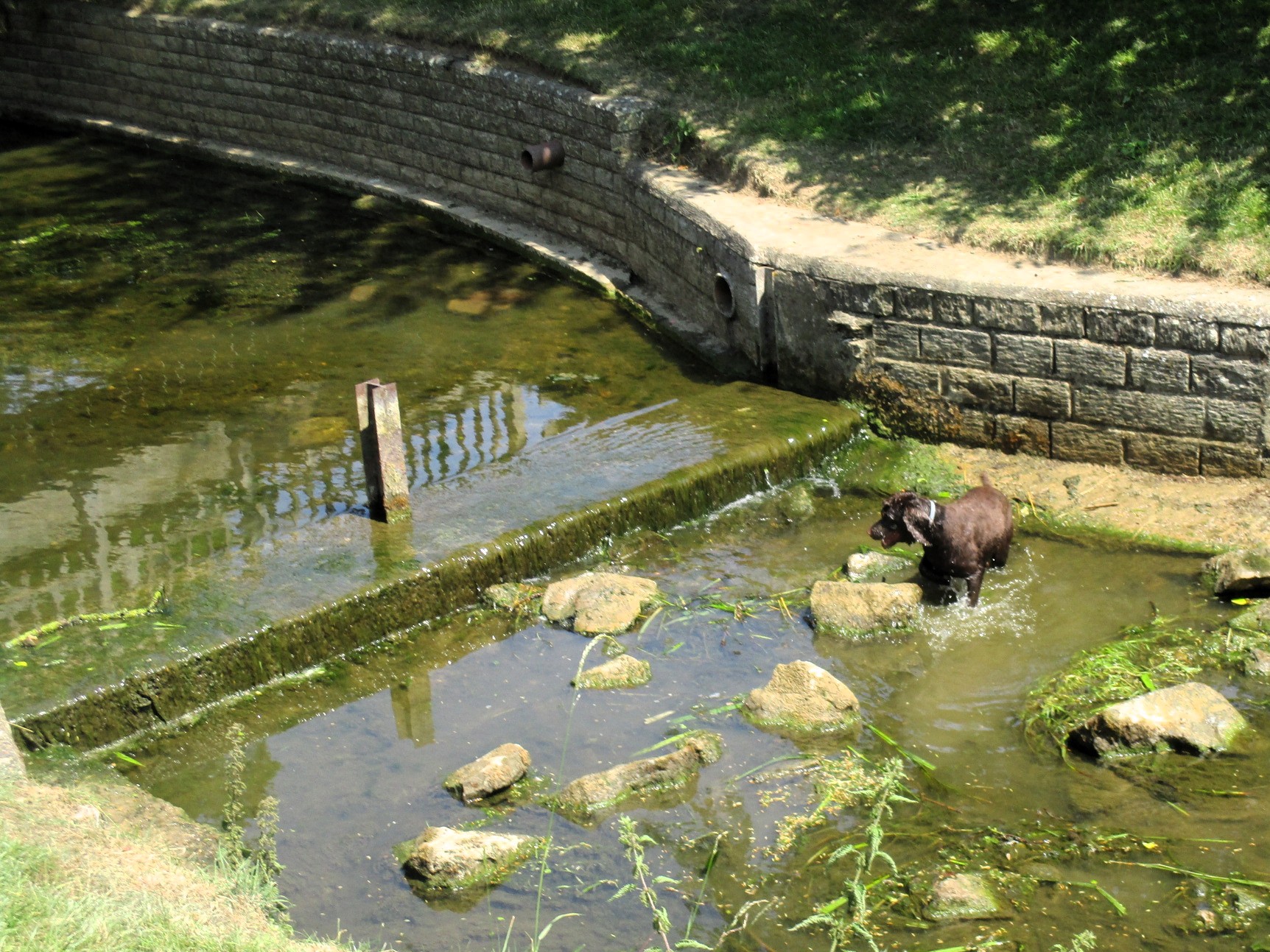
But it was a lovely day to sit outside above the brook. I drank Birrificio Angelo Poretti, because it was chilled and I liked the cinema advert, and enjoyed the entertainment in the water.

Tuesday, May 27, 2025

Britain's worst road traffic accident took place 50 years ago today: The 1975 Dibble's Bridge coach crash

Today, 27 May, is the 50th anniversary of Britain's worst road traffic accident. In it, 32 coach passengers and their driver lost their lives when a coach lost braking power while descending a steep hill in North Yorkshire and crashed through the parapet of a bridge at the bottom.

The passengers, all women, were on a day trip from the town of Thornaby-on-Tees in North Yorkshire to Grassington in the Dales.

Strangely, I have no memory of hearing about this disaster on the news at the time, nor have I ever heard it referred to since. It's odd how some such events are remembered and others quite forgotten.

There aren't even any photographs of the aftermath of the crash on the Getty Images site, where I look for such things. So instead I have added a video made for Thornaby Town Council in 2019.

As it explains, the design of coaches has changed out of recognition since 1975, partly as a result of this accident.

The crash site is less changed though. It had been the scene of a similar bus crash in 1925, and the video tells of two cyclists who died here in separate incidents more recently after failing to negotiate the bend at the bottom of the hill.

Later. BBC News has an article today marking the anniversary.

Lincoln Seligman, who is interviewed in it and in the video above, was a barrister at the time of the crash and is now a sculptor. He was also a godson of Edward Heath - his father was a Conservative MEP and a strong supporter of Heath's leadership.

Tuesday, March 04, 2025

Lib Dems win £100m in concessions for allowing Labour's budget for Wales to pass


Jane Dodds, the only Lib Dem member of Senedd, allowed Labour's budget for Wales to pass today by abstaining on the vote. As a result it was passed by 29 votes to 28.

Deeside.com reports the concessions that the Welsh Lib Dems won in return for allowing the budget to pass:

The deal with Ms Dodds, the Lib Dems' only Senedd member, included a promise to ban greyhound racing in Wales and allocate £15m for a pilot of £1 bus fares for under-22s.

The MP-turned-Senedd member secured £30m for childcare, £30m for social care, £10m for playgrounds and leisure centres, £10m for rural investment and £5m to address pollution.

Ministers also committed £8m to a "funding floor" to reduce variation across Wales’ 22 councils, with each set to receive a minimum increase of 3.8 per cent.

Jane Dodds told Senedd:

"If we don’t pass this budget, we risk losing billions for the people of Wales and I cannot in good conscience let that happen."

But, explaining her decision to abstain, she said: 

"I cannot fully support a budget that falls short of delivering the investment and radical change Wales needs."

Wednesday, October 09, 2024

Sausage company launches free rural bus service


We have our Headline of the Day - and a possible solution to the lack of public transport in the countryside - thanks to BBC News.

Tuesday, September 03, 2024

The aerial ropeway trestle at The Bog


When in the Shropshire Hills be sure to visit the visitor centre at The Bog. It's housed in what was the school for this lost mining village and serves tea and wonderful cakes, as well as selling local crafts and books on the area.

I got there using the Shropshire Hills shuttle bus, which will run on every Saturday for the rest of September. I remember the days when these buses would take you to far off places like Much Wenlock and Knighton. They have gone along with reasonable funding for local authorities, but they still take you round the Long Mynd and Stiperstones.

This time there was a new (for me) attraction at The Bog: a trestle from an aerial ropeway that has been put up as a tribute to all who worked at the mine here.

Bog mine was redeveloped before the 1st World War and different ways of transporting ore from the mine to the railway at Malehurst and of coal back to the mine were considered. Traction engines would cause extensive damage to the roads, and extending the railway from Snailbeach would be prohibitively expensive. 
The solution adopted was a five mile aerial ropeway which took less land and could cope with rough ground and gradients. Its drawbacks were its limited carrying capacity, problems in frost and high winds and the amount of maintenance it required. 
It was designed and constructed by "Ropeways Limited" during 1918, much of the construction work being done by German prisoners of war. The mine closed in 1925 and the ropeway with it.
The trestle, which is of the same design as those used on the original ropeway at The Bog, came from Claughton Manor Brickworks, which had the last functioning ropeway in the country. You can see a video of it in use on this blog.

The trestle isn't as tall as I expected, which makes sense of the stories you hear at Minsterley. There the ropeway taking coal up to the boilers at Snailbeach mine ran across people's back gardens. If times were hard, residents would reach up with a stick to tip a bucket as it passed overhead and receive some free fuel.

And then it was time to get the bus to the pub at Bridges to meet another friend from Twitter.


Tuesday, March 12, 2024

Leicestershire and Nottinghamshire preserved lengths of the Great Central Railway to be reunited this weekend

Exciting news from the Great Central Railway:

Join us for this spectacular weekend as we reunify the Great Central Railway and the Great Central Railway Nottingham for a celebration of the 125th opening of the GCR London Extension. 
Our Rail Replacement Bus Service will reunify the two halves of our railway with a service between Quorn and Woodhouse Station and Ruddington Station to allow you to explore all of our attractions with one inclusive ticket that is valid for entry to all sites and includes train travel and the reunification bus service. Kids go for a Quid (aged 3-15 inclusive)

The weekend in question is 16-17 March, when the 125th anniversary of the Great Central will be celebrated.

The Great Central Railway was the last main line to be built, sending trains from Marylebone out to through Leicester, Nottingham and Sheffield to Manchester.

Great Central Railway and Great Central Railway Nottingham are separated by a missing bridge and length of embankment at Loughborough. The video above gives you the latest news on the project to reunify the two lines.

Incidentally, the Great Central Railway Nottingham was originally constructed by the contractors Logan & Hemingway. That's Logan as in this blog's hero J.W. Logan, Liberal MP for Harborough 1891-1904 and 1910-1916.

Tuesday, January 16, 2024

"I'll miss the fucking horse"

Another short extract from David Storey's A Stinging Delight. This one contains a thumping dangling participle, but the book was published posthumously, so he probably never got to revise it as he would have wished.

I returned to Andrassay's, but soon afterwards I discovered that I could earn more as a bus conductor and applied to the West Riding Bus Company at the Belle Isle depot in Wakefield for their one-day training course. 

Held in a mock-up of a bus interior sets out as rows of chairs in an otherwise cheerless office, I was the only student in a room of men and women that included the driver of a horse-drawn shop, which had plied its trade on the estate throughout my childhood. 

"Times have changed." the ageing driver remarked as I sat beside him. "Though I'll miss the fucking horse."

Tuesday, December 26, 2023

On the Omnibuses: The radical roots of On the Buses

I had dozed off with the TV on a high-numbered channel and woke up a little way into this. You can imagine my confusion. What was I seeing?

If I say it's nothing like a usual episode of On the Buses, many readers will be delighted.

But maybe we shouldn't be so surprised to find the show encompassing a tutorial on Edwardian trade union law. Because there were remarkable links between ITV situation comedy and Joan Littlewood's radical and experimental Theatre Royal at Stratford East.

Earlier today I watched Sparrows Can't Sing, a 1963 film about social change in the East End adapted from a play that emerged from Littlewood's theatre.

The cast was extraordinary: James Booth, Barbara Windsor, Roy Kinnear, George Sewell, Murray Melvin and Harry H. Corbett.

And among it too were many future stalwarts of ITV situation comedy among the cast: Brian Murphy, Yootha Joyce, Arthur Mullard, Bob Grant, Stephen Lewis and Queenie Watts. Yet ITV sit coms have always been ranked below the BBC's output.

The original play, titled Sparrers Can't Sing, owed much to Frank Norman and Lionel Bart's musical Fings Ain't Wot They Used T'Be, and was developed by the cast in rehearsal. But for the film, a single writer was credited.

It was Stephen Lewis, later famous as Blakey from On the Buses. And On the Omnibuses was written by him and Bob Grant, who played Jack the conductor.

But enough from me: it's time for On the Omnibuses.

Monday, July 03, 2023

GUEST POST Liberalism, transport and the climate crisis

Peter Doveston says liberals should reframe the transport debate by talking about the way public transport can offer freedom from the burden of car ownership.

Here is a quotation from the concluding chapter of Not thinking like a Liberal by Raymond Geuss:

Liberalism, in the sense I have been using it, is committed to the inviolability of individual taste and opinion, the need to protect maximum unfettered choice, and free enterprise. Anyone who, in our world, can see a viable path from this conception to a situation where we avoid ecological disaster has much sharper vision than mine.

I came across these sentences recently and it dawned upon me the intractable nature of the problem we face when it comes to our behaviours and the environment. 

It has often been my opinion that to sufficiently address our environmental challenges we will need to reduce what we consume in quite a stark way. However, how will this ever materialise when the principles of liberalism, as it is defined above, are so embedded within our institutions and our everyday lives?  

Of course, this isn’t the first challenge to have been placed at the feet of liberalism. Prior to the Liberal landslide election of 1906 there were many conversations as to how the Liberal Party could address poverty and maintain liberal beliefs at its core. 

The answer? Liberalism was reframed and instead of just considering 'freedoms to' it was surmised that it should also include 'freedoms from'. Yes you have the freedom to speak, trade, assemble etc., but you also should have the freedom from poverty and ill health.  

Outside of London and a few other anomalous places, public transport is suffering in modern Britain and, arguably, it is the fault of uninhibited liberalism. 

In the 1980s bus services were deregulated and were, by and large, taken over by private enterprise and, to remain commercially viable, many services have been cut. British Rail was sold off and became the patchwork of regional services we see today supposedly competing against each other in a free market. 

The freedom to own a car was taken up on a massive scale. Roads were built to maximize this freedom. Services such as shops redesigned themselves to capitalize. 

If liberalism died then you might expect a queue of environmentalists at the funeral, ready with spades to help fill in the grave.  

Liberalism, however, is not going to die anytime soon. Despite my negative review thus fair, it has given us the kinds of lives that the people of 1906 Britain could not have even dreamed of. However, perhaps we could take one lesson from 1906 and ask how we might reframe liberalism to face the challenges of our time. 

Instead of thinking of the car, for instance, as a freedom, we might perceive it as a ball and chain. After all, in places where you are stuck having to use a car you also have a vast list of charges to pay: 

  • cost of driving lessons and test 
  • insurance 
  • tax 
  • fuel 
  • maintenance 
  • cost of car and financing 
  • parking costs. 

You are also obliged to drive it everywhere and when you no longer can drive it, perhaps due to ill health, you are stuck. Then there is the polluting element causing illegal levels of air pollution in some places. Should we not develop our towns and cities so that people are free from all these burdens?  

The question then becomes: how do we free people from these burdens? 

Luckily, in Britain our capital city provides solutions and some of them not so unfamiliar to liberalism. Franchised bus services might be one way we could go or municipal bodies, like TFL does in London, running services in towns and cities. 

For trains we need to look at the successes of our European neighbours and create a unified network and, as I mention in another post I have written recently, we need to bolster that network with the reopening of former lines

Liberalism faces many challenges when it comes to environmental concern, modern consumerism being the most difficult. However, perhaps by using public transport as a model, we could show how the behaviours we consider to be archetypally liberal are, in fact, quite the opposite.

Peter Doveston is part of the Northampton Streets Campaign and writes for CA-WN Exchange. You are welcome to contact him by email.

Thursday, June 15, 2023

The Joy of Six 1138

"Leicestershire is home to the Lib Dem’s safest and longest-run council Oadby & Wigston (some might say best run too). After widespread gains in May the party achieved a safe hold in O & W, also in Hinckley & Bosworth, flipped the status of Harborough and Rutland (which we now lead), entered into an NOC coalition in NW Leicestershire and left the Tories hanging by a thread in ultra-marginal Blaby." Matthew Pennell celebrates our successes in East Anglia and the Midlands.

Laura Thompson backs the campaign for union recognition at Amazon's Coventry depot.

Nurbek Bekmurzaev says Kazakhstan is still haunted by Soviet-era political repression and famine.

"Today, rather than pay a playworker’s salary (however ludicrously small that is), local councils are probably more likely to use their resources to pay for expensive fixed devices on soft-surfaced ground. These are obviously great risk-free fun for your lively five-year-old, but totally dull for a twelve-year-old." Ben Highmore on the rise and fall of adventure playgrounds.

"Each possessing a cosmopolitan collection of friends and drawing lifelong inspiration from the devastation of the entire continent that they witnessed first-hand during service in the Second World War, Heath and Ustinov shared a passionate commitment to Europe." Tom Chidwick reveals an unexpected friendship.

Bus and Train User manages to catch the West Ealing to West Ruislip 'ghost bus': "I was greeted by a smiling driver who seemed a bit surprised to see me explaining it was her first time driving this route and she wasn’t entirely sure where she was going."

Monday, May 22, 2023

The Long Mynd and Stiperstones shuttle bus is back

Good news from the Shropshire hills: the coming weekend sees the return of the shuttle bus that takes visitors to the Stiperstones and the Long Mynd. It will run every weekend through the summer: the last day of operation is Sunday 8 October.

There's more good news: the buses will stop near the lead mines at Snailbeach after missing them out last summer and, by serving Hamperley, they will take you to the heart of Malcolm Saville country. There are also better links with service buses on the Ludlow and Bishop's Castle roads.

The bad news is that all this is being accomplished with just one bus, so you will have to plan your day more carefully than in the past. There'll be no more waiting an hour for the next bus if you are having a good time at The Bog visitor centre or the Stiperstones Inn.

But we all know the pressures on bus services at the moment, so I'm pleased this one is running at all.

You can read more on the Shropshire Hills AONB site and also download the tables from there. I have borrowed the rather impressive map above from the same source.

Saturday, March 18, 2023

The Joy of Six 1118

It's become evident to some of Putin's propagandists that they may face charges in a war crimes tribunal, but their own words are still strengthening the case for the prosecution, reports Julia Davis.

"Our research is ongoing, and it’s still early. But so far, we have found that these short bursts of independence have led to reduced anxiety in kids and their parents, increased self-esteem and willingness to try difficult things, and more free time for parents, who don’t have to spend every waking moment chasing their kid." Clinical psychologist Camilo Ortiz outlines a new approach to helping anxious children.

Mark Bridge on research suggesting that a harrowing anonymous account by an 18th-century slave trader was written by John Newton, who wrote the hymn Amazing Grace.

"Rod McKuen sold millions of poetry books in the 1960s and 1970s. He was a regular on late-night TV. He released dozens of albums, wrote songs for Sinatra, and was nominated for two Oscars. He was a flashpoint in the battle between highbrow and lowbrow, with devotees revering his plain-spoken honesty and Dick Cavett mockingly calling him 'the most understood poet in America.' Every year on his birthday, he sold out Carnegie Hall." So why, asks Dan Kois, has he been completely forgotten?

Andy Boddington says Shrewsbury bus station is a disgrace: "Whatever the future plans for redevelopment, we can’t wait years for a better bus station in our county town. Shropshire Council should smarten up the bus station and make it an attractive place to wait for a bus and a welcoming place for people coming to Shrewsbury and Shropshire."

Explore a "haunted landscape of abandonment" in rural Leicestershire with Christopher Somerville.

Friday, February 03, 2023

The theatres mural in Savoy Street, Leicester


Savoy Street is a new route opened up to allow buses to leave the centre of Leicester more quickly and to make it easier for pedestrians to get from one city bus station to the other. One day there will be only one.

This mural in Savoy street commemorates three Leicester theatres that once stood nearby: the Savoy Theatre (which I knew as the ABC Cinema), the Floral Hall and the Palace Theatre.

The mural is the work of the Leicester-based group Graffwerk - and very good it looks too.