Showing posts with label Flooding. Show all posts

Monday, July 27, 2026

The Fenland floods of 1947

A film about farming and the harsh winter of 1946/7. In particular, about the flooding that hit the Fens when the snow finally thawed and the efforts to recover from it.

Those floods form the background to Malcolm Saville's book The Luck of Sallowby. Here's his description of the fight against the floodwaters:

Now they were close against the wall they saw it was only a few inches higher than the rising water which stretched before them in a turbulent brown lake, whipped into waves by the gale. And these waves beat against the wall ceaselessly and the spray from them blew over the top and drenched the bags and settled in pools on the tarpaulins and made the blue clay slimy and almost unmanageable.

The sky was full of rain again but they knew now that even if it did not rain in the Fens the danger was coming from the water which fell many miles away in the Midlands and in Bedfordshire, and that the swollen rivers were still rushing down to the plain while the wind which fretted these floods into the banks, made a menace which it was very hard to fight.

So they worked on with them men, laughing and joking with them, until a shout and disturbance about fifty yards away broke the rhythm of their toil. They looked round to see that the water had found a weakness in the wall and was gushing through the cracks between the bags like a fountain. There was another similar leak nearer to them on their other side, and now the gangs plastered these leaks with clay without waiting to bag it.

Sunday, March 15, 2026

Searching for Frankie Howerd in York


I've made it back from York. Our spring conferences always seem to involve too much travel and not enough conference, so I rarely attend them. But it was good to meet old friends and have a look round the city where I took my first degree many years ago.

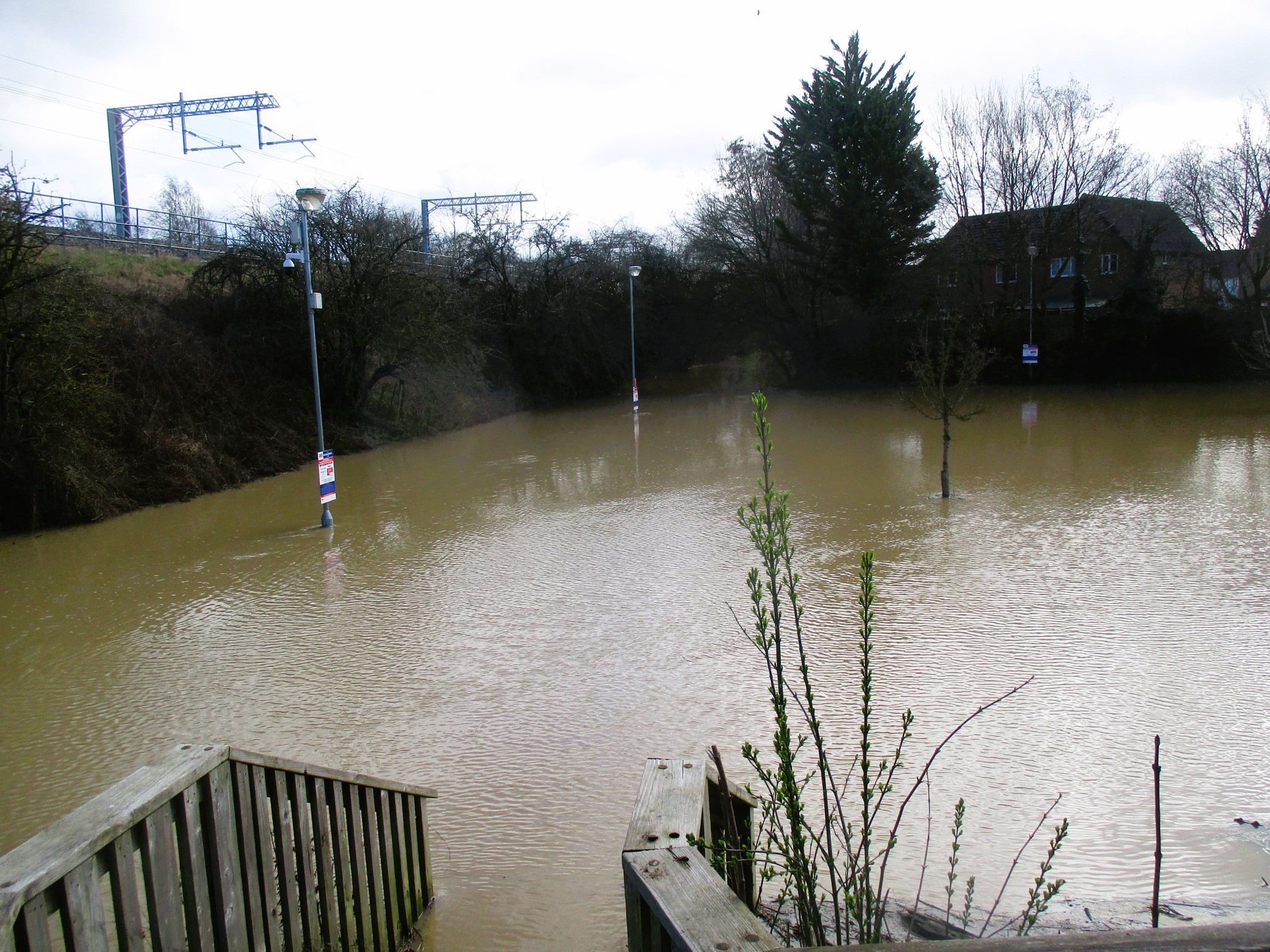
One sight I made sure of seeing in York this time was the blue plaque on Frankie Howerd's early childhood home. The map suggested you could walk to it through a park that runs along the banks of the Ouse, but the park turned out to be flooded. I was forced to find a more inland route.

There's a reason that Hartoft Street, where I found the plaque, was built so it ended well short of the river and in steps taking you down to the park.


Monday, November 24, 2025

The Joy of Six 1440

"The 'peace deal' that America is now attempting to force on Ukraine, is not like Neville Chamberlain’s betrayal of Czechoslovakia at Munich; it is far, far worse," says Jonty Bloom.

Sam Bright on the right-wingers who claim to love Britain, but want to destroy all its institutions: "The whole of Britain has become one big Oxford restaurant after a Bullingdon Club dinner: the tables upturned, the glass smashed, the staff left to sweep up the mess while the lads stumble out laughing, having dumped a bag of cash on the table by way of compensation."

"This feels partly like a sidelining of Wales in the national agenda, but also something more than that: a kind of disaster ennui. Floods aren’t new any more. They have become commonplace: but the way they are disregarded by some of the media and the government is deeply dangerous." Jude Rogers asks why the floods Storm Claudia caused in Monmouthshire received so little coverage.

Jack Walton remembers the lost world of Greater Manchester’s newspapers: "The Manchester Evening News is now the only local newsroom in Greater Manchester that has more than a handful of staff reporters, but go back 25 years and it would have been one of a dozen. Grand old titles like the Oldham Evening Chronicle and the Bolton Evening News used to inhabit imposing buildings which were buzzing with staff. In 2011, the Chronicle had 22 journalists and 76 total staff at its Union Street offices."

Colin Thurbron gave the eulogy for the writer Gillian Tindall at her memorial gathering last week: "'Houses and barns,' she wrote, 'gate posts, hedgerows, field slopes and the lie of paths, persist and persist, even when people that created them are earth themselves'.  In effect cities and buildings become, in her work, a palimpsest, in which the past lingers beneath the surface of things, and continues to shape them."

"Twain eventually came to believe that his idyllic childhood in Hannibal – immortalised in The Adventures of Tom Sawyer – had been only a dream, from which he had awakened to inescapable loss and misery. The boom and bust so redolent of American life haunted Twain, as it would F Scott Fitzgerald." Edward Short reviews a new biography of Mark Twain.

Thursday, October 16, 2025

The Joy of Six 1422

"The British physicist has dedicated herself to increasing diversity and accessibility within the STEM community, with a special emphasis on women of all backgrounds. Among her many advocacy initiatives are, of course, her Wikipedia biographies, which she began writing in her 20s. In less than a decade, she has created more than 2000 articles for the online encyclopedia, focusing on women and underrepresented scientists who have been overlooked or forgotten by history." Eva Baron on Jessica Wade's work to further the recognition of women scientists.

Clive Simpson says the Lincolnshire Fens desperately need new flood defences: "Most of the area’s pumping stations and sluices were commissioned in the 1960s and recent Environment Agency studies show what would happen if those pumps stopped: vast swathes of Lincolnshire and Cambridgeshire would be under 1.5m of water. Combine this with rising sea and tide levels, and it’s clear why the issue is urgent."

The Riyadh comedy festival was an ultimately doomed attempt by the Saudi government to buy the kind of authentic grassroots culture it is unwilling to countenance, argues Jonathan Liew.

"For centuries, such creatures were cast as messengers of fate, straddling the boundary between the natural and the supernatural. Yet today, the omens these animals bring are no longer warnings of ghosts or witchcraft, but of something far more tangible: their own survival." Jessica Lloyd May and Matthew Jones find the medieval folklore of Britain’s endangered wildlife – from hedgehogs to nightjars – is developing a new meaning.

Nicola Skinner finds pet-sitting provides the ideal single-parent holiday.

Ben Finlay chooses ten autumnal British albums – I strongly approve of his number 1.

Wednesday, June 18, 2025

Duke of Rutland is urged to sell 'trashed' grouse moor to the people of Sheffield

The campaign group Reclaim Our Moors wants the Duke of Rutland to to sell Moscar Moor near Sheffield for £1 because they think it is in such poor condition, reports the Sheffield Star:

Members say they walked across part of the 6,000-acre estate, between Stanage Edge and the A57, and found "almost no insect life, few birds and no grouse".

They claim it has been "trashed" by the duke, "who sets it on fire - sending smoke into people’s homes, worsening flood risk downstream and releasing carbon that adds to the climate crisis."

They also state it has been “scoured of wildlife by gamekeepers who kill anything that could affect gamebird numbers.”

The report goes on to say that in October 2023 deliberate fires on the moor blanketed Sheffield in smoke and caused a city-wide pollution incident. Heather is burnt to encourage the growth of green shoots that grouse can feed on.

It also says Moscar has received an average annual subsidy of £175,400 since 2012 under a Natural England stewardship scheme.

The Duke declined an invitation to comment.

Lord Bonkers is, of course, chuckling at this story. I get the impression he finds grouse shooting rather ungentlemanly:

"Shoot at a Rutland partridge and it will take cover and fire back. Now that's what I call sport!"

Anyway, there is more about Reclaim Our Moors online.

Saturday, November 30, 2024

The old course of the River Jordan through Little Bowden


The flooding of the River Jordan earlier this week has had me looking at old Ordnance Survey maps. As I suspected, Rectory Lane has this long curve because it used to follow the river.

And the shot below, taken outside the old thatched house on Scotland Road below - I remember it as a shop in the 1980s and it may once have been Little Bowden Post Office - shows how high the pavement once is there. I suspect that's because the road used to flood regularly.

Little Bowden used to be two settlements. One was by the church and the other, called Scotland End, was at the Northampton Road end of Scotland Road. Presumably because of regular flooding, the old shop was about the only building between them.

As far as I can tell from the maps, the radical straightening of the Jordan took place about 1920 - this needs more research. And I've found an old newspaper report that says that, before the railways came to Harborough, the Jordan used to flow through the fields near Gores Lane and join the Welland further east than it does now.

Monday, November 25, 2024

Jordan's river is deep and wide, Hallelujah!


Little Bowden's River Jordan burst its banks last night. At one time it flowed past the village church and around the green, so perhaps it was looking for its old course. The roads affected were reopened this morning.

I live near the Jordan, but if my road floods it's because a little stream is unable to flow into the river and backs up until it spills over.

Later. After posting this, I went for a walk. The floods on Kettering Road, shown in the video above, had vanished, but the mud and debris on the pavement suggested that the stream beside my road had overflowed at some point in the night.

Monday, September 30, 2024

Heavy flooding at Wellingborough last week

PurpleVision - follow him on YouTube for East Midland disused railway goodness - went to Wellingborough last week to look at the overflowing River Nene.

He explored the Embankment area of town on foot - you can see it, swans and all, in happier circumstances in a post on this blog - and then filmed the wider area with a drone.

Friday, April 26, 2024

The 1931 floods and the history of Winchelsea Beach

This is an interesting little video. Winchelsea Beach, where we had a family caravan holiday when I was seven, is a small resort that has developed on land that was reclaimed as the sea retreated.

Winchelsea, which was once a major port, now finds itself a couple of miles inland, but the sea used to lap at the foot of the cliffs on which it stands. It is Winchelsea Beach that stands by the sea and is at risk from its moods.

I suspect these floods in 1931 inspired the plot of Malcolm Saville's third Lone Pine story, The Gay Dolphin Adventure, which was published in 1945.

You will see at least one old railway carriage in the video, which makes me think that Winchelsea Beach may have begun less as a holiday resort than as plotlands of the sort which Jonathan Meades led me to at Bewdley.

A post on English Buildings suggests I was right.

Friday, April 12, 2024

Sunday, February 18, 2024

The River Jordan in spate this afternoon

The Jordan is Market Harborough's second river. It rises near Desborough, flows through Braybrooke and Little Bowden, and joins the Welland near Market Harborough railway station.

In summer it can dry to little more than a trickle, but you should have seen it today.

The photo above shows the Jordan entering the Welland. Between them they have flooded the commercial car park across the road from the station.

And the photos below, I hope in the correct order, show my walk to the station from my house this afternoon.

Wednesday, January 24, 2024

Plan drawn up for the Stiperstones to become a 'super' National Nature Reserve


Natural England has drawn up a proposal to expand the existing Stiperstones National Nature Reserve in Shropshire by up to 5,000 hectares  - that's a chunky 20 square miles.

A press release from Natural England and DEFRA explains the plan:

The proposal is to extend the existing Stiperstones National Nature Reserve, by joining up with landowners and partners to significantly increase the land declared as a National Nature Reserve by up to 5,000 hectares. 

The Stiperstones National Nature Reserve is made up of a wild landscape of uplands, lowlands and woodland that attracts birds including red grouse, red kite, skylark, and snipe. It is home to invertebrates (insects) ranging from the hairy wood ant to the small pearl-bordered fritillary butterfly. 

It also, just about, attracts curlews. When I first went to these hills I reckoned them every time and took their call as a sign that I was in proper hill country.

Emma Johnson, Deputy Director for Natural England in the West Midlands says:  

“There’s a great opportunity here in Shropshire to create better and bigger places for nature, that people can enjoy too. A ‘super’ National Nature Reserve joining up land with partners would be so beneficial, for example soaking up huge amounts of carbon and helping to reduce flooding downstream. 

“Everyone is invited to find out more at the drop-in session where they will be able to talk to people from Natural England and some of the partner organisations involved.  There’ll be lots of information about the proposal, we really want to hear what people think.” 

That drop-in session will take place at Snailbeach Village Hall between 6 and 9pm on Wednesday 7 February.

Unsolicited testimonial: If I want a Liberal Democrat blog that will keep me informed about what's happening at Snailbeach Village Hall, I always turn to Liberal England first.

Saturday, January 06, 2024

Flooding in Market Harborough - in 1958

We had floods in Market Harborough earlier this week but, judging by this newsreel, they were nothing to what the town experienced in the summer of 1958.

The Ritz stood opposite the Market Hall - it closed as a cinema in 1978. It's where I saw Jaws and Monty Python and the Holy Grail. My friend Tim Farnsworth knew about the abrupt ending of the latter and insisted that we left at once to show how cool we were.

Look too for the imposing former carpet factory behind The Square. It opened in 1805, and in 1865 was where Robert and William Symington begam to produce their corsets. It was demolished in 1973.

h/t @staplefordtrain on Twitter.

Tuesday, March 03, 2020

The Derwent Valley in snow and flood


From the Britain on Film site:
From the Big Freeze of 1963 to gales, landslides and, most memorably, the major flooding of December 1960 and November 1965 - local photographer Harry Gill was on the spot to capture these moments of extreme weather in Derbyshire. 
Motorists try to negotiate Crown Square in Matlock as waves of muddy water from the Derwent flow into the town. The streets seems eerily quiet as residents take to the largest vehicle available: a huge quarry lorry, to navigate the deluge.
The frozen water wheel was filmed in Cromford.

Saturday, February 29, 2020

Six of the Best 912

"Brexit has given nationalists the confidence to cast suspicions upon a wide array of independent public bodies, from universities to the Bank of England. One thing that neoliberals and nationalists can agree on is that anyone whose education and career has been spent in publicly funded liberal institutions, telling a story about 'the public interest' is a fraud." William Davies on the Conservative attack on the humanities.

"The report that Johnson wants civil service briefings to be short and simple is not so remarkable – many politicians share that desire – but the suspicion must be that he also wants them to pander to, rather than to challenge, his pre-existing beliefs." Chris Grey finds that Brexit is going feral.

Mona Wang and Gennie Gebhart say American schools are pushing the boundaries of surveillance technologies.

Mary Beard, who grew up in Shrewsbury, says the prime minister should be visiting flooded settlements. "People who have been inundated need to know that those in power have some sense of the reality of flooding beyond the words and the headlines."

Harry Potter’s dwindling popularity dismays Patrick West.

"His anguished cry, “It’s not the despair, Laura. I can take the despair. It’s the hope I can’t stand” is more relatable than ever in these toxic times." James Gent watches John Cleese's 1986 film Clockwise.

Monday, July 15, 2019

Market Harborough floods in 1958

Embed from Getty Images

This photograph of the Square under water in 1959 has turned up on GettyImages.

I particularly like the road signs. The half-timbered building behind them was still there when I moved to the town in 1973, but was demolished soon afterwards.

Sunday, December 03, 2017

The Fenland floods of 1947

Embed from Getty Images

The weather of 1947 threatened food supply while the nation still recovered from war. From the snow bound uplands to the fens plagued by thaw floods, everything seemed lost. 
But wartime had bred a can-do attitude - with new seed from the empire, equipment from allies, conscripts building barricades and the hardy persistence of the farmers themselves, there’s another victory on the home front. 
Made in the mode of wartime propaganda, this film continues the style and approach that the Ministry of Information had perfected in a series of agriculturally focussed films during WWII. 
Director James Carr would go on to take the production company World Wide Pictures to success as one of the premier British suppliers of government documentaries and industrial films in the postwar period.
So says the blurb for Trial by Weather on the British Film Institute site. Follow that link and you may watch it there.

Fellow admirer's of Malcolm Saville's children's books will be familiar with those floods because of his The Luck of Sallowby, which I once blogged about.

Monday, January 04, 2016

Six of the Best 563

The Liberal Democrats should cut their spending by moving their headquarters out of London, argues Simon McGrath.

"Pickering, North Yorkshire, pulled off protection by embracing the very opposite of what passes for conventional wisdom. On its citizens’ own initiative, it ended repeated inundation by working with nature, not against it." Geoffrey Lean explains how one town that beat the floods.

Terence Fane-Saunders dissects Oliver Letwin's inadequate apology.

James O'Malley wants the left to stop retweeting bullshit.

"If it looks completely at home in this northern European setting, that's because a mosque has stood here, roughly 20 minutes' drive south-west of the Lithuanian capital, Vilnius, since 1558." Tharik Hussain on the Muslims of the Baltic.

The Downstairs Lounge celebrates the career of Kenneth Horne.

Tuesday, January 06, 2015

Flooding near Market Harborough railway station, 2012


This is the way I walk to the station every morning. If it is not your car under water, this is an oddly beautiful video.

I took my own photograph of the scene, perhaps the afternoon before this video was shot, on my way home as the light failed.

Monday, August 13, 2007

Don't build on the flood plain, darling

At the end of June - a couple of floods ago - I wrote about the Shropshire Wildlife Trusts call for an end to building on flood plains.

I have now found more about it on the Trust's website. And this rather nice photograph.