Showing posts with label Tony Benn. Show all posts

Monday, October 06, 2025

Neal Ascheron on Frederick the Great and the draining of the Oderbruch

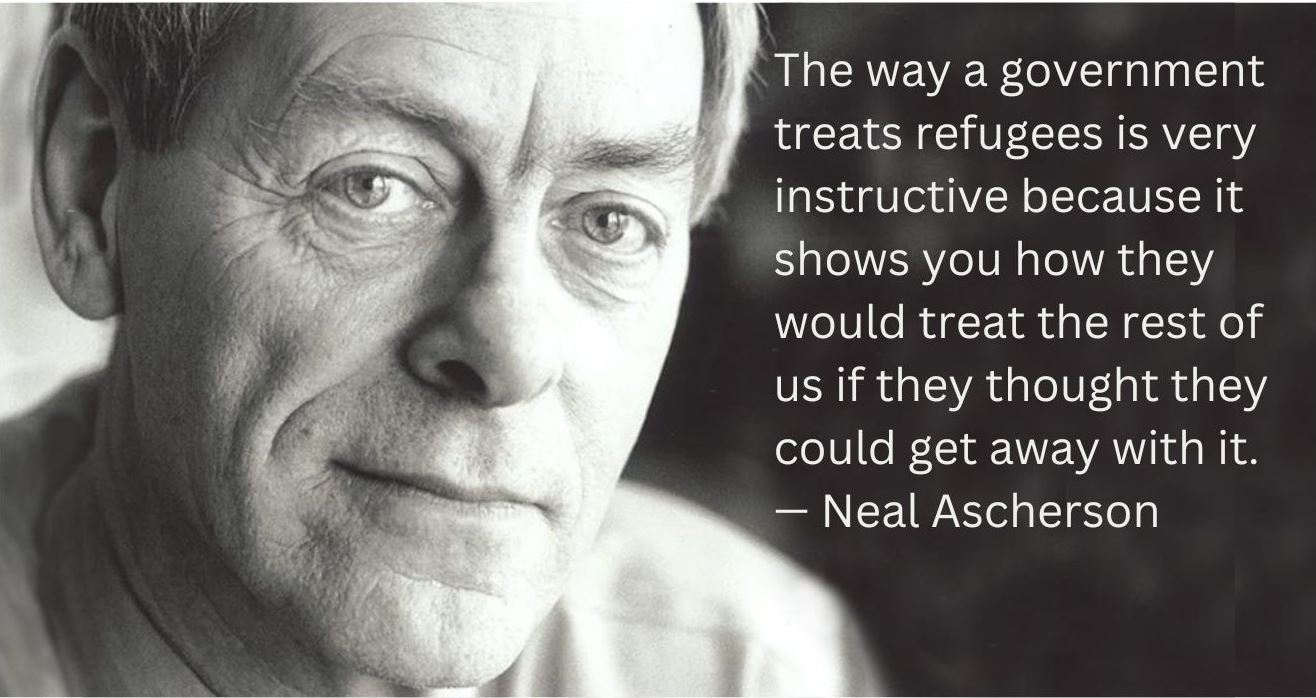
One of my favourite writers is Neal Ascherson. Among many other achievements, it was he, and not Tony Benn, who came up with the well-known quotation above. (There's chapter and verse on this blog.)

Here is Ascherson reviewing The Conquest of Nature: Water, Landscape and the Making of Modern Germany by David Blackbourn for the London Review of Books in 2006 - Frederick is Frederick II (Frederick the Great) of Prussia:

In Frederick’s time, marshlands were regarded as sinister, useless places, breeding malarial vapours and sheltering not only dangerous wild beasts but primitive human beings beyond the reach of law. Today, we would treasure the lost Oderbruch as one of the marvels of Europe. 

On its way to the Baltic, the river frayed into countless shallow channels and lagoons, into swamps, shoals and muddy islands. Twice a year, it flooded up to ten or twelve feet deep, nourishing a dense cover of waterlogged bushes. Here lived ‘an almost unimaginable range of insect, fish, bird and animal life’, including wolves and lynxes. 

Blackbourn has the sense to rely heavily on the travel writings of Theodor Fontane, the most lovable and observant of German writers, who explored the drained Oderbruch in the 1850s and collected memories of pre-reclamation times. Fontane was told of the enormous shoals of countless species of fish, of pike hordes so dense that they could be scooped up in buckets, of crayfish which escaped the hot summer shallows to swarm in trees from which they could be shaken down like plums. 

And he wrote also about the old inhabitants. They were not Germans but Wends, Slavs who had survived in the marshes since the Germans colonised the fertile land almost a thousand years before. The Wends lived on mounds hidden in the swamp, their huts encircled by ramparts of cow-dung which kept out the floods and served as pumpkin beds.

There's more about The Conquest of Nature: Water, Landscape and the Making of Modern Germany on the Penguin website.

Saturday, August 17, 2024

The latest on the Labour Party and Hakluyt

Liberal England takes an interest in the "strategic advisory" firm Hakluyt, and its deepening relationship with Labour, for the recherché reason that it was co-founded by a son of the long-forgotten historical novelist Vaughan Wilkins.

Peter Geoghegan keeps us up to date with the latest news of Hakluyt and Labour in the London Review of Books:

Labour is said to have turned last September to another ‘strategic advisory’ firm, Hakluyt, to facilitate meetings with business leaders. Hakluyt began in a field in which the UK truly excels: private spying. 

Named after the Elizabethan geographer Richard Hakluyt, the company was founded in 1995 by a group of former MI6 agents, but in recent years has sought to distance itself from the world of spooks. Spying on Greenpeace activists on behalf of oil companies is supposedly a thing of the past. 

The company’s website looks more like that of a private bank than a corporate espionage outfit, with a list of staff and advisers that includes the Conservative peers Paul Deighton and William Hague, director and chairman respectively. The former Labour minister Shriti Vadera sits on the advisory board. 

‘Hakluyt sells its political connections,’ a contact who has worked in London’s corporate intelligence world for decades told me. ‘It’s incredibly well connected. That’s how it can charge so much. Hakluyt wouldn’t get out of bed for less than a hundred grand.’ 

Its contact book is set to become even more valuable now Starmer has appointed its managing partner, Varun Chandra, a former investment banker who helped set up Tony Blair Associates, as his special adviser on business and investment (Chandra duly resigned from Hakluyt). He might well be joined in government by Olly Robbins, the former Brexit chief negotiator and a Hakluyt partner. Another Hakluyt executive is Tony Benn’s granddaughter Emily Benn.

The Honourable Emily Benn is the daughter of Stephen Benn, who became the third Viscount Stansgate upon the death of his father Tony Benn.

Sunday, June 02, 2024

Tony Benn: Nigel Farage's John the Baptist?

This video was posted on Twitter earlier today, and it's uncanny how close Tony Benn's arguments against Britain remaining in what was then the European Economic Community are to those used by Leave in the 2016 referendum.

He comes over as Nigel Farage's John the Baptist, while the slightly amused reference to Italy wanting to sell its wine is pure Boris Johnson. 

You may say that Benn's wish to leave room for protectionism is a world away from the economic beliefs of Brexit's most powerful backers, but many Brexit voters thought they were voting for protectionism.

But then I have taken the odd potshot at the myth of St Tony over the years.

In 2009 I devoted a my Liberal Democrat News column House Points to the hobby, pointing out that the pirate radio ships of the Sixties had gone from being a threat to the British way of life to the subject of warm nostalgia:

You would not know it from Richard Curtis’s recent film, but the minister who sank the pirate ships was Tony Benn - or Anthony Wedgwood Benn, as he then called himself.

Getting into high gear, I continued:
Do the sweet young things who hang upon his words about global warming know that when a minister in the 1970s he forced through the construction of the coal-burning Drax power station?
Or take his party piece. There are five questions we should ask politicians: “What power have you got? Where did you get it from? In whose interests do you use it? To whom are you accountable? How do we get rid of you?”
That is not what he said when he met Saddam Hussein in 2003: 
"I have 10 grandchildren and in my family there is English, Scottish, American, French, Irish, Jewish, Indian, Muslim blood, and for me politics is about their future, their survival. And I wonder whether you could say something yourself directly through this interview to the peace movement of the world that might help to advance the cause they have in mind?"

But it has to be admitted that Benn is good at getting his points across. Roy Jenkins does not say much in this clip, so it may be unfair to judge him on it, but there are two problems with what he does say.

The first is that accent. As Nye Bevan is supposed to have said when it was suggested to him that Jenkins was lazy:

"Lazy? Lazy? How can a boy from Abersychan who acquired an accent like that be lazy?"

The second is something that is endemic on the left: too much abstraction. I'm sure the average voter could quickly be brought to understand the concept of "pooled sovereignty", but I'm not convinced they will understand it without explanation. So maybe Jenkins needed to find simpler language in the first place.

I'm reminded of the time, at the height of the campaign for a second referendum, when someone decided that having Stephen Fry discoursing on "forced perspective" was the way to convert Leavers to our cause.

Plus ça change, plus c'est la même chose, as they say in the European Union.

Saturday, March 18, 2023

A tribute to Neal Ascherson on his 90th birthday

Last October one of my favourite journalists, Neal Ascherson, turned 90. To mark the occasion, he was interviewed by Tim Adams in the Observer:

There are certain writers who seem singled out to bear witness to their times. Neal Ascherson first had a graphic inkling of that fate when he was a small boy in Peterborough, where his father, a naval officer, was stationed at a factory making torpedoes. 

"It would have been the summer of 1940," Ascherson says, "and I was coming back to the village where we lived, from school, on the bus. I must have been seven. This aircraft appeared as I was walking back to our house. Like all small boys I knew my bomber planes and I recognised it as a German Dornier, flying low. I didn’t hear it firing, but my mother did. She was watching for me from a window and almost died of horror. 

"Some fucker in the belly turret of the plane let off some machine gun rounds at me. I was the only person in the whole landscape, a little boy with a school bag. The noise of the engine was so loud I didn’t hear anything, and obviously he missed, but afterwards the trees all along the road had these white scars where the bullets had gone in."

Ascherson is telling me this story, with a characteristic twinkling smile, from his sofa in the tall terrace house near Highbury Fields in north London where he has lived for 40 years with his second wife and fellow journalist, Isabel Hilton. 

The previous night he had celebrated his 90th birthday at the Polish Hearth Club in Kensington where his old friend, the playwright Michael Frayn, a youthful 89, had toasted him as a man of “rare charisma, like a 19th-century romantic hero, with a kind of nobility that has always seemed a kind of human gold standard”. 

Ascherson wears those traits lightly, but you glimpse them all the same. In some ways, that near-miss from the Luftwaffe established the pattern of his life: if European history was happening, he was never far away.

And my graphic? Yes, it was Neal Ascherson who said that and not Tony Benn.

Wednesday, November 02, 2022

No, Tony Benn didn't say that about governments and refugees

There's a very good quotation that pops up on Twitter from time to time. It runs:

The way a government treats refugees is very instructive because it shows you how they would treat the rest of us if they thought they could get away with it.

Almost invariably, these words are attributed to Tony Benn, but he did not say them. Rather, they were written by the Scottish journalist (and sometime Lib Dem Holyrood candidate) Neal Ascherson.

The history of the quotation is as follows.

In 1996 Ascherson wrote an article on the al-Masari affair in the Independent, where he said:
The al-Masari affair overflows in all directions with moral relativism. My own view is that to expel a political asylum-seeker because his country threatens to cancel business contracts with Britain is absolutely wrong. 
And it is not only wrong but dangerous in the long term to us all. This is because of one of the Laws of Politics that I wrote long ago into my little black notebook: "The way a state treats its aliens is the way it would treat its own subjects if it dared".
And in 1999 Francis Wheen paraphrased Ascherson to produce more or less the quotation we know today:
We should always watch how politicians treat refugees, Neal Ascherson once wrote, because that's how they would treat the rest of us if they thought they could get away with it.
Neal Ascherson, incidentally, has passed 90 and is still going strong. You should be able to read some of his articles on the London Review of Books site before its paywall kicks in.

Wednesday, May 25, 2022

The Joy of Six 1052

Basic Income Conversation and Compass have published new research modelling a fiscally neutral basic income that could reverse the poverty and inequality rises of the last 45 years.

Maxim Osipov describes the journey of those, like him, who chose exile rather than remaining as their country invaded Ukraine: "On the way to the airport, you drove through Moscow. Although this is where you were born, where you studied and lived, it has long been enemy territory. Parting with people is hard, nearly impossible; parting with Moscow is easy." 

"You might imagine that more conventional forms of modern therapy as delivered by a psychologist, counsellor or clinical social worker cannot be harmful because the treatments involve ‘just talking’. Regrettably, this is not the case." Yevgeny Botanovis, Alexander Williams and John Sakalukis on the drive to identify psychotherapeutic approaches that are not only ineffective but actively harmful.

The brainchild of Orkney-born musician Merlyn Driver, Simmerdim: Curlew Sounds is a multi-artist album inspired by the Eurasian curlew. Such celebrations inspire us to protect what we have, says Karen Lloyd.

Paul English reports on the search for the Glasgow Garden Festival: "A team of archaeologists is beginning an excavation in the only remaining part of the 120-acre site in search of touchstones evoking memories of the six-month festival that ran between spring and autumn in 1988." 

We all know  Margaret Rutherford's father murdered his own father (who was Tony Benn's great-grandfather) by banging him repeatedly on the head with a chamber-pot in Matlock. Matthew Sweet dives deep into the case.

Monday, October 14, 2019

A warning to Labour from 1983

Embed from Getty Images

What if the opinion polls are right? Yes, Corbyn did much better in 2017 than anyone expected, but what if Labour finds itself struggling to beat the Liberal Democrats into third place at the next election, much as Michael Foot struggled to outpoll the Liberal/SDP  Alliance in 1983?

You might think that would mark the end of Corbynism and a long march back to the centre ground n Labour's behalf.

Don't bank on it.

Here is Tony Benn's reaction to Labout's catastrophic (the Tories had a 144-seat majority) defeat in 1983:
"The general election of 1983 has produced one important result that has passed virtually without comment in the media,” said Benn. “It is that, for the first time since 1945, a political party with an openly socialist policy has received the support of over eight and a half million people. 
"This is a remarkable development by any standards and it deserves some analysis … the 1983 Labour manifesto commanded the loyalty of millions of voters and a democratic socialist bridge-head in public understanding and support can be made."
This determination of the hard left to learn nothing from defeat was a gift to Neil Kinnock, His reforms of the Labour Party met with little opposition because the only alternative appeared to be perpetual defeat,

But Kinnock commanded a majority on the party's national executive. Whoever succeeds Corbyn, the hard left will enjoy that advantage and may well take Tony Benn's line on electoral defeat.

In which case there will be no easy way back for Labour.

Monday, January 28, 2019

It's Labour MPs who need to grow a backbone, not Jeremy Corbyn

"What did you think of the Jeremy Corbyn’s backbone meme?" asks Liberal Democrat Voice.

Like most of the people who have left comments there, my answer is "Not much."

I am all in favour of using humour in campaigning, but it has to be done well. These tweets were not worth the time and effort expended on them.

But the real problem with them tweets was they they were political nonsense.

We were painting Corbyn as someone who is opposed to Brexit but lacks the courage to say so. The truth is more or less the opposite.

Jeremy Corbyn is, as he has always been, opposed to British membership of the European Union. Mark Pack has chapter and verse on this and I once wrote a post about the Labour left's Alternative Economic Strategy of 1976, which is where many of Corbyn's ideas come from.

The reason so many people fail to understand the man's politics is that you have to be pushing 60 to remember when the Labour left was last a force.

Ask any young Corbyn supporter who said this:
[The EEC] is really dominated by Germany. All the common market countries except the UK have been occupied by Germany, and they have this mixed feeling of hatred and subservience towards the Germans.
They will surely tell you it was some absurd old Tory. But it was said by Corbyn's mentor Tony Benn,

The people who do need to show some backbone are the bulk of Labour MPs who come from the party's mainstream.

They ought to resist Corbyn's wish to see Britain leave the EU, but I am not sure they will.

Featured on Liberal Democrat VoiceAnd if any are trembling on the edge of rebellion, a series of comic tweets is not going to convince them to jump.

Friday, March 30, 2018

When Bill Maynard finished fourth in a parliamentary by-election


Earlier in the week I learnt an interesting fact about Bill Maynard and thought of writing a blog post about him.

And now he has died. It's Bob Appleyard all over again.

The interesting fact was that Maynard had played the baker in the famous Hovis television commercial. (Despite the Northern vibe, it was filmed on in Dorset - on Gold Hill in Shaftesbury to be precise.)

But there are many more interesting facts, some of them confirmed in an interview he gave to Harborough FM. He was well into his anecdotage, but we do learn that he did a lot of straight acting as a younger man.

From a local point of view, Maynard was born Walter Williams in Surrey. His family soon moved to Leicestershire, and he grew up in poverty in South Wigston and won a scholarship to Kibworth Grammar School.

I recall reading once that he had a job with R. & W. Symington, the Market Harborough corsetmakers, before he went into show business full time, but I cannot find a source to confirm that. His Guardian obituary confirms he was in the rag trade though.

But let's go national with three top Bill Maynard facts:
  • In 1957 he finished fourth in A Song for Europe, the British eliminator to choose our entry for the Eurovision Song Contest. You can hear him on Youtube. His son led the band Ryder who represented Britain in 1986 and came seventh.
  • In 1984 he stood in the Chesterfield by-election as an Independent Labour candidate to protest against the candidacy of Tony Benn. He finished fourth with 1355 votes in what was then a record field of 12 candidates.
  • In 1989 he married Tonia Bern, the widow of Donald Campbell. Campbell had died in 1967 when his craft Bluebird crashed on Coniston Water as he tried to break the world water speed record.

Sunday, October 29, 2017

Should the Lib Dems have exposed Jared O'Mara?


Miriam Gonzalez Durantez revealed on Peston this morning that her husband Nick Clegg and the Liberal Democrats knew about the allegations against Jared O'Mara before June's general election.

Mark Pack suggests that we should have made use of this knowledge during the campaign in Sheffield Hallam:
Taking care over when to criticise the personality of an opponent is wise. But when you have evidence about issues as serious as sexism and homophobia and the person in question is bidding to become an MP, then – if you have solid evidence – raising them I would even go so far as to say is necessary. Democracy requires the cases for and against candidates, parties and policies to be put before the public.
Liberals tend to fight shy of this sort of campaigning - "When they go low, we go high" - but Mark is right. It can be your duty to reveal your opponents deficiencies if they are sufficiently serious.

I do not trust the idea that it is only what Tony Benn used to call the "ishoos" that matter. So many political questions arrive out of clear blue sky that the character of the people you elect to tackle them is immensely important.

And if you know your opponent has a bad character, you should say so.

Monday, July 24, 2017

Corbyn's economics - the Alternative Economic Strategy of 1976


If Peter Harrison, a fellow member of Wrekin Young Socialists with whom Jeremy Corbyn once climbed that Shropshire hill to plant the red flag, is right to say:
"I knew him when we were 18 or 19, and his views have not changed. We are talking about the thick end of 50 years ago."
It follows that we should look back to those days if we want to understand the Labour leader's economic views.

And that brings us to the Alternative Economic Strategy which Tony Benn put to the Labour cabinet (with some support from Peter Shore) in the autumn of 1976.

Bob Rowthorn has listed its proposals as follows:
  • reflation of the economy to raise output and create more employment;
  • import controls to protect industries on the verge of collapse and to keep imports in line with what Britain can afford;
  • price controls to prevent firms from exploiting the sellers' market resulting from import controls and economic expansion;
  • compulsory planning agreements to force big firms, especially multinationals, to pursue different production, employment and investment policies;
  • nationalisation of key industrial firms to provide the public sector with the skill and knowledge required to control the private sector - following the example of the British National Oil Corporation (BNOC) set up by Tony Benn;
  • public ownership of the major financial institutions to give the state control over the investment policies of pension funds and other sources of industrial finance;
  • new powers for workers and their trade unions to bargain with big companies and monitor their activities;
  • withdrawal from the Common Market and abrogation of the Treaty of Rome which outlaws many of the above measures;
  • expansion of the social services to restore the Tory cuts and deal with new problems created by the present crisis;
  • a reduction in military expenditure to help finance expenditure for other purposes;
  • redistribution of income and wealth to eliminate some of the gross inequalities in Britain today.
Note that withdrawal from Europe is central to this strategy, so we should not be surprised at Corbyn's comments on the single market yesterday.

I am up for a fair bit of curbing capital's freedom of operation, but it is obvious that if that is to be done then it must be a multi-national enterprise.

To pretend Britain can act and then prosper in isolation is a nonsense - and a nonsense that Corbyn shares with the Conservative right and Ukip.

Friday, October 23, 2015

Michael Meacher and the Oldham West and Royton by-election


Michael Meacher enjoyed a remarkable 45 year career as an MP. The most generous tribute to him was that by John Vidal in the Guardian:
Michael Meacher was a remarkable environment minister because for six years, at the start of the Blair government, he almost single-handedly fought to defend the natural world from road-building, the first generation of GM crops and rampant industrialisation. 
While junior environment ministers usually accept the Treasury or No 10 line without question, "the Meach", as he was widely known, stood up to Tony Blair and Gordon Brown and possibly saved the administration from political embarrassment by urging caution at key moments.
Julia Langdon, in the same newspaper, was more measured:
He sat on Labour’s frontbench in government and opposition for a total of 29 years, but his misfortune was that he was never greatly favoured or particularly trusted by the six party leaders under whom he served.
At least he died under a leader with whom he was perfectly in tune.

Meacher was also known for losing a celebrated libel action against the journalist Alan Watkins, who had questioned his working class credentials.

In fact, Meacher had attended a public school - Berkhamsted. The late Robin Totten, who was the leader of Harborough District Council in the days when the Liberal Democrats ran it, once told me that Meacher had been his fag there.

I suggested to him that this is what had made Meacher a socialist, but I am sure it was not as Robin was a lovely man.

But politics, as Alan Watkins, used to observe, is a rough old game and already thoughts are turning to the forthcoming by-election in Oldham West and Royton.

On Lib Dem Voice Jonathan Fryer is absolutely right when he argues the Lib Dems must take it seriously:
During the Coalition government the Liberal Democrat powers that be took what I believed to be a misguided decision to virtually ignore northern parliamentary by-elections, with predictably disastrous results. In a couple of cases there was, however, a tremendous surge towards UKIP, almost causing shock Labour defeats. 
We lost our deposits spectacularly, despite the hard efforts of by-election candidates and mainly local party support. The impression given to the wider public, however, was that in the North of England the LibDems are rubbish, even irrelevant. We must not allow that to happen again.
By-elections campaigns are important for raising party morale, learning new campaigning techniques and making and renewing useful friendships.

But the strongest challenge to Labour in Oldham will almost certainly come from Ukip. Both Guido Fawkes and Sebastian Payne claim to have the inside on their likely candidate and campaign strategy.

After 45 years of Michael Meacher, who used to be called 'Tony Benn's representative on Earth, the Labour voters of Oldham are unlikely to be spooked by the leftward turn the party has taken by electing Jeremy Corbyn.

Corbyn should, however, be very worried about how they will react to a three weeks of being exposed to the views of his newly appointed lieutenants.

I cannot see John McDonnell's take on the Provisional IRA or Seamus Milne's view of the death of Lee Rigby going down at all well.

Which is why, like Nick Tyrone, I believe Labour needs to take the Ukip challenge extremely seriously.

 Ukip's fortunes seem to be in decline at the moment, but we shall have a clearer idea of their future, and of how the Corbyn leadership will play with Labour voters, after this by-election.

Thursday, October 08, 2015

Denis Healey: The Best Prime Minister Labour Never Had?


While Britain watched The Great British Bake Off, BBC2 showed this excellent documentary on the career of Denis Healey.

You can now view it on BBC iPlayer, and I urge you to do so.

The still above shows Ken Livingstone, Tony Benn and a young Jeremy Corbyn during the 1981 deputy leadership election in which Healey narrowly defeated Benn and quite possibly saved the Labour Party.

It seems Corbyn is determined to ensure that achievement is only temporary.

Sunday, June 14, 2015

Six of the Best 518

Why did the pollsters get it so wrong at the general election? A special extended edition of the Polling Matters podcast tries to find out.

"It is a strategy that ignores the potential that is in 100% of today’s labor force, 98% of next year’s, and a huge number of people who will be around for the next half-century." Ricardo Hausmann questions the orthodoxy that education is the key to economic growth.

David Hencke says cutting councillors in Newcastle upon Tyne is a dangerous move to dilute democracy.

 The Labour leadership election of 1976 was contested by Tony Benn, Jim Callaghan, Anthony Crosland, Michael Foot, Denis Healey and Roy Jenkins. Alwyn W. Turner looks back.

Elizabeth Day talks to Alistair McGowan about his experience of portraying Jimmy Savile in a new play.

Rebecca Mead on the appeal of Middlemarch.

Saturday, January 10, 2015

Lord Bonkers advised Labour against having Gordon Brown as leader

If I am unable to sleep, I turn to the diaries of Lord Bonkers - they usually do the job quite quickly.

Every now and then, however, I come across something that brings me up short. Like this from 2006.
Saturday 
It is hard not to sympathise with the New Party’s MPs: Blair has clearly gone barking mad – his public protestations of love for a chimpanzee, all those foreign wars, his plans to send children to the Jack Straw Memorial Reform School, Dungeness, before they are born – but their constitution makes it impossible to get rid of him. 
We Liberal Democrats recently had leadership problems of our own, but Kennedy’s fondness for drink never put the country in peril. Yes, he might fall asleep in meetings, sing raucous Highland ballads or try to kiss Alan Beith, but life was still more restful than under his predecessor, Paddy Ashplant, and – dash it all – I am rather fond of old Beith myself. 
A word of advice to the New Party: if you do succeed in tipping Blair out of the window, don’t replace him with that dour Brown fellow. Try someone younger and fresher like Tony Benn’s charming daughter Hilary or one of the Millipede brothers.

Sunday, March 23, 2014

Six of the Best 428

Lynne Featherstone on the latest steps in the campaign against female genital mutilation.

"The City of London threatens U.S. security and abets corruption. Revisionist powers like Russia have figured out this dynamic and are busy exploiting it." How others see us - in this case Nicholas Shaxson on The American Interest.

Writing for Politico Magazine, Elizabeth Wahl explains what it was like to work for the Russian propaganda machine and why she quit her job on live TV.

"The memorialising of Benn’s eloquence is not only nostalgia. It is a reminder that there is a fundamental connection between speaking well and democratic life in a just society. All of us, instinctively knows this. It is why the characteristic institution of a democracy is a debating chamber. It is why democracies put free speech at the top of their list of fundamental rights. And it is also why all tyrannies start by suppressing speech." On the University of East Anglia blog Eastminster (geddit?!), Alan Finlayson explains why Tony Benn was such a successful rhetorician.

Declaration Game suggests Donnie Darko may hold the key to the exclusion of Kevin Pietersen.

The Slate blog Atlas Obscura has some haunting photographs of Ani, the ancient capital of Armenia. The city declined over the centuries and was abandoned altogether by the mid 18th century. "To visitors, Turkey omits all mentions of Armenia from descriptions of Ani's history and focuses on the city's Turkish and Muslim influences."

Sunday, October 09, 2011

When Tony Benn was still Anthony Wedgwood Benn

On her blog, Lynne Featherstone points us to an article by Carol Morley in today's Observer. It deals with the life and death of Joyce Carol Vincent, who was found dead in her North London flat after her body had lain undiscovered for three years. Her story has been made into a film, Dreams of a Life, which is to be shown at the London Film Festival.

Lynne herself features in Morley's article, having tried without success to interest the authorities in the case, but I was struck by a very minor point in the article.

Morley says of Joyce Carol Vincent:
She was born in 1965, the year the Post Office Tower opened, which Tony Benn later referred to as a symbol of our age – an age in which we worship the internet, television, mobile phones.
But Tony Benn did not say this "later" at all. He said it at the time. Because in 1965 he was Postmaster General and one of the bigwigs at the tower's opening.

A Guardian article by Nigel Fountain from 2000 describes his attitude that day:
While Big Ben had represented "the fussy grandeur of the Gothic revival that epitomised the Victorian imperial affluence, built on the foundation of the first industrial revolution", as the postmaster-general, a Mr Anthony Wedgwood Benn, had pithily proclaimed at the opening, "the Post Office tower, lean, practical and futuristic, symbolises the technical and architectural skill of this new age." 
Good old new ages, where would we be without them? At the time, Tony Benn - as he became when he, too, opted to be lean, practical and futuristic - reckoned a new definition of a Cockney would be someone born within sight of the tower.
You can even see footage of him that day on the British Pathe site. (My current internet connection cannot cope with it, so I have not seen this newsreel myself.)

Shortly afterwards Anthony Wedgwood Benn became even more lean, practical and futuristic and took charge of the Ministry of Technology - or Mintech, as he liked to call it. The days when Tony Benn (as he was later to become) would present himself as a sage who laughed at the follies of our technological age were then far ahead of him.

But then Carol Morley is not the first person to be taken in by accepting Benn at his own estimation. In a House Points column a couple of years ago I recalled his role in the banning of pirate radio and then asked:
Do the sweet young things who hang upon his words about global warming know that when a minister in the 1970s he forced through the construction of the coal-burning Drax power station?
People can get upset when you point out historical ironies of this sort, but I am with Cicero: "To be ignorant of what occurred before you were born is to remain always a child."