Thanks to Illuminations Media for pointing me to this Jonathan Meades video from 1989.
Showing posts with label Jonathan Meades. Show all posts
Showing posts with label Jonathan Meades. Show all posts
Monday, March 09, 2026

Friday, October 03, 2025
Jonathan Meades talks to Mark Lawson
Recorded in 2006:
"It's as much music hall as it is lecture hall, the stuff I do, I think. I might want to be Geoffrey Hill, but part of me also wants to be Benny Hill. And it's not a question of pushing the Geoffrey out or pushing the Benny out, but of finding a way of combining them."
What I value in Meades is not any organised body of opinion, but his attitude.
Saturday, July 05, 2025
The Victorian age and the 1950s both took place in colour
One of the best things about subscribing to the London Review of Books is that it grants you access to the magazine's archives. So it was that I was reading a book review by Jonathan Meades from 2018.
I've not read the book he is discussing – The Tiger in the Smoke: Art and Culture in Postwar Britain by Lynda Nead – a lot of caveats apply to this post. And I'm pleased to see it has a photograph of St Saviour's Road, Leicester, on its dust wrapper. It's the same photo you see above.
Meades writes:
In The Tiger in the Smoke, fog and smog are ubiquitous. They are past and present, a continuum from the High Victorian age to the New Elizabethan age, which was also, according to Nead, the first neo-Victorian age. They possess a palette that is specific to them.... The 'characteristic colour' she assigns to the period – 1945-60 – is a foggy sort of greyish brown.
He questions whether this is an adequate account of Victorian Britain, suspecting that Nead has been too influenced by Dickens and his fog, when in reality:
He lived in an age of polychromatic brickwork, dazzlingly bright inflammable crinolines, gilded smoking rooms, saturated ottomans, luminous painting, garish advertisement hoardings and the Great Exhibition. Its gaudy vulgarity appalled such aesthetes as William Morris and, retrospectively, Nikolaus Pevsner, who wrote of Victorian manufacture’s 'rank growth'.
And I am going to question the book's account of the post-war era, at least as it is seen in this snippet on audience reaction to David Lean's Great Expectations that Meades quotes:
'What,' she wonders, 'did this fabulous cinematography mean to postwar audiences and how did it relate to the greyscale aesthetics of the fog and the bombsites?'
But bombsites weren't grey. Here's J.K. Adams writing the Guardian's Country Diary for 1 September 1948:
A gentle breeze was blowing as I walked through the badly bombed Cripplegate area of London the other day, and the feathery seeds of the rosebay willowherb were drifting before it like snowflakes. In the basements of what seven or eight years ago were shops, warehouses, and dwellings a waist-high tangle of willowherb, spear-plume thistle, and Oxford ragwort bore witness to the thoroughness with which nature reclaims the land as soon as man’s back is turned. More than that, here and there were birches and elders and various sorts of willow that had grown to a height that fully entitled them to be called trees.
It may have been a far cry to the complete return to nature envisaged by Richard Jefferies in After London, but the germ of that great reversion, one felt, was there. Even the birds have begun to return to this as to other parts of London that have gone wild. Within the past two years a linnet and both pied and grey wagtails have been seen there, and at migration time in 1946 three birds on passage looked in – a whitethroat, a wheatear, and a whinchat. Even more remarkable was the visit paid by a little owl during the autumn of that year.
Or to make it sound more exotic, here is Lucy Scholes writing about Rose Macaulay's The World My Wilderness:
Later, in London, they escape their homes and their guardians, hiding from the police in the blitzed ruins of Cheapside. This uninhabited no-man’s-land is "a wilderness of little streets, caves and cellars, the foundations of a wrecked merchant city, grown over by green and golden fennel and ragwort, coltsfoot, purple loosestrife, rosebay willow herb, bracken, bramble and tall nettles, among which rabbits burrowed and wild cats crept and hens laid eggs."
I suspect London bombsites became less exotic as they were gradually cleared for redevelopment, but I still think of them as a home to lush vegetation and providing unexpected new vistas of Italianate churches.
Let's finish by going back to Victorian polychromatic brickwork. Here's something else I've found recently - a charity-shop copy of Nairn's London. In it, Ian Nairn writes of All Saints, Margaret Street:
To describe a church as an orgasm is bound to offend someone; yet this building can only be understood in terms of compelling, overwhelming passion.
I'm not sure that it advances my argument, but I really want to quote it.
Sunday, June 01, 2025
Strange tales from the Bewdley plotlands

"Bewdley is, perhaps, the crown jewel of the plotlands movement - it’s one of the biggest UK sites, home to roughly 163 households," writes Samuel McIlhagga for The Dispatch:
After days of research, a trip to rural Worcestershire and lots of unanswered emails, I’d uncovered a saga involving dead horses, a legal case no one will - or can - talk about, and a landlord allegedly disrupting the water supply to push tenants out - a potentially criminal offence. Clearly, trouble was afoot.
I visited the Bewdley plotlands myself back in 2010, inspired by one of Jonathan Meades's television programmes, and these are some of the photographs I took that day.
If you want to know more about the plotlands movement, you can listed to a recent Uncanny Landscapes podcast on it.


Sunday, May 25, 2025
Raymond Lefèvre and his Orchestra: Soul Coaxing
It's summer in the late Sixties and you're out for the day on a coach or in a car with plastic seats that children have to peel themselves off carefully at journey's end. This is playing on the radio and it tells you you're going to have a good time.
For this was an era when optimism was still the default register - Jonathan Meades once wrote that the future happened briefly in 1969.
As I discovered long ago, Soul Coaxing is an orchestral arrangement of the song Âme Câline by Michel Polnareff. Lefèvre's skill here is to make you wait just long enough that you are hungry for the main theme each time it returns, but don't get impatient with the piece as a whole.
Soul Coaxing was everywhere once, and was used by Radio Caroline and Radio Luxembourg as a theme tune or to fill the airwaves while DJs changed over.
Monday, December 23, 2024
The Joy of Six 1303

Keith Edwards argues that the US Democrats need to give youth its head: "Americans are some of the youngest people in the rich world. Yet our elected leaders are easily the world’s oldest."
Patrick Barkham reports that water voles continue to decline in their distribution across Britain, but there are signs of recovery in 11 key areas.
"A few years ago, on social media, I posted the architectural critic Jonathan Meades' description of Birmingham as 'an almost excessively sylvan place' with 'lavishly green' suburbs. It was laughed at in some corners, so at odds was it with many outsiders’ image of the city as a concrete jungle." Jon Neale says that Birmingham's 19th-century 'guinea gardens' gave the city a split personality that it retains to this day.
"I used to know Mary Norton. I played with her daughter. One day I asked her 'What’s this story you have written about little people who live under the floorboards?' and Mary replied 'It's not about little people who live under the floorboards, it’s about Czechoslovakia.'" Chris Wallis asks if The Borrowers is a children’s fantasy classic or a political allegory.
Amanda Craig celebrates the genius of Joan Aiken: "Darkness, injustice and cruelty underlie Aiken’s stories; packed with vivid characters, each can be read as a critique of capitalism, industrialisation and the class system. Her aristocrats are often villains of the deepest dye, never more so than in The Whispering Mountain ... with its cold, murderous, gold-obsessed Marquess of Malyn, searching for a lost tribe of goldsmiths living inside a Welsh volcano."
Wednesday, November 20, 2024
In which Jeremy Thorpe, John Pardoe and Paul Tyler tour selected resorts of Cornwall and Devon by Hovercraft

Whether people enjoying a seaside holiday would be in the mood to meet politicians is a point you hope the party considered first. Anyway, here is a report from the West Briton and Cornwall Advertiser (15 August 1974) looking forward to such a tour by Thorpe, John Pardoe and Paul Tyler. There's a mention too for Edward Sara, the Liberal candidate for Falmouth and Camborne.
In this era hovercraft were very much seen as a mode of transport of the future. There would be displays of miniature ones at top-end village fetes.
As it turned out, there's a lot to be said for the Jonathan Meades theory that in Britain the future happened briefly in 1969.
Saturday, September 14, 2024
Lord Bonkers' Diary: In case they get peckish during Lent

Wednesday
What to do about the beavers? Back in the Sixties I might have asked Violent Bonham Carter’s boys to have a quiet word with them: “Nice dam you’ve got here. Pity if anything happened to it” – you know the sort of thing. But those days are gone, so I have instead been asking around to see who might be able to help.
This morning I struck gold. It transpires that one of our new MPs from Cambridgeshire, Pippa Heylings, is expert at smoothing over the tensions that arise in communities when beavers are reintroduced, so I feel sure she will make them see reason.
When I was picking the Revd Hughes’s brains the other day, he mentioned that our Roman Catholic friends count beavers as fish in case they get peckish during Lent. It sounded Rather Far Fetched, but when I phoned my old friend Father Alton he confirmed that it is the case.
Lord Bonkers was Liberal MP for Rutland South West, 1906-10.
Earlier this week in Lord Bonkers' Diary
Thursday, May 16, 2024
The Joy of Six 1229

Giorgia Tolfo on Chiswick Women's Aid, who opened the world’s first safe house for women and children in 1971: "In the first month of opening the centre, a woman suffering violence at home arrived asking for shelter. Erin Pizzey, CWA's coordinator and spokesperson, didn't think twice. She quickly made arrangements to host the woman at the centre until her situation improved. Word spread and soon more women arrived seeking shelter."
Amid rising rents and closing businesses and venues, locals in South London are increasingly forming cooperatives to take charge of spaces and reinvigorate their communities, reports Kemi Alemoru.
"He discovered ... the fine perspectivist and occasional architect Raymond Myerscough Walker living in a vagabond caravan in a wood near Chichester, his archive stored in his car, a near sunken Rover. Such persons are much more than also-rans. They are the substance of a parallel history of Stamp’s creation that abjures inflated reputations, vapid self-promoters and the slimy gibberish of PRs and journalists who pump them up to this day." Jonathan Meades reviews Interwar: British Architecture 1919-39 by Gavin Stamp.
John Boughton has been to Thamesmead, where tenants are trying to fight off unwanted redevelopment.
Jonathan Denby discusses the importance of gardening to Victorian politicians: "Their involvement in gardening went much further than being responsible for a large estate. At Hawarden, it was a fixture of Gladstone’s calendar to host the annual horticultural society show in his garden, giving an address on horticulture, which was later published as a pamphlet."
Friday, April 26, 2024
The 1931 floods and the history of Winchelsea Beach
This is an interesting little video. Winchelsea Beach, where we had a family caravan holiday when I was seven, is a small resort that has developed on land that was reclaimed as the sea retreated.
Winchelsea, which was once a major port, now finds itself a couple of miles inland, but the sea used to lap at the foot of the cliffs on which it stands. It is Winchelsea Beach that stands by the sea and is at risk from its moods.
I suspect these floods in 1931 inspired the plot of Malcolm Saville's third Lone Pine story, The Gay Dolphin Adventure, which was published in 1945.
You will see at least one old railway carriage in the video, which makes me think that Winchelsea Beach may have begun less as a holiday resort than as plotlands of the sort which Jonathan Meades led me to at Bewdley.
A post on English Buildings suggests I was right.
Monday, August 07, 2023
Jonathan Meades at The Crooked House, Dudley
A sad news story over the weekend was the fire that has gutted 'Britain's wonkiest pub', The Crooked House at Himley, near Dudley.
As ITV News points out, the fire took place only days after the pub was sold to developers by Marston's the brewers.
I had the feeling I had seen the pub somewhere, and last night I remembered where. It was in the opening scenes of Jonathan Meades's 1994 film Get High.
Much more from the great man at MeadesShrine.
Saturday, June 10, 2023
The Joy of Six 1137

Michael Crick argues that Keir Starmer will come to regret purging the Labour left.
"Her concerns stretched beyond monetary union. She voiced fears over the EU’s tendency to centralise and erode national barriers, warning that 'the rush to a Single Market … is corroding the social, employment, and environmental structure of our continent.' She even noted how EU freedom of movement would have a depressionary effect on wages." Richard Johnson reminds us that Caroline Lucas used to be a Eurosceptic.
Sarah Menkedick asks why American children are treated as a separate species.
Jonathan Meades reviews a book on heritage and conservation: "Seventy years ago, Augustus John advised in his autobiography Chiaroscuro that we ought not to admire hedges and drystone walls no matter how handsome the patchwork they form, for they are instruments of ownership. Stourton overlooks John. He comes up with the familiar justification that great estates have spared the country mass housing. Familiar but, frankly, bollocks."
Steven Smith, Travis Head and Marnus Labuschagne all played club cricket in England. Scott Oliver looks back to those days.
Wednesday, May 17, 2023
Cadbury's Dairy Milk and the supersonic Seventies
As I remember it, this is where the Seventies began. There were no more flower children or village green preservation societies: we had landed in a new decade of supersonic air travel, traffic and pollution. (I seem to recall another Cadbury's commercial, using the same tune, that mentioned "the supersonic Seventies", but I can't find it online.)
"Like it always will be?" Cadbury's was sold to the US firm Kraft Foods after the Gordon Brown's government declined to intervene.
And supersonic travel is no more. As Jonathan Meades has pointed out, the future happened briefly in 1969. It seems Cadbury's was already too late.
Tuesday, May 16, 2023
The Joy of Six 1132

"A great film and a rare example of one that improves on its written source, it also takes its place in the distinguished line of UK dystopias stretching from The War of the Worlds to Day of the Triffids to The Drowned World." Simon Matthews watches Alfonso Cuarón’s 2006 film Children of Men.
Isaac Butler says it's long past time to retire the anti-historical search for who 'really' wrote Shakespeare's plays: "Trutherism abuses the liberal public sphere by using the values of liberal discourse - rational hearing of evidence, open-mindedness, fair-minded skepticism about one’s own certainties, etc. - against it. Once the opposition tires of this treatment and refuses to engage in debate any longer, the truther can then declare victory, and paint the opposition as religious fanatics who are closed-minded and scared of facing the truth."
Lisa R. Marshall takes to the wild green hills of Worcestershire with Jonathan Meades and A.E. Housman.
There's been controversy about Sussex giving the Australian captain Steve Smith a short-term contract before this summer's Ashes series. Ben Gardner asks if the decision is hurting Sussex as well as England.
Wednesday, June 01, 2022
The Joy of Six 1054

"Emanuel Gomes was an outsourced Ministry of Justice cleaner. He died after working for five days with suspected COVID symptoms in a near-empty office, because he believed he could not afford to lose income." Caroline Molloy on the government's treatment of low-paid staff.
Tideline Art goes mudlarking in New York, finds an ID tag and opens up a chilling account of the fear of nuclear attack.
"While many mid-20th century writers have fallen in and out of fashion over the past seventy years, Pym has always enjoyed the ardent support of various literary luminaries, including Philip Larkin, Lord David Cecil, Jilly Cooper, Anne Tyler and Alexander McCall Smith - even during the wilderness years." JacquiWine's Journal welcomes Virago Press's glamorous makeover of Barbara Pym.
"Captain Tyler returned in mid-April 1874 for a second inspection. This time four 40 ton engines passed over the viaduct at speeds of up to 40 miles per hour. Although there seemed little in the way of vibrations, when he inspected the upright timbers at ground level, he found many were rotten. Even those which 'appeared sound to the eye, when chopped by the axe, displayed a rotten or hollow core'." Huddersfield Exposed looks at the history of Denby Dale Viaduct.
Tish Farrell goes walking in the Stiperstones.
Sunday, April 24, 2022
The Joy of Six 1047

"Even Johnson’s critics will have been taken aback by the sheer crass inhumanity of the current scheme. It is the wrong answer to the decades-old question of how to make use of the Commonwealth and, like almost everything else the prime minister touches, it is likely to reflect badly on everyone involved." Philip Murphy on Britain, Rwanda and the Commonwealth.
Mark Fellowes and Jo Anna Reed Johnson say the new GCSE in natural history can help us towards a greener future.
Jonathan Meades loves the new Pevsner guide to Birmingham.
"I try to be really honest with myself about the music I love, and the music I really need in my life. Am I holding onto an LP purely because it’s got a great cover, or because I’ve always felt I should like it more, or because I feel a little sorry for it?" Tom Cox ruminates on record collecting.
"Rather than telling the story of a king, especially one who is viewed so differently, from really evil to saint-like, the windows show universal human experiences and the hope of redemption offered by Christ." Dottie Tales celebrates the Richard III stained windows in Leicester Cathedral.
Monday, April 18, 2022
The Joy of Six 1046

Jonathan Meades argues that war and famine offer opportunity to the spivs: "It doesn’t matter how catastrophic, how terrible, how morally squalid, how globally imperilling the circumstances, there is nothing that cannot be shamelessly exploited by the descendants of Stanley Baldwin's 'hard-faced men who look as if they had done very well out of the war'."
Josie Giles recalls Orkney's short-lived anarchist newspaper The Free-Winged Eagle.
Arundells, Edward Heaths former home in Salisbury, is open to the public. Richard Smith finds a visit intriguing.
"Blyth might not look much like ancient Sparta, but the locals shared a similar devotion to hard work and athleticism, and there can’t be many football grounds where Plutarch is quoted above the grandstand: 'Spartans do not ask how many are the enemy, but where are they.'" Dan Jackson on how he fell in love with the Northern League.
Richard Williams pays his tribute to Doris Day: "I imagine that back in 1963 I was not the only teenaged boy to be stirred by 'Move Over Darling', a 'girl group' record sung by a 41-year-old woman, co-written and produced by her 21-year-old son." Richard Williams pays his tribute to Doris Day.
Wednesday, January 26, 2022
The Joy of Six 1038
To preserve our environment, we must realise that nature is not elsewhere - in the safari park or on an eco-resort - but here and everywhere, argues John Burnside.
Jonathan Meades revisits the county of his boyhood: "Wiltshire, in the grip of the Church, the army and the past, gets the architecture and sub-architecture that reflects those unhappy fates."
"Although it was the next major leap forward in visual storytelling after Citizen Kane, many did not recognise it until the ’70s. The lyrical nature of the horror on the screen was perfectly complemented by the fantastic screenplay by James Agee." Swapnil Dhruv Bose on Charles Laughton's masterpiece Night of the Hunter.
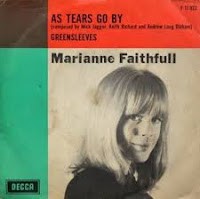
The background to Marianne Faithfull's hit As Tears Go By is explored by Mick McStarkey.
Kathryn Burrington finds that the path to Halnaker Windmill is "a magical tunnel of trees".
Saturday, July 10, 2021
The Joy of Six 1016

Nigel Scott on the Liberal Democrats, queer theory and transsexual rights: "The Liberal Democrats’ have adopted a queer theory centred approach to trans rights. This means that the party implicitly opposes women’s sex-based rights, because women no longer exist as a fixed sex class. Accordingly, any man can adopt the status of a woman on demand and because 'transwomen are women' in the words of the party's mantra, there is no longer a rationale for single sex spaces."
"Having been for centuries essentially a comprehensive for the aristocracy, Eton changed into an oligarchical grammar school. With the incomes of the super-rich racing ahead, especially after Thatcher;s tax cuts for the wealthy and ;big bang; deregulation of the City, the sky was the limit for both fees and resources." To understand Boris Johnson you must understand Eton, arguesAndrew Adonis.
Heather Burns says the new Online Safety Bill gives government enormous to redefine, constrain and censor the boundaries of free and legal speech.
"Today there is no former rust-bucket city, no sometime edgeland, no crumbling dock, no monument to asbestos that has escaped rebranding as a 'creative quarter'." Jonathan Meades pours cold water on fantasies of regeneration.
Jane Nightshade celebrates Nicholas Roeg's 1973 film Don't Look Now.
"In the collection’s final poem ‘Who’ Causley writes of seeing the ghostly figure of himself as a child haunting the places around Launceston he has known his whole life. He sees his younger self wandering beside the River Kensey in old fashioned clothes and has a vision of the fields where he once played, now covered by houses." The Cornish Bird surveys the life and work of the Cornish poet Charles Causley.
Tuesday, April 20, 2021
Six of the Best 1004

"Fundamental to holding onto hope of living in harmony with nature is modernising the UK’s Anglo-Norman land ethic. This cannot abide the idea that land is the core natural asset of the nation and of the planet. Instead, it gives primacy to any private benefit that may accrue to those who choose to exploit it." Laurence Rose says we shall have to be radical if we are going to save nature.
Daniel Button asks if the government will finally act on social care: "The problem with the Care Act ... was that the reality came nowhere near the aspiration. The wellbeing principle lacked teeth, was passed into law while councils were being cut to the bone and the social care system was simply not set up to deliver on these principles."
The Rest is History podcast weighs the importance of the year 1066 to British history.
Owen Hatherley interviews Jonathan Meades about his new book Pedro and Ricky Come Again,
"What a Crazy World is far from your average pop film. Its songs are a blend of music hall and rock'n'roll, and for all the lightness of tone their subject matter is essentially gritty: unemployment, petty thieving, fighting, the generation gap." Pismotality celebrates this 1963 release.
Subscribe to:
Posts (Atom)