Saturday, February 17, 2007

Ming Campbell in a hung parliament

There is an interesting aside in an article on the Scottish elections in this morning's Guardian:
Some observers believe Sir Menzies has privately agreed with Labour ministers, particularly Gordon Brown, whose constituency in Fife borders his own, to maintain a centre-left coalition between the two parties in the Scottish parliament.
No doubt the Scottish Lib Dems can look after themselves, but it is interesting to speculate what might happen in the event of a hung parliament at Westminster after the next election.

Despite his patrician mien - and despite Lady Elspeth - most of Ming's close political friendships are with members of the Scottish Labour establishment. It is likely that his first instinct will be too form a Lib-Lab coalition at Westminster too.

Whether the Bright Young Things who supported Ming during the leadership election will see things the same way is an interesting question.

Judge John Deed: An apology

I'll never say the plot lines of that series are far fetched again.

Tomorrow's Mail on Sunday reports:
The Government was hit by a second legal marital scandal last night after it was revealed that Attorney General Lord Goldsmith had an affair with Britain’s leading Asian woman barrister.

Friday, February 16, 2007

Snuggery in Clun

From the South Shropshire Journal:
A row between past and present members of a hall committee deepened this week after one group was alleged to have chopped down trees and bushes at a children’s play area through fear of paedophiles hiding behind them.
What is snuggery? Explanation here.

Osborne crouching amongst the yoghurts

My House Points column from today's Liberal Democrat News. Osborne's approaches were discussed in an earlier posting on this blog.

Osborne overtures

According to the Daily Mail, George Osborne has been trying to persuade senior Liberal Democrats to defect to the Tories. The paper has claimed that no fewer than three MPs have been the subject of these approaches.

The way the Mail tells it, our MPs hardly dare enter their offices for fear of the shadow chancellor leaping out from behind the umbrella stand and trying to suborn them. “We’ll find you a safe seat,” he cries. “I can even arrange for you to meet Malcolm Rifkind.”

And it’s getting worse. Only this morning I found Osborne crouching amongst the yoghurts in my fridge. To be brutally frank, gentle reader, if you have not been approached by him, you are not quite such an important member of the Liberal Democrats as you thought.

But do not worry. The Tory press was full of stories about Lib Dem MPs changing parties a year ago when we were having our - how shall I put it? - eventful leadership contest. They turned out to be nonsense then. I am sure they are nonsense now.

So let’s forget these rumours and think instead about one of the great English novels. William Thackeray’s Vanity Fair was published in instalments in 1847-8. One of its central characters is a certain George Osborne. And there is something familiar about him:
“He would say it was a warm evening , or ask his partner to take an ice, with a tone as sad and confidential as if he were breaking her mother’s death to her, or preluding a declaration of love. He trampled over all the young bucks of his father’s circle, and was the hero among those third-rate men.”
Young George is not irredeemably bad, but he is snobbish and far too pleased with himself. He lusts after the spirited Becky Sharp but is married to the soapy Amelia Sedley. An army office, he fights at Waterloo and Thackeray ends his account of the aftermath of the battle with the shocking words:
“Amelia was praying for George, who was lying on his face, dead, with a bullet through his heart.”
Perhaps he had been trying to persuade one of Napoleon’s generals to defect to Wellington’s side?

Hazel Blears: A nation holds its breath

An overexcited BBC reports:
Labour chairman Hazel Blears will announce "soon" whether she intends to stand for the party's deputy leadership, the BBC has learned.
I love that "the BBC has learned" to make it sound like an exclusive.

What did the BBC imagine Blears would do? Wait until after the contest? Forget to make an announcement at all?

I love the sound of breaking glass

How much do people change between the ages of 20 and 40?
So asks Stumbing and Mumbling, and goes on:
This question is the key to whether David Cameron is fit to hold any political office

Thursday, February 15, 2007

A wind farm on Lewis?

I think Peter Sanderson, who writes Earthquake Cove, had a less enjoyable time on Lewis than the one I had a few years ago. But he has posted a couple of lovely photographs and I think he is right when he says:
I can see that Lewis would be an incredible place for a wind farm ... But some places simply are not meant for development. They are too wild, too elemental. I cannot say that I enjoyed my time on Lewis. It was cold, difficult, dangerous, bleak. But it left me with a a great gift of this experience that I will not find elsewhere (and another great gift that I have not mentioned on my blog). How will the sacred landscape of Callanish adapt to dozens of giant turbines? It will become industrialised.
Mind you, if they get their tunnel the Outer Hebrides will really change.

Wednesday, February 14, 2007

Is Coate Water safe?

Steve Wakefield, a Tory councillor from Swindon, suggests that the University of Bath may be preparing to bale out of the proposed Coate Water Campus development on the outskirts of the town.

For reasons I explained a year ago, this would be a thoroughly good thing.

Later. There is more in the Swindon Advertiser.

Later still. A sensible local Liberal Democrat view:
We have always maintained that whilst Coate is the exact wrong location for a University campus, the town would greatly benefit from having one.

Elspeth unplugged

There is a substantial interview with one of this blog's heroines - Elspeth Campbell - on the Evening Standard site:
"I just want him to do the best possible job he can, although my prime concern is that he stays healthy. But you know, if the polls result in a hung Parliament, he could be a significant player come the election. People are beginning to recognise that fact."

That Trident motion in full

Liberal Democrat Voice has the text of the Federal Policy Committee motion which is going to our Spring Conference, and the amendments proposed by the Lib Dem Peace and Security Group.

It also provides links to the majority and minority reports from the working group set up to consider the future of Trident.

Frank Field takes Lord Bonkers' advice

Frank Field has called on the Labour Party to pass on the opportunity of having Gordon Brown as its next leader. Writing in the Guardian this morning, he says:
The question then becomes not who is owed the leadership, but who by their very presence shouts at the electorate that New Labour has already moved on to the next stage of its life. Will that be best achieved by a candidate whose hands have been on the steering wheel for the last decade? Or will it come from the younger generation, in a candidate who is not linked in the public mind with what will soon be seen as stage one of New Labour's journey? Step forward, David Miliband.
Paul Linford takes a dim view of this:
The sad truth about Frank Field is that he is an embittered man who blames Brown for the failure of his welfare reform green paper in 1998 when he was challenged to "think the unthinkable," and for his subsequent sacking from the Government.

I hate to speak ill of a fellow Christian, but this article ought to ensure that the process of estrangement from the Labour Party, which has been going on ever since that abrupt dismissal, is now complete.
But he should not be so quick to condemn. Field is only following the counsel of Rutland's most famous peer.

Writing in September last year (see Saturday) Lord Bonkers said:
A word of advice to the New Party: if you do succeed in tipping Blair out of the window, don’t replace him with that dour Brown fellow. Try someone younger and fresher like Tony Benn’s charming daughter Hilary or one of the Millipede brothers.

Images of Cleopatra and Mark Antony discovered


Top 10 Most Fanciable MPs

Adam Bolton has posted 2007's list on his blog. He writes:

It was a difficult and drawn out consultation process involving viewers, bloggers and in-house experts.
Anyway, here is that list in full:
  1. Julie Kirkbride. 46. Bromsgrove, Conservative
  2. Caroline Flint. 45. Don Valley, Labour
  3. Nick Clegg. 39. Sheffield Hallam, Lib Dem
  4. Theresa May. 50. Maidenhead, Conservative
  5. Shahid Malik. 39. Dewsbury, Labour
  6. Dawn Butler. 37. Brent South, Labour
  7. Lynne Featherstone. 55. Hornsey & Wood Green, Lib Dem
  8. Angus MacNeil. 36. Na h-Eileanan An Iar, SNP
  9. Nadine Dorries. 48. Mid Bedfordshire, Conservative
  10. Ed Vaizey. 37. Wantage, Conservative

Tuesday, February 13, 2007

God's never heard of Belgium

I am currently reading Andrew McCall Smith's 44 Scotland Street. One character reports having offered a new hymn to the Church of Scotland when it was revising its hymnary. It began:

God's never heard of Belgium,
But loves it just the same,
For God is kind
And doesn't mind -
He's not impressed with fame.

Monday, February 12, 2007

Biometrics in schools

A blog written by "A concerned parent who doesn't want her children to live in '1984' type society."

More on the Tories and ID cards

In House Points last week I wrote about and welcomed the Tories' decision to come out against ID cards. As I reported:

On Monday David Davis wrote to the cabinet secretary saying a Conservative government would scrap the ID card project. He asked what had been done to protect public funds against the costs of early cancellation. He also wrote to likely major contractors warning them of the Tories’ intentions.
The story has moved on, according to The Register, with this remarkable exchange:
The IT industry has found itself in a handbagging spat with shadow home secretary David Davis over the Conservative party's plans to ditch ID cards should they win power from Labour.

Davis' "official warning" to government said a democratic clause should be written into contracts with ID system suppliers so they could be scrapped if the electorate demanded so.

John Higgins, chairman of IT trade body Intellect, promptly wrote to Davis warning him that the IT industry held such sway over the British economy that the Conservatives would be foolish to mess with them.

Davis's response, sent yesterday, upbraided industry over its creepy anticipation that it would get lashings of gravy from a government project designed to encroach on people's civil liberties.

Higgins had argued that the interests of big business should take precedent over the will of the British electorate.

"It is highly likely that the manner of this intervention will undermine the confidence of the supplier community in any future Conservative government honouring other contractual commitments which may have been entered into by previous administrations."

In other words, should the Conservatives win an election on a promise to ditch ID cards, the previous government's contractual obligations to the IT industry should prevent the new manifesto from being implemented.

Davis retorted: "Your claim to be neither for or against the policy of introducing ID cards in the UK, given the clear commercial interest of a number of your members, is simply disingenuous."
Faced with a spat between big business and a democratically elected government of any colour, we Liberal Democrats should feel inclined to back the government, but it does show the uncharted waters the Tories are now sailing into.

James Gray still in the soup

The Tory MP for North Wiltshire may have survived an attempt to deselect him, but he is not in the clear yet.

A couple of days ago the Daily Mail claimed:
Tory MP James Gray is at the centre of a fresh controversy with the revelation that he is using his Commons expenses to support the cancer-stricken wife he dumped for his mistress instead of paying her out of his wages.

The Wiltshire North MP is paying his wife Sarah £2,400 a month from his Commons staff allowance even though she ceased to work as his secretary two years ago. In that time he has paid her a total of nearly £60,000 from his expenses.
Particularly diverting is this detail:
a senior Conservative at Westminster said Mr Gray could find himself in the bizarre position of facing a claim for unfair dismissal from his wife, even though it is alleged she has not worked for him for two years despite being paid.
Ludwig Wittgenstein writes: My brain hurts.

BritBlog Roundup

Tim Worstall has posted this week's selection of the best from the British blogosphere.

Sunday, February 11, 2007

Mike Oborski

More sad news this evening: Mike Oborski has died.

There is more news on the Wyre Forest Liberals site and Tom Watson, the Labour MP, pays him a notably magnanimous tribute:
The title “great man” is overused in this age of easy tributes and casual sentiment but for Mike, it’s application is properly applied.

A Liberal - not Liberal Democrat, a Polish Consul, the greatest community campaigner I have ever met and probably ever will, he stood up for what he believed in. At various points in time, he drove nearly every member of Wyre Forest Labour Party into incandescent rages such was his genius, but my God did they admire him. They’ll all miss him too. I’ll miss him.

Julian Cummins

I was very sorry to hear of the death of Julian Cummins on holiday in Majorca.

Julian, a former editor of Liberator, was the first Liberal candidate I ever worked for. This was in the council elections in York in 1980 when he narrowly failed to take a seat from Labour.

He was later a councillor in Leeds and the Liberal Alliance candidate for Pudsey in the general elections of 1983 and 1987.

Later. There is more about Julian on the Yorkshire and Humberside Lib Dems site.

Saturday, February 10, 2007

Drug revelations will harm Cameron


Not because people care about cannabis, but because everyone will be reminded that he went to Eton.

Cameron tries to woo Lib Dem MPs

Guido Fawkes points us to an article by Peter Oborne on the Daily Mail website:

Last autumn, George Osborne, the shadow chancellor, invited himself into the office of a leading figure in the LibDem Party. Then, without so much as a preamble, he got down to business and presented him with a dramatic proposition, which he made clear had been sanctioned by David Cameron.

Osborne suggested to David Laws, LibDem work and pensions spokesman, that he should consider defecting to the Conservative Party. In return, he would be offered a shadow cabinet job. At this point, Laws politely and thoughtfully explained that he was not a Tory.

David Laws was targeted because he is regarded by Conservatives as the ablest of all LibDems. He is a former banker and stands on the free-market wing of his party, so much so that some of his ideas on the economy would be regarded as dangerously Right-wing by centre-ground Conservatives.

So it is easy to see why he personally should be courted. But the Tory high command is ambitious for the dramatic capture of a senior LibDem and has other key lieutenants of Sir Menzies Campbell in mind.

Veiled approaches have been made to Jeremy Browne, one of the brightest of the latest parliamentary intake, while LibDem health spokesman Norman Lamb is also seen as an interesting proposition.
A year ago Tory websites were confidently predicting that at least one Lib Dem MPs was about to defect, but nothing happened. I trust that nothing more will come of these rumours either, but I thought I would pass the gossip on to you.

Friday, February 09, 2007

When Simon Cowell met an even bigger bitch

From the Borehamwood & Elstree Times:

Bette Davis made two Hammer films at Elstree in the mid-1960s, entitled The Nanny and The Anniversary and, at the time, she stayed at The Chantry, in Barnet Lane.

Popstar maker Simon Cowell told me that as a child he was a neighbour and remembers being bounced on the actresses (sic) knee.

The return of House Points

From today's Liberal Democrat News. It owes a lot to an earlier posting on this blog - and thanks to Iain Dale too.

Identity crisis
While House Points was taking a break, the prime minister was twice interviewed by police, Lembit Öpik took up with a Cheeky Girl and the Conservatives came out against identity cards. We shall return to Tony Blair’s adventures – though perhaps not Lembit’s – another day, so let’s look at the Tories.

On Monday David Davis wrote to the cabinet secretary saying a Conservative government would scrap the ID card project. He asked what had been done to protect public funds against the costs of early cancellation. He also wrote to likely major contractors warning them of the Tories’ intentions.

At last: a policy from the Tories. And it’s one Liberal Democrats should welcome unreservedly, even if it only catches up with a position we have held for years.

But the interesting question is how it will play with Conservative members. They may not be as keen on watering down Tory authoritarianism as we are.

In the early 1990s I was walking the South-West coast and spent a night in Kingsand -- a village across the Tamar from Plymouth. It was one of those magical evenings when you make friends with the locals and people keep buying you drinks.

Towards closing time, the local Conservatives came in from a meeting and I got talking to them too. They had been discussing identity cards and asked what I thought. I said (a little pretentiously) that I didn't see why, as a freeborn Englishman, I should have to carry a card to show my right to be in my own country.

Yes, they said, there was someone at the meeting who thought that, but the rest of us were firmly in favour of cards. It turned out this was chiefly because of their fears about illegal immigration.

Political activists will put up with anything from their leaders if they think they are being marched to victory. Labour members allowed Blair to discard their traditional policies. Liberals agreed to stand down in half the seats in the country to support David Steel’s "Alliance" project.

But they soon change if success does not arrive. There will be plenty of Tories eager to round on David Cameron if he does not improve his party’s performance markedly at the next election.

Thursday, February 08, 2007

Minister for Deciding How Close People Should Stand to One Another

Congratulations to Vernon Coaker on his new appointment.

Lloyd George, Asquith... and Jacob Rees-Mogg

This blog has been known to poke a little gentle fun at Jacob Rees-Mogg, who is the son of the former Times editor and Tory PPC for the new North East Somerset seat.

Peter Black has gone further, suggesting that Rees-Mogg's appearance on Newsnight (he provides a link to a video of it) is the reason why Liberal Democrats should never countenance working with the Tories. However silly Rees-Mogg's views (and they are very silly), that seems a bit strong. After all, we do run councils like Leicester and Birmingham together.

But if we delve a little further into Rees-Mogg's life some fascinating connections with great Liberal names of the past appear. For, as this website tells us, he is head of global emerging markets and a director of Lloyd George Management.

Lloyd George? Yes, there is a connection with David Lloyd George. The company was founded by Robert Lloyd George, and it turns out that he is the great grandson of the Liberal leader and the author of the book David and Winston: How a friendship changed history, which I reviewed in Liberator last year.

There is more. Lloyd George Management's expert on Latin American markets is one Mark Asquith. Is there another connection? More research shows shows that he is indeed the great great grandson of the last Liberal prime minister.

Wednesday, February 07, 2007

Geoffrey Wheatcroft on Peter Hain

Good stuff from this morning's Guardian:
Gordon Brown comes out of Iraq better than Peter Hain. It is a very long time since British politics has witnessed anything quite as abject and contemptible as Hain's recent interview in the New Statesman.

"The neocon mission has failed," Hain proclaims - now. "People have forgotten about [the government's achievements] because of the Iraq conflict," the Northern Ireland secretary tells us - now. The government found itself working with "the most rightwing American administration, if not ever, then in living memory", he observes - now, in the year 2007, just as he happens to be running for the Labour deputy leadership.

But really, what an utter wretch this man is! What a dismal, slippery poltroon! Like Molière's Monsieur Jourdain learning that he had been speaking prose all his life, Hain suddenly discovers that George Bush is a rightwing politician, something he evidently never noticed in the years when Bush was governor of Texas, and presided over the execution of 153 people - on one occasion publicly mocking a woman he had put to death - or indeed when he reached the White House.

It's quite true that we took part in the Iraq war in order to demonstrate our - or Blair's - absolute loyalty to that American administration. Like Brown, Hain was a member of the cabinet when the war began. Like him, he could have resigned. Like him, he decided, in Lloyd George's phrase, to perish with his drawn salary in his hands.

In fact, Hain went further. Two years ago he was still defending the case for regime change, or insisting that "an Iraq moving into democracy provides a better future for the Iraqi people". And he sneered at what he called the "tired old attack" which "questions the prime minister's integrity" - over the dossiers and claims about weapons of mass destruction, that is.

Set my turkeys free

My favourite commentator on farming and rural affairs, Graham Harvey, has an article on Comment is Free about the economics and health and environmental consequences of intensive poultry farming:
Until the 1960s, turkeys - like chicken - were mostly reared on mixed farms. Their feed was grown on the farm, and many were allowed to roam over pastures and corn stubbles.

Given the opportunity, turkeys will eat significant amounts of vegetation as well as the insects and worms they find in their general foraging. It's now known that poultry meat produced this way contains higher levels of B vitamins, fat-soluble vitamins such as A and D, and essential omega-3 fatty acids than the meat of birds kept in sheds.

This kind of extensive poultry-keeping has other benefits. Free-ranging birds enrich the soil with their droppings, providing fertility to grow the following crop. The enriched soil is better able to sequester carbon, taking carbon dioxide from the atmosphere and locking it up in organic matter. These benefits were largely lost when we started keeping birds in sheds.
On an Overgrown Path has some photographs from Holton in Suffolk, where the outbreak of avian flu took place.

Under the sea to Skye

You cannot fault the people of the Outer Hebrides for ambition. The Independent reports:
Violent storms this winter which disrupted ferries to the Western Isles, and fears that climate change will make the situation worse, have inspired a campaign to build a road tunnel between the Outer Hebrides and mainland Scotland.

Local councillors, business leaders and residents are proposing an undersea link, which would be the longest road tunnel in the world. The Channel Tunnel, which opened in 1994, is 31 miles long, with just 23 miles under the sea, while the Western Isles road tunnel would be 41 miles long and almost entirely beneath the waves.

The project's supporters are considering two alternatives. The first is a 25-mile crossing from Benbecula to the northern tip of Skye, which already has a bridge to the mainland. The second is a 41-mile link between Stornoway on Lewis to Ullapool, Wester Ross. Either option would cost considerably more than the £10bn it took to build the Channel Tunnel.
This seems a good place to add today's Pleasing Trivial Fact. As this story confirms, Donald Trump's mother, Mary Anne MacLeod, grew up on the Isle of Lewis and her first language was Gaelic.

Tuesday, February 06, 2007

Is choice really an illusion?

The Guardian has a full report of Tony Blair's appearance before the Commons liaison committee this morning.

I was particularly struck by the following:

Second subject, and Lib Dem Phil Willis, the chair of the science and technology committee, leading the questioning.

What evidence is there that patient choice in health drives up quality? he wants to know.

Mr Blair points to reduced waiting lists. No, you're going off on a tangent, says Mr Willis. What about quality, not waiting times?

The prime minister says that in 1997 the key issue was waiting times; a few months rather than a few years for cataract operations is an improvement in health care.

But how meaningful is choice if the hospital you attend is not chosen by the patient or even the GP, but faceless bureaucrats at the primary care trust?

Choice is an illusion, says the Harrogate MP. I don't agree, says Mr Blair; payment by results will mean that money follows the patient.
Granted, it is the job of members of this committee (who are the chairs of other select committees) to ask awkward questions. Granted, it is the job of members of opposition parties to oppose.

But Phil Willis here seems not just to be pointing out all the practical problems in implementing the government's choice agenda. He seems to be questioning the very concept of choice itself. And that seems to me an odd thing for a Liberal to be doing.

I stand by what I wrote on the Guardian politics pages in April last year:
If liberalism is to amount to something more than socialism without the identity cards, respect for individual difference must be central to it.
Perhaps there are ways of respecting individual differences that do not involve giving people more choice. But opponents of choice do not talk about them. Too often - in the Liberal Democrats and beyond - they sound like the voice of public sector professionals and almost contemptuous of the views and interests of the wider public.

Welsh cakes all round

Harry has a posting on Crooked Timber about Welsh cakes, complete with the recipe.

This reminds me of one of my favourite parliamentary by-elections: Brecon & Radnor in 1985. I spent polling day in Cwmtwrch-isaf. The polling station was at the local community centre and tellers from all the parties were provided with a table and chair. There was also free tea and Welsh cakes for all comers. No doubt this was against all sorts of electoral laws, but it did make things more enjoyable.

Incidentally, I travelled down to Brecon with the Liberals' East Midlands regional agent, a young man by the name of Chris Rennard. Does anyone know what happened to him?

Monday, February 05, 2007

The Tories and identity cards

Iain Dale crows:
The LibDems seem to take great delight in asserting that they are the only Party which is totally opposed to ID cards. Well they won't be able to trot out that old canard again.
Why?
Today David Davis, has today written to the Cabinet Secretary, Sir Gus O'Donnell giving formal notice that an incoming Conservative Government would scrap the Government's ID card project and asking what provision, if any, has been made in the relevant contractual arrangements to protect the Government - and public funds - against the costs that would be incurred as a result of early cancellation of the scheme. A similar letter has also been sent to the likely major contractors warning them of our intentions.
This is good news and the Conservatives are to be commended. But I wonder how this will play with the membership.

I remember one of my walking holidays around the South-West coast from the early 1990s. I spent the night in Kingsand - a charming village across the Tamar from Plymouth. It was one of those magical evenings where you make friends with the locals and people keep buying you drinks.

Towards closing time, the local Conservatives came in from a meeting and I got talking to them too. They had been talking about identity cards and asked what I thought. I said (a little pretentiously) that I didn't see why, as a freeborn Englishman, I should have to carry a card to show my right to be in my own country.

Yes, they said, there was one person at the meeting who had said that, but the rest of us are all in favour of cards. There major reason for supporting them was their belief that the country was overrun with illegal immigrants.

Perhaps none of us can be quite so sceptical about that as I was in those days, but this anecdote does serve a reminder of just how far the Tory rank and file will have to travel if they are to embrace Cameron's attempt to bring the party back into the mainstream.

I wish Cameron well, but a lot of people will pounce on him gleefully if he fails to improve the Tory performance markedly at the next election.

Oval Office 2008

"An impartial blog on the next US Presidential election."

Found via Tom McEvoy.

Democratic (sic) Unionists

From the BBC News site:

DUP assembly election candidates have received a contract asking them to sign a resignation letter, which could be triggered if they breach party policy.

The contract was described as "draconian" by one member.

The member told the BBC DUP assembly members could find themselves out of a job without even being consulted.

A DUP spokesman said he was not aware of any contract at this stage, but said it was normal practice for candidates to sign one.

A two-page contract with a letter of resignation attached has been received by a number of candidates standing in the election.

BBC Northern Ireland political correspondent Martina Purdy said one of the clauses imposed a £20,000 fine on members as a form of discipline.

Rebranding the fruitcakes

The Daily Telegraph reports:
The UK Independence Party is today preparing to change its name as part of a re-branding exercise designed to woo large numbers of Conservatives disaffected with David Cameron.

Nigel Farage is confident that a change of name will help his party win seats in local elections and gain a foothold in the Commons

As part of an assault on the Tories, the ruling executive of the anti-Brussels party is expected to approve plans to promote itself as the Independence Party for the local elections on May 3.

Sunday, February 04, 2007

BritBlog Roundup

Tim Worstall has just posted this week's selection.

Harry Ellis: A star is born

While it was great to see Jonny Wilkinson back in an England shirt yesterday, the most important thing about the victory may well turn out to be the emergence of Harry Ellis. For the first time since the 2003 World Cup, we have a world-class scrum half. And he play for Leicester Tigers.

Let's hope he doesn't hurry to go on A Question of Sport or take up ballroom dancing.

Your mate's down the corridor and he's singing like a canary

The News of the Screws makes some remarkable claims this morning:

Shock admissions by one of Tony Blair's closest aides are set to lead to three people being charged in the Cash For Honours scandal.

The News of the World can reveal that the Prime Minister's political secretary John McTernan "started the dominos falling" when quizzed by cops.

These dominos are expected to come crashing down around Blair, who yesterday pleaded with the Labour Party to be allowed to stay on in Downing Street. We can reveal:

  • The new evidence led to two arrests and Mr Blair being questioned by detectives.
  • Now three people, including two of the PM's closest aides, the Prime Minister's fundraiser Lord Levy and his head of government relations Ruth Turner, are set to be charged.
  • Substantial new evidence, including McTernan's diaries, has now been disclosed to the Crown Prosecution Service.
  • Mr Blair may now be questioned again, possibly even under caution, after he failed to give satisfactory answers to police.

Turkey factories are not bootiful

Why is everybody calling Bernard Matthews' premises at Holton a "farm"? Almost unimaginably, it holds nearly 160,000 turkeys. It should surely be called a factory.

Here is a link to Compassion in World Farming.

Saturday, February 03, 2007

Lib Dem manifesto site launched

The Liberal Democrats have launched a website as part of the process of drawing up their next general election manifesto.

Liberal Democrat Voice quotes Steve Webb, as saying:
Unlike the other parties, we want a genuine conversation, and the manifesto we produce will be better as a result.

The days of the mass-produced print manifesto are over. Our manifesto for the next election will embrace new technology designed to reach people who have been excluded from the political process for too long.
Whether the people traditionally excluded from the political process have easy access to personal computers, I rather doubt. Still, it is an exciting initiative.

Why "denial" is a dangerous concept

On Tuesday I noted with approval an article by Frank Furedi which discussed "denial" as the first of a series on "Really Bad Ideas".

Just how bad an idea it may be can be seen from an article in yesterday's Daily Telegraph:

People who question the official history of recent conflicts in Africa and the Balkans could be jailed for up to three years for "genocide denial", under proposed EU legislation.

Germany, current holder of the EU's rotating presidency, will table new legislation to outlaw "racism and xenophobia" this spring.

Included in the draft EU directive are plans to outlaw Holocaust denial, creating an offence that does not exist in British law.

But the proposals, seen by The Daily Telegraph, go much further and would criminalise those who question the extent of war crimes that have taken place in the past 20 years.

The legislation will trigger a major row across Europe over free speech and academic freedom.

Of course, you have to enter caveats when discussing Telegraph stories on Europe. Does anyone know any more about this? Is it just another scare?

On a lighter note, I liked the observation of England Expects:
If Turkey joins the EU then we will have the comedy situation that denial of the Armenian Holocaust is a criminal offence in France, whilst mentioning it is a criminal offence in Turkey.
Thanks to Tim Worstall for the links.

Local radio for local people

I was walking across The Square in Market Harborough this morning when somebody handed me a leaflet for Harborough FM.

Friday, February 02, 2007

XI Forgotten Men of England

The England one-day side has tried, tested and (mostly) rejected no fewer than 36 players since its tour of Pakistan in 2005-6.

On the Cricinfo site Andrew Miller looks at eleven recent caps who will not be going to the World Cup.

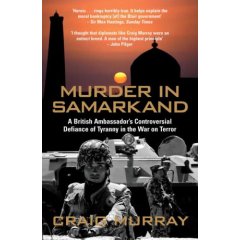
Murder in Samarkand

Craig Murray's book is now out in paperback.

He also has a blog.

Thursday, February 01, 2007

I'm Hobbes. Which famous feline are you?

I don't normally go in for this sort of thing, but this one is rather appealing. Found via Beep! Beep! It's Me.


Which famous feline are you?


You're Hobbes. First of all, the makers of this quiz would like to congratulate you. You have our seal of approval. You are kind, intelligent, loving, and good-humoredly practical. You're proud of who you are. At the same time, you're tolerant of those who lack your clearsightedness. You're always playful, but never annoying. For these traits, you are well-loved, and with good cause.
Take this quiz!


Quizilla
Join

Make A Quiz More Quizzes Grab Code

When will Blair go?

Paul Linford writes on his blog:
It's not that often I take issue with Guido Fawkes but I was surprised to see him advising punters today to back a July departure, admittedly before news of the second interview broke.

I honestly think the very best he can hope for now is a March announcement on a formal departure just after the local elections in May. That way he still gets to do his 10 years, while at the same time lancing the boil ahead of those elections to limit the damage to Labour.

Of course, Blair himself remains in denial about the degree of damage he is doing by hanging on, but the man who has run Britain like an elected president is about to be reminded that we live in a parliamentary democracy after all.

To put it bluntly, I don't think Labour MPs are going to put up with another five or six months of this. It will be a plain, old-fashioned backbench revolt that gets him in the end.

The man who invented Aero bars

Yesterday's revelation that Veronica Watkins was the woman who put the bubbles into Wispa, reminded me of another trivial fact.

The process for getting the bubbles into Aero bars was invented by the novelist Nigel Balchin. This fact is referred to in passing by Gilbert Adair and you can learn all about Balchin's work for Rowntree's in an article from The Psychologist (.pdf file).

Balchin is probably best remembered today as the author of the novel The Small Back Room, which was filmed by Michael Powell and Emeric Pressburger.

Making up British values

Last March I wrote in Liberal Democrat News:
The problem with today’s world is not that terrorists believe in their cause so strongly: it’s that the democracies’ belief in theirs is so weak.
In today's Guardian Timothy Garton Ash quotes a 22-year-old Muslim woman from Leeds to similar effect:
"The bad thing, and I don't know how we can solve this, is that they [the British] don't really know what their values are. So when they are attacked they kind of seem to be making it up."

Wednesday, January 31, 2007

Getting the bubbles into a Wispa

For once some news from the Welsh Liberal Democrats that doesn't involve Lembit Opik.
Writes David Cornock on the BBC website:
The party has appointed "deputy spokespeople" in the run-up to the Welsh assembly elections in May to ease the burden on assembly group leader Mike German's top team.

Among those promoted is Veronica Watkins, the new deputy spokesperson on science and the environment. She is well qualified for the (unpaid) post, having once played a key role in the introduction of bubbles into the now defunct Wispa chocolate bar. She also happens to be married to Mike German.

A slow news day in Shropshire?

From the Shropshire Star:
Former Spice Girl Mel B today denied she was planning to leave her Beverley Hills retreat for a new home in Shropshire.

Tuesday, January 30, 2007

Denial is just a river in Egypt

Frank Furedi has a new essay on the Spiked website. Billed as the first in a series on "Really Bad Ideas", it looks at the current popularity of the concept of "denial".

As he writes:
Disbelief in today’s received wisdom is described as ‘Denial’, which is branded by some as a crime that must be punished. It began with Holocaust denial, before moving on to the denial of other genocides. Then came the condemnation of ‘AIDS denial’, followed by accusations of ‘climate change denial’. This targeting of denial has little to do with the specifics of the highly-charged emotional issues involved in discussions of the Holocaust or AIDS or pollution. Rather, it is driven by a wider mood of intolerance towards free thinking
Good stuff.

Discovering Malcolm Saville

At last, I am not the only blogger interested in this children's author, best described as "a thinking child's Enid Blyton".

Now there's Harry on Crooked Timber too.

Good news from North Wiltshire

Good news for the Liberal Democrats, at any rate.

James Gray MP has been reselected to fight North Wiltshire for the Conservatives after a particularly unpleasant row within his local party.

There have been boundary changes in this part of the world, where the most promising Lib Dem target is now the Chippenham seat. Nevertheless, the amount of bile spilt and the prospect of an independent Conservative standing against Gray must make it a great deal more interesting for us now. See the comments on this Liberal Review posting for more details.

Monday, January 29, 2007

Lembit: Latest love shock

Thanks to the Guardian.

Paul Channon and The Winslow Boy

Iain Dale reports that the former Conservative cabinet minister Paul Channon has died.

Time, I think, to uncork one of my favourite trivial facts. Channon was the dedicatee of Terence Rattigan's play The Winslow Boy, as this article confirms:
Rattigan began writing the play in July 1945 while Great Britain was in the midst of a General Election which would oust Winston Churchill, the hero of the war, from office. We know Rattigan was enthusiastic about the theme because he read portions of the work in progress to his close friend, the well-known man about town, diarist and Conservative MP, "Chips" Channon. His reaction was encouraging. Rattigan finished the play in just six and half weeks and dedicated it to Channon s young son, Paul who would later be a member of Mrs Thatcher's government.
As I recall, the dedication said something like "In hope that he will live to see a world where this play's moral will not have to be pointed." Whether Mrs Thatcher quite brought this about, I shall leave you to decide.

Later. Channon's Telegraph obituary gives the dedication as "in the hope that he may live to see a world in which this tale will point no moral".

North Wiltshire Tory selection latest

The row over James Gray's attempt to keep his Commons seat is becoming almost unbearably sordid.

The Daily Telegraph reports:
The wife of a Conservative MP who left her for another woman has attacked her husband for belittling her fight against cancer.

Sarah Gray, the wife of the North Wiltshire MP James Gray, has written to the Conservative leader David Cameron to say she was "deeply hurt" by her husband's behaviour after he left her for Philippa Mayo, 44, a mother of three and fellow countryside campaigner.

Mrs Gray, 51, said she had been forced to respond after her husband had claimed she had merely had treatment for "pre-cancerous cells."
Gray's future will be dicided by the result of a ballot of local party members, which will be announced tomorrow.

Sunday, January 28, 2007

How Chris Huhne won the leadership election

Last year's Lib Dem leadership election was noticeably light on policy discussion, but two issues did achieve some prominence. On each of them the party now supports the line taken by Chris Huhne and opposed by Ming Campbell during that election.

The first issue is environmental taxation, which forms the centrepiece of the new economic policy adopted at last year's Conference in Brighton. Chris Huhne supported this strongly during the leadership election, but Ming was far less convinced - as I pointed out at the time.

The second issue was the setting of a deadline for the withdrawal of British troops from Iraq. This was the subject of a clash between Huhne and Campbell during the special Question Time programme that the BBC organised during the campaign. As its website reported:
The Lib Dem leadership challengers have clashed over when British troops should be pulled out of Iraq.
In a BBC Question Time debate, Simon Hughes and Chris Huhne pushed for troops to leave by the end of 2006.
Mr Huhne said he knew from his time in business that deadlines were the best way of ensuring things happened.
But Sir Menzies Campbell, who does not want to set a firm deadline, countered, saying: "There are 8,500 lives at stake. This ain't business."
Perhaps this is not such a surprise. Ming Campbell's appeal to the party and to the voters has never relied strongly upon his command of policy detail. It has always relied more upon his personal qualities - particularly gravitas (or "bottom", as they used to say in the 18th century). Such ideas as there were during the leadership campaign came largely from the Huhne camp.

But issue 309 of Liberator magazine (.pdf file downloadable from here) gives another clue to what was going on. The magazine's Radical Bulletin section wrote:
But how was Huhne to carve out a platform distinct from his rivals? Those present at the leadership hustings in East Grinstead found out when Lord Oakeshott, appearing on Huhne's behalf, for some reason chose to announce his campaign secrets from the platform.
He said a group of backers had looked for "wedge issues" that would get the relatively unknown Huhne noticed. They lighted on withdrawing troops from Iraq, not renewing Trident and a greater environmental emphasis as areas on which they could challenge Campbell and, presumably, win some supporters over from Hughes.
Oakeshott did not say that these issues were particularly dear to Huhne, merely that they were chosen from their ability to attract attention.
Yes, there was an element of calculation to the Huhne campaign. But I suggest the issues that would help the third candidate in a Lib Dem leadership election have a lot in common with those that would help the third party in a general election.

Which is why the Huhne line has become the Lib Dem line on two of the three issues he identified.

Saturday, January 27, 2007

Friday, January 26, 2007

Snailbeach District Railway


A group has been set up to restore this narrow gauge railway in the wilds of Shropshire. It has, of course, its own blog.

The line never carried passengers while it was operating, but the group intends to do so if it is reopened.

For the history of the SDR, see the Colonel Stephens Railway Museum, from which I borrowed this rather fine image.

Later. But now read this.

No New Trident

The Lib Dem Peace and Security Group has set up a site to boost its campaign to commit the party to opposing a replacement for Trident. The vote will take place at the Liberal Democrat Spring Conference in Harrogate.

I have always been something of an agnostic on this issue, and don't have the time to comment in depth today, but there is some thought-provoking material on the new site.

John Prescott and Sir Anthony Eden

I have referred a couple of times to the story that, when Eden took a cruise after his resignation over Suez, his cabin steward was a young John Prescott. Even so, I feared that it was a little too good to be true.

The pleasing truth is that it really did happen. To learn more, read this page on the BBC website or listen to Prescott at Your Service on BBC Radio 4 on Wednesday 31 January at 11 a.m. or Sunday 4 February at 1.30 p.m.

Wednesday, January 24, 2007

Eaten by Missionaries

Iain Sharpe tells me that his blog has woken up. It is well worth a visit.

He writes:
it’s harder to start blogging again once you have stopped than to keep going when you’ve started.
Oh dear.

Working my way back to you

Blogging remains light - and is likely to do so for a while - because of continued family problems. The same is true for my other writing efforts. But we'll get there.

On the bright side, a letter has flooded into Cowley Street asking what has happened to my House Points Column in Liberal Democrat News.

So someone has noticed.

Saturday, January 20, 2007

Correction of the Week

This effort from Monday's Guardian deserves to be remembered:
A rigid application of the Guardian style guide caused us to say of Carlo Ponti in his obituary, page 34, January 11, that in his early career he was "already a man with a good eye for pretty actors ..." This was one of those occasions when the word "actresses" might have been used.

That was the week that was

Apologies for the lack of updates since Monday. I did warn you. Here are some meaty stories that came up during my absence from the blogosphere...

From politics.co.uk:
Former home secretary David Blunkett has admitted that anti-social behaviour orders (Asbos) are not working and are seen as a "badge of honour" by some youngsters.

The Sheffield Brightside MP was asked if he still had faith in the measures that, although introduced two years before his time at the Home Office, he championed. He replied: "Not wholly."
From Hot Ginger and Dynamite:
the priority and ordering of the stories on Newsnight last night was bizarre in the extreme. The lead story was a hack job by Michael Crick, along the lines of “On the day that the Tories launch a campaign for more success in the North ... a Conservative activist was found to have sent an email to a Conservative Councillor in Bradford, in which he called the local Labour Party Chair a cripple”. 
This may have merited a story in the Bradford Telegraph and Argus, but to lead Newsnight with it was very curious. To place that story ahead of the dawn arrest of the Prime Minister’s Director of Government Relations in connection with sale of honours, which seems likely to be the greatest scandal of the Labour Government, is shocking.
From Guido Fawkes:
Guido is given to understand that the police have recently discovered an evidential "smoking gun" and that they are now more confident that this will all see the light of day at the Old Bailey. There is increasing confidence that the CPS will be compelled, by the evidence, to bring prosecutions.

The denizens of Downing Street can huff and puff all they like, but their house is coming down...

Monday, January 15, 2007

NHS up the creek

NHS Blog Doctor has a nice parable about a rowing race between the NHS and Marks & Spencer:
Patricia Hewitt was discouraged and depressed about the crushing defeat. She appointed a team of senior managers to investigate and to recommend appropriate action.

Their conclusion was that the Marks & Spencer team had eight people rowing and one person steering, whilst the NHS team had eight people steering and one person rowing. Patricia did not like the report, so she hired a private management consultancy company and paid them a large amount of money for a second opinion.

The consultants opined that too many people were indeed steering the boat, whilst not enough people were rowing and that, in order to prevent another defeat, the NHS rowing team's management structure should be reorganized to four steering supervisors, three area steering superintendents and one assistant superintendent steering manager.

They also recommended a new performance system, involving pre-determined targets that would give the one person rowing the boat greater incentive to work hard. The performance system was called the "Rowing Team Quality First Program" and the rower was required to attend twice weekly meetings throughout the year at which he ate bourbon biscuits, was given free pens and listened to presentations from consultant rowing specialists who, thought they had never rowed themselves, were very knowledgeable.
Read it all here.

Should we burn Guido Fawkes?

Bloggerheads is back with a long and powerful post attacking Britain's best known political blog Guido Fawkes. He writes:
Because this is long, it is 'boring', so here's the executive summary:

1. Guido, through a number of deceits, renders any meaningful interaction with his weblog inert... above all, he's a comment cheat and a disgrace to blogging.
2. Guido is practically inviting politicians to avoid blogging or work to restrict the activity. It is honest bloggers who will pay the price.
3. Most of Guido's 'scoops' are nothing of the sort
4. Guido is a shameless opportunist and he's using your own frustration(s) against you.
5. Guido is lower than tabloid scum... and that's saying something.
6. Watch out for the switch, when Guido secretly starts (or continues) batting for those in power that he favours.
7. Guido is a stat-whore.. and a figure-fiddling one at that.
8. Guido insists on knowing where the funds come from for politicians/interest-groups, but he's awfully secretive about what funds his activities.
9. Guido is nothing but a smart-arse arsonist... and that's only if we take his word for it.
10. Guido may not realise it, but he's a bit of a homophobe... and (surprise, surprise) like attracts like.
11. Guido betrays his readers and his informants.
My own view is that anyone who believes everything they read on a site like Guido's should not be allowed out on their own. Political gossip is not edifying, but - hell! - it's fun.

So I shall not be taking my link to Guido down, even if I am not terribly proud of it. I shall be restoring a link to Bloggerheads though.

Sunday, January 14, 2007

Tim Worstall: Well played, sir!

Tim Worstall has posted his hundredth Britblog Roundup this afternoon.

Perhaps he has brought up his ton with a scampered single rather than a glorious six, but it is still a mighty blogging achievement.

Saturday, January 13, 2007

Who will be the next Lib Dem leader?

Of course, we all believe that Ming is the greatest Liberal leader since Gladstone and should stay in the position for ever and all that.

Even so, you may enjoy this thread on politicalbetting.com.

It's murder for Labour in Rochdale

It seems the Rochdale Labour Party makes North Wiltshire Tories look like a band of brothers.

Back in November we reported Labour disarray in Rochdale. Things have moved on since then.

According to Kevin Maguire on the Daily Mirror blog:
Danczuk, a frontrunner to be selected as Labour's candidate in marginal Rochdale, says a caller with an Asian accent demanded he pull out of the race. "He said 'If you don't withdraw from the Parliamentary selection process meeting on the 6th January you'll find your body parts spread across the M6 motorway'," said Mr Danczuk.

Raiders of the Lost Archive

An article in today Times makes this ITV series sound rather fun:
The young Michael Parkinson looked a bit like Alastair Campbell and once pretended to have his back tattooed by an old codger called Sailor Jack in a dingy Liverpool parlour. When he is shown this alarming clip on Raiders of the Lost Archive, the old stager is suitably aghast, but embarrassment turns to joy when they show him his only interview with Laurence Olivier on an early cinema show.

Even more alarming is Rolf Harris showing Joan Bakewell his didgeridoo on the po-faced arts programme Late Night Line-Up. Or Rolf playing a Stylophone duet with Liberace, an event he says he has forgotten, even after the amiable, blokeish presenter Paddy McGuinness has played it back to him.

In four half-hour shows, two ageing celebrities per programme are confronted with clips from their misspent TV youth. Others feature Bruce Forsyth, Bill Oddie, Chris Tarrant and Johnny Briggs from Coronation Street. All tap into the semi-submerged world of TV archive retrieval.
The programme also has its own website. The first episode will be broadcast on Tuesday 16 January at 10 p.m. on ITV1.

Friday, January 12, 2007

Would you like to be Chancellor, Darling?

The Scotsman thinks it knows something important about Gordon Brown's plans for his first Cabinet:
Alistair Darling will next week lead Britain's biggest ever trade mission to India where he will link up with Gordon Brown.

The three-day trip to Mumbai, Delhi and Bangalore will boost speculation at Westminster that he is set to become Chancellor when Mr Brown takes over from Tony Blair as Prime Minister.
"When Mr Brown takes over from Tony Blair as Prime Minister"? Does anyone know the Scots for "hubris"?

Philippa Pearce: Minnow on the Say

It seems I am not alone in preferring Minnow on the Say to Tom's Midnight Garden amongst the works of the late Philippa Pearce.

Daria Donnelly writes:

Philippa Pearce's 1958 Tom's Midnight Garden ... is considered one of the finest novels written for children, "as near as any book I know to being perfect in its construction and writing" according to critic John Rowe Townsend. But I think Pearce's recently republished first novel, Minnow on the Say ... is even better.

Yes, Tom's Midnight Garden is terrific. It tells the story of a boy whose loneliness is both expressed and relieved by nightly play in a sprawling and inhabited late-Victorian garden which, by day, is mere pavement and garbage cans. The nature of time, desire, and memory - Pearce delicately conveys and considers each. And yet...communication technology and style have changed, enough that Tom's means of expression (effusive letters to his beloved brother) slightly estranges today's reader.

Not so Minnow on the Say, with its timeless, if more conventional plot. The story begins in 1930s England when David Moss, the child of a bus driver, finds a lovely, neglected canoe tossed onto his family's dock after a storm swells the river Say. He desperately wants to keep it, but his father urges him to find the owner.

That turns out to be young Adam Codling. He is last in the line of a now-impoverished family that has occupied the banks of the Say for centuries. The only way that the Codling estate might be saved, and Adam not sent to relatives in Manchester, is if he and his new friend David can find the treasure that an ancestor hid during the time of the Spanish Armada. Equipped with a single clue (a four-line poem) and their canoe, the Minnow, the boys spend a summer questing for treasure.

They cover a lot of territory and so does the book: poverty, greed, mourning, class relations, the nature of marriage and of friendship, village ways, and more. Don't read this expecting misty nostalgia. Pearce's love of village and river life shines through (she grew up on the river Cam in the village of Great Shelford), but so does her experience of the London Blitz and the trauma of World War II.

You might never read a more painful account of the ravages of mourning as those scenes in which Adam's grandfather, demented by denial of his only son's death during the Great War, fails to understand that the boy he lives with is his grandson.

Broadband at The Stiperstones Inn


One of my favourite pubs in Shropshire is The Stiperstones Inn.

Now it has something else to recommend it: a wireless network installed as part of the Switch on Shropshire project. There is more on this innovative project to bring broadband to remote rural areas in, of course, the Shropshire Star.

Charming water colour borrowed from the pub's website.

Thursday, January 11, 2007

North Wiltshire Tories go to war

Extraordinary goings on in a part of the world where Liberals have traditionally come second but never won. As the Daily Telegraph reports it this afternoon:
A Conservative MP, who is fighting for his political life after his affair with a married mother of three was exposed, has written to supporters urging them to look past his “human failings” and judge him on his role as an MP.

The news comes as 1,000 members of the North Wiltshire Conservative Association start to vote today to decide whether to adopt James Gray as their MP at the next general election.

Mr Gray called for the postal ballot after the constituency’s executive council decided to deselect him in November in the wake of Mr Gray’s widely publicised affair with Philippa Mayo, a married Countryside Alliance campaigner, while his own wife Sarah was being treated for breast cancer.
Indeed there are letters flying about in all directions as the different factions take shape. Conservative Home has the text of them all here and here. The comments on those postings make entertaining reading too.

Wednesday, January 10, 2007

Home Office ministers on thin ice

The Times reports:
Two Home Office Ministers were fighting for their careers tonight after it emerged that senior police had alerted them to problems over Britons convicted abroad.

Chief constables wrote to Tony McNulty, the Police Minister, three months ago and the letter was then passed to Joan Ryan, a junior minister.

The letter advised Mr McNulty that given earlier problems over foreign national prisoners it might be wise for the Home Secretary to be briefed on the issue.

Ms Ryan’s office acknowledged the letter in December, according to a report on ITV news.

Fear and loathing in Cowley Street?

Iain Dale prints an anonymous e-mail from a Lib Dem party expressing concern at the way the party is being run.

LibDem Voice and Norfolk Blogger do not approve of the writer's decision to send it to a Tory blog.

Tuesday, January 09, 2007

LibDem Voice goes phoot!

Worrying news from Rob Fenwick.

No doubt this valuable site will be up again soon.

Later. It's back! Unphooted.

You'll thank me for this one day, Tompkins

The excellent ARCH blog points us (sort of) to a worrying story from York. Schools there are taking children's fingerprints and using them to issue books from their libraries.

Depressing but not new, you say.

But what is new is one of the arguments used to defend the procedure:

Chris Bridge, head teacher at Huntington Secondary, said the system was preparing pupils for a world in which terrorism was rife, and their privacy would be further invaded.

He said: "These children, frankly, are growing up in a world where identity and being certain about your own identity is increasingly important.

"All the measures to do with ID cards will possibly invade their privacy even further, but the world has no answer to terrorism without using these things and I would see us as getting them ready for the world in which they will have to live."

Magnus Magnusson and Waking the Dead

I was sorry to hear of the death of Magnus Magnusson. He was one of the dwindling band of public figures who have been there throughout my life. Among sports commentators, for instance, Bill McLaren, John Arlott and David Coleman are all dead or retired. There is only Peter Alliss left, though John Motson runs him close.

Magnusson was most famous, of course, for presenting Mastermind and it is hard for people today to appreciate just what a phenomenon that programme was in its early years. But I can remember his presenting the BBC2 archaeology series Chronicle even before that.

I also have something of a personal connection with Magnusson. He was given an honorary degree and made a speech at the ceremony when I got my BA from York. (When I got my MA from Leicester we had Tom Butler. He was the Bishop of Leicester. It was what he did.)

Best of all when I was a child, he sounded like a minor character from Noggin the Nog.

I suspect that I watch Waking the Dead for similar reasons. The acting - from Trevor Eve and Sue Johnston in particular is good, even if the series as a while is often overexcited and rather nasty.

But what I really like is that I can remember Trevor Eve in Shoestring, which was screened some 28 (gulp) years ago. Watching him convinces me that I am still young.

Morrissey to sing Eurovision

This has to be the story of the day:

Former Smiths singer Morrissey could represent the UK at the 2007 Eurovision Song Contest, the BBC has confirmed.
As a Liberal England exclusive, we are able to bring you the first draft of his song. Early indications are that he is adapting his style well to the demands of the contest:
The rain falls hard on a humdrum town,
this town has dragged you down.
I'm gonna bounce up and down on my spring!
Do you really think
She'll pull through?
Do you really think
She'll pull through?
Boom, bang-a-bang, I love you!

Monday, January 08, 2007

Lembit in love latest

A couple of stories from Digital Spy.

There's:
The Cheeky Girls and their mother/manager are in debt worth around £130,000, according to a report.

A list of music industry figures are owed cash by the stars and Margit Semal, who controls their career, says the Mail on Sunday.

Graham Stone, of Devon music agency Vegas Entertainments, said: "I've been in the business for 35 years and I've never encountered anything like the trouble I've had with Margit Semal. We've been to court five times and got nowhere."
And:
Cheeky Girl Gabriela Irimia has been banned from moving in with her new boyfriend.

The singer's mother Margit has told her that she must marry Lib Dem MP Lembit Opik before they can share a home.

"Gabriela would never move in with him until she got married," Margit confirmed to The People.

Adil Rashid interviewed

A comment on our most recent posting on Rashid points to an interview with him on the cricket blog The Corridor of Uncertainty.

Sunday, January 07, 2007

TV Film of the Week: The Kidnappers


Two little orphan boys are not allowed a dog by their stern grandfather, so instead they steal a baby to have something to love and play with.

Insufferably sugary? Not a bit of it. The Kidnappers, to be shown by Channel at 10.00 a.m. on Tuesday 9 January, is actually rather a bleak film, dealing with poverty and racial tension. It was made in Scotland in 1953, but set in Canada at the time of the Boer War. So much for the idea that British films of the period were always insular.

The best account of the film I can find is in the obituary of one of the young stars, Vincent Winter, who died in 1998. Tom Vallance writes:

The film's success was largely due to the performances of the two young lads in the leading roles, John Whiteley and, playing his younger brother, the chubby-cheeked Vincent Winter, who managed to be totally endearing without ever becoming self-consciously cute. It is the little dog-lover Davy (Winter) who suggests, when the boys are deciding on a name for the infant, "We could call it Rover."

Whiteley and Winter were both given special miniature Academy Awards for their "outstanding juvenile performances", and Winter went on to have a lifelong career in show business, though not eventually as an actor ...

Winter was born in 1947 in Aberdeen, Scotland, and was only five years old when discovered by a children's coach, Margaret Thompson. Whiteley had already played a major role in Charles Crichton's Hunted (1952), but Winter was without experience.

Philip Leacock recalled: "We brought the children in to test for the parts; we did play situations, as we did with the film itself. Vincent couldn't read so he had to be firmly taught lines - he had a memory like a computer. He would do his own lines aloud and then silently mouth everyone else's words!"

The naturalism that Winter conveyed gave no hint of the primitive methods of training. "If we had a little white ratting dog," he suggests to his grandmother, still hopeful, "it wouldn't eat but rats and it could have a wee end off of my ration on a Sunday."

Whiteley, nearly three years older, was also Scottish, and part of the two boys' charm lay in their melodious Aberdeenshire accents. "Is it our babby now?" asks Winter after they discover the child. "It's mine," replies Whiteley soberly, "but you can have a loan of it while I've other business."

Jon Whiteley is now a distinguished art historian at the Ashmolean Museum in Oxford.

Why the Lib Dems should be careful how they choose their candidates

Back in July 2005 the Guardian reported that Simon Hughes had suggested that:

advertise for would-be MPs in newspapers, women's magazines and on the radio, their president urged yesterday.

Even non-members could apply to stand as a Lib Dem parliamentary candidate under plans introduced by Simon Hughes.

I was less than complimentary about the idea at the time:

If he means a party needs philosophers, economists and novelists as well as activists, he is right. But our opponents would hang a crass idea like advertising for candidates round our necks for years afterwards.

Simon should take his shrimping net off to Herne Bay for a week or two and return refreshed for the fight.
A few days ago Iain Dale discovered an old article from Liberator that said:
Even more startlingly, the PCA believes “in the longer term … there is a case for ‘headhunting’ of suitable candidates within and outside the party, e.g. among students at universities and colleges.” Yes, you read that right. The body that represents the party’s parliamentary candidates believes that people who do not belong to the party should be approached to stand as candidates for it in general elections.
There are always those who are attracted to such gimmicks. Let this story serve as an awful warning to them.

Labour in the red

A cheering story from today's Independent:
Labour is in no fit financial state to fight the next election because it has been "bankrupted" by the cash for honours affair, senior Labour MPs have warned.

MPs, including those on Labour's ruling body, say the party does not have the cash to pay back almost £10m in loans due to be repaid this year.

Labour figures are also bracing themselves for a massive legal bill for advice to party figures caught up in the police investigation into cash for honours.

The scale of Labour's debt is so large that all money coming into the party, which could have been channelled to vulnerable seats, will have to be diverted to pay off a huge number loans.
I think we see why state funding of political parties is suddenly on the agenda.

Michael Vaughan back as England captain

The BBC reports:

Michael Vaughan has replaced Andrew Flintoff as England captain for the one-day series in Australia.
One's natural reaction to this move is pleasure or even relief. But is it such a good idea?

First, there is the worry that Vaughan's knee will not stand up to a one-day series against Australia and the subsequent World Cup. And if it goes again, then that will probably be the end of his career. Are we risking this long-term disaster in an attempt to avoid embarrassment over the next couple of months.

Second, there is the fact that Vaughan has never been a terribly good limited overs player. As the BBC says:
In 74 matches, the Yorkshire man has yet to score a century, averaging 28 with a top score of 90, which was against Zimbabwe in December 2004.
So, whatever Vaughan's virtues as a captain, it is unlikely that his batting will make that much difference.

Third, is his hurried recall really an attempt by the selectors to put off having to make a long-term decision about the test match captaincy? That appears to be a straight fight between Flintoff and Strauss, with recent events in Australia suggesting that it is Strauss who should win.

But taking the captaincy away from Flintoff and giving it to Strauss would be a public humiliation for Freddie. So is giving it to Vaughan just a risky way of letting Flintoff down gently?

Friday, January 05, 2007

Next stop is Iran

Suddenly the smell of Britons being prepared for an attack on Iran is all pervasive,
says Robert Fox on The First Post. Read him.

Blimey, it's Blakey


On Post Political Times Richard Allan invites you to Have Your Say on Varney.

My opinion? I thought he was quite good in On The Buses.

Cricket quote of the day

Richard Williams in the Guardian passes on a gem from Steve Harmison's newspaper column:
We're hearing about a lack of team spirit and being undercooked and having too many distractions, and they're all wide of the mark. It's simply because we're 4-0 down. If we were 4-0 up nobody would be saying anything.

Petula Clark is a goddess

And not just because she sang "Downtown" and starred in Trouble at Townsend.

On An Overgrown Path has further evidence:
In 1968 Harry Belafonte, whose album Calypso was the first LP to sell more than 1 million, appeared on a primetime CBS television special hosted by British singer Petula Clark. In the show, the two singers performed a duet, and Petula Clark held on to Belafonte's arm, as my still from the programme shows here. After the first take the director asked them to repeat the song, standing apart. It transpired that an executive from the show's sponsor, an automobile manufacturer, saw the first take and ordered it to be re-shot. His reason was that showing a white woman touching an African-American might adversely affect car sales in southern states.

An outraged Petula Clark and her husband Claude Wolff, the show's executive producer, destroyed all the takes except the first one. The transmission went ahead with the original duet, and the programme achieved very high viewing figures following press exposure of the sponsor's attempted inteference.

Thursday, January 04, 2007

The case against farm subsidies

Graham Harvey has a good article on the Guardian website:
While consumers may clamour for healthy, local foods, the British countryside is singularly ill-prepared to provide them. Mainstream agriculture is principally engaged in growing bulk commodity cereal crops on a large scale, an enterprise entirely dependent on nitrate fertiliser whose manufacture wastes profligate amounts of fossil energy.

Half of these industrial grains are then fed to animals kept in sheds. Animals managed this way are often unhealthy. So is the commodity milk and meat they produce. Things will have to be organised differently if we're serious about healthy, local food.
For more detailed arguments see his book The Killing of the Countryside.

Wednesday, January 03, 2007

Harborough Books & Collectors Centre

It has to be a good day when you discover another secondhand bookshop has opened in your home town.

You can find it at 115 St Mary's Road, Market Harborough - near the railway station - or ring 01858 469409.

Tuesday, January 02, 2007

Come, ye cold winds, at January's call

It is a while since I have linked to Common Ground's pages for each new month. The January one is now in place.

Adil Rashid picked for England A

This blog's hero, the Yorkshire leg-spinner Adil Rashid, has been included in the England A party to tour Bangladesh.

Note too the presence of Nick "Grandson of Denis" Compton and Stuart "Should have been picked for the Ashes" Broad.

Philippa Pearce

This morning's Guardian carries an obituary of the children's writer Philippa Pearce, who died just before Christmas. It turns out that the Independent carried a rather better obituary at the time.

Pearce was one of the most important figures of what has been called the second Golden Age of English children's literature. This occupied, I suppose, the second half of the 1950s and the first half of the 1960s.

Her most celebrated book is Tom's Midnight Garden, though I was always fond of the earlier Minnow on the Say, even if I was never quite able to understand the ending. Did they find the treasure or not?

Certainly, Pearce contributed more to the good of mankind than Lord Lambton, whose Guardian obituary appears alongside hers.

Monday, January 01, 2007

Execution as pornography

Writing in the Daily Telegraph, Sam Leith says:

What we've been seeing over the past couple of days is the pornographisation of a judicial process. There's no question that Saddam's crimes were terrible. There's no question that, however jury-rigged the legal process by which he was held to account for them, it is proper that he was held to account. But our fever of excitement over that hempen rope is no more than the baying of a mob.
And he is right.

There was something shocking about the casual way in which broadcasters and newspapers have deployed the footage of Saddam's last moments. It turned us all - willing or unwilling - into voyeurs. For those who are really keen, I gather that footage of the hanging itself can easily be found on the net.

The conduct of the execution, which allowed Saddam to emerge as the only dignified figure involved, was of a piece with the shambles into which the occupation of Iraq has fallen. As the New York Times reports:

Iraqi and American officials who have discussed the intrigue and confusion that preceded the decision late on Friday to rush Mr. Hussein to the gallows have said that it was the Americans who questioned the political wisdom — and justice — of expediting the execution, in ways that required Prime Minister Nuri Kamal al-Maliki to override constitutional and religious precepts that might have assured Mr. Hussein a more dignified passage to his end.

The Americans’ concerns seem certain to have been heightened by what happened at the hanging, as evidenced in video recordings made just before Mr. Hussein fell through the gallows trapdoor at 6:10 a.m. on Saturday. A new video that appeared on the Internet late Saturday, apparently made by a witness with a camera cellphone, underscored the unruly, mocking atmosphere in the execution chamber.

This continued, on the video, through the actual hanging itself, with a shout of “The tyrant has fallen! May God curse him!” as Mr. Hussein hung lifeless, his neck snapped back and his glassy eyes open.

The cacophony from those gathered before the gallows included a shout of “Go to hell!” as the former ruler stood with the noose around his neck in the final moments, and his riposte, barely audible above the bedlam, which included the words “gallows of shame.” It continued despite appeals from an official-sounding voice, possibly Munir Haddad, the judge who presided at the hanging, saying, “Please no! The man is about to die.”

The Shiites who predominated at the hanging began a refrain at one point of “Moktada! Moktada! Moktada!”— the name of a volatile cleric whose private militia has spawned death squads that have made an indiscriminate industry of killing Sunnis — appending it to a Muslim imprecation for blessings on the Prophet Muhammad. “Moktada,” Mr. Hussein replied, smiling contemptuously. “Is this how real men behave?”
We are accustomed to being told that we are far more civilised than previous generations, but I wonder. There may have been demands to "Hang the Kaiser" after the First World War, but they were resisted by the authorities. Willhelm II died from natural causes in the Netherlands in 1941.

Nor was Napoleon executed, even after his escape from Elba and the subsequent Battle of Waterloo. He was merely exiled again.

To finish on a lighter note, I recall a cartoon which showed Napoleon aboard ship looking very depressed. One British sailor is saying to the other: "The poor sod thinks he is being exiled to St Helens."