I'm off to listen to The Westminster Hour, but it's not looking good. The orcs are winning a lot of line-out ball and the elves are making too many simple handling errors.
Now Frodo has been caught by a spider.
Next day. Damn! I wish I'd stayed up now.
Sunday, November 19, 2006

Another guilty pleasure
Remember Q magazine's list of guilty pleasures? I posted my own list back in August and have just thought of another one:
- Bright elusive butterfly of love - Val Doonican.
A village called Milton Keynes
Distinguished blogger Paul Linford believes that "until the 1970s Milton Keynes did not actually exist as a place".
Not so.
I refer the Hon. Gentleman to a posting on my anthology blog Serendib. In his Buckinghamshire Footpaths, published in 1949, J.H.B. Peel wrote:
Not so.
I refer the Hon. Gentleman to a posting on my anthology blog Serendib. In his Buckinghamshire Footpaths, published in 1949, J.H.B. Peel wrote:
In Broughton you turn rightward along a lane into Milton Keynes, as fine a small English village as you are likely to encounter in these parts, or, for that matter, in any other parts.
Milton Keynes is a homely place. Fields encroach upon the dusty by-lane, and brim over the scattered cottages. There is nothing here of the conventional beauty spot, for indeed no one seems to have heard of the place, save the handful of its inhabitants; and these think so well of it that they rarely leave it, and then only upon compulsion like Falstaff.
I have known and loved Milton Keynes since I was a boy, but at no time in my legion pilgrimages thither have I met a stranger.
Iain Dale is a brave man
You have to admire someone who dares meet Ron "Chopper" Harris and Anne Widdecombe in the same afternoon.
Brian Glanville adds: The presence of rugged defenders like Eddie McCreadie and Anne Widdecombe gave Chelsea players like Charlie Cooke and Alan Hudson the time and space to express themselves.
Brian Glanville adds: The presence of rugged defenders like Eddie McCreadie and Anne Widdecombe gave Chelsea players like Charlie Cooke and Alan Hudson the time and space to express themselves.
Liberator 314 published
Liberator 314 has been published and the magazine's website now carries some of the articles from it. These include Commentary and Radical Bulletin, as well as Lord Bonkers' Diary (which I posted here the other day).
This issue also includes an article by David Boyle, who reviews the three books of Liberal Democrat essays that appeared for the Brighton Conference: Community Politics Today, Liberalism - Something to Shout About and Britain After Blair.
I shall not quote all of it here, so let me quote one paragraph at random. Writing of Liberalism - Something to Shout About David says:
That said, it includes a chapter that, for me, beats all the others in any of the books: Jonathan Calder’s brilliant essay about policy towards children, in which he asks why it is that, the more children’s rights are asserted, the less rights children seem to have.
Saturday, November 18, 2006
"Read this or the corgi gets it"
My House Points column from yesterday's Liberal Democrat News. It's remarkable how far a corny pun can get you.
No kidding
It’s the goat I feel sorry for. One minute it is leaping from rock to rock (or whatever it is that goats do); the next is has been slaughtered, skinned and had some appallingly right-wing policies inscribed on its hide.
For the Queen’s own copy of the Queen’s speech is traditionally written on goatskin. Some historians believe that this practice is where the phrase "nanny state" comes from.
Certainly, last year’s goat died largely in vain. The Tories have published research showing that half of the 30 bills she was made to announce last year ("Read this or the corgi gets it") have failed to make it into law. They have been scrapped, delayed, watered down or amended because they have turned out to be unworkable.
Should we hope that this year’s beast will turn out to have made a more worthwhile sacrifice? There were useful measures on pension reform and climate change in the speech, but it is hard to feel enthusiastic about many of the other measures it contained.
The overwhelming feeling is that we have been here before. As this was a New Labour speech, it promised more criminal justice legislation. Yet the government has reached the point where it is bringing in new laws to overturn its own ‘reforms’ of a few years ago.
As Ming Campbell said: "After nearly ten years in office the government and the Prime Minister are still chasing the same elusive goals and the same elusive headlines."
If there was a theme to the speech it was not the ‘security’ – lumping together international terrorists and unruly teenagers as though they are part of the same problem – we were promised beforehand. Instead its theme was ‘mistrust’ – mistrust of the British people.
We were promised a rush towards identity cards, an end to jury trials in some fraud cases and powers to detain mentally ill people who have committed no crime. Elsewhere there were hints that, if he becomes prime minister, Gordon Brown will again seek to bring in powers to detain terrorism suspects for up to 90 days.
Ming talked of "a rush from judgement towards legislation. The government suffers from a statutory addiction."
He was right. Hey Tony, leave them goats alone.
Thursday, November 16, 2006
Paul Keetch to leave the Commons
 Liberal Democrat Voice tells us that Paul Keetch is to stand down as MP for Hereford at the next election. As the site adds:
Keetch’s seat will be a prime target for ambitious PPCs - with a majority of just 962, Hereford is winnable next time, but needs a lot of attention. Paul Keetch has pledged to work closely with his successor.As a service to those ambitious PPCs, here is a link to the Hereford tourism site and a picture of the catherdral.
A short history of John Reid
Blood & Treasure reminds us of some of the less glorious incidents in Reid's political career.
There's nothing that has not appeared on this blog before, but we can't be reminded too often.
There's nothing that has not appeared on this blog before, but we can't be reminded too often.
Wednesday, November 15, 2006
"Blair's policy is not new and is similar to President Bush's policy"
The Guardian sends out a weekly e-mail on politics called The Backbencher. You can subscribe via the paper's website.
The latest issue has a good story on the White House's comment on Tony Blair's recent comments on Iraq and the Middle East:
The latest issue has a good story on the White House's comment on Tony Blair's recent comments on Iraq and the Middle East:
More on the White House site.You thought Tony had suggested that engaging with Iran, Syria and the Middle East peace process might be the key to sorting out Iraq? How wrong you were.
The Backbencher always enjoys the White House's Setting the Record Straight feature, and this week it tackles the misreporting of the PM's speech on Monday. DC-based reporters claimed Tony had shifted his position. London-based ones said he wasn't proposing anything new and, if he was, certainly tried not to give that impression.
If you think those reports don't necessarily contradict each other, then you are wrong. Got that? Wrong. The line to take is this, and it's underlined for emphasis: "Prime Minister Blair's Policy Is Not New And Is Similar To President Bush's Policy."
Disgruntled Radical
Welcome to another Liberally minded new blog: David Grace's Disgruntled Radical.
Tuesday, November 14, 2006
Beverley Hughes: Worse than the cure
On Sunday the Observer reported:
For the Observer report continues:
And there is something odd about the idea that the new academy will advise children's experts. Shouldn't it be the experts who are advising the state?
I think there is a lot in what she says. The trouble is that the cure she proposes is quite likely to make things worse.Many parents have lost confidence in how to bring up their children properly and feel inadequate, isolated and unsupported in coping with the pressures of modern family life, the government has warned.
Mothers and fathers often feel 'disempowered' as parents, and find it particularly difficult to enforce rules so their child does not misbehave, according to Beverley Hughes, the Minister for Children and Families.
In an interview with The Observer, Hughes voiced alarm that parents have much less faith than previous generations in their abilities to raise and guide their children, and wanted help to deal with their conduct.
For the Observer report continues:
Hughes will announce plans tomorrow for a new National Academy for Parenting Practitioners to provide useful, reliable advice to parents and children's experts on what has been proven to work, which will start work in autumn 2007.If you are told that an an activity needs a "national academy" is that likely to make you more or less confident of your own powers as someone without formal qualifications?
And there is something odd about the idea that the new academy will advise children's experts. Shouldn't it be the experts who are advising the state?
You don't have to be mad to write for The Times...
...but it certainly helps.
Matthew Turner points us to an article by Tim Hames from last month:
Matthew Turner points us to an article by Tim Hames from last month:
if the Americans opted to liberate Pluto tomorrow I would think to myself (i) that is a little odd, (ii) is it worth the effort when the place is not formally a planet anymore? and (iii) how can we ensure that there are seats in their spaceships for the Parachute Regiment?
Granny-bashing Labour councillor "fought with Edwina Currie"
As Anders Hanson demonstrates, Liberal Democrat blogs have all the best stories.
Monday, November 13, 2006
See you later, aggregator
Political Opinions brings together postings from British political blogs of all persuasions.
A bride too far
Yesterday's Sunday Times had an article on Elspeth (wife of Ming) Campbell's memories of her father Major-General Roy Urquhart.
As everyone knows by now, Urquhart was the character played by Sean Connery in the film A Bridge Too Far:
As everyone knows by now, Urquhart was the character played by Sean Connery in the film A Bridge Too Far:
During the course of filming Urquhart got to know Connery and “because they both loved whisky and golf, they got on quite well”.With apologies for the headline.
Sunday, November 12, 2006
For Remembrance Day
At a Calvary Near The Ancre
One ever hangs where shelled roads part.
In this war He too lost a limb,
But His disciples hide apart;
And now the Soldiers bear with Him.
Near Golgotha strolls many a priest,
And in their faces there is pride
That they were flesh-marked by the Beast
By whom the gentle Christ's denied.
The scribes on all the people shove
And bawl allegiance to the state,
But they who love the greater love
Lay down their life; they do not hate.
Wilfred Owen
Thanks to Stephen Tall and Benjamin Britten for inspiration.
Saturday, November 11, 2006
"Small minds in some grey zone of human experience"
My House Points column from yesterday's Liberal Democrat News.
Risky business
In 1774 Edmund Burke (who was an Irish Whig and not the English Tory that most English Tories imagine) told his Bristol constituents that “Your representative owes you, not his industry only, but his judgment; and he betrays, instead of serving you, if he sacrifices it to your opinion.” In other words, MPs and councillors should do what they think is right, not what they think will be popular.
I was reminded of Burke’s words by the artwork Another Place -- the sculptor Antony Gormley's collection of 100 cast iron statues on Crosby beach. There a local Conservative councillor and prospective parliamentary candidate was quoted as saying she thought the work “brilliant”, and then persuaded the council to have it uprooted.
If you think something is brilliant, shouldn’t you be campaigning for it rather than against it?
A more complicated example was to be found on Monday when Henry Bellingham opened a debate on firework nuisance. The Tory MP for North West Norfolk (he lost the seat to Labour in 1997 and won it back in 2001) began with extravagant praise for a constituent who had collected a petition calling for an outright ban on the sale of fireworks. She was “indefatigable, resolute, determined and passionate”.
Yet it turned out that, despite helping deliver the petition to Number 10, Bellingham did not agree with her. He spoke engagingly of the pleasure he had derived from a recent family firework display. His tenuous argument was that unless the House agreed to further restrictions on fireworks a total ban was inevitable.
That counts as trying to slip your judgment through unobserved in a conspicuous display of industry.
Still, it was not the silliest argument we have heard on fireworks lately. Barry Sheerman described bonfire night as a “cataclysmic disaster” for the environment. Not just a disaster, you note, but a cataclysmic one - the very worst sort.
Never mind that the press could find no expert opinion to support him: Sheerman’s views are perfectly in tune with our times. As Anthony Gormley said of the removal of his sculptures: “There is no logic to this other than small minds in some grey zone of human experience wanting to deny the unusual … This is another example of risk-resistant Britain.”
Take me to your leader
The Shropshire Star tells us:
Britain is “wide open” to alien visitors and a department meant to look into UFO sightings has virtually “closed down”, a former Government expert warned today.On the positive side, the report does mention Lembit Öpik once.
Friday, November 10, 2006
On the Brighton buses
Simon Hoggart was once known as "Helene Middleweek"
At least that is what he said yesterday:
They made a wonderful row. Lord McNally, leader of the Lib Dems, then the lord speaker with whom, under the name of Helene Middleweek, I was at university, which makes me feel very old.
Apologies for lack of posting
I am sorry for the lack of posting this week. My stepfather died on Wednesday afternoon aged 89 and I have been busy supporting my mother and doing grown-up things like informing relatives and registering his death.
I have a little time between appointments now, so let's see if I can post some of the flippant material for which this blog is noted.
I have a little time between appointments now, so let's see if I can post some of the flippant material for which this blog is noted.
Tuesday, November 07, 2006
Hunting on election day
Paul Walter is aghast that Dick Cheney has spent polling day hunting. "You couldn't make it up," he writes.
That is nothing.
Julian Critchley wrote in his memoirs A Bag of Boiled Sweets:
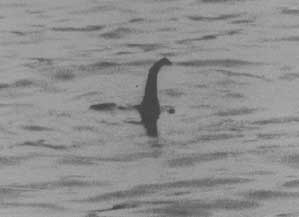
That is nothing.
Julian Critchley wrote in his memoirs A Bag of Boiled Sweets:
David James, who retired from Parliament as Member for Dorset North in 1979, was dotty. His reputation for eccentricity dated from 1964 when as Tory MP for Brighton, Kemptown, he lost his seat to Labour by seven votes. When, a few days after Alec Douglas-Home's defeat (and my own at Rochester), I went to Conservative Central Office to interview the then chairman of the party John Hare, I murmured some words of sympathy. We had, after all, just lost a general election after thirteen years in office.
"It's all that silly bugger David James's fault," cried Hare. "The fool spent most of the three-week campaign in Scotland looking for the Loch Ness Monster." Indeed, he had, and the tabloid press had been full of it. The papers claimed that every so often a cable would arrive from some godforsaken Scottish village addressed to the Kemptown Tory agent "Have almost found the Monster. Hope all goes well with the campaign."

Graham Poll and Chelsea
The people at Stamford Bridge are convinced that Graham Poll is biased against them.
Of course he is. He only booked John Terry twice on Sunday yet he sent him off.
Of course he is. He only booked John Terry twice on Sunday yet he sent him off.
A Shropshire Star classic
Joy over compost accolade
Civic leaders in Newport are wriggling with delight after their cemetery worm farm won an international accolade.
Civic leaders in Newport are wriggling with delight after their cemetery worm farm won an international accolade.
Monday, November 06, 2006
Lord Liverpool: Goodness gracious me
Moonlight Over Essex has discovered that Lord Liverpool, the long-serving but little remembered 19th century Tory prime minister, had a grandmother who was part Indian.
The belief that Winston Churchill had American Indian ancestry, by contrast, does not appear well founded.
The belief that Winston Churchill had American Indian ancestry, by contrast, does not appear well founded.
Britain's largest cave rediscovered
The BBC records another triumph for the East Midlands:
A cave believed to be the biggest in Britain has been unearthed in the Peak District in Derbyshire.
Titan is thought to be almost 460ft (140m) deep, as high as the London Eye, sculpted out of limestone by rain water over millions of years.
Local potholer and underground explorer Dave Nixon led the team that discovered it, near Castleton.
He began searching for it after reading an account by an obscure 18th century academic in a university library.
Startling new research on reading
From the BBC:
Struggling young readers make dramatic improvements when they are given tailored one-to-one coaching by expert teachers, research suggests.Who would have thought it?
Lord Bonkers' latest diary
Liberator 314 is out, so it is time to reproduce the latest Lord Bonkers Diary.
Monday
The morning’s newspapers are full of reports that the authorities once feared that militant Suffragettes were plotting to assassinate Asquith. The first Lady Bonkers, I am proud to say, was a great supporter of ‘Votes for Women’ and never slow to take action to further her cause – an observer once remarked that had she thrown herself under the King’s horse, the beast would have been stopped in its tracks, if not shunted back several yards. She was also, it has to be admitted, a crack shot, able to bring down a passing widgeon with a single barrel, who would often borrow my gentleman’s collapsible travelling rifle range if she was staying in Town. Yet I have no hesitation in maintaining that she was never involved in any scheme to bump off the Prime Minister: the unfortunate injuries suffered by the Master of Elibank here at the Hall one winter’s morning were agreed by all impartial observers to be entirely his own fault.
Tuesday
To York to conduct some delicate negotiations with the Joseph Rowntree Trust. You may recall that during the recent Liberal Democrat Conference in Brighton Sir Menzies Campbell (as his friends call him) announced the establishment of a fund to help women and other minority candidates, the first £200,000 of which was to be provided by the aforementioned charity. Ever anxious to do my bit on behalf of the fairer sex, I asked some of our lady candidates what the greatest problem they face is; the general view was that having to look after children is a fearful bind when there is a constituency newspaper to distribute to one's deliverers or an interview to be given to one‘s local radio station. I have therefore reserved a number of places at the Bonkers' Home for Well-Behaved Orphans for the sole use of the children of female Liberal Democrat candidates in target seats. I wish to emphasise what an attractive offer this is: Here at the Home we offer what may fairly be called "wrap-around" care - particularly since the new wall was erected. We have also taken on board today's concern about child obesity, as anyone who studies the diet we offer will see. The purpose of today's negotiations in York was to ensure that the £200,000 was paid directly to me: the last thing we wish to see is this fund wasted in paying for red tape and pen-pushers.
Wednesday
Should one worry at reports that North Korea has tested its first atomic bomb? I think not. It happens that I visited Pyongyang recently and am therefore able to reveal that the people in that unfortunate land are poor as church mice. From my observations it is simply unthinkable that they could afford all the uranium – or whatever the boffins at the Ministry put in the wretched things – needed to make an A bomb. Nevertheless, one should not underestimate the ingenuity that smaller nations can display when planning their own defence: here in Rutland we were making good progress with a weapon employing extra mature Stilton (though it was eventually ruled illegal under Article IV of the 1972 Biological Weapons Convention). Some will ask what explains the seismograph activity detected in Korea at the time of the supposed explosion: has it not occurred to them that one million peasants dressed in identical boiler suits and all shouting “Bang!” at the same time will have a tolerably large effect?
Thursday
My own breakfast television station has enjoyed a chequered history – and one time it had to be rescued by a glove puppet named Rutland Rat – but these days it is on a firm footing. Watching the news I am shocked by the scenes it portrays: people without shelter, without food or drink, without hope. Yes, the people queuing to get into the Conservative Conference - simple-minded folk who ask no more than a chance to call for the return of the birch or applaud Ian Smith's regime in Rhodesia - are in terrible straits. My duty is clear: I have the Bentley loaded with luncheon baskets and set off for Bournemouth. I arrive to find a shadow minister pleading with the doorman: “But don’t you know who I am?” The doorman ponders a moment and replies “No.”
Friday
I have given strict instructions that should that swarthy little Maradonna fellow turn up at the Home he should be shown the door - and quite possibly the rough end of an orchard doughty too. He has a record of using illicit substances and some of us have not yet forgiven a certain handball yet either. All in all, he is not a suitable person to be a parent, as these “children’s rights campaigners” one hears quoted everywhere would no doubt agree. Incidentally, it is pleasing that these campaigners are devoting their efforts to keeping children in orphanages: at one time they used to try to spring them.
Saturday
Passing through Winchester I feel suddenly peckish and – “any port in a storm” and all that – enter a McDonald’s restaurant. The table service proves disappointingly slow, but I am able to attract the manager’s attention eventually. The minion he dispatches to take my order is strangely familiar and when he asks “Um large or um regular?” I am able to put a name to a face. “Rising Star!! I exclaim, “What the devil are you doing here?” “Examining career opportunities after I leave Parliament” he says in his best Westminster voice, before lapsing into broad Cherokee: “Rising Star find new job. Um squaw make heap big trouble.”
Sunday
To St Asquith’s where, I am happy to report, after poor Kennedy’s recent “difficulties with the script,” the Reverend Hughes is word perfect. His reading is taken from one of the gospels and I think there is a lot in what it has to say.
I am informed that my negotiations with the Rowntree Trust have borne fruit to such an extent that that august institution has donated two million pounds to the Liberal Democrats - no doubt there is something about my share to be found in the small print. After our experience with Mr Michael Brown, I hope that the party will exercise due diligence and ensure that Rowntree’s is a bona fide company. No doubt there will be volunteers to test its products.
Lord Bonkers was Liberal MP for Rutland South-West 1906-10.
Sunday, November 05, 2006
Gunpowder, treason and plot
Walking across Market Harborough last night, I was intrigued that the best firework display was that taking place at the town's Roman Catholic primary school.
Saturday, November 04, 2006
The Commons needs a cat
Tim Worstall argues that "our civilisation is disappearing down the plughole, sucked into a vortex of our own gross stupidity".
His evidence?
His evidence?
You have to admit he has a point. Tim does not give a link to the news story he is quoting, but there is a short item on the subject here.The Commons is infested with mice. Fair enough, old, Victorian, building, a thousand or two people wandering around, lots of cafeterias and dining rooms, lots of people using take away trays to eat at their desks and so on: sure, there will be mice around. It's even rumoured that the mice have become immune to poison and the pest control people doubt that they'll be able to eradicate them.
Now, given the accumulated human wisdom that is our inheritance as a civilization, what would be a rational thing to do? Why, for example, does damn near every farm in the country have a few cats sunning themselves on the hay bales (and those that don't usually have a couple of terriers scurrying around the yards)? Yes, well done, we'll control the mice by bringing in a predator or two.
Can we do this in the Commons?
The work appears to have forced the mice out into the open. Requests for a House of Commons cat to do its traditional job of catching vermin have been rejected by the "authorities" on health and safety grounds.
Friday, November 03, 2006
Islam and Liberalism
Theo "As I look out over this magnificent vista..." Butt-Philip has details of a John Stuart Mill Institute event being held at the National Liberal Club on 13 November.
Polly Toynbee is a snob
Here she is in today's Guardian, commenting on the IPPR report on British teens:
And Toynbee's answer? Inevitably, it is:
The number of badly behaved teens in Asbo-type trouble, drinking, taking drugs and having too-early sex mirrors the proportion born poor in their generation. As Nick Pearce, the IPPR director, says, this is all about class - again. There is no great mystery, no strange British pathology or innate savagery in our genes. These aimless, uncared-for young people are the price paid (mostly by them) for gross inequality of opportunity and reward.Radical politics used to revolve around the belief that the poor are as good as the rich. In Toynbee's hands it has degenerated into the belief that the children of the poor - all of them - are a delinquent underclass. This is the crudest prejudice.
And Toynbee's answer? Inevitably, it is:
All schools should become "extended" 8am-to-6pm havens by 2010, offering breakfast, tea and after-school activities and activities that only the middle classes take for granted.Why not take the children of the poor into care and have done with it? Clearly, the less time they spend with their parents the better.
House Points: The Iraq inquiry debate
My column from today's Liberal Democrat News.
2003 and all that
When Tobruk fell to Rommel on 29 June 1942, two Conservative MPs tabled a motion of no confidence in the direction of the war. Churchill mounted a robust defence of his premiership and received the support of 475 members. Even so, there were 25 votes against him and 27 abstentions.
That is how the Commons behaved when Britain was fighting for survival. On Tuesday, by contrast, ministers repeatedly told the House that even holding an inquiry into the Iraq war would be a mistake. In the clunking words of Margaret Beckett, there was a danger of "sending the wrong signals at the wrong time".
To be fair, as football managers say, it was William Hague who made the point that Commons debates were held about military events at the height of the first and second world wars. “People didn't say we mustn't ever debate these things because it might encourage the Germans."
But let’s see what Hague was saying last time the Iraq war was debated in the Commons. This was on March 18 2003 and it took the country to war. In those days life was simpler: “there are powerful moral arguments on the side of military action”; “in some of the opposition to the government's stance there is a hint of appeasement”; “The prime minister has put before the house the right decision. He deserves the support of honourable members in all parts of the house.”
And Hague was not alone. There were saner voices from the Tory benches - Kenneth Clarke, John Gummer and Douglas Hogg all voted against the government - but his party was largely enthusiastic for the Iraq war.
Iain Duncan Smith (remember him? me neither) said: “I hope and believe that … the suffering of the Iraqi people will be short-lived.” John Maples said: “If we withdrew our support for the alliance at this late stage, we would destroy the credibility of our foreign policy for a generation.“ Boris Johnson appeared to be calling for Zimbabwe to be invaded too.
Above all, Charles Kennedy was barracked unmercifully because the Tory benches were outraged that he was opposing the government.
The moral, as I am sure William Hague would agree, is that people should remember their country’s history. But we Liberal Democrats remember 2003 as well as 1942.
Thursday, November 02, 2006
Walberswick to Dunwich
Last summer I walked along the sea wall from Walberswick to Dunwich. I am glad that I did, because it may no longer be possible.
The Guardian reports:
Dunwich is famous as the town that was lost to the sea, although ultimatley the changing course of the River Blyth had more to do with its decline than its eroding cliffs did.
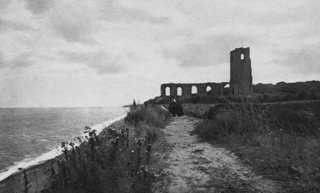
Anyway, here is a plug for Bridge Nurseries and its tearoom and a picture of one of Dunwich's lost churches.
The Guardian reports:
It goes on to say that it is unlikely that the sea wall will be repaired because of the costs involved and the government's policy of "managed retreat" for vulnerable coastal stretches.The washing away of sea defences on the Suffolk coast could have caused irreparable damage to a nature reserve that is home to one of Britain's rarest bird species, it was revealed today.
A combination of a surge tide and strong north-westerly winds destroyed a mile-long section of shingle and dune bank between Walberswick and Dunwich, north of Ipswich, yesterday.
Dunwich is famous as the town that was lost to the sea, although ultimatley the changing course of the River Blyth had more to do with its decline than its eroding cliffs did.
Anyway, here is a plug for Bridge Nurseries and its tearoom and a picture of one of Dunwich's lost churches.

CCTV and the decline of public life
In my essay in Liberalism: Something to Shout About I wrote:
Inner Hippy has a post on the same theme, which takes the analysis further:Then there is the depopulation of public space over the past 30 years. Semi-official figures like park-keepers and bus conductors have disappeared, largely out of a desire to save public money, and been replaced by technological alternatives. The result is a landscape less friendly to children - you try asking a CCTV camera for help if you have lost the bus fare home.
So what is the cost of saving all this money? An environment where people no longer feel protected by authority and where kids/hoodies/drunks/idiots are empowered to assume ownership of these public places - all because the boundaries have been removed. Cameras do not provide boundaries, they provide an intrusive and antagonistic presence that people do not respect or trust.I am also reminded of a passage from Alexei Sayle's novel The Weeping Woman Hotel which I posted on Serendib:
those into whose charge fell the open spaces during the 1960s were having none of that old malarky - they couldn't quite explain to you how a bandstand could be oppressive of racial minorities while simultaneously putting down women, they just knew it somehow did.
Who is Guido Fawkes?
Wednesday, November 01, 2006
Another curiosity
The Nottinghamshire oilfield that helped win the Second World War:
Right at the very time the U-boats were having their best successes in the North Atlantic, the Oil fields surrounding Dukes Wood were having their most successful year, thanks to a large part by the efforts of the Americans who came over to drill the extra 106 wells needed at this vital time.
Because these oil wells were situated largely within wooded areas they managed to keep the knowledge of this strategic target from the attentions of enemy aircraft.
Not only were Americans recruited for this war effort but Italian prisoners of war were also used. By 1945 almost 240 wells were being operated and production had totaled 400000 tons (about 3 million barrels).
Respect to Charles Kennedy
Charles's contribution to the Iraq inquiry debate yesterday deserves to be celebrated.
First, a personal note:
First, a personal note:
Let me put on the parliamentary record the genuine gratitude of myself and my family to colleagues on both sides of the House, in all parties, for the expressions of goodwill and support that we have enjoyed and much appreciated over the course of the past few months. I am particularly grateful to be contributing to this debate, on this of all issues, which probably consumed more of my time as leader of the Liberal Democrats than just about any other, short of fighting general election campaigns.Then some acute political points:
I recall the role played by the Conservatives. I do not want in any way to shatter the convoluted consensus that the former leader of the Conservative party, who is now its foreign affairs spokesman, sought to fashion earlier, but we should remember the time when Conservative Members were shouting out things like “Charlie Chamberlain”—showing, I always felt, a paucity of knowledge of the history of their own parliamentary party—and failing to ask the pertinent questions about what became known as the dodgy dossier.
I can tell the House—as I had my briefing in No. 10 a few minutes later—that the Prime Minister was as taken aback as anyone when the then Leader of the Opposition, the right hon. Member for Chingford and Woodford Green (Mr. Duncan Smith), emerged from No. 10 Downing street and announced on its steps that war was now both inevitable and desirable, which was not even the official position of the Government at that point.
Tuesday, October 31, 2006
Non à Halloween
 The BBC reports encouraging news from France:
Norfolk Blogger does not like the new festival either. And I had my say last year:Halloween is said to be dying in France after a short-lived bonanza, according to media reports.
It seems the festival, which came to prominence in the late 1990s, is in decline because it is perceived as "too American".
An association called No to Halloween - which was set up to combat the trend - has now wound down as a result of the festival's waning appeal.
It said Halloween was artificially inflated to serve commercial interests.
good honest begging, involving some creative effort and hours of shivering on street corners, has gone. It has been replaced by a form of demanding money with menaces: Trick or Treat?
Curiosity of the Day
The result is in and (rustle, rustle) the winner is The Kinema in the Woods at Woodhall Spa in Lincolnshire.
Monday, October 30, 2006
When Mark Oaten nudged Edward Heath
There is a review of Greg Hurst's biography of Charles Kennedy on the Social Affairs Unit website. It includes a quotation from the book which reveals a hitherto unremarked service rendered to Kennedy by the member for Winchester:
Lib Dem MP Mark Oaten emerges as a Kennedy loyalist. This extended to an important role at Prime Minister's Question Time. Kennedy's performances were hesitant but his team:
became aware that the somnolent posture of Edward Heath beside him made the visual impression still worse. Each week thereafter Mark Oaten made a point of squeezing onto the bench next to Edward Heath and giving the former Prime Minister a vigorous nudge just before Charles Kennedy rose to speak.
Duncan Hannah
More on the painter of "Mystery at Nevill Holt" (or "Mystery at Bonkers Hall", as I think of it):
These days Duncan Hannah is known for his nostalgia-ridden figurative paintings that take their inspiration from 1930s England. But 25 years ago he had a brief career as an underground film actor, appearing in a series of black-and-white movies by Amos Poe that sought to transplant the Parisian cool of the early Nouvelle Vague to the heroin-infused punk-rock milieu of New York's Lower East Side.
Jim Wallace to publish memoirs
Jim Wallace's call for the Holyrood First Minister and his or her deputy to have a seat in a reformed House of Lords has gained some publicity. That call was made at a lecture at Glasgow University this evening.
On Sunday the Herald reported that he is to go further next year and publish his memoirs. The paper said:
On Sunday the Herald reported that he is to go further next year and publish his memoirs. The paper said:
He has hinted there could be revelations that will cause embarrassment to some. The book will give his account of the frosty relations he had with Paddy Ashdown, who sought to do a Labour-LibDem deal with Tony Blair and to direct the Scottish coalition arrangements from London.
Sunday, October 29, 2006
Mystery at Bonkers Hall
 I have remarked before that many literary scholars regard Nevill Holt in Leicestershire as the model for Bonkers Hall, the ancestral home of my old friend Lord Bonkers.
With this in mind, it is interesting to read a Times feature on David Ross, co-founder of the Carphone Warehouse, who bought the old pile when it closed as a prep school and converted it back into a private house.
Its author, Caroline Donald, describes the character of the place:

The 30,000sq ft house sits on top of a gentle hill ... with huge views over the Welland Valley. It is a gloriously eccentric architectural assortment, with castellations, turrets, cloisters and wings added to the original 13th-century great hall over the years. It was home to the Cunard family from 1876 to 1912; Nancy Cunard, the writer and society hostess, was born there in 1896.And:
Elaborate wrought-iron gates lead back to the lower lawn. Along with the weather vane on the house, they were made by Sir Bache Cunard, Nancy’s father, in his workshop in the tower.
Googling "Nevill Holt" also throws up this painting - "Mystery at Nevill Holt" by Duncan Hannah. No doubt it stems from the Hall's time as a school, but Lord Bonkers would probably conclude that one of the Well-Behaved Orphans has got over the wall.
Henry Porter in the Observer
Porter now occupies the role that Nick Cohen used to have in the Observer. He is the columnist who makes you cheer by exposing this government's assault on liberty.
Today's piece is especially good:
Today's piece is especially good:
What runs through all this seems to be a rather surprising dislike of the British people. It was once possible to believe the government's unusual attention to law, order and behaviour was benevolent yet ill-conceived. Now it looks more like the result of late-onset sociopathy, influenced by a long period in power and the degenerate entanglement between Downing Street and the seething red-top newspapers.
Saturday, October 28, 2006
We'll always have Powys
The Shropshire Star reports:
Later. I assume they mean "scoffed at newspaper reports".
TV weathergirl Sian Lloyd today scoffed newspaper reports that her two-year engagement to Mid Wales MP Lembit Opik had ended.I'm sorry to include such a trivial story, but I have been itching for the chance to use this headline. I also note that the Star does not bother to put the little dots over Lembit's O.
Rumours began to fly after the Welsh-born weather presenter appeared on TV last week without her engagement ring.
But Sian today denied there was any possibility that the couple were splitting.
“It’s absolute nonsense,” she said today.
Later. I assume they mean "scoffed at newspaper reports".
Friday, October 27, 2006
House Points: Safeguarding vulnerable groups?
Today's House Points from Liberal Democrat News. It owes an indecent amount to the Manifesto Club report The Case Against Vetting: How the Child Protection Industry is Damaging Social Relations.
Checking out
On Monday MPs from all parties gave final approval to the Safeguarding Vulnerable Groups Bill. Who could object to legislation designed to ensure people who work with children do not endanger them?
Well, let’s have a try.
First, look at the scale of the new law. A report from the libertarian Manifesto Club suggests that 9.5 million adults - a third of the working population - will be subject to regular criminal checks. Already a bewildering variety of groups have to undergo them: university lecturers who teach 17-year-olds, hospital secretaries, cricket umpires, teenagers whose parents mind a younger child.
On Monday, despite two years of consultation, the government still found more groups to include at the last minute.
Second, this explosion of vetting will discourage volunteering. To give a couple of hours helping at a school disco you will have to produce three forms of identification, pay £30 and wait for a month.
And it’s not just the expense and inconvenience: the involvement of the criminal records system reinforces the prejudice that there must be something odd about an adult who enjoys the company of children. Already the Scouting and Guiding Movement is struggling to find volunteers. To discourage them further at a time when everyone agrees youngsters need more exercise and more socialisation is crazy.
Third, it is not clear the new law will save children from abuse. It casts the net so widely that people will be too busy checking forms and covering their own backs to look at how a particular adult is behaving with children. And it is unlikely that notorious murderers like Ian Huntley or Thomas Hamilton would have been picked up.
Fourth, vetting will take a fortune out of the voluntary sector. Many volunteers have to pay to be checked themselves, which costs up to £30. Employers pay more than that. The Scout Association carries out 50,000 checks a year, at a total cost of £250,000. Still, it is all good news for Capita, whose deal with the Criminal Records Bureau will net it £400 million.
Fifth - and most important - there is Calder’s First Law of Politics: If men and women of good will from all parties unite to support a measure, it is bound to turn our disastrously.
Thursday, October 26, 2006
Little blue men
In May 1997 a flying saucer was seen over Michael Howard's house in Kent.
I think that explains a lot.
I think that explains a lot.
Dave Hill on the BBC
Quite:
The BBC makes heroes out of big babies like Jeremy Clarkson, bigheads like Jonathan Ross and big bullies like Chris Moyles - Grown Men Behaving Badly at our expense.
Nick Robinson Ate My Hamster
Lovers of political cartoons may enjoy this blog.
Lord Bonkers adds: The owner's portrait of me is regarded by many art historians as being his finest work.

Lord Bonkers adds: The owner's portrait of me is regarded by many art historians as being his finest work.
Irony in Arundel
The BBC reports:
A West Sussex fire station which did not have a fire alarm fitted has been badly damaged in a blaze.
Wednesday, October 25, 2006
I've got a nice cuttlefish for you
Factchecking Pollyanna - the blog which keeps an eye on Polly Toynbee's Guardian columns - has woken up.
Its most recent posting looks at Toynbee's column on NICE and NHS funding for drugs. Tim Worstall is also worth reading on the subject.
Its most recent posting looks at Toynbee's column on NICE and NHS funding for drugs. Tim Worstall is also worth reading on the subject.
Tuesday, October 24, 2006
Why aren't you in school, Mr Tompkins?
Red faces in Colchester last week:
Found via Fair Deal Phil (cringe).
A policing crackdown on truants hit a snag yesterday when it emerged many pupils were out of the classroom because of teacher-training days.All very amusing. But later on the East Anglian Daily Times report says:
The "truancy sweep" across Colchester was a joint initiative between Essex Police and educational welfare officers from the county council.
Pc John Meacock and educational welfare officer Justine Musk headed to Tesco at Highwoods, where they spotted a number of youngsters with parents or grandparents.The idea that you can be stopped by the police and asked to account for yourself simply because you are with your children has always seemed to me outrageous. It is something that would take place in totalitarian state. But we have become so used to the belief that the state cares more for our children than we do ourselves that it goes unremarked.
But after a friendly word from Pc Meacock, it emerged they were all out with good reason - either teacher training or in one case a kidney infection.
Found via Fair Deal Phil (cringe).
Anna Russell and Don Thompson
Two great eccentrics had their obituaries in the Guardian today.
Anna Russell, who has died at the age of 94, was a musician and satirist, famous for her lampoons of Wagner:
Don Thompson won a gold medal in the 50km walk at the Rome Olympics in 1960. As his obituary says:
Anna Russell, who has died at the age of 94, was a musician and satirist, famous for her lampoons of Wagner:
I caught part of a radio programme about this remarkable woman a few months ago. You can find it here.Once Siegfried has met Gutrune in Götterdämmerung, Russell reminded her listeners, "She's the only woman that Siegfried's ever come across who isn't his aunt."
When challenged by Wagnerites who felt she was ridiculing sacred art, she replied: "I merely tell the story as accurately as possible and play the bits of music exactly as written. I can't help it if the story is absurd."
Don Thompson won a gold medal in the 50km walk at the Rome Olympics in 1960. As his obituary says:
Thompson's preparations for the steamy heat of Rome have gone down in sporting legend. Determined to be properly prepared, he trained for the race by exercising in temperatures of up to 38C (100F) in the bathroom of his home in Kent, which he had converted into a steam room using heaters and kettles of boiled water. "There was an electric heater attached to the wall and I thought, 'Well, that won't provide enough heat,'" Thompson said in an interview two years ago. "I had to boost the humidity too, so I got a Valor stove and put that in the bath. Half an hour was more than enough; I was feeling dizzy by then. It wasn't until several years later that I realised I wasn't feeling dizzy because of the heat; it was carbon monoxide from the stove."Who needs Lottery funding when you have that spirit?
Monday, October 23, 2006

Community action in Shropshire
The Star reports:
Residents faced with paying thousands of pounds to repair Bridgnorth council sewage works are considering taking over the plants themselves.
New blow to Cameron
David Cameron has received a further setback in his attempt to make the Conservative Party more representative of modern Britain.
At the start of the month I pointed to Newsnight research suggesting that so far 83 per cent of the Tory candidates selected to fight the next general election have been called "Rees-Mogg".
It has just got worse. Hot Ginger and Dynamite reports that Annunziata Rees-Mogg has been selected as Tory candidate for Somerton and Frome.
Sunday, October 22, 2006
Me and Wogan vs Jonathan Ross
We know what's going on, me and Wogan.
Here is Terry quoted in today's Sunday Telegraph:
Here is Terry quoted in today's Sunday Telegraph:
"As for those much-trumpeted seven-figure deals, I have the suspicion that the corporation is in some cases over-paying. Their excuse is that if they do not offer millions, the opposition will lure the talent away with honeyed words and equally large sums. Frankly the BBC is often giving huge quantities of money to people who would prefer to work for the corporation anyway. We can all name stars who have been persuaded to cross over from BBC to ITV, and it has ended in tears."And this is what I wrote in Liberal Democrat News back in July:
But it is hard even to begin making the case for paying him £6 million a year when most BBC staff are suffering a pay squeeze. Their managers defend huge salaries for performers (and themselves) by appealing to the market. If we don’t pay them this sort of money, someone else will.Granted, with me you get a quotation from The Deserted Village thrown in. But basically me and Wogan are both men of the world and on the same wavelength.
The answer to that is simple. Let them go. The backwaters of British broadcasting are teeming with people who thought that life would be better away from the BBC. Just ask Des Lynam. “I’ll have another consonant please, Carol.”
Or as Oliver Goldsmith put it:
Princes and Lords may flourish, or may fade:
A breath can make them, as a breath has made;
But a bold peasantry, their country's pride,
When once destroyed can never be supplied.
Chocolate money for the Lib Dems
 Good news from ePolitix:
The Liberal Democrats are to receive a £2m donation from the Joseph Rowntree Reform Trust.
The gift will be a major boost to the party, which according to its last accounts filed with the Electoral Commission had just under £300,000 at the end of 2005.
The trust, a charity which funds research into tackling 'social difficulties', has previously given money to Labour and the Greens, and has consistently supported the Lib Dems.
In 2003 it gave the party more than £500,000 to fight the local, Scottish and Welsh elections, and in 2004 and 2005 it donated £250,000.
Saturday, October 21, 2006
John Humphrys remembers Aberfan
The Aberfan disaster took place 40 years ago today:
I have always said and I will always say that nothing - nothing - I will ever see will compare to the horrors of that day.
From Pansea Bay to Phuket
Mark and Belinda Oaten have been to Thailand. I hope they had nice weather for it.
They have also been on Woman's Hour.
They have also been on Woman's Hour.
Friday, October 20, 2006
Stop jabbing me with your umbrella
My House Points column from today's Liberal Democrat News.
PO talk
These queues just get worse and worse, don’t they? Still, at least they give you time to chat.
On Monday the Liberal Democrats‘ (“Cashier number three“) called two Commons debates. One was on the need for green taxes and the other on the future of the Post Office.
Ed Davey opened the post office debate, his contribution made more urgent (“Cashier number one”) by the publication of an interview with Alistair Darling in that morning’s Financial Times. There Darling -- the Trade and Industry Secretary -- talked ominously of a further round of branch closures. Already (“Cashier number two”) a network that was 22,000 strong 20 years ago has dwindled to 14,326 offices.
According to Jim Fitzpatrick, a Darling underling, it’s all down to market forces. “The world is changing, and people are choosing to operate differently.” But in reality it is often government that (“Cashier number one”) that is making the choices.
As Ed said: “The problem has been caused by the government’s decisions over the past few years on pension books, television licences, passports and (“Cashier number three“) the Driver and Vehicle Licensing Agency, and by their indecision on the social network payment, the Post Office card account and the future of Royal Mail.”
And the Liberal Democrat alternative? It is to be found in the policy we approved at this year’s Spring Conference. Sell 49 per cent of the Post Office to raise capital, give it the power to borrow in (“Cashier number two”) the capital market and stop taking business away from the network.
Those who opposed these plans when they first appeared were afraid what Labour would say about them. But Labour is in no position to attack us over the Post Office. It is the Liberal Democrats who realise the importance of a flourishing network of sub post offices to the health of our communities. Labour has lost site of the public interest here altogether.
There is another point worth making. Most (“Cashier number one”) of those protesting against closures talk about rural post offices because their fate is the most emotive. But the loss of suburban offices (“Cashier number one”) is just as important…
All right, stop jabbing me with your umbrella. I was just going up there.
Thursday, October 19, 2006
The Hungarian Uprising 50 years on
 Spiked seems to be getting its commemoration in early: the uprising began on 23 October 1956. But the site has two good articles on the subject.
First, Dave Hallsworth remembers a meeting of the Liverpool District Committee of the Communist Party of Great Britain. There he called for the Soviet troops to get out of Hungary, and demanded that those present pledge their full support for the Hungarian workers and students in their attempt to replace Stalinism:
As I walked back from the podium to my seat in the audience, screams of ‘Trotskyist!’ hit me from all sides. Communist Party comrades who had been my friends hurled abuse at me, their faces screwed up with hatred. By the time I got back to my seat I was shouting back, telling them that, like the AVO (Hungarian secret policemen) who were then swinging on lamp posts as a result of people’s anger, their time on the end of a rope was nearing. I would not recommend this as a way to win political arguments.Second, Frank Furedi recalls his experiences as a child refugee after the Soviet tanks rolled in (his father had been a member of the populist Smallholders Party):
My sister was certain that she would become a surgeon. My mother looked forward to a life where she did not have to worry about someone knocking on our door in the middle of the night. My dad talked ceaselessly about all the books he was going to read. And I was preparing to meet my first cowboy.
Paul Farrelly MP: Metaphor chutney
From yesterday's Hansard:
I suspect that taking a sledgehammer to crack a few nuts would drive a coach and horses through effective shareholder protection and company regulation in this country...
Wednesday, October 18, 2006
Charles Kennedy: "Some problems with the script"
Sad news from This is London:
Like all Lib Dem members, I wish Charles well. But I fear those who have been conducting polls on how soon he should return to the front bench have been rather premature.
There were fresh fears about Charles Kennedy's health today after he pulled out of hosting an awards ceremony.As Guido Fawkes says, the explanation by a Kennedy spokesman - "I spoke to Charles about the event and I gather some problems with the script occurred" - has the potential of legend about it.
Mr Kennedy, who resigned as Liberal Democrat leader after admitting a drink problem, had to be replaced by the BBC's Jeremy Vine just an hour before the event began.
He reportedly stumbled over his lines and struggled to read the autocue. One eyewitness said he was slurring his words and "did not look in a good way."
Like all Lib Dem members, I wish Charles well. But I fear those who have been conducting polls on how soon he should return to the front bench have been rather premature.
Sarah Teather opposes school fingerprinting
No, she has not come out against messy methods in art classes. It is far more serious than that.
The Register reports:
The Register reports:
Shadow ministers for the Libdems (sic.) and Conservatives have condemned schools that fingerprint children.Found via ARCH blog.
Liberal Democrat shadow education secretary Sarah Tether (sic.) and Conservative shadow minister for schools Nick Gibb spoke out on Teachers TV. The issue is coming to a head because parents are preparing a case against schools that have installed fingerprinting systems over the summer and started fingerprinting children without their parents' consent.
"They should not be doing this," Gibb said of fingerprinting schools. "They should find another method of identification for borrowing library books."
He said there were serious civil liberties issues about a government that amassed databases of people's fingerprints.
Tether (sic.) told Teachers TV: "Fingerprinting three year olds to borrow library books is clearly excessive and completely over the top. There's a serious issue here. The government must get some legal advice."
Farm subsidies do more damage
 The other day I wrote about the way in which subsides paid to farmers have cut the funding that goes to Britain's canal system.
There was an article by Peter Hetherington in the Guardian today showing that the way Defra spends its money does more damage than that. Coastal defence, research grants and much else are being cut so that money can go to agriculture:
For Neil Ward, a government adviser and director of Newcastle University's centre for rural economy, the financial crisis underlines the continuing dominance of agriculture in a department that is meant to focus on the wider countryside economy.
The department, he recalls, was formed to "break with the past" and address a wider rural agenda on the back of the 2001 foot and mouth epidemic, which cost the taxpayer at least £2bn. In reality, however, Ward says the non-farming rural economy is still being marginalised, with farming taking the bulk of Defra's budget, despite the fact that 26,000 agricultural jobs disappeared between 1998 and 2002 alone, with 270,000 new jobs being created in non-farming rural enterprises.
"Agriculture is now recapturing some of the money that should be going to other rural interests," Ward complains. "It is still a very well protected industry, and although farmers complain, they are helped considerably when, arguably, the village post office is not."
In the next financial year, farming support is projected by Defra to cost almost £2.8bn directly - by far the largest slice of its budget - with "rural affairs and natural resources" getting just £488,000.
Quote of the Day: Adrian Sanders
Adrian Sanders, Lib Dem MP for Torbay, complains that his office did not receive credit for its help with this story in today's Daily Telegraph:
An inquiry was demanded last night into how British tourism chiefs were spending £10 million on an internet accommodation service which produced just over 400 hotel bookings this summer.Never mind, Adrian. At least you have won an award for this quotation:
It would have been cheaper for the Government to pay for the 428 holidays!
Health news from the Welsh Border
I am afraid this story comes from yesterday's Shropshire Star. But the approach to hospital management it reveals is so novel that it is still worth passing on:
Concerned patients in the Powys area have been assured that they remain a key priority to hospital bosses.
Tuesday, October 17, 2006
J. M. Barrie and Peter Pan
I am watching Alan Yentob's Imagine... programme on J. M. Barrie and Peter Pan.
He has interviewed Andrew Birkin, who wrote the 1978 television plays The Lost Boys. And if you are interested in the background to this tale, there is no better place to go than Birkin's website.
He has interviewed Andrew Birkin, who wrote the 1978 television plays The Lost Boys. And if you are interested in the background to this tale, there is no better place to go than Birkin's website.
Death of a goalkeeper
So come all you Glasgow Celtic,
Stand up and play the game,
For between your posts a spirit stands,
Johnny Thomson is his name.
The injuries suffered by Carlo Cudicini and, in particular, Petr Cech at Reading on Saturday recall the sad story of the Celtic keeper John Thomson. As the club's official site tells the story:
Stand up and play the game,
For between your posts a spirit stands,
Johnny Thomson is his name.
The injuries suffered by Carlo Cudicini and, in particular, Petr Cech at Reading on Saturday recall the sad story of the Celtic keeper John Thomson. As the club's official site tells the story:
On Saturday, September 5th, 1931, the Celtic goalkeeper John Thomson received a serious head injury while playing against Rangers at Ibrox. He died later in hospital, having never regained consciousness after the incident.
The death of a footballer in his prime is thankfully rare, and even rarer on the field of play. Even after this length of time, John Thomson's untimely death at the age of just 22 remains one of football's great tragedies. A young goalkeeper, already the first choice for his club and country, with a long and distinguished career seemingly ahead of him, dead as a result of an accident during a game.
Thomson was renowned for his bravery and fearlessness, and his dive at the feet of the Rangers forward Sam English as the player went to shoot was visible evidence of those virtues. As English shot, John Thomson's head took the full impact of the Rangers player's knee, leaving the goalkeeper unconscious and his head bleeding.
Quote of the Day: Alan Bennett
The great man in today's Guardian:
"I heard Jonathan Ross complaining recently that my portrayal of childhood in the 1980s was nothing like his and I thought: thank God for that."It's not the most daring or original recommendation, but Bennett's Untold Stories - just out in paperback - is a wonderful read.
Monday, October 16, 2006
Madonna and the orphans
I am amused by the news reports that "children's rights campaigners" are trying to prevent Madonna taking a child out of Malawi.
Inter-country adoptions raise all sorts of issues, but it is a strange view of a child's rights that see them as being best secured by living in an institution. I am reminded of the Secretary-Superintendent of the Southern Railway Servants' Orphanage who, in 1944 wrote that large orphanages were just like public schools and asked why the orphan should be treated differently from the child of the rich man.
Lord Bonkers writes: I hope we are not going to see orphans treated as fashion accessories, but if by any chance you do want to treat an orphan as a fashion accessory, please ring the Bonkers; Home for Well-Behaved Orphans and ask for the Sales Department.
The Safeguarding Vulnerable Groups Bill
This morning Russell Eagling was one of the signatories of a letter to The Times on the government's Safeguarding Vulnerable Groups Bill. It began:
There is more over at Spiked: articles by Josie Appleton and David Clements, and a link to the Manifesto Club report: The Case Against Vetting: How the Child Protection Industry is Damaging Social Relations.
This is one of those issues I worry away at, hoping that one day the Liberal Democrats will one day here something the Labourite mainstream of professionals might disagree with. The omens are not good. Already in this parliament John Pugh has been heard sounding regretful that "children are necessarily brought up by amateurs".
We believe that the Safeguarding Vulnerable Groups Bill is a misguided response to a small number of tragic, but fortunately rare, incidents involving the abuse of children. The Bill will mean that up to a third of the adult working population — those who come into contact with children through their work or volunteering — will be subject to continuous criminal-records vetting. This could include babysitters and private tutors, as well as those who merely have access to information about children. The massive expansion of vetting is driven by suspicion and paranoia.Russell writes about this issue on the Centre Forum's FreeThink blog.
There is more over at Spiked: articles by Josie Appleton and David Clements, and a link to the Manifesto Club report: The Case Against Vetting: How the Child Protection Industry is Damaging Social Relations.
This is one of those issues I worry away at, hoping that one day the Liberal Democrats will one day here something the Labourite mainstream of professionals might disagree with. The omens are not good. Already in this parliament John Pugh has been heard sounding regretful that "children are necessarily brought up by amateurs".
Somerset Tories' Upper Class Twit of the Year Contest
The betting for this prestigious event has been thrown wide open.
Jacob-Rees Mogg was such a short-priced favourite after his comment that people who had not been to Oxbridge were "potted plants" that bookies in Crewkerne and Midsomer Norton had already paid out.
Now (according to the Daily Mail, so it must be true) David Heathcoat-Amery has made a late bid for the title:
Black Labour MP Dawn Butler has made a formal complaint about former Tory Minister David Heathcoat-Amory, claiming he insulted her and a group of ethnic-minority visitors to Parliament, telling them: "The place is going to wrack and ruin. They are letting anyone in these days."Thanks to Hot Ginger and Dynamite for the leads.
Jenni Russell smells the coffee
At last someone at the Guardian has woken up to the fact that Gordon Brown is no friend to liberty:
Essentially, Brown is promising the same policy as that pursued by Blair, except stronger, wider, tougher.
Sunday, October 15, 2006
Oaten warning
A correspondent has just informed me that Mark and Belinda Oaten are being interviewed on BBC Radio 4's Woman's Hour on Tuesday morning (10-10.45 a.m.)
A spy in the sky from Brass Eye
 The other day I suggested that John Reid's idea of paying foreign prisoners to go home may have owed something to Chris Morris's cashback scheme from Brass Eye.
Because I enjoyed Brass Eye so much I allowed the quotation to run on. Next we heard Rhodes Boyson agreeing that it might be a good idea to have the cashback scheme policed by Richard Branson hovering over the offenders in a balloon.
These days satire has to run fast to keep ahead of reality. The BBC reports:
Given a year or two, I am sure the police will catch up with Chris Morris.Police have played down reports that spy planes could be flown high above the streets of Merseyside as a way to fight anti-social behaviour.
Merseyside Police's new anti-social behaviour (ASB) task force is exploring a number of technology-driven ideas.
But while the use of surveillance drones is among them, they would be a "long way off", police said.
Saturday, October 14, 2006
Patrcia Hewitt Google bombed
David from Save Hemel Hempstead Hospital writes:
If you type "Hospital Hater" in to Google and hit the 'I'm feeling lucky' button, there's a little suprise awaitingI don't usually go in for this sort of thing, but (assuming it is the old West Herts Hospital) I had my arm set at Hemel Hempstead Hospital when I was 4.
Friday, October 13, 2006
Playing Matron at three-card brag
And they're off! The first House Points from the new parliamentary season. This column appears in Liberal Democrat News.
Education gamble
Culture, media and sport questions are usually obsessed with organised games in schools. But a
less healthy kind of activity featured prominently on Monday:
Gambling will always be with us. It is impossible to ban and must be regulated. But it is hard to see why government should encourage it.
Later Alan Johnson made a statement on young people in care. He spoke with feeling of the problems they face. They are five times less likely to get five good GCSEs and nine times more likely to be expelled from school than other children. A quarter of people in prison today have spent time in care . And he pledged that the government would do better in future.
The trouble is that Frank Dobson was saying much the same almost 10 years ago. Progress has been made, but it is dreadfully slow.
Everyone agreed on the need for more social workers, but Johnson’s statement hinted at a move from the professional model of care towards more of a family model. He wanted children to have long-term relationships with individual workers and those workers to be able to give children small sums of money for days out like a parent would.
Another proposal to win widespread support was compelling the best schools to take children from the care system. Sarah Teather welcomed it for the Liberal Democrats without mentioning that it goes against our wish for applications to secondary schools to be made anonymously.
But it would be best if that policy were quietly dropped. Children -including children in the care system - are individuals with unique abilities and needs. We need an education system and a care system that recognises this.
Education gamble
Culture, media and sport questions are usually obsessed with organised games in schools. But a
less healthy kind of activity featured prominently on Monday:
The roulette match against Fettes was won. The first XI are playing Eton at blackjack this afternoon and I expect a large and enthusiastic turn out to support them. And the boy who has still not paid Matron what he owes her from playing three-card brag: see me afterwards.Mercifully, it was not school gambling they were talking about. But the government is in trouble with the adult variety. The days when Labour ministers imagined families enjoying days out at casinos are long gone. Now their ambition that Britain should become a world leader in online gambling looks equally questionable.
Gambling will always be with us. It is impossible to ban and must be regulated. But it is hard to see why government should encourage it.
Later Alan Johnson made a statement on young people in care. He spoke with feeling of the problems they face. They are five times less likely to get five good GCSEs and nine times more likely to be expelled from school than other children. A quarter of people in prison today have spent time in care . And he pledged that the government would do better in future.
The trouble is that Frank Dobson was saying much the same almost 10 years ago. Progress has been made, but it is dreadfully slow.
Everyone agreed on the need for more social workers, but Johnson’s statement hinted at a move from the professional model of care towards more of a family model. He wanted children to have long-term relationships with individual workers and those workers to be able to give children small sums of money for days out like a parent would.
Another proposal to win widespread support was compelling the best schools to take children from the care system. Sarah Teather welcomed it for the Liberal Democrats without mentioning that it goes against our wish for applications to secondary schools to be made anonymously.
But it would be best if that policy were quietly dropped. Children -including children in the care system - are individuals with unique abilities and needs. We need an education system and a care system that recognises this.
Thursday, October 12, 2006
The Armenian genocide
The French parliament has voted to make it an offence to make it a crime to deny that Armenians suffered "genocide" at the hands of the Turks, although this view is unlikely to make it into law.
I am instinctively against such moves, even when they concern the Nazi holocaust, because as a Liberal I believe that the truth will out. However, the Turkish government's refusal to recognise this episode in its own history is shameful. People can still be prosecuted for mentioning the fate of the Armenians, and the existence of such laws make it hard to be enthusiastic about Turkish accession to the European Union.
Nor am I a great admirer of the institution of Holocaust Memorial Day. One of the reasons for this is the way the organisers discourage any mention of the Armenians because it may affect relations with Turkey today. One cannot admire people who lecture the rest of us while acting in such a shamelessly pragmatic way themselves.
For more information on the Armenia genocide, see the Armenian National Institute pages.
Army chief calls for Iraq withdrawal
The BBC is reporting tonight:
But isn't the important point that what Sir Richard is saying is obviously true?
Doug Henderson has been on the news saying that this raises important constitutional questions. No doubt it does.The head of the British Army has said the presence of UK armed forces in Iraq "exacerbates the security problems".
In an interview in the Daily Mail, Sir Richard Dannatt, Chief of the General Staff, is quoted as saying the British should "get out some time soon".
But isn't the important point that what Sir Richard is saying is obviously true?
Calder 1 Bonkers 0
I have finally made it: I am the subject of an entry in Wikipedia.
I suspect thanks are due to Alex Foster. I am a little relieved that Lord Bonkers' entry did not survive. While it existed it was longer than mine.
Lord Bonkers writes: Quite right too!
I suspect thanks are due to Alex Foster. I am a little relieved that Lord Bonkers' entry did not survive. While it existed it was longer than mine.
Lord Bonkers writes: Quite right too!
Plane hits New York skyscraper
An aeroplane flies into a skyscraper in New York. Not yesterday's crash involving Cory Lidle. Not 9/11.
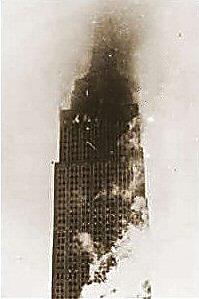 No, it is part of my campaign to prove that nothing is as novel as we think it is. As the Damn Interesting site tells the story:
 No, it is part of my campaign to prove that nothing is as novel as we think it is. As the Damn Interesting site tells the story:
On a Saturday morning in July of 1945, Army Air Corps bomber pilot Lt. Colonel William Smith was trying to fly his B-25 bomber through a steadily increasing fog. He was on his way to Newark airport to pick up his commanding officer when he appeared above New York Municipal airport (now La Guardia airport) about 25 miles to the east of his destination. He was requesting a weather report.Fourteen people died as a result of the accident.
Municipal tower reported extremely poor visibility over New York, and urged him to land, but Lt. Colonel Smith requested and received clearance from the military to continue his flight. "From where I'm sitting," the tower operator warned, "I can't see the top of the Empire State Building." Despite the advice from the Municipal tower, Smith plunged into the soupy fog with his two crewmen, bound for Manhattan.
Partway through their flight, the pilot quickly became disoriented because he was unable to see the ground below, and he lost his way. Despite Manhattan regulations that forbade aircraft from flying below 2,000 feet, Smith made the decision to drop below 1,000 feet in an attempt to untangle his bomber from the densest part of the fog. When his plane emerged from the thick, his visibility indeed improved. All around his aircraft, silhouettes of skyscrapers towered above Smith and his crew… and the New York Central Building was directly ahead.
Smith reacted quickly and banked hard, pushing the lumbering bomber to its stress limits to try to avoid the collision. His plane just missed the New York Central Building, flying past its west side with little room to spare. Dozens of skyscrapers lay beyond the first one, leaving a forest of fog-shrouded towers in the plane's path. Smith tried to gain altitude as he weaved between the ghostly shadows of buildings, forcing the bomber to maneuver at its operational extremes.
When the Empire State Building emerged from the fog right ahead of his craft, Smith banked his plane and pulled back as hard as he was able, but the bomber lacked the maneuverability to dodge the large tower looming over it. At 9:49 a.m, in the middle of a desperate, climbing turn, the ten-ton B-25 slammed into the 79th floor of the Empire State Building.
Wednesday, October 11, 2006
Disenchanted with the testing culture in schools
Now and then you do get an interesting article in the Guardian Education section.
Today Mark Piesing writes about moves amongst parents and teachers to break away from the state system:
Today Mark Piesing writes about moves amongst parents and teachers to break away from the state system:
Fiona Carnie, from HSE [Human Scale Education], who is also a consultant at the Centre for Educational Innovation at the University of Sussex, says: "These teachers and parents just want to bale out. They are disenchanted with the testing culture and spoon-feeding found in schools. By setting up for themselves, the teachers are reclaiming their professionalism."
For others it is about the needs of their community. After the shop and pub closed in Priors Martin, Warwickshire, the headteacher and villagers were determined not to also lose their primary school when the LEA wanted to merge it with a school four miles away.
Trustee Carolyn Bath says: "The initiative came from the whole community, not just the parents. They raised the money to employ a teacher and in 1996 it reopened with one teacher and 12 students ... Sir John Harvey Jones opened the school and gave us three years. We're still going strong after 10."
Lancet article on deaths in Iraq
Today's news has been full of the Lancet article on deaths in Iraq since the invasion of 2003.
You can download a .pdf file of the whole thing from the journal's website. Here is the abstract:
You can download a .pdf file of the whole thing from the journal's website. Here is the abstract:
Mortality after the 2003 invasion of Iraq: a cross-sectional cluster sample survey
Gilbert Burnham, Riyadh Lafta, Shannon Doocy, Les Roberts
Background An excess mortality of nearly 100 000 deaths was reported in Iraq for the period March, 2003–September, 2004, attributed to the invasion of Iraq. Our aim was to update this estimate.
Methods Between May and July, 2006, we did a national cross-sectional cluster sample survey of mortality in Iraq. 50 clusters were randomly selected from 16 Governorates, with every cluster consisting of 40 households. Information on deaths from these households was gathered.
Findings Three misattributed clusters were excluded from the final analysis; data from 1849 households that contained 12 801 individuals in 47 clusters was gathered. 1474 births and 629 deaths were reported during the observation period. Pre-invasion mortality rates were 5·5 per 1000 people per year (95% CI 4·3–7·1), compared with 13·3 per 1000 people per year (10·9–16·1) in the 40 months post-invasion. We estimate that as of July, 2006, there have been 654 965 (392 979–942 636) excess Iraqi deaths as a consequence of the war, which corresponds to 2·5% of the population in the study area. Of post-invasion deaths, 601 027 (426 369–793 663) were due to violence, the most common cause being gunfire.
Interpretation The number of people dying in Iraq has continued to escalate. The proportion of deaths ascribed to coalition forces has diminished in 2006, although the actual numbers have increased every year. Gunfire remains the most common cause of death, although deaths from car bombing have increased.
A family day out at the casino?
Last night I wrote my first House Points of the new parliamentary season and touched upon gambling.
I am sure that when changes to the law were first proposed a Labour minister talked about families enjoying a day out at the casino. I have a feeling it may have been Peter Hain.
Yet when I searched for the quotation last night I could find no trace of it. Can anyone remember who said it or supply me with a link?
Tuesday, October 10, 2006
John Reid meets Chris Morris
The Guardian reported this morning:
Prisoners from countries outside the European Economic Area (EEA ) - which comprises the 25 EU nations plus Norway, Iceland and Liechtenstein - will be offered a package worth between £500 and £2,500 to go home, rather than face detention while they are considered for deportation.Nick Clegg asked:
"What has the Home Secretary been doing for the last six months if his efforts to solve the foreign prisoner crisis now amount to a vague pledge to sort the problem out by next spring, and an even vaguer plan to bribe them to go back home?But I was reminded of Chris Morris's Brass Eye and his cashback scheme for criminals:
CUT TO:
STUDIO: (David Compression, the interviewer, and "Mad" Frankie Fraser on either side of a desk, current affairs interview style)
CM: "Up NEXT... A new scheme, for young offenders."
DC: "Take the cashback scheme, that they're gonna try in Toxteth, where young offenders are on a fourteen-week sentence - costs about two grand a week to keep them in - so rather than spend twenty-eight grand to keep them inside, they give them twenty-five grand, and say "here you are, use that, for a positive reason."
TITLE: ("Mad" Frankie Fraser, ex gangster)
MFF: "I think that's a smashing idea. Yeah, I do, honestly."
DC: "If someone had done that to you, what would have happened?"
MFF: "I don't think you'd have ever heard of me again."
CUT TO:
STUDIO:(David Compression, the interviewer, and Sir Rhodes Boyson on either side of a desk, current affairs interview style)
DC: "Do you think perhaps enlisting somebody like Richard Branson to sell the cashback scheme... _might_ just work, might just get through to them."
RB: "I wouldn't say no to that."
DC: "I suppose if there was an element of... stick, you know - Richard Branson up in a balloon, watching the situation and saying, "there's your twenty-six thousand pounds, but I'm watching you from a balloon, and I can see a very long way.""
RB: "I'd go along with that."
CUT TO:
INTRO SEQUENCE: END OF PART ONE
Farm subsidies close canals
 The BBC reports:
Some of Britain's waterways may have to close amid funding cuts which have led to 180 job losses, the organisation which runs the 2,200-mile network says.Farm subsidies do great damage to the third world, as the kickAAS blog emphasises. They have also led to the despoilation of the British countryside, as Graham Harvey's The Killing of the Countryside shows. Now they are threatening our canal system.
British Waterways blames the cuts on a £7m drop in its funding from Department of Environment Food and Rural Affairs.
Defra's cost-cutting follows a £200m overspend - which it blames partly on bird flu fears and new farm subsidies
The way that the agricultural industry is pampered never ceases to amaze. After the foot and mouth outbreak in 2001 the government compensated the farmers and allowed other rural businesses to go to the wall. The Youth Hostels Associations had to close many hostels, but there was no sign of government help for it.
Chris Huhne called today for "Defra's bungling of single farm payments" to be met from the contingency reserve. This would be an improvement if it prevents the closure of canals. But really we need to question the need for huge subsidies to farming in the first place.
Chinese non-interference?
Jane Macartney writes in this morning's Times:
If Beijing is not to find itself too far out of step with much of the rest of the world, it may even be forced to consider sanctions. It is a measure that Beijing abhors because of its foreign policy principle of non-interference.A passing Tibetan lama remarks: Bollocks.
Parliamentary Idiot of the Day
Parliament has only been back for a day and we already seen a prime piece of idiocy.
A little improbably, Sir Stuart Bell (sometime author of the steamy Paris 69) was answering questions on behalf of the Church Commissioners. Here is the supplementary from Mark Pritchard, Tory MP for The Wrekin:
That is the sort of truth that Conservatives used to understand. No longer apparently. Instead, Pritchard dreams of fast-tracking thrusting young vicars into mitres before they turn 30.
The man is a fool. I predict he will be in the shadow cabinet before the year is out.
A little improbably, Sir Stuart Bell (sometime author of the steamy Paris 69) was answering questions on behalf of the Church Commissioners. Here is the supplementary from Mark Pritchard, Tory MP for The Wrekin:
Does the hon. Gentleman agree that bishops should be appointed on their spiritual and administrative attributes and skills, not time served? If so, what is the Church doing to recognise such skills earlier in those clergymen who have not served 20 or30 years?Where to begin? Perhaps by asking what "spiritual skills" are supposed to be. And if you must have bishops, isn't wisdom one of the attributes they ought to possess? And doesn't that usually come with age?
That is the sort of truth that Conservatives used to understand. No longer apparently. Instead, Pritchard dreams of fast-tracking thrusting young vicars into mitres before they turn 30.
The man is a fool. I predict he will be in the shadow cabinet before the year is out.
Monday, October 09, 2006
Conkers: Now the good news
Fair Deal Phil has the most toe-curling blog name in the known universe, but he does link to the website of the World Conker Championships.
Subscribe to:
Posts (Atom)