Showing posts with label New Statesman. Show all posts

Wednesday, November 12, 2025

V.S. Pritchett reviews the Sword in the Stone in 1938

V.S. Pritchett (1900-97) was still reviewing for the New Statesman in his late seventies when I started buying it in the sixth form.

Here he is back in 1938, welcoming the publication of T.H. White's The Sword of the Stone in his review for The Bystander:

The Sword in the Stone, by T. H. White (Collins 8s. 6 d.), is mixed, but, on the whole successful, fantasy about anachronisms and it contains two chapters at least which are the funniest things I have read for a long time. Mr. White's game is to tell the adventures of a boy called the Wart, at his father's mediaeval castle, in terms which lie somewhere between the language of Grimm, Wodehouse, and the College of Heralds. 

This kind of thing may produce the vulgar comedy of the schoolboy howler or passages of wicked genius Mr. White has both here is an example of the latter. A possible origin of fox-hunting is suggested—

Sir Ector said: "Had a good quest to-day?"

Sir Grummore said: "Oh, not so bad. Rattlin' good day in fact. Found a chap called Sir Bruce Saunce Pite choppin' off a maiden's head in Weedon Bushes, ran him to Mixbury Plantation in the Bicester and lost him in Wicken Wood. Must have been a good 25 miles as he ran." 

The two high spots are the witches' duel—run strictly on what I take to be Camelot rules—with Merlyn; and a wonderful joust between two knights who lumber along towards each other at a mild drayhorse canter and meet with stupefaction in a dull crash of ironmongery. These are both Disney scenes. 

Mr. White has a pleasant learning which gives the whole a comically critical and instructive air. I never recommend humour, because it makes enemies, and many awful people will read this book aloud; but I suggest a prolonged and surreptitious glance at it.

And Disney did buy the rights to the book in the following year, though his film of it did not appear until 1963.

Trivia fans will be interested to know that Pritchett is the grandfather of the cartoonist Matt, who is famous for nailing it.

Friday, January 31, 2025

The Joy of Six 1319

"In recent years, the United Kingdom has seen a troubling increase in Holocaust denialism, fuelled by disinformation, a lack of historical education, and the actions of influential public figures." Jack Wilkin on a growing assault on truth.

Patrick McGuinness remembers the hounding of Christopher Jefferies: "The day after his arrest, one of my former classmates spoke to the Telegraph. The article was headlined 'Joanna Yeates Murder: Suspect Christopher Jefferies was eccentric with love of poetry' and my classmate was quoted as saying: 'He was particularly keen on French films.' If innocence can look this bad, who needs guilt? Jefferies became the nation’s High-Culture Hermit-Ogre.

Phil Edwards asks why the New Statesman keeps hyping up the threat posed by Nigel Farage.

No, the HS2 'bat tunnel' has not cost £300,000 per bat, and it will protect a lot of other mammals, birds and insects. Holy heritage, Jeff Ollerton.

"That's what made him such an ideal partner for Kenneth Williams: always unselfish and understated, he complemented rather than competed. While Williams concentrated on the broad brushstrokes, he was content to add the fine details. It was why Williams, who so often came to clash with his fellow performers, never had a bad word to say about Hugh Paddick." Graham McCann pays tribute to a skilled and understated performer.

John McEwen celebrates the books of Denys Watkins Pitchford ('BB'): "His most famous was The Little Grey Men, a children’s adventure story about some gnomes who went in search of their long-lost brother. It was inspired by his own incontrovertible sighting of a gnome at the age of four. He was a down-to-earth man and never budged on this issue; though latterly he felt that gnomes, like so much of the countryside, might have become extinct during his lifetime."

Friday, March 15, 2024

Why the general election may well be on 28 January 2025

I now believe it's likely that Rishi Sunak will put off the general election until the last possible moment, which is 28 January 2025.

It's only human for him to hold on to office in the hope that "something will turn up", though it's hard now to imagine anything that could turn the polls round enough for the Conservatives to win. Victory over an invading force of Martian spaceships might just do it, I suppose.

But there may be another human reason for his delay.

In the autumn of 1978 it was widely thought that Jim Callaghan was about to call an election. Instead, in his speech to the TUC Congress, he mocked journalists who were speculating about it by singing the old music hall song Waiting at the Church.

Yes, really.

He soldiered on, but loss control of the unions and then lost of a vote of confidence. There was no guarantee he would have won in 1978, but things only got worse for him after he declined to call an election then.

It was I think James Fenton - now a distinguished poet, then the political sketchwriter for the New Statesman - who pointed out that "Prime Minister 1976-9" would look much better against Callaghan's name in the history books than "Prime Minister 1976-8".

So maybe Sunak wants to be remembered as "Prime Minister 2022-5" rather than "Prime Minister 2022-4".

Sadly, I can't find a video of Jim Callaghan singing Waiting at the Church to embed, so we'll have to make do with Miss Piggy.

You what?

Sunday, November 26, 2023

Rev., Tom Hollander and the shrinking market for Nick Clegg trivia


I went to put some flowers on my mother's grave this afternoon. When I got back I saw a tweet by Andrew Male about rewatching Tom Hollander's situation comedy Rev. He said it has lasted well and even looks prescient:

I now realise how much it was a show about a changing Britain, one where humanity and generosity were gradually being replaced by something more cruel and corporate.

That made me think about how the series and I how I would watch it on DVD with my mother in the days when she was still well enough to come over to my house. 

Andrew Male says that, like Doctor Who, it's all on iPlayer at the moment.

Then a tweet arrived from a Senior Welsh Liberal Democrat Who Now Writes Political Thrillers, asking if I knew that Nick Clegg had been directed in a play by Sam Mendes. I didn't know it. 

Peter Black's tweet sent me to one by Marie Le Conte. which quoted a 2010 Guardian article about... Tom Hollander's situation comedy Rev.

The vital passage says of Hollander:

At Cambridge, where he studied English, he took the title role in a memorable 1988 production of Cyrano de Bergerac that brought together an interesting array of talent. Sam Mendes, a childhood friend from Oxford, was the director, their pal Tom Piper was designer and Nick Clegg, then a frequent student actor, played Carbon de Castel-Jaloux, captain of the cadets.

The market for Nick Clegg trivia has been falling for years, yet I can remember when a blog post about his great great aunt was enough to get you a column with the New Statesman website.

And Tom Hollander's verdict on him has lasted as well as his sit com:

Hollander can't recall Clegg's student performances, but thinks he did well in this year's televised leadership debates. "I would say he's a better actor than Gordon Brown and a worse actor than Tony Blair."

But it was when Blair stopped acting, and everyone else despised him, that I came to have a grudging respect for him.

Thursday, October 05, 2023

The New Statesman goes to the Liberal Democrat conference

Fiona was busy, so the New Statesman sent Freddie to see the Liberal Democrats meet in Bournemouth. This is what he found.

It's not deep analysis, but the participants in this podcast do say some nice things about us.

Tuesday, September 19, 2023

Somehow this disqualifyingly moronic assumption did not deter Russell Brand's political acolytes

Embed from Getty Images

Twitter yesterday was full of people arguing that, because Russell Brand - who denies all the allegations made against him on Saturday's Dispatches programme - was being defended by right-wing conspiracy loons, there were no lessons for the left to learn from his rise and fall.

If you pointed out, as I did a couple of times, that Brand had written a Guardian column for years and edited a special issue of the New Statesman, some were outraged.

So I was pleased by Marina Hyde's article in the Guardian this morning, which looks at the role of the press - the Guardian and herself included - in boosting Brand over the year.

Here are a few quotations from it:

Back in the day, though, a lot of people were thrilled to be on what they thought was Russell’s side of the line. For a certain type of mournfully uncool man on the left, Russell Brand was quite the excitement. You only had to watch their little faces in his presence – lit up at being fleetingly indulged by the kind of guy who would probably have bullied them at school. 

And:

The apogee of this particular stage of Brand’s inevitable journey toward alt-right-frotting wingnut was surely the ludicrously feverish speculation over whether he’d endorse Labour in the 2015 general election. 
Keen to be awarded his royal warrant, the then Labour leader, Ed Miliband, traipsed to Brand’s London flat during the final stages of the campaign, for a filmed interview where committed non-voter Russell inquired rhetorically: “Since suffrage, since the right to vote, what has meaningfully occurred?” Nothing much, he reckoned. Somehow, this disqualifyingly moronic assumption did not deter his political acolytes.

And:

What is completely bizarre, with the benefit of 2023 hindsight, is how the Sachsgate story was framed, both by those who were reflexive defenders of the BBC and “comedy” and free speech (then a somewhat lefty preoccupation, funnily enough), AND by those who wished their destruction. Fleet Street quickly settled into tribes and covered it as a story where each assumed the other was acting out of vested interests. This was back when our only culture wars were about things that happened on the BBC. (My how we’ve grown.) Mail vox pops were incandescent; some Guardian ones found it an “overreaction”.

Hyde also reminds us that the Liberal Democrat contribution to this climate was Nick Clegg telling GQ he had slept with 30 women.

I have sometimes resisted the cult of Marina Hyde in the past, but this is a brave and important column.

Later. Sadly, the column isn't or brave as I first thought. Here is a Lost in Showbiz column by Hyde from January 2009 - thanks to Gerry Lynch for tweeting it:

Today in Jesus Wept we must turn to Sachsgate breakout star Georgina Baillie, who has thus far managed to parlay Russell Brand's insult to her dignity into an excruciatingly candid red-top buy-up and a number of semi-mucky photoshoots.

But can we please draw the line at the trenchant newspaper comment pieces? It seems not. Breaking another ten second silence, Manuel's estranged granddaughter takes to the pages of today's Sun with an opinion column unlikely to give PJ O'Rourke any sleepless nights.

Entitled "My View", it sees the Satanic Slut attempt to gain some sort of purchase on this latest Jonathan Ross "outrage", the details of which I literally cannot be bothered to even look up, let alone confect horror over. The world can now be divided into people who genuinely think caring about this crap is important, and people you might wish to know socially.

If Russell Brand was the school bully who was briefly your friend, then in these columns Marina Hyde was the most popular girl in the school, and she was being mean to someone else.

It's a shame she didn't acknowledge that in today's article. What appeared to be an admission of guilt now looks more like an attempt to hide it with fake candour.

Sunday, September 17, 2023

Russell Brand was a creation of television and the tabloids, not the comedy circuit


Until last night's Dispatches, I had never seen Russell Brand's comedy act. I now look back on those days with affection. 

But that doesn't mean I wasn't aware of him. As I complained in 2013:
Russell Brand turned up writing on football for the Guardian. He guest edits the New Statesman. He's interviewed on Newsnight. I can’t get away from him.

He wasn’t much of a sportswriter and his political views on Newsnight were ridiculous – a bunch of media-left slogans and a call for unelected officials to tax us all.

But then why should he be expected to be an expert on these things? He is a niche comedian.

Brand’s trouble is that he has become a symbol of youthful cool and everyone wants to be associated with him.

Jonathan Ross’s exit from the BBC arose from his inability to grow middle aged gracefully. He wanted to show how young and hip he still was. And the way to show that was to demonstrate to us that he knew all about Brand’s love life.
And two years later Owen Jones fell under Brand's spell too. And have a look at the Guardian's contributor page for Brand to see just how much the paper loved him.

The extent to which Brand was a media creation was brought home to me by something Simon Evans tweeted this afternoon:
Brand is not now and never was a comedian. He was never on the 'comedy circuit', which is now being traduced as an unreconstructed sewer of nodding, winking, pawing, leering predatory men, with a code of silence to match their coercive behaviour.

He's a TV/tabloid/PR construct and that is the sewer you need to navigate if you want to understand the culture that allowed him to thrive. Pretty much the exact same one that allowed his illustrious precursors in disgrace to thrive before him.

I was a stand up from 1996 and gigged hard on the circuit until 2010 or so. I didn’t see Brand on a bill once. I’ve been in multiple dressing rooms with everyone else from that era, however quickly they elevated to TV and tour shows. That’s how it works. I’ve never even met Brand. 

The only time I saw Brand at a show was  standing at the back of a one off gig being hosted by his friend Simon Amstell. I am not guilting Simon by association, I don’t know him. But that’s who he was there with. 

Brand is (or rather was in those years) 100 per cent the product of the very culture that C4 deliberately cultivated like a pseudo left wing Daily Mail sidebar of shame, with a dash of Eurotrash. I found it nauseating but they loved his bad boy shock factor.

My honest gut feeling was that he would have been despised in 90 per cent of 'dressing' rooms on the circuit. They were old fashioned enough on the whole and If nothing else he showed a good deal of self awareness in steering clear of the place and booking himself on the fast track to notoriety via Big Brother and Bizarre.

And for some sharp analysis of the way the media kowtowed to Brand, read Evans on his appearance on Newsnight in the video above.

He says of it:

It’s not a masterpiece (and I cringe at some of the boosted “laughter track”) but then it was written and performed in a 48-hour period. And the hat was misjudged. I did not quite understand the format. 

But I will assert that my chosen take on Brand was driven through against the prevailing perception of his having spoken truth to power in that Newsnight interview. Prevailing in the SUFTW offices at any rate. And particularly among… but no. I’ll leave it there. 

Monday, June 13, 2022

Exploring Lincoln’s Inn Fields and Fleet Street with John Rogers

Time for another London walk with John Rogers. The YouTube blurb for this one runs:

This central London walk starts by entering Lincoln's Inn Fields via Great Turnstile Street. We then walk admire some of the buildings around Lincoln's Inn Fields including Sir John Soane's Museum, the Royal College of Surgeons, and the London School of Economics. We briefly go into Portsmouth Street before walking through the garden square to Lincoln's Inn. 

The route then goes along Carey Street, past the Seven Stars pub, Bell Yard and Star Yard to Chancery Lane where we admire The Maughan Library at King's College and the London Silver Vaults. 

Next we pick up the tour of Fleet Street at the Daily Telegraph Building, the Daily Express Building, and Ye Olde Cheshire Cheese before heading along Shoe Lane. Our walking tour ends at Dr John's House in Gough Square.

Great Turnstile was the address of the New Statesman when I was a teenage reader in the 1970s, and for a period in the following decade we put Liberator together on a Saturday in an office in Lincoln's Inn.

And John Rogers is right: you often saw filming taking place there. I'm sure I spotted the Liberator editorial collective in the background of a BBC Dickens adaptation one Sunday afternoon.

John has a Patreon account to support his videos and blogs at The Lost Byway.

Monday, June 06, 2022

Lord Bonkers' Diary: The little girl who asked for my autograph and then demanded I sing 'The Way I Feel Inside'

It looks as though Lord Bonkers has escaped from Camley Street Natural Park, but I won't relax until he's back at the Hall.

Incidentally, I once wrote an article about Camley Street for the New Statesman, but it's no longer on their website. "That's Socialism for you," as Lord B. would say. 

I miss the old brute.


The little girl who asked for my autograph and then demanded I sing 'The Way I Feel Inside'

I will not deny that I did well for myself. It’s not just that the visiting schoolchildren were generous with their sandwiches - I fear that more than one will have been marked down for listing a gorilla among the wildlife they spotted that day, though I rather fell for the little girl who asked for my autograph and then demanded I sing ‘The Way I Feel Inside’ - it’s that the neighbourhood proved to be thronged with pop-up restaurants that offered every cuisine known to man. So enticing were they that I had to have my costume let out twice during my stay there.

Then, one evening as I rolled home from a favourite eatery, I spied a familiar van: the fellow was delivering the East Midlands’ most prized product to an all-night delicatessen! We fell into conversation and it transpired that his grandfather had been a deputy in one of my own Stilton mines. He kindly agreed to give me a lift home as the Hall was not far off his route back to Cropwell Bishop. 

One thing worried me: "What about the smell?" I inquired. "Don’t worry, your lordship," came the reply, "it won’t affect the cheese."

Lord Bonkers was Liberal MP for Rutland South West, 1906-10.


Earlier this week

Tuesday, September 08, 2020

How I became anti-nuclear: Windscale Fallout by Ian Breach

Ever since Michael Gove said "I think the people of this country have had enough of experts" the left hasn't been able to get enough of them.

Yet if you are on the left then at some point you will have decided that Important People are wrong.

For me it was the debate over nuclear power. At the start of 1978, when I was still 17, Lord Justice Parker recommended in his inquiry report that a thermal oxide reprocessing plant be built at Windscale and the government went ahead with the idea.

I decided Parker had got it wrong. I remember asking a visiting speaker at school, who was there to promote nuclear, why we didn't develop renewables instead.

And I had a 'Nuclear Power? No Thanks' T-shirt and bought a Penguin Special on the subject: Windscale Fallout by Ian Breach. 

Though they sound like something out of the 1940s, Penguin Special were very much a thing in those days. They felt serious and grown up and I liked them in the way I liked the New Statesman because it had its leading article on the front cover.

I've found a review of Windscale Fallout from Australian Left Review:

The scene that Breach describes is familiar: A company which has been doing a profitable business in reprocessing nuclear fuel wants to expand its operations. It already has a very lucrative contract with Japan. The workers are in general in favour of this expansion. And so is the Labour Government. The expansion goes along with future plans for a commercial fast breeder reactor program. But because the company has been secretive about the safety of its operations, because local people are concerned, the Government is induced to hold a public inquiry.

The wide terms of reference of the inquiry encourage those who have objections, mostly environmentalists, to throw a great deal of time, effort and money into presenting their case. They raise the issues of safety, civil liberties, nuclear proliferation, the need for public participation in setting safety standards and making energy policy. In the end, the Commissioners write the report which the company and the Government expected and wanted.

Not much has changed in more than 40 years.

Breach was an interesting figure who became one of the BBC's first environmental correspondents before, his Guardian obituary records, being sacked by John Birt for demanding the corporation devote more airtime to the environment.

Thursday, January 31, 2019

Shropshire: Don't drink the water and mind that huge rock

Calder’s blog is an eclectic mix of musical choices, random news items from Shropshire (where he doesn’t live), and political news and views.
So said the New Statesman back in 2008.

Well, it's been a good week for random news item from Shropshire. Following the Bishop's Castle poetry pharmacy we have two more today.

Item:
People in south Shropshire have been told not to drink tap water after an "unauthorised connection" was attached to the water network. 
Severn Trent Water said it had issued 69 'do not drink' orders to people in the Craven Arms area after finding the private connection, and Shropshire Council announced the Wistanstow Church of England Primary School was closed today due to a "water supply issue".
You can see the school in the photograph above.

Item:
It is a mystery to rival those of the pyramids and Stonehenge - just how did a huge rock end up on the Long Mynd? 
The seven foot long by three foot wide rock was first spotted six months ago by National Trust rangers wandering the south Shropshire hills. 
But the question is how did it get to the remote spot and why? 
Despite signs being put up around the stone urging the pranksters to come forward and reclaim it, no one has stepped forward, so now the trust has taken matters into its own hands to remove the giant rock.
Thanks, inevitably, to the Shropshire Star for both stories.

News stories over here in the East Midlands somehow seem more conventional - unless I generate them myself.

Tuesday, July 31, 2018

In which Priest Weston is entirely surrounded by potholes

There's worrying news of my favourite part of Shropshire.in the Shropshire Star:
People living in a rural village on the Welsh border have demanded immediate county council action after being threatened with being effectively cut off by unfinished roadworks. 
At a meeting held at Priest Weston Village Hall locals told of their frustrations concerning the roads’ poor maintenance and the damage it was causing to their cars. 
Among those present was the school bus driver and the primary school minibus driver - both of whose routes have been affected by the lack of work to remedy the road surfaces.
The meeting was organised by the area's Liberal Democrat county councillor Heather Kidd.

She told the Star:
“Despite a sustained campaign by residents and myself we still have not had any meaningful repairs done to the dreadful road surfaces on all four roads leading out of the village.”
There is a mention too for The Miners Arms, which is one of the pubs in this part of the world where local resident Ronnie Lane would sometimes turn up with a few friends and give an unadvertised performance.

This is not the first time Priest Weston has had such problems. Back in 2007 the collapse of an old mine shaft led to the closure of the road to White Grit.

That incident led to this piece of whimsy from me in the New Statesman:
Last year, down the road in a field near White Grit, an old mineshaft collapsed. It left a hole 50ft across and 20ft deep. (You will find White Grit on the map near The Bog ­- the village names are delightful round here.) 
The hole turned out to be right on the border between Shropshire and Powys and neither council was keen to take responsibility for it. Argument raged over whether it was in England or Wales. And until the matter was settled I had a profitable side-line selling bootleg liquor from a stall in the field.
Anyway, as the Coalition and Conservative governments' cuts to local authority spending bite every more deeply, I fear there will be many more cases like Priest Weston.

Monday, April 09, 2018

Richard Branson quotes me in his new autobiography


Unable to sleep in the small hours, I reached from my Kindle. As you do, I tried a bit of ego-surfing on Google Books - and this was one of the things I found.

I am quoted in Richard Branson's Finding My Virginity: The New Autobiography, which was published in October of last year.

The joke he quotes is from one of the columns I used to write for the New Statesman's website.

You can still find this one on the magazine's website,

In fact all of them are still there, though the Statesman has announced that it is soon to put up a paywall.

Monday, September 25, 2017

Dr William Penny Brookes celebrated in Much Wenlock


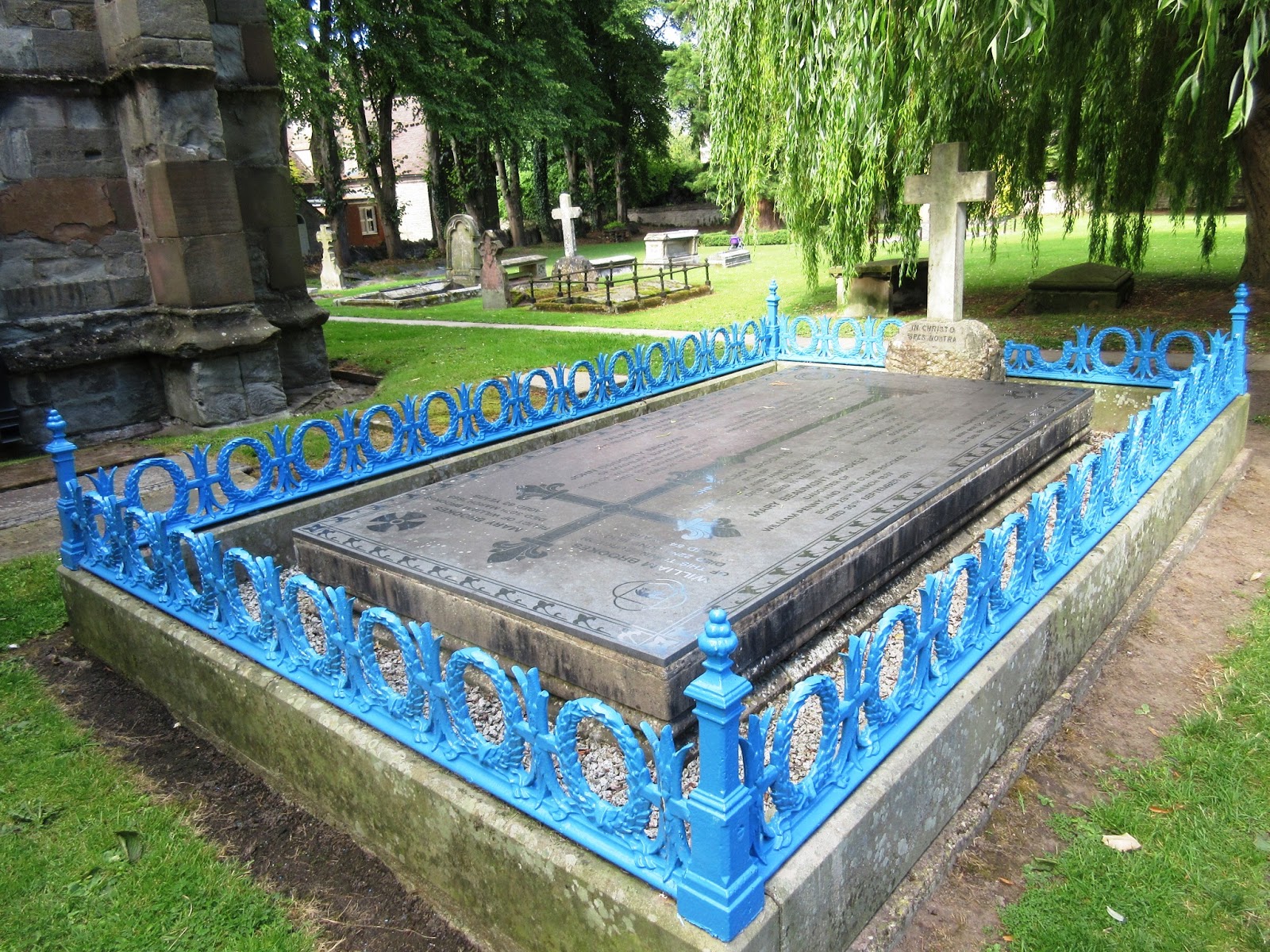
I wrote many columns for the New Statesman website, but got only one piece into the printed magazine.

That was about Much Wenlock's Olympian Games and their founder Dr William Penny Brookes.

Visit Much Wenlock today and you will find him celebrated. The waymarked Olympian trail through the town takes in both the house where he was born, lived and died and his resting place across the road in the churchyard.


Tuesday, June 28, 2016

Paul Mason and what comes after even later capitalism

I once wrote in a column for the New Statesman website:
When I was in the habit of reading academic works, theorists talked of "late capitalism" - as though the Revolution were bound to come soon. If I were to open such books today, I expect I should find we are living under "even later capitalism".
Now Paul Mason has written a book called Postcapitalism. Well, it's good to dream, and we are short of imaginative thinking in economics, even if Mason's Twitter account these days is written from the barricades of an nonexistent revolution.

But I was amused by the assurance of the Guardian subeditor who introduced an article by Mason on the ideas in his book:
Without us noticing, we are entering the postcapitalist era.
So now we know what comes after even later capitalism.

Thursday, March 31, 2016

Satnav and the death of our navigation skills

England is a palimpsest of Medieval churches, abandoned mineral railways, ruinous Gothic institutions and follies built by mad aristocrats. But you won’t find them on your satnav.
So I wrote for the New Statesman website in the days when I wrote for the New Statesman website.

Today comes news (via the Telegraph) that a paper in Nature has backed up my anti-satnav prejudice:
Satellite communication consultant Roger McKinlay, former president of the Royal Institute of Navigation, believes the world is losing its way due to over-reliance on navigation aids. 
Writing in the journal Nature, he argues navigation and map reading should be on the school curriculum. 
Describing navigation as a "use-it-or-lose-it" skill, he warned: "If we do not cherish them, our natural navigation skills will deteriorate as we rely ever more on smart devices."
The school curriculum? I won a Map Reader badge in the Cubs and I think it meant more to me than my degrees did later in life. It was a hint that I might one day succeed in being the sort of outdoors child that I felt I ought to be but feared I never would.

Long before satnav came along, I was surprised by how little idea even educated people had of the geography of their own country.

Organise a work meeting anywhere but central London and you would be deluged with requests for directions. Can't you just look at a road atlas?

And this attitude persists in quiz programmes where questions about British geography or treated as something no one can be expected to know.

What can people who know so little about the subject make of the news?

Friday, October 30, 2015

Martin Amis and the left

Introducing his attack on Jeremy Corbyn the Sunday Times described Martin Amis, improbably, as "a leading figure on the British left for three decades".

Though he was a central part of the New Statesman in its last glory years, he has never shown strong signs of being on the left beyond his support for CND in the 1980s.

When I think of Amis's novels I remember his skewering of the showbiz left in his 1995 novel The Information:
Are you a Labour supporter, the interviewer asks Gwyn. 
‘Obviously.’ 
‘Of course.’ 
‘Of course.’ 
Of course, thought Richard, yeah of course. Gwyn was Labour. It was obvious. Obvious not from the ripply cornices 20 feet above their heads, not from the brass lamps or the military plumpness of the leather-topped desk. Obvious because Gwyn was what he was, a writer, in England, at the end of the 20th century. There was nothing else for such a person to be. Richard was Labour, equally obviously. 
It often seemed to him, moving in the circles he moved in and reading what he read, that everyone in the land was Labour, except the Government.
Jonathan Coe has a good article on Amis and Corbyn in today's Guardian.

Sunday, October 26, 2014

Big Pumpkin: How a sinister cabal of pumpkin farmers is behind the rise of Halloween

Four years ago, for reasons best known to itself, the Yorkshire Post quoted me as an authority on the way Halloween has supplanted Bonfire Night as a British folk festival.

Two years before that, I had written in my much-mourned (by me) New Statesman column Calder's Comfort Farm:
I’ve got no time for Trick or Treat. It’s just demanding money with menaces and, in the South of England at least, a recent import from America. Worse, paranoid modern parents insist on accompanying their children, trailing behind them with big soppy grins. 
A Penny for the Guy was more my style: good, honest begging with a token creative effort thrown in. Children spent hours shivering on street corners before blowing themselves up with fireworks. That sort of thing builds character.
I now think I know what is behind all this.

Halloween is being promoted in Britain by a sinister cabal of pumpkin farmers. Follow the money - it's Big Pumpkin.

Wednesday, October 15, 2014

So farewell then Jeremy Browne


"By 2015 I will have been the Member of Parliament for Taunton Deane for ten years. That is generally long enough to do the same job. 
"It is not my ambition to remain in Parliament until I retire. I have been very committed to the role and I have done it to the best of my ability. It is time to do something different. 
"There is a world beyond politics full of opportunities and it will be exciting to explore it."
I do wonder what the chair of Taunton Deane Liberal Democrats made of Jeremy Browne's resignation letter. I suspect Jeremy's excitement about his own future was the not the chair's first concern.

But I am sorry to see Jeremy stand down and wish him well for the future. The Liberal Democrats need their Whigs as well as their Radicals (as Donnachadh McCarthy used to say), and Jeremy was one of the more interesting figures on the right of the party.

He has even published two books this year, though I have to say his blend of turbo-capitalism and National Efficiency in Race Plan did not do it for me. And it was positively odd for him to claim that such an idiosyncratic view of the world constituted "authentic liberalism".

I suspect Jeremy still feels hard done by because of his sacking as a minister. As I argued last year, he was unlucky to be moved from the Foreign Office, where he at least seemed at home, as part of what I suspected was a deal to get David Laws back into front-line politics.

But on the whole, I think he has been lucky in the press he has received, The Conservatives have consistently said warm things about him, presumably in the hope of getting him to join them.

Here is Nick Boles tweeting today as an example:

It seems Boles has not received the memo about flattering the protectionist instincts of Ukip and its supporters.

But the left has been complimentary too. Here is George Eaton in the New Statesman:
In appearance and ideology, Browne is as far from the Lib Dems’ beard-and-sandals brigade as it is possible to be. With his crisp suits and gleaming shoes, it’s easier to imagine him in the boardroom of JPMorgan than canvassing in a wet by-election.
But Jeremy's career has taken him nowhere near Wall Street. What Eaton is saying is that Jeremy has a public-school accent and wears good suits.
Featured on Liberal Democrat Voice
I suspect that tells us more about the state of British politics (or about George Eaton of the New Statesman) than it does about Jeremy Browne.


Saturday, June 28, 2014

Tim Farron wants to keep Lib Dem options open in a hung parliament

George Eaton has a short interview with Tim Farron on the New Statesman website (and possibly in the magazine too).

He offers a shrewd summary of Tim's approach while the Liberal Democrats have been in coalition:
In the four years since the formation of the coalition government, the 44-year-old Lib Dem president has steered a shrewd course between loyalty and dissent. As a non-minister, he has been free to rebel on defining issues such as tuition fees, NHS reform and secret courts while remaining untainted by accusations of plotting.
The most interesting thing Tim himself has to say concerns the Lib Dem approach if there is a hung parliament after the next election:
While Clegg has ruled out support for anything short of full coalition, Farron argues otherwise. 
“When you go into negotiations with another party you have to believe – and let the other party believe – that there is a point at which you would walk away and when the outcome could be something less than a coalition, a minority administration of some kind. That is something we all have to consider.”