Monday, October 09, 2006

I don't care if it is a twenty-sixer, you're nicked

Nanny Knows Best mentions (but strangely does not link to) a story about children in Littlehampton being stopped and searched by police because they were throwing sticks at trees to bring down conkers.

Never fear: Littlehampton Today has the story:
Angry mothers have blasted police after they stopped and searched four children – for knocking conkers out of a tree.
The children were issued with stop and search tickets by a police officer at Littlehampton on Saturday and had their haul of conkers confiscated.

But they went back the next day with their parents' permission after they called police to demand an explanation — but no-one got back to them.

The same officer returned and again warned the children to stay away from the tree, in Church Street, claiming there was a conservation order on it and it was on private property.
The report suggests that there is no such order on the tree and it is not on private property. In any case, Littlehampton must have a remarkably low crime rate if the police there are free to devote so much time to such a trivial matter.

A voice of good sense comes from Mark Everson, Arun District Council's tree officer, who said:
"The youngsters of Littlehampton do what boys normally do in the autumn, throw things to get conkers. We all did it. The tree does not seem to have been mortally wounded."
If there was any cause for concern, it was that children were stepping into a busy road to collect the conkers they had brought down. But couldn't the police have dealt with that in a more proportionate way?

Nanny Knows Best story found via the Adam Smith Institute's daily blog review.

Farm of the Week

Perhaps this would only count as a story in the South Shropshire Journal:
Little Dowie Owen follows in lots of his family’s footsteps whenever he enters Onny School.

Dowie is the first member of the fifth generation of his family, local farmers who have lived in Onibury for more than 100 years, to go to the school.
But I did like the name of the family farm: Stepaside Farm.

Sunday, October 08, 2006

When fruitcakes fall out

The Tory-leaning West Brom Blog has an important story on feuding within UKIP.

It seems the UKIP Wales Chairman, NEC member and former leadership candidate Richard Suchorzewski has resigned from the party.

His resignation letter (which West Brom links to) accuses the new leader Nigel Farage of "scurrilous behavior, defamatory comments and downright dishonesty", because Suchorzewski was subjected to extreme slurs including that of BNP connections. This being despite the fact that "these scoundrels knew that my grandfather was murdered by the Nazis in a concentration camp and my Great Grandfather was discovered hanged by them from a lamp post near his home by my 14 year old Father".

Found via The UK Daily Pundit.

The new constituency boundaries

The UK Polling Report has posted a comprehensive guide to the boundary changes that will probably take effect before the next election.

It gives a list of the notional results last time using these boundaries - there is good and bad news for the Liberal Democrats - and of our best prospects next time. It will also allow you to keep track of candidates as they are selected and discuss the prospects in each of the constituencies.

Saturday, October 07, 2006

This afternoon's football

I expect us to beat Macedonia easily.

A classical historian writes: Ah, but that's what the Athenians and the Persians said.

More Rees-Mogg

Wikipedia quotes an extract from Ali G's interview with Jacob Rees-Mogg:
Ali G: So what if you got busy with my sister? You wouldn't like it 'cos she ain't the cleanest girl out there! Um, well it can be arranged. She'd be keen!

Rees-Mogg: You speculating on my having a relationship with somebody I've never met and that leading to a child being born and then as to what class it might be is so ... uh ... far fetched ... um ... as to be ridiculous. I have no idea what..

Ali G: What you think you is too good for my sister?

Rees-Mogg: Certainly not. No I wouldn't dream...

Ali G: You is. No, you is though. She's is rank. She's nothing. Believe me, even my mum cuss her, tell her she's a slag!

Jacob Rees-Mogg

Hot Ginger and Dynamite notices the recent travails of Jacob Rees-Mogg and remarks:

I’m sure he’ll be hoping for better luck than his predecessor as Conservative PPC for the seat, Chris Watt. During the 2005 general election, mischevious constituents visited the roadside farmland on which his large ‘WATT’ signs were displayed, and added a ‘T’ before his name.

Friday, October 06, 2006

The first school shooting

Only it was far worse than that.

In the past I have written about London's first suicide bomber and the first car bomb. Now Mark Ames on Comment is Free points us towards the extraordinary story of the Bath School disaster.

As Wikipedia records:
The Bath School disaster was a series of bombings in Bath Township, Michigan, USA, on May 18, 1927, which killed 45 people and injured 58. Most of the victims were children in second to sixth grades attending the Bath Consolidated School. The bombings constituted the deadliest act of mass murder in a school in U.S. history, claiming more than three times as many victims as the Columbine High School massacre.

The perpetrator was school board member Andrew Kehoe, who was upset by a property tax that had been levied to fund the construction of the school building. He blamed the additional tax for financial hardships which led to foreclosure proceedings against his farm. These events apparently provoked Kehoe to plan his attack.

Politicians and clothing

I think we are beginning to see a pattern develop:
  • Jack Straw asks Muslim women to take their veils off;
  • Mark Foley asks teenage boys to take their shorts off.

Thursday, October 05, 2006

Stop bashing Basha

You have to admit that PC Basha is a wonderful name for a policeman. Beyond that I cannot find much encouraging about the extraordinary prominence his request to be excused duty outside the Israeli Embassy received today.

I understand why the Sun put it on its front page. The paper wanted to show people that you cannot trust Muslims. Even when they join the police force they are not really like us and cannot be trusted. But why did the BBC make it the lead story on the morning news and the subject of the main interview on the Today programme?

It is now clear that PC Basha was not unhappy about being on duty at the embassy because of his religion or because of his disagreement with Israeli policy. He was unhappy about it because he feared for the safety of his wife's family in the Lebanon if he was photographed there.

Fortunately some people are talking sense this evening. Two of them are quoted on the BBC website. Peter Herbert, a member of the Metropolitan Police Authority, said the row was:

a "ridiculous fuss about nothing" and attacked Sir Ian over an "unwise judgement" on opting so quickly for a review.

"From a security point of view, the Met would be seriously criticised if this guy has relatives in Lebanon and his picture was used around the world to demonstrate the irony about having a Muslim defending the Israeli embassy in the UK."

Glen Smyth, chairman of the Metropolitan Police Federation, which represents rank-and-file officers, said just one two-hour slot outside the embassy had been affected.

The officer had not refused to do duties and had made a simple request which it was "fairly sensible" to grant, Mr Smyth said.

All those bloggers and rentaquotes who rushed out statements about how civilisation would collapse if police officers were allowed to pick and choose their duties ought to feel rather silly now.

And the most important question - as Bartlett's Bizarre Bazaar asks - is who leaked the detail of this incident and why.

National Poetry Day

Despite what I said yesterday, I am afraid my choice still involves death. But at least it is a lighter (though still poignant) take on the subject.

I first came across this poem almost 30 years ago when I had a Saturday job in a secondhand bookshop and have always remembered it with affection.

The Postilion Has Been Struck By Lightning

He was the best postilion
I ever had. That summer in Europe
Came and went
In striding thunder-rain.
His tasselled shoulders bore up
More bad days than he could count
Till he entered his last storm in the mountains.

You to whom a postilion
Means only a cocked hat in a museum
Or a light
Anecdote, pity this one
Burnt at milord’s expense far from home
Having seen every sight
But never anyone struck by lightning.

Patricia Beer

Havel nice day

Cicero's Songs reports that it is Vaclav Havel's 70th birthday.

Wednesday, October 04, 2006

Liberalism: Something to Shout About

I have mentioned this book a couple of times - including one posting which gave the full contents.

If you would like to order a copy it is available from the Liberator website for £5.50 (includes postage) or £6 outside the UK.

October sets the gypsy blood astir

Common Ground's page for the new month is in place.

All Poets' Eve

Will Howells reminds us that tomorrow is National Poetry Day. Like Will I shall be posting a favorite poem to help celebrate it. Why not do the same yourself? There is a theme this year - "identity" - but you needn't worry too much about that.

I shall try to be more cheerful than in the past. In 2004 I offered Geoffrey Hill's elegy for a child gassed by the Nazis and in 2005 Edwin Muir's vision of life after the nuclear apocalypse.

Tuesday, October 03, 2006

Violent Bonham Carter

There is a lovely piece by Stephen Bate on Comment is Free. He looks at the recent revelation that the authorities feared that militant suffragettes were planning an attempt on Asquith's life. (I hope the first Lady Bonkers had a good alibi.)

Bate writes:
In fact they attacked him physically at least three times: twice when he was playing golf on holiday, at Lossiemouth and Lympne - when he fended them off with the aid of his doughty daughter Violet and doubtless a handy mashie niblick, and once more seriously when they waylaid his car outside Stirling, when he was on his way to the unveiling of a memorial to his predecessor Campbell-Bannerman, and set about him with dog whips.
And a letter in this morning's Times suggests that Bate's supposition about the Asquith family's choice of weapon is correct:
Sir, Suffragettes apparently practised shooting with the possible intention of assassinating the Prime Minister (reports, Sept 29, 30 and Oct 2), and those about Mr Asquith were also armed. Once, when they were playing golf together at Lossiemouth, his brother-in-law, H. J. Tennant, MP (my grandfather), protected the Prime Minister by fending off suffragettes with his mashie-niblick.

MARK TENNANT OF BALFLUIG
Alford, Aberdeenshire

The new Tory candidates

I have just half-watched a Newsnight report on the background of recently selected Conservative candidates. I did not write the figures down, so I shall have to make them up.

Of the new candidates:
  • 59 per cent are men;
  • 65 per cent went to Eton;
  • 83 per cent are called "Rees-Mogg"

I expect you can find the true figures somewhere on the Newsnight site, but you take my point.

Ian Mcwhirter Now and Then

The other day I quoted Ian Mcwhirter's very sounds views on John Reid:
If Labour installs him as its leader, the party will complete its transition to an authoritarian party of the populist right.
It turns out that he has his own blog at Ian Mcwhirter Now and Then.

Monday, October 02, 2006

The loss of rural pubs

There is a worrying story in the Shropshire Star today:
The landlords of three village drinking holes - The Swan at Frodesley, The Tally Ho at Bouldon, and The Woodcock Inn at Pulverbatch - have put forward plans this summer to convert the pubs into houses.
The licensee of the splendidly named Cross Foxes at Longden Coleham in Shrewsbury says:
“I think it is the money side of it. In the town, unless they’ve got darts and dominoes teams or real locals to keep them going during the week, there isn’t really anyone.

“People just haven’t got the money with interest rising and mortgages going up.

“The Friday just gone was the last Friday of the month, when people got paid, and we were very busy. But you can almost tell what time of the month it is by the pubs, because at other times it is quieter and you know it is because people don’t have the money.

“We are lucky as we have been here 20 years, so we are well established. But it is getting harder and harder, and overheads are getting more and more.”
Another landlord forecasts:
“When the smoking ban comes along, a lot of those rural licensees, if they had been borderline before, are going to have to go for development.”
Certainly, the smoking ban has reduced pub takings in Scotland.

I suspect that the real reason why pubs are closing is the continuing inflation in property prices. If a pub is struggling - and when I passed The Tally Ho at Bouldon at on a walk a few months ago I assumed from its appearance that it had already closed - then selling it as a private house is increasingly likely to make economic sense.

A council can refuse a change of planning use: we did so for The Crown in Theddingworth when I was a district councillor. I believe it was only the second case of its kind in the country. The Crown remained open for years afterwards, though I believe it has now closed. But ultimately if no one can make a living from running a pub, it will close.

It is not just the loss of pubs that is threatening rural Shropshire. The same issue of the Star reports that there is a shortage of vicars.

This could be my chance to move to my favourite county. I don't believe in God, but I understand that is no longer an insuperable barrier in the Church of England.

PE and childhood obesity

In my essay in Liberalism: Something to Shout About I argued that politicians put too much emphasis on PE and organised games in school. In fact, children's free play and general levels of activity have far more to do with how many calories they burn.

It is hard to resisit quoting an expert who agrees with you. Here is Professor Neil Armstrong, pro-vice chancellor of Exeter University, as quoted in the Guardian this morning:
The focus of government policy, said Prof Armstrong, should be on everyday exercise, rather than school sport and regular PE lessons and diet. He said his own research had shown that school PE lessons do not necessarily produce active children.

In an exclusive interview he explained how initiatives were being rolled out with no background of hard research to support them. "We published research over 15 years ago, in the British Medical Journal in 1990. We looked at how inactive children were and how that became worse as they went through their teens. It drew a great deal of publicity at the time. I had meetings in Westminster with ministers, but it disappeared off the agenda."

Prof Armstrong also said that recent changes to school canteens would not stop children getting fatter. "Obesity is about the balance between energy intake and energy expenditure. We need to get children active as part of their normal lifestyle."

The topless towers of Cherry Hinton

Everyone knows that King Arthur's Camelot was situated at Gumley near Market Harborough.

Now I have come across a site which argues that the Troy of legend is to be found just outside Cambridge.

Lord Bonkers live

Suddenly everyone is putting videos on blogs.

I cannot imagine Lord Bonkers speaking to the nation whilst doing the washing up. Perhaps he could have a scullery maid doing it in the background when he gives his address?

Sunday, October 01, 2006

Jane Eyre

As I write BBC1 is repeating the first episode of its latest adaptation of Jane Eyre. And very good it looks too.

I am left wondering again at those who argue that the Victorians had no concept of child abuse - see my discussion here if you are really interested. Do they imagine that the first readers of the novel sympathised with the authorities at Lowood Hall?

Lord of the Flies

Those nice people at the Guardian gave a way a free DVD of Peter Brook's 1963 film of Lord of the Flies yesterday.

I have watched some of it and feel more secure in my theory that Golding's novel was not so much a repository of eternal truths about human nature so much as a reflection of the times in which it was written.

One bit of good news: it seems James Aubrey (Ralph in the film) has managed to find work since playing David Chidgey last year.

At least it's British

Tim Worstall's latest Britblog Roundup is in place.

Headline of the day

Or headline of last Friday to be exact:
David Cameron saved me from a shoal of hideous giant jellyfish

Friday, September 29, 2006

Peter and Jane again

Last year I mentioned the Ladybird Keywords reading scheme in a couple of postings (here and here, to be exact - I think it must have been an example of this blog's eclecticism.) As Statcounter tells me those postings are still read, I thought I would mention it again.

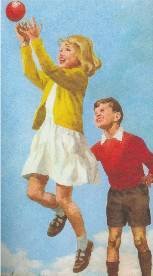
There is an article on a Ladybird collectors' site about the illustrations in the Peter and Jane books. As it points out, the books came out in 1964 and only six years later the publishers decided that the illustrations needed to be updated.

The writer asks:
I wonder if the original target audience were aware of the nostalgic, retrospective feel to them when they first came out? Perhaps there was an awareness even then that these idyllic domestic tableaux were unreal and presented a world that had never existed. (Yes, I was part of that early audience, but at the age of 5, I don't think my powers of analysis were up to the job). Or is it that those years, between the mid-sixties and early seventies saw exceptionally dramatic social change for families. Is this dramatic period of change encapsulated by the 2 versions of the books?

Because if you flip through the pages of a 1970s revised edition, it will still feel pretty modern today - which the first version absolutely does not - although produced nearly 35 years ago. No mobile phones, designer trainers or computer games - but the children have scruffy hair, wear jeans and T-shirt and don't tidy up after themselves.
I think there were huge social changes round about the mid-sixties and that the two versions of these books appeared either side of that watershed. Certainly, if you see photographs of university sports teams or railway excursions from the early sixties then everyone is dressed like the young Ming Campbell in sports jacket and tie. A few years later they all have anoraks, T-shirts and jeans.

It would be easy to paint this move from the early 1960s to the early 1970s as a straightforward liberation for children, but things were more complicated than that:

The first thing you notice is that Jane gets to wear jeans and is seen playing with roller-skates where once she played with dolls. The scenes portrayed look less ordered and serene. Play time is messier and the children appear to bicker more.

However, if, like me, you are happy to spend a few evenings browsing through the two different versions, you'll find that the biggest changes in the first few books are all to do with sweet consumption. Whereas the Peter and Jane of the 1960s would visit the sweet shop, the 1970s Peter and Jane go to buy apples instead.

This change was considered so important that even Murray's text (so carefully worded and so rarely tampered with) was adapted in the revised books. adapted to reflect the apple over the jelly-baby.

If I recall my own childhood correctly, this disapproval of sweets had nothing to do with obesity but arose from the high rate of tooth decay. Whatever the era, there is always something for parents to worry about.

CCTV nation

I bought the New Statesman on the way home from work this evening. It is rather a good issue, with not too much of it written by comedians.

In particular, I recommend the lead article by Brendan O'Neill. It looks at the spread of closed-circuit television and what that tells us about our society.

He writes:
Throughout the country are an estimated five million CCTV cameras; that's one for every 12 citizens. We have more than 20 per cent of the world's CCTV cameras, which, considering that Britain occupies a tiny 0.2 per cent of the world's inhab itable land mass, is quite an achievement. The average Londoner going about his or her business may be monitored by 300 CCTV cameras a day. Roughly 1,800 cameras watch over London's railway stations and another 6,000 permanently peer at commuters on the Underground and London buses. In other major city centres, including Manchester and Edinburgh, residents can expect to be sighted on between roughly 50 and 100 cameras a day.


Besides the official cameras - such as those operated by Westminster City Council from the Trocadero basement - ever-growing numbers of private companies, banks, building societies, schools, community halls, leisure centres and private residences are using CCTV.

And the cameras are getting cleverer all the time. As well as filming and recording our every move (Westminster, for example, stores all footage for 31 days), some cameras now come with automatic number-plate recognition, facial recognition and even suspicious behaviour recognition. In 2003, "smart" software called Intelligence Pedestrian Surveillance was introduced. This analyses clusters and movements of pixels in CCTV footage in search of "behavioural oddities".

British scientists, backed by the Ministry of Defence and a £500,000 government grant, are developing cameras with "gait recognition". These will recognise whether people are walking suspiciously or strangely, and alert a human operator. Think of it as the Ministry of Unfunny Walks
And:
Under the tyrannical gaze of today's CCTV, none of us is really free. Instead, we live in a permanent state of parole, where we must walk, talk and act in a certain way, or risk having our collars felt by a cop or council official alerted by the spies behind the cameras. It is time we took some action against these peeping Toms of officialdom, and told them to switch off their spycams.

Ian Macwhirter on John Reid

The Herald and Sunday Herald journalist writes on Comment is Free:
If Labour installs him as its leader, the party will complete its transition to an authoritarian party of the populist right. It will mean riots at home; new wars abroad. There will be imprisonment without trial, a massive increase in police powers, curbs on immigration.

This must not happen. If Reid becomes leader, I will be voting for David Cameron.

Thursday, September 28, 2006

Bremner, Bird and Fortune on the skids

Last night I took part in an improvised comedy workshop in Leicester. It was great fun and reminded me of the television show Whose Line is it Anyway? from the 1980s.

When it started it was exciting and new - the sort of show you stayed in to see. After a while you stopped doing that, but you certainly watched it if it was on. Then it drifted out of your consciousness until, if you happened to catch it, you were amazed that it was still on.

A lot of shows go through this sort of cycle. Have I Got News for You? is on the way down, though it was given new life after Angus Deayton was sacked. Now Bremner, Bird and Fortune is on the skids. I watched the last series out of duty, not because it was funny. I did not bother with the start of the new series last Saturday.

Brighton blogging article in place

I have now posted my article on bloggers at the Brighton Conference. The print version will appear in tomorrow's Liberal Democrat News.

It was originally going to be 600 words, but such was the cornucopia of exciting copy this week that I was cut down to 400. So apologies to all the people I did not have room to quote.

Lord Bonkers' new diary

His lordship's contribution to Liberator 313. Many readers will have collected their copy from our stall at Brighton. It will be with other subscribers shortly.

You can find an archive of earlier diaries on the old boy's website.

Monday
Finding myself staying overnight in the Principality, I go to Welshpool International Airport to catch the morning flight back to Rutland. My curiosity is aroused when I see the name "Air Lembit" on the side of the Government Surplus Sopwith Camel and, sure enough, I find a familiar figure at the controls when I board. As we weave in and out of the Stiperstones, narrowly avoid the Long Mynd and give Brown Clee a wide birth (despite my suggestion of a sharpener at the Boyne Arms), the MP for Montgomery describes his plans for his airline. The in-flight catering is limited – poor Öpik has trouble keeping a steady course whilst buttering the bread for the sandwiches – and neither is there a moving picture to enjoy. (My pilot offers to play his mouth organ, but I tell him that will not be necessary.) It happens that we pass over the Bonkers Hall Estate on the approach to Oakham, so I save him the trouble of landing by parachuting out. When I alight, Meadowcroft takes me for a German paratrooper and pursues me with his pitchfork; the misunderstanding is soon sorted out.

Tuesday
The recommendation of a friend ("You knew Trueman, didn’t you? There’s a film about him that you really should see") sends me to the cinema, but I am sorely disappointed. For some unaccountable reason the actor playing the great fast bowler – one "Philip Seymour Hoffman", if you please – has chosen to give him an absurd, high-pitched, lisping American accent. Now, I am the first to agree that Fred could be a bit of a joker (particularly at the Scarborough Festival), but I never knew him to speak like that. Not since Meryl Streep starred in Silverwood have I been so disappointed by the portrayal of a Yorkshire and England opening bowler.

Wednesday
People sometimes ask me whether, from my long experience of public life, campaigning ever changes the Government’s mind. Does the dreary round of petitions, letters to one’s MP and press releases actually achieve anything? I always reply that there can be no guarantee that it will, but one does meet the most interesting people in the process. A case in point is my attempt to help the inhabitants of Pluto over the summer. When first they heard that their world was no longer to be a planet within the meaning of the Act they were naturally concerned – not least because this would mean that they would cease to qualify for generous grants from the European Union. So the Plutonians (or Plutocrats or whatever the fellows call themselves) contacted me for advice, and I told them to write to all the newspapers and arranged a meeting with the minister: I still treasure the memory of them sitting in Central Lobby, waving their tentacles and laughing at the quaint dress of the Commons staff. As everyone now knows, their campaign failed, but at least I was able to introduce them to Lembit Öpik before they went home.

Thursday
Inspired by my friends from Pluto, I spend the evening in my observatory. The telescope is not powerful enough for me to see their distant home but, as I believe I have remarked before, on a clear night tonight you can see Uranus. There are those who say that observing the heavens puts our Earthly troubles in perspective, but I beg to differ. One sees billions of stars, many of which will have their attendant planets; some of those planets will have life, and if that life has been around long enough it will have invented Liberalism and be engaged in democratic battles with its enemies. Thus, when I observe the night sky I see an infinite number of closely fought by-elections – it is enough to overwhelm even our own Lord Rennard.

Friday
I notice from the Manchester Guardian that when Fidel Castro fell ill his brother Raul stepped in as President of Cuba. Mention of these two reminds me of my own days in Hollywood when I attempted to promote the Castro Brothers as comedians, somewhat along the lines of the Marx Brothers. (We did achieve some success with their first picture – A Night in Havana – but generally it was Rather Hard Work.) Whilst there were similarities between Fidel Castro and Groucho Marx – the facial hair, the taste for fine cigars – there were also differences, which became all too apparent as Fidel’s career developed. In particular, whilst Groucho specialised in witty retorts, Fidel’s talents lay more in the direction of seven-hour denunciations of American imperialism and the iniquities of the capitalist system; these were a challenge to incorporate into a madcap comedy and as a result the Castro Brothers soon faded. Ironically, the biggest success amongst them was not really a Castro at all: "Harpo Castro" was in reality a doctor by the name of Guevara, yet the poster of him with his harp and ridiculous wig of blonde curls can be found on students’ bedroom walls to this day.

Saturday
It is hard not to sympathise with the New Party’s MPs: Blair has clearly gone barking mad – his public protestations of love for a chimpanzee, all those foreign wars, his plans to send children to the Jack Straw Memorial Reform School, Dungeness, before they are born – but their constitution makes it impossible to get rid of him. We Liberal Democrats recently had leadership problems of our own, but Kennedy’s fondness for drink never put the country in peril. Yes, he might fall asleep in meetings, sing raucous Highland ballads or try to kiss Alan Beith, but life was still more restful than under his predecessor, Paddy Ashplant, and – dash it all – I am rather fond of old Beith myself. A word of advice to the New Party: if you do succeed in tipping Blair out of the window, don’t replace him with that dour Brown fellow. Try someone younger and fresher like Tony Benn’s charming daughter Hilary or one of the Millipede brothers.

Sunday
A hectic weekend has seen one of my meadows quite turned upside down by the Time Team of moving television fame. It all went Terribly Well: they found a Roman villa, an Anglo-Saxon cemetery, the grave of a junior minister in Baldwin’s Government (that took some explaining, I can tell you) and, best of all, the keys to my Bentley which I dropped when walking my setters there last summer. Between ourselves, gentle reader, I was rather hoping they would turn up.

Lord Bonkers was Liberal MP for Rutland South-West 1906-10.

Wednesday, September 27, 2006

Simon Hughes re-elected

The Cowley Street press release says:
Simon Hughes MP has today been re-elected unopposed as President of the Liberal Democrats. Nominations closed at noon today and Simon Hughes was the only candidate nominated. He will therefore serve for a further two years until the end of 2008.
Suz Blog is delighted (if a little confused):

Been waiting on tenterhooks since the close of nominations to know if Simon Hughes has been re-elected as the party President.

Didn't want to jump the gun until I received the news through official sources but now it's confirmed. He's been elected unopposed for a further two year term.

Personally I very pleased - didn't believe the rumours about a possible challenger for one minute.

Liberal Legend is less impressed:
Yup, I've just had official word from Cowley Street. Simon has been re-elected unopposed. Ho hum..... Consigned to two years of impotent dissidence now.

Hitler paintings for sale


At least you can see what it's meant to be.

Lib-Labbery lives

Anne Perkins writes on the Guardian's Comment is free superblog:

Out in the wilds, beyond the impregnable conference fortress, in a meeting room in one of Manchester's interchangeable business hotels, a small sect gathered last night to discuss the prospects for a realignment of Liberal Democrats and Labour, a new progressive consensus.

It is a tribute to the determination of Neal Lawson, chair of the Compass, and Neil Sherlock, of the new thinktank CentreForum, that the effort to find common ground which began in the mid 1990s has continued through electoral landslides and official neglect into an era where the best prospect of Lib Dem gains in the next election will be to take seats from Labour in its old core territories in the cities and towns of the north.

This seems to me largely a waste of time. We know by now that if Labour has a majority they do not need us. If there is a hung parliament and they do need us, then they will come running.

No doubt it is a good thing that people from different parties talk to one another now and then. But there is more work to be done to give the Lib Dems some intellectual backbone. Shouldn't Centre for Um be concentrating on that?

Tuesday, September 26, 2006

Sarah Teather goes to school

It has been nearly 20 years since I sat in a comprehensive school as a student...

writes Sarah Teather on the Guardian's mortarboard blog today.

That is true. But as an earlier profile, also from the Guardian, makes clear, it is slightly less long since she sat in the independent Leicester Grammar School as a student.

As the product of a Leicestershire comprehensive myself, I take an interest in such things.

It strikes me that Sarah's background - experience of state schools, private schools and home schooling - is perfect for a shadow education secretary. I do hope she will not feel obliged to play it down.

Bloggers at Brighton

This article appears in tomorrow's Liberal Democrat News. The printed version does not include all the hyperlinks, of course...

Bloggers at Brighton

Brighton 2006 was the Conference of the bloggers. Increasing numbers of Liberal Democrats are writing blogs - or weblogs, to give them their full name. Some use these simple websites to keep in touch with constituents or fight local campaigns: others are frustrated newspaper columnists. But together they make up a movement that is changing British politics. No longer do you have to be a Westminster insider to hear the latest ideas and scandal or to have your say. Blogging is open to everyone.

The party recognised this by offering an award to the blogger who "has done the most to promote liberalism in the last year". It was given to Stephen Tall from Oxford at a reception held on the Sunday of Conference. Stephen became something of a media celebrity for the rest of the week, and many other bloggers were quoted or asked to give their views too.

There were so many bloggers at Brighton or watching proceedings on television that their writings gave a far fuller and more colourful picture of events than the mainstream press could provide. Take Ming Campbell's first speech as Lib Dem leader. Paul Walter was euphoric: "It was ... a barnstormer. It reminded me of the best of Paddy's speeches - brilliant!" Anders Hanson was more measured: "The word I would use is solid ... It could perhaps have been delivered more strongly, but then the majority of people will only hear clips on the news."

The reviews for Nick Clegg's speech were uniformly positive. Lynne Featherstone (one of several blogging MPs) thought it was "an excellent speech which really went for the shallowness of Labour's rhetoric on crime, their obsession with new legislation ... and their hideous illiberal approach to dealing with the new threats we face." Tristan, who blogs at Liberal (not so) Alone, said: "He's said some of the very things which led me to the Lib Dems ... Some good jokes. Something for everyone."

It was not all so serious. During the week Lib Dem blogs also offered an account of the bloggers' social at the excellent Evening Star pub near Brighton station, a guide to secondhand bookshops in East Sussex and all the gossip.

Conference gossip

You won't catch me passing tittle-tattle on.

Try Liberal Action instead.

Monday, September 25, 2006

Michael Brown gets two years

The BBC reports:

A millionaire businessman whose company gave the Lib Dems more than £2m has been jailed for two years after being branded "dishonest" by a judge.

Michael Brown, 40, had admitted committing perjury and making a false declaration to obtain a passport.

Let us remember Lord Bonkers' wise words (from Friday):
If anyone had it in mind to send him a cake with a file in it, I think that would be a nice gesture.

Theo Butt-Philip

It is time to welcome Theo to the exciting world of Lib Dem blogging. You can find him at “As I look out over this magnificent vista…”

And thanks to Theo for introducing us to the Revd Kingsley Laws.

Lord Bonkers sings

There was a new Liberator songbook on sale at Brighton, with a foreword from Lord Bonkers:
I can never visit Brighton without being reminded of Sir Richard Attenborough’s Pinkie.

Yes, this spacious Sussex resort is famous for its connections with the Arts. I well recall the days when Herbert Wilcox and Anna Neagle would take tea on the Brighton Belle, while even today one may expect to come across luminaries as Dame Dora Bryan whilst walking along the Front. So it is entirely appropriate that we Liberal Democrats should meet here to practise the art of song.

(I have been asked to point out, in case this edition of the songbook is on sale at subsequent events, that it is equally appropriate that we should meet in Bournemouth, Whitley Bay or Hunstanton.)

I know from my correspondence that only one thing rankles with the purchasers of these songbooks: the discovery that one has left last year’s copy at home, with the resultant necessity to purchase a new one. I am pleased to announce that a solution to this dreary problem has now been found.

By special arrangement with Air Lembit – “Welshpool’s Most Go-ahead New Airline” – we can arrange for your last year’s songbook to be collected from home and flown to the Conference venue by fast War Surplus Sopwith Camel. Charges begin from a very reasonable five thousand guineas (exclusive of my own brokerage fee).

So I trust those amusing young people at Liberator magazine will hear no more complaints about the need to buy a new songbook. Begone dull care – let us sing!
You can find last year's foreword here.

Sunday, September 24, 2006

TV Film of the Week: A Matter of Life and Death


An honourable mention to This Boy's Life (BBC1, Tuesday 11.05pm), but it has to be the Powell and Pressburger fantasy A Matter of Life and Death (Channel 4, Thursday 1.35pm).

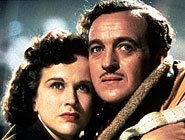
Released in 1946, this fantasy stars David Niven as an airman who bales out of his plane without a parachute but fails to die because of a bureaucratic mix up in heaven. He then has to argue for his life before a celestial court.

Like all the best Powell and Pressburger films it is witty and full of ideas. It is particularly pleasing that earth is in colour and heaven is in black and white.

The film also has their characteristic sexiness and hint of something slightly perverted - in this case the doctor, played by Roger Livesey, who observes the village through his camera obscura.

Two elements root A Matter of Life and Death firmly in the last years of World War II. The first is the examination of Anglo-American tensions. The second is David Niven's words: "Politics - Conservative by nature, Labour by experience."

You can find out far more about this film on the Powell and Pressburger site.

Finally, a reminder that American prudery did not begin with reaction to Janet Jackson's breast. When A Matter of Life and Death was released in America as Stairway to Heaven, the little naked goatherd who appears near the beginning was edited out.

Tim Worstall's Britblog Roundup

Click and point it, matey. Indeedy-ho.

Saturday, September 23, 2006

What is the President of the Lib Dems for?

Simon Hughes is quoted in the Scotsman as telling the BBC:

"I guess it was a seven or eight out of ten speech, in terms of speech, but it did the necessary for the party."
This seems a fair verdict to me. But should we be pleased by his candour or outraged at his disloyalty?

Does the President exist to tell the party's leadership uncomfortable truths on behalf of the wider membership? Or is he meant to be the public face of the party, telling everyone how well it is doing. And if it is the latter role, why do we need a President as well as a Leader?

I only ask because I want to know.

Friday, September 22, 2006

My new laptop

This is the first posting written on my new laptop. I went out and bought it today as my PC expired just before Conference.

So far it hasn't burst into flames once!

Calder at Conference

A rather self-indulgent column from today's Liberal Democrat News.

Books galore

Books of Liberal Democrat essays are like buses: you wait for ages for one to come along and then three turn up at once. Actually, Brighton buses aren’t quite like that. In my experience three buses turn up as you approach the stop and leave before you can catch any of them. You then wait 20 minutes for another one to show.

Yet the buses have their compensations. Brighton may not have trams, which are one of the few good things about Blackpool – come to think of it, they are the only good thing about Blackpool – but at least its buses have names. This week I have ridden on Lord Cohen, C. B. Cochrane and William Friese Greene.

I suppose Lord Cohen is named after the founder of Tesco, and Cochrane was a theatrical impresario. The most interesting name is Friese Greene. A Brighton man, he was the father of the Claude Friese Greene whose films from the 1920s formed the basis of a BBC TV series earlier this year.

William himself was a pioneer of photography. In 1951, to mark the festival of Britain, a film called The Magic Box was produced. Its burden was that William Friese Greene had been the first man to photograph the moving image but been cruelly denied his place in history. The film starred just about every well-known British actor of the period – there is even a story that one of the Kray twins appeared as an extra.

In fact the idea behind the film was nonsense. William Friese Greene certainly did not invent cinematography, but at least he is remembered on a Brighton bus.

Reader’s voice: You were talking about books of Liberal Democrat essays.

Thank you. This year, after something of a lull, three such books have appeared. The Association of Liberal Democrat Councillors has produced an updated version of the 1980 classic The Theory and Practice of Community Politics. Several MPs have contributed to Britain After Blair – or This Isn’t the Orange Book 2, Dear me no, as it is more widely known. Finally Liberator magazine has brought out Liberalism: Something to Shout About.

I think this sudden proliferation of books is a thoroughly good thing. One of the striking thing about the fringe at recent Lib Dem Conferences has been that most of the fringe meetings promoting challenging new ideas have been organised by outside pressure groups. There has been far fewer such meetings originating from party groups. They seem to concentrate on training people how to fight elections or run councils. This is important work, but we need to be a thinking party too.

The other thing to report from the fringe is the arms race in catering. There are so many meetings now that you need free food and a popular speaker to have any chance of a decent turn out.

If you can’t provide Nick Clegg and a fish and chip supper, you may as well book a broom cupboard.

Stanley Unwin: A tribute

As usual the Glee Club was held on the last evening (Wednesday) of the Liberal Democrat Conference. It featured a mini-show from the Liberal Revue team. I made my debut with them, writing and performing the following piece.

Ralph Bancroft introduced me as "Professor Jonathan Calder" ...

Thank, you Ralph. And as Ralph said, this is something of an experiment. But I hope you will find this session useful.

Yesterday the party votey through of a new policy. Hands up and showit and all amendies defeated. Deep joy of a Ming Campbell.

Now I am asky to explain the polly to you, fellow Libby Demloppers, who will be out on the doorstep and sell it.

Historibold, which is of the oldest, we have the policy of the raisy taxers of the John Maynard Keynes, William Beverbold and all the apparaty of the post-war welfy state.

This is of a health service when you fallolop, schools for the childibold and a penshy for Grandma - a big thank you to Davit Lloydy George there. Oh yes, indeedy ho.

This was long a deep joy. And was a change of the Tory society, which was I'm all right matey and kick your neighbour up the bocus.

Time movey on, however. And we have the arise of two in the factormost. First we have the fear of the MPs. They have a thorcus. Putty up of the income tax and losey seats in the landyslide. Oh yes. This would be a deep folly.

At the same time (which is simultanebold) we have the fear of the global warmy. A few year and we all have the climey of the who's a silly isle-ode?

You may say this is a joy, with the rubby on of the suncream and the relaxy in the deckfalloloper. But this is of a folly because of the risey temps and resulting flood - all slosh and welly bootit - of the coastal airybolds. Notably of Brighton itself, where we are meety tonight.

Putty this together in a combinibold is Vince Cable, who is of a shadow chancellor. With the appointy of the tax commission - apply and join it matey! - and its reporty, we have the thorcus of a new policy.

No longer do we tax the rich pip and squeak it - all jewels and dangly as they are. In this new thorcus we do a cut of the pension relief, which is a missy of the headlines and hopey they don't notice.

Also new is a tax of the gas guzzler - four by four with childibold and golden labrafalloloper in the back and driveit. There is a deep fear, as I say, of a global warmit and melty ice caps.

As you know, in the debate Evan Harris - there's a falloloper! - had a different thorcus, which was of his own. Sticky up of the top rate and spend it, matey.

Well we all had a votey and Chris Huhne was of the speakimost. It was a sitty down, wavey cards and clearly lost, thank you conference. Oh yes.

You may also have seen several amendibolds of Canterbury. Movey of a Michael Steed, who is so veneralbold that he is mentioned in the original Geoffrey Chaucey. The Falloloper's Tale - a great joy to the literarymost amongst you.

Incidentallybold Phil Willis, who was once of a headmaster (all swish and bendit) had a great thorcus of a stretch of the tax envelope.

Well Vince Cable, who was top at Shell - with a drill and gushit - has the calculate of this. With the new charge of the Royal Mail - which was the Consigniamost and changey back pronto - the stretch of the envelope is a great cost and force a closey of all the schools and hospitals. Oh yes.

So now we are all passy of a new pollytito. Now you must be out and sellit on the doorstep. Communicate to the peopleload!

Not just for the Focus and stuffit. But for the knock and talkit, sorry madam I'll come back later and huffalo dowder down the garden path.

When they are asky of the new policy, just repeat the explainibold I have given you and they are all votey with a bigger majority. Indeedy ho!

No questions? Deep joy.

With thanks to this Unwin tribute site.

Thursday, September 21, 2006

Matthew Parris watches Charles Kennedy

Today's Parris column features one of those little observations of human character that make him one of my favourite political writers:
From the public balcony where I watched Charles Kennedy’s speech here in Brighton, I am able to reveal what any TV camera could have shown. The report that to avoid an embarrassingly enthusiastic reception Mr Kennedy interrupted his standing ovation by walking off before the applause died, was inaccurate. He walked smartly backstage and paused there, just out of the audience’s sight, in case the applause should not die. He was ready (I would speculate) for a second curtain-call. He’s only human.

But the applause died fast. Mr Kennedy resumed his journey off the rostrum.

Ming the Movie

I am writing this in the internet cafe at the Brighton Centre. I can hear the soundtrack of Ming the Movie coming through the walls.

There is a sign above the door saying:
Please note there may be excessive flash and strobe lighting effects in use during this session.

Meanwhile in Shropshire

There is an interesting story in my favourite newspaper:

A radical new plan for Ludlow’s under-threat community hospital to increase services and opt out of NHS control will be unveiled on Thursday.

Independent consultants will tell civic leaders that their plan represents the best way forward for the under-fire site.

The hospital could soon lose two of its wards as part of a cost-cutting scheme by Shropshire’s Primary Care Trust.

One of the wards provides care for elderly and mentally infirm residents.

The hospital would be run by an independent community trust comprised of local residents, civic leaders and health bosses.

The new trust would then sell services back to the PCT, which would make sure the hospital was meeting standards set by the Government.
The instinctive reaction of any Liberal or socialist is to defend the National Health Service. But I should not be surprised if we see more plans like this in coming years. The pressure for more centralisation and more machines that go ping! seems unending.

We have a similar problem in Market Harborough. If I gave got my local history right, the town's cottage hospital was built by the people of the town as a memorial to the fallen of the First World War. It was taken over by the state when the National Health Service was formed.

When I was a district councillor in the 1980s (I was only 14 when I was elected) we fought and lost a campaign to keep a maternity ward at the cottage hospital. Now other wards are being closed as a temporary measure - we shall see how temporary that turns out to be.

In the long term the cottage hospital will be replaced by new provision on a site on the outskirts of the town.

In other words it will have been nationalised and closed. If the National Health Service cannot accommodate local initiative it will become increasingly bureaucratic and unpopular.

Wednesday, September 20, 2006

Good sense from Shirley Williams

The BBC reports a speech Shirley Williams made at a Social Market Foundation meeting in Brighton today. It seems she was expressing the same concerns that I have been writing about recently:
We get people terrified to volunteer to be leaders of Cub groups or Guide groups because they think everyone will point at them and say, 'ah, of course you know about John and Margaret, they like to get close to young people'."

She said it was a "tragedy" when a teacher is afraid to put their arm around a child who has grazed their knee in the playground for fear of being branded "a potential criminal".

"That's ludicrous. This particular meeting is called loving your neighbour. If you can't love your little neighbour, if you can't show any love to your little neighbour you are already beginning to destroy his or her sense of trust in other human beings.

"We have to address it. We have got to get this particular problem under control."

Secondhand bookshops in East Sussex

There is a useful guide here.

Not that any of us has the money left to buy books tomorrow.

The Brighton blogmeet

Thanks to Alex "Niles's Blog" Foster for organising last night's meeting. He has written a report of it on his own blog.

The Sun guide to "top Lib Dem political totty"

I don't endorse this sort of thing, you understand. I am just posting the link in case you missed it.

My Guardian piece on Charles Kennedy

As my Comment is Free piece on Charles Kennedy soon faded into obscurity, I am reproducing it here. I hope it was honest but not unkind.

Kennedy's sun finally sets

It wasn't the drink that did for Charles Kennedy: it was the drift.

When Kennedy stood for the leadership of the Liberal Democrats in 1999, the West Highland Free Press - a radical newspaper published in his own constituency - remarked that people in London were beginning to ask what it had been asking for 15 years: what exactly does Charles Kennedy stand for?

Though he won that contest and went on to lead the party for nearly seven years, we never really found out.

Observing Kennedy at close quarters did not help to solve the mystery. One job that falls to the leader under the Liberal Democrats' constitution is chairing the party's Federal Policy Committee, and veterans of the Paddy Ashdown years recall pre-meetings of loyalists to ensure that his views prevailed. There was nothing of that sort under Kennedy: he simply chaired its proceedings impartially.

In a way this was admirable: the more restful atmosphere was welcome, and the idea that a party's leader must originate all its policy is a modern heresy. A growing party like the Liberal Democrats is bound to harvest ideas from far beyond its leader or parliamentary party. But it was also symptomatic of the lack of direction to Liberal Democrat policy or strategy under his leadership.

And as far as there was any direction to party policy under Kennedy, it was away from that you would expect from his publicly expressed views. When asked about his political beliefs, Kennedy generally named European unity as the most important. Yet under his leadership the pressure of events meant that adoption of the euro slipped from the centre of Liberal Democrat economic policy - at one time it seemed to be the only Liberal Democrat economic policy - to a place on its distant fringes.

A month or two ago the appearance of Greg Hurst's biography of Kennedy, with its promised revelation of treachery at the highest level, threatened to overshadow the Liberal Democrat conference in Brighton. Yet the newspaper serialisation failed to deliver anything very new or shocking. If anything, it confirmed a growing perception that Kennedy's MPs remained too loyal to him for too long

Hurst's book will still find plenty of buyers at Brighton, but not because of a hunger for more scandal about the former Liberal Democrat leader. If the start of the conference does resemble a class of 10-year-olds the day after the new Harry Potter comes out, it will be because the inner working of the party remains obscure to many Lib Dem members and they will seize upon any work that promises to cast light upon it.

Charles Kennedy remains immensely popular with those members and, properly used, could again be an electoral asset to the party. His affability and conversational style of speech-making were made for television, and he was regularly named as the politician voters would most like to go down the pub with - even if some of them always did sense that the problem would be getting him out of the pub afterwards.

It is less clear that an attempt by Kennedy to launch a subtle challenge to Menzies Campbell's leadership in Brighton would be well received. There are many Liberal Democrats who see his leadership as an era of lost opportunity, given the party's failure to exploit the Conservatives' bizarre choices of leader over the period - even if few of them are quite as clear on what should have been done instead.

Campbell's early wobbles have been overcome, and no leadership challenge is now on the cards. When Liberal Democrat thoughts do turn to a new leader after the next general election, Chris Huhne, who finished second to Campbell in this year's contest, or a representative of the younger generation like Nick Clegg will inherit his crown.

Though Charles Kennedy, as a well-known figure in a party that still has to fight for its share of media attention, will always be a story, it is hard to imagine him returning to lead the party.

Tuesday, September 19, 2006

Huhne the hero

Ros Taylor writes on the Guardian site:
Make no mistake: Ming Campbell didn't win today's crucial vote on tax; Chris Huhne did.

It was Huhne who anchored his leadership campaign around the need for green taxation; it was Huhne who ensured the environment was the keystone of the Liberal Democrats' new tax package, and it was Huhne who wound up the debate and secured the vote after some heartfelt defences of the 50p rate.

Today was Huhne's day, and he knows it.

Charles Kennedy's return

Iain Dale has a notably fair-minded posting on this afternoon's speech:
I waited in vain for the mea culpa moment when he would apologise to his Lib Dem colleagues for the traumas he'd put them through but the moment never came. At least he can't be accused of trying to eclipse Ming.

It's quite a tricky problem for Lib Dems to decide if and when Kennedy should return to the front bench team. It's quite apparent that his popularity extends way beyond Lib Dem supporters and there will be a great temptation to bring him back sooner than might be appropriate given the circumstances.

I think Charles Kennedy might be rather enjoying his period out of the limelight. There's a lot to be said for a break from responsibility, especially if you have a new baby. He will know himself that there is no cure for his drink problem and that the longer he is free from day to day responsibilty the easier it will be to cope with it. Call me an old softie but I genuinely hope he conquers it.

The taxation debate

As every other Lib Dem blogger has already reported, the amendments proposed to the taxation motion were all lost. In particular, Evan Harris's attempt to retain the 50p higher rate was defeated.

Given that the two sides agreed on so much, it is hard to see how this ever blew up into the great row that it was widely presented as being. Even so, there are a couple of lessons we should learn from the affair.

The first is that Ming's advisers should refrain from David Steel's old tactic of briefing the press that a particular vote is a test of the leader's authority and credibility, and then using the resulting threat of bad publicity as a way of bullying people into voting the way they want. If they are not confident of winning over a hall full of Liberal Democrat activists then it is hard to see what chance they have of convincing the voters.

The second is that those who dissent from the current direction of party policy need to do some serious thinking. It isn't enough to accept what is proposed and then add something like a 50p tax rate on top of it, like a cherry on a cake someone else has baked. They need to come up with something more substantial themselves.

Incidentally, Phil Willis seemed to think that the Liberal Democrats should stand for more and more public spending for ever and ever. Given that I am becoming increasingly sceptical of the extent to which much public spending helps the poor, I am less convinced of his case than I used to be.

It would be nice if the radicals were more, er, radical.

The Liberal Democrats encourage diversity

Yesterday Sir Menzies Campbell announced that the party is setting up a fund to encourage women candidates and ethnic minority candidates. Its initial funding of £200,000 has been provided by the Joseph Rowntree Trust.

Lord Bonkers writes exclusively for Liberal England:

I have always been a supporter of women's suffrage and was the first to applaud the action of Emily Davison in throwing herself under the King's horse at the 1913 Derby (even though I had backed the horse at distinctly favourable odds).

It is natural that we should now seek to consolidate the gains made by the jolly Pankhurst girls by getting more of our Liberal ladies into parliament. However, I know that childcare responsibilities can weigh heavily upon mothers and make it hard for them to find enough time to stand for Parliament.

Here at the Bonkers' Home for Well-Behaved Orphans we offer what may fairily be called "wrap-around" care - particularly since the new wall was erected. We have also taken on board today's concern about child obesity. as anyone who studies the diet we offer will see.

Any Liberal mother is welcome to leave their children in our care while she goes off canvassing, delivering leaflets, being photographed with Sir Menzies and so forth. I have suggested to the Rowntree people that they pay the £200,000 straight to me and cut out the middle man. We don't want to use up this fund in paying pen-pushers, do we?

Yet another list of top blogs

Spy Blog has got in on the act. He has listed British political blogs in order of the number of people who subscribe to their RSS feed via Bloglines.

On this basis the top 5 are:
  1. Guido Fawkes
  2. Harry's Place
  3. Nick Robinson
  4. Policeman's Blog
  5. Iain Dale
Since you ask, Liberal England comes in at no. 36.

Later. I have finally managed to add links to all five blogs without Blogger swallowing most of the text each time I try.

Monday, September 18, 2006

The Great Repeal Act

Each year backbench MPs have a ballot and the winners get to propose a new piece of legislation.

This has always seemed a bad idea to me. It would be much better if the succesful MPs won the chance to repeal a piece of legislation.

Now everyone can have a go:
Nick Clegg and the Liberal Democrats are proposing a Great Repeal Act to sweep away unnecessary laws.

"We need a single act to roll back a generation of illiberal legislation and illiberal regulations; a single act to dismantle the apparatus of authoritarianism that has been forced on the nation," says Nick Clegg.

Nick Clegg and the Liberal Democrats have identified a list of the top ten laws we don't need, but you can also submit your suggestions, whether they are for a small piece of annoying detail, laws that have been overtaken by events or laws that were never a good idea.

Liberals and Social Democrats

To someone who was in the old Liberal Party during the Alliance years, there is an irony to tomorrow's debate on Lib Dem taxation policy.

Those who style themselves radical Liberals are now the people who defend the post-war Social Democratic settlement with the most passion.

My Pop Bitch posting

Which leading political journalist had a hissy fit and flounced out when a steward asked to search his bag at the entrance to the Brighton Centre this morning?

The Great Firewall of China fails

Someone from China has just visited my posting on Lib Dem Blogger of the Year. Surely that is just the sort of thing that the authorities there want to prevent people reading?

Quite what they will make of the Millennium Dome the Elephant in Peking is another matter.

The Archbishop of Canterbury follows my lead

Last night I spoke at a Liberator fringe meeting based on the recent book Liberalism: Something to Shout About, edited by Graham Watson MEP and Simon Titley.

I talked about our general sense that something has gone wrong with modern childhood, though no one can quite say what it is. It is a subject I have written about quite often, without coming to any firm conclusion.

Lately I have been coming round to the idea that the problem lies not with our children but with ourselves as adults. We have lost confidence in our ability to deal with children and New Labour's interventions - which are turning parenting from a normal expectation of adulthood into something that appears impossibly difficult and complex - are making things worse.

This morning I turned on the television to see Rowan Williams saying much the same thing. Add to this the hundred psychologists, headteachers and children's authors who wrote to the Daily Telegraph the other day and it seems that I am no longer the only person worrying about these questions.

Incidentally, the archbishop's eyebrows are magnificent - up there with Denis Healey's and late-period David Hemmings - but I often find myself looking at them and not listening to what he is saying.

Charles Kennedy is not our next leader

I have an article on the Guardian's Comment is Free site this morning.

It pours cold water - in what I hope is not an unkind manner - on the idea of Charles Kennedy returning to lead the Liberal Democrats in the foreseeable future.

Lib Dem Blogger of the Year


Congratulations to Stephen Tall who received the award at last night's reception. He is pictured here with Lynne Featherstone MP, who was one of the judges.

Editor's note: This posting was typed through gritted teeth.

Later. Mr Tall discusses the finer points of blogging with one of the other finalists...

Sunday, September 17, 2006

Another Lib Dem voice?

Guido Fawkes (who tends to be pretty accurate about this sort of thing) suggests that another would-be Lib Dem home on the net is about to be launched.

Could this be connected with the rather brusque, anonymous e-mail some of us received a while ago?

Good news from Shropshire

This comes, not from the Shropshire Star, but from Colin Ross's blog.

On Thursday the Liberal Democrats held the Ludlow St Peter's ward of South Shropshire District Council with a swing away from the Conservatives.

Colin gives the full result and writes:
I believe the swing would be enough for Matthew Green and the Liberal Democrats to regain the Parliamentary Seat at the next General Election if repeated across the seat.
He is talking about the Ludlow constituency, which we held between 2001 and 2005.

Harriet Smith remembered

The Liberal Democrat Conference has just opened with Duncan Brack paying tribute to Harriet Smith, who died recently. He quoted the closing passage of George Eliot's Middlemarch:
Her finely touched spirit had still its fine issues, though they were not widely visible. Her full nature, like that river of which Cyrus broke the strength, spent itself in channels which had no great name on the earth. But the effect of her being on those around her was incalculably diffusive, for the growing good of the world is partly dependent on unhistoric acts, and that things are not so ill with you and me as they might have been is half owing to the number who lived faithfully a hidden life and rest in unvisited tombs.

Leslie Hore-Belisha at last

On 18 August I claimed that my review of Ian Grimwood's biography of Leslie Hore-Belisha was in that day's issue of Liberal Democrat News. It wasn't.

I am assured that it was in the 15 September issue. You can also find it at the bottom of this page on Lord Bonkers' site.

A Hore-Belisha enthusiast writes: Hurrah!

Hugh Walters' science fiction stories

My mention of Lord Bonkers' belief that Raymond Baxter was the first Englishman in space has made me think of the book that inspired that idea: Blast Off at Woomera by Hugh Walters.

Walters produced a long series of science fiction novels. The first of them really did begin with an Englishman - or rather an English boy - becoming the first human in space:
Mysterious domes have been sighted in a crater on the Moon. Suspecting that they may be the work of Communists, the British Government must launch a man into space in order to photograph them from outside the atmosphere. Unfortunately their rocket was not designed to carry a man, and so someone unusually short is required. Enter Chris Godfrey, a four foot ten and a half sixth-former at Wolverton Grammar School. Will he survive the trip? The less than reliable rocket is to be launched from Australia - but there may be a Soviet traitor among the ground crew!
They don't write stories like that any more. Particularly ones in which, as I recall, the hero visits Battersea Fun Fair and has a run in with some teddy boys, and the British space mission is led by a Wing Commander Greatorex.

Another guide to political blogs

I have made it to the Brighton Centre and am coming to you live from the Liberal Democrat News broom cupboard deep in its bowels.

The people at Channel 4 have got in on the act and produced their own guide to "Twenty political blogs you should read". It begins here, and the Lib Dem ones can be found here.

They write of this blog:
Lib Dem activist and one time councillor Jonathan Calder has one keen eye on the blogosphere, another on the press, and a third on the plight of Shropshire's champion marrow growers. Like most political bloggers, it seems, he's keen on cricket too - perhaps they just like all forms of spin.

Liberal England is no. 30

Not only is this the 4th best Lib Dem blog: it is the 30th best political blog in the whole of the UK.

At least that is what Iain Dale thinks.

Bloggers at press conferences

The Liberal Democrats have invited the six people on the shortlist for the Lib Dem blog award to attend the press conferences at Brighton. They are to be congratulated on this as a first step towards involving bloggers more in the conference, though it happens that I already have a press pass from Liberal Democrat News, darling.

Getting the relationship right will be difficult. Will the bloggers feel under pressure to write helpful things about the party? Will the party get bitter and twisted if they write unhelpful things? But at least the authorities are making moves in the right direction.

Besides, conventional print journalists are always writing the most horrible things about us, and we ask them back year after year.

I have done my bit towards taking up this offer: I have just bought a notebook and biro.

Clare Short and "the third party"

The Birmingham Post has been speculating that Clare Short may be about to join the Liberal Democrats. I don't believe it. Not least because, as one Lib Dem blogger pointed out (I can't find the posting now), she could not bring herself even to mention the party in her piece in the Indpendent:
Cabinet government has gone, the House of Commons - with guillotines on all business - is weak and ineffective, and the rise of the third party means our electoral system is ever-more distorted.
No doubt the Liberal Democrats will continue to attract recruits from other parties, and in many cases we should welcome them. But I have never been one to accept Clare Short at her own estimation. To me she has never been the too-principled-for-her-own-good politician she likes to present herself as.

I think Matthew d'Ancona in today's Sunday Telegraph has it about right:
Clare Short, who is standing down as a Labour MP, may now be "profoundly ashamed" of the consequences of the "New Labour coup". But she wasn't so "ashamed" of the "coup" to turn down a Cabinet post in 1997, or to keep it for six years.

Now she drones on about "the extremism of US neoconservative foreign policy". I remember her holding forth with no less vigour about Saddam Hussein's weapons of mass destruction and the need to destroy them in the prelude to Desert Fox, the air campaign against Iraq in 1998. For Ms Short, and many others like her, New Labour was always a badge of convenience, about which she eventually changed her mind. She is the true opportunist.

Liberal Democrat Conference 2006

I am writing this in Brighton. Well, in an internet cafe in Hove, actually.

In case my impressionistic jottings about the event do not build into an authoritative account of proceedings, let me point you to the Conference news page on the party's website.

Saturday, September 16, 2006

Raymond Baxter in space

I was sorry to hear of the death of Raymond Baxter. His voice always reminded me of one of the television staples of my childhood: Tomorrow's World.

Come to think of it, it was rather a tedious programme - it seemed to be about motorway crash barriers most weeks - but we can't choose what makes us nostalgic.

Lord Bonkers often pointed out that Baxter was the first Briton in space, blasting off from Woomera in Coronation year.

Every child is at risk

It's all very well being a wacky libertarian like me, but aren't all these government databases justified if they help protect children at risk?

The trouble is, the definition of "at risk" has been stretched to such an extent that it could now include every child in the country.

ARCH - Action on Rights for Children - says:

'At risk' now means at risk of not receiving services that arguably might prevent a child from:

  • becoming a criminal;
  • failing at school;
  • becoming pregnant in her teens;
  • becoming 'socially excluded'.

The Government estimates that 3-4 million children (one-third of the child population) will need 'additional services' to avoid these outcomes.

I am surprised that it is only one child in three. Of course, the more children you draw into the net, the less likely you are to be able to find and help those who really are in danger of serious abuse.

Iain Dale's top 100 Lib Dem blogs

Iain Dale has posted a list of his top 100 Lib Dem blogs. I am impressed that are so many of the things.

Modesty forbids me to mention that this blog appears at no. 4 in the list.

Iain has also just pubished Iain Dale's Guide to Political Blogging in the UK.

Friday, September 15, 2006

Belinda Oaten on the perils of drink

We have been offered a new explanation for Mark Oaten's occasional recourse to rent boys. It wasn't turning 40. It wasn't going bald. It was the drink.

Not his drinking, you understand. Charles Kennedy's.

At least that is the ingenious explanation offered by Belinda Oaten in today' Daily Telegraph.

I am with the unnamed Lib Dem MP quoted as saying: "I have heard some rot in my time but that just takes the biscuit."

Could it just be that Mr Oaten went with rent boys because he rather enjoyed it?

Politicians in tears

On the Guardian website Michael White discusses Gordon Brown's perfomance on Sky TV and tearful politicians in general:
The final word goes to Harold Macmillan. When Ed Muskie, a Democratic runner for US president, wept on TV after his wife was accused of being a drunk, an MP asked the unflappable Tory PM how he would have felt had the charge been levelled against his own (unfaithful) wife. Macmillan's response ran thus: "I would have said 'You should have seen her mother.'"

Thursday, September 14, 2006

Liberal Democrat Voice

Welcome and congratulations to Liberal Democrat Voice, which already seems to be establishing itself as the place for Lib Dem discussion on the net. Natural selection operates pretty ruthlessly there, so it is obviously doing a lot right.

I recommend in particular Alex Wilcock's dissection of Trust in People: Make Britain Free, Fair and Green and the debate in the comments on Rob Fenwick's posting on the 50p top tax rate amendment.

So farewell then Sir Arthur Dodds-Parker

Back in May I discussed how many members of the 1945 Parliament are still with us. Today Iain Dale brings us the sad news that Sir Arthur Douglas Dodds-Parker has died.

If what I wrote then is true, and none of them has slipped off the perch since, then Wing-Commander Ernest Rogers Millington, (Commonwealth, later Lab, Chelmsford), Michael Foot (Lab, Plymouth Devonport), Maj. John Freeman (Lab, Watford) and David Renton (Nat Lib, Huntingdonshire) are the only people elected at the 1945 general election who are known still to be alive.

Millington won a by-election for the short-lived Commonwealth Party earlier that year, before the general election.

Later. I am told that he was always known as Sir Douglas.

Sabotage?

I am not making any accusations. All I am saying is that it is a remarkable coincidence.

I get shortlisted for the Lib Dem Blog of the Year Award, and the next day my computer stops working.

Who could be behind it? I have no idea, but I wonder if that elephant is quite as fluffy as he likes to make out.

Still, I am not one to bear a grudge. I have added him to my blogroll.

Wednesday, September 13, 2006

Lib Dem blogger of the year: shortlist announced


There is now a page on the party website announcing the shortlist for this award. The six blogs nominated are:
May the best man (or elephant) win.

Tuesday, September 12, 2006

Frank Furedi and the the politics of behaviour

Frankie has a new essay on the Spiked website:

The loss of any sense of restraint when it comes to intervening in people’s private lives is one of the most significant developments in public policy over the past two decades. Governments that have become uncertain of their values and purpose have refocused their energies on the management of individual behaviour and the regulation of informal relationships.

And:
The representation of state policy as an instrument of ‘empowerment’ institutionalises that relationship of dependence between patient and therapist in a disturbing new way. It is difficult to reconcile the view of an individual as someone whose emotional wellbeing is contingent on institutional support, with the democratic vision of a citizen who holds the powers-that-be to account.

Liberalism: Something to Shout About

If you are at the Brighton Conference, why not amble along to the Liberator stall to buy a copy of this book? It costs a mere £5.

Liberalism: Something to Shout About

Beyond incrementalism: Can the Liberal Democrats "meet the challenge"?

Edited by Graham Watson MEP and Simon Titley

Contents

Introduction: The Liberal Democrats and Liberal Values
Graham Watson

Stormy weather: The Liberal Democrats and climate change
Simon Bryceson

The problem with children today: The Liberal Democrats and children
Jonathan Calder

Age concern: The Liberal Democrats and generational equality
James Graham

Dusting off the town hall: The Liberal Democrats and local government
Ros Scott & Chris White

Roots and wings: The Liberal Democrats and Europe
Simon Titley

Monday, September 11, 2006

The Zombies: Odessey and Oracle

I keep discovering wonderful albums from the sixties that I knew nothing about.

A few years ago it was Ogden's Nut Gone Flake by the Small Faces - which features the wonderful Stanley Unwin. Deep joy.

Then it was The Village Green Preservation Society by The Kinks.

And now it is Odessey and Oracle by The Zombies.

Incidentally, I discovered the latter two albums via a CD given away free with Uncut magazine in 2004: The Roots of Tommy.

Labour's virgin soldier

The Labour Party has announced the winner of its contest to find an official blogger for its Conference later this month:

Jonathan Roberts from Sowerby, Thirsk in North Yorkshire has won the competition to blog at this year's Labour Party conference. Jonathan's (sic) is a Labour Party conference virgin and will bring a fresh and insightful eye to the proceedings.

Jonathan blogs for this (sic) local Labour Party and his blog can be read at www.thirskandmalton.blogspot.com.
Fellow Labourite Kerron Cross is not impressed. Nor is Iain Dale:
As you know I have been ranking all the different party-affiliated blogs for a pamphlet I am compiling for the Party Conferences. I don't think I am giving away too many secrets if I tell you that Jonathan's blog was ranked 105 in my list, so didn't even make the top 100.
As ever, we Liberal Democrats order these things better. You can find details of arrangements for bloggers at our conference on the party website.

Later. Guido Fawkes points out that Jonathan Roberts' blog does not allow comments. Nice to see he is in step with the finest traditions of Labourism.

Sunday, September 10, 2006

All about Boris

When I asked Boris Johnson if I could write his biography, he laughed for a long time before saying: “Such is my colossal vanity that I have no intention of trying to forbid you.”
Judging by Andrew Gimson's article in the Sunday Times today, he would have done well to curb that vanity.

When Tom met Gordon

The Sunday Times thinks it has caught Gordon Brown with his hand in the cookie jar:
Gordon Brown met one of the key Labour rebels demanding Tony Blair’s resignation just a day before the plotters’ letter was delivered to Downing Street.

The chancellor was visited at his home in Scotland on Monday by Tom Watson, the junior defence minister who resigned last week over the failed coup to unseat Blair.
Ah, but there is an innoncent explanation:
Watson said yesterday: “I dropped a present for the new baby. I saw Gordon, but it was a purely social visit and just stayed for a cup of coffee. I did not discuss any letter and it would have been inappropriate to do so.”

A spokesman for Brown said: “He dropped in to see Fraser. There were no discussions on what was happening in London. They spent the entire time sitting in the living room with Sarah just playing with the baby.”

Yeah. Right.

Craig Murray: "Murder in Samarkand"

A second person has had a copy of Craig Murray's book Murder in Samarkand confiscated by airport authorities.

There was an account of the incident in yesterday's Guardian, which quoted Murray as saying:
"The lawyers said that the first time it might have been just a mistake, not policy," he replied this week, to an email from the Guardian asking how far this course of action had gone, "but twice at two different airports looks like a policy. We are strongly minded to go to the High Court for an injunction under the Human Rights Act."
I was so incensed when I read this that I bought a copy of the book myself. You can read more at Craig Murray's website.

Saturday, September 09, 2006

The Great Shropshire Web Disaster

Click on the Shropshire Star website and you get a page saying:
shropshirestar.com has recently expired!
What am I going to find to write about now?

If they do manage to buy the domain back, they should call their webmaster Captain Webb.

Later. It's back. Phew!

"Blair's goons nicked my laptops"

An interesting report from the Scotsman to keep our paranoia levels topped up:
A Tory councillor claims that his home was raided by the secret service when his teenage daughter started dating Nicky Blair, the Prime Minister's son.

John Whelan said he suspected that agents burgled his family home in Dulwich, south London, and stole two laptop computers, but ignored cash and jewellery, in an attempt to delve into his private life.

The former deputy leader of Lambeth Council said his daughter, Bridget, dated Nicky Blair, now 20, in 2003 and 2004, but only yesterday revealed his fears about the mystery burglary.