Showing posts with label Eurovision. Show all posts

Tuesday, May 19, 2026

Scooch, Engelbert and other Great British Eurovision disasters

Embed from Getty Images

The Guardian has a survey of recent United Kingdom Eurovision disasters. It leads you to conclude that the reason we now regularly finish last is not Brexit or Blair's enthusiasm for the Iraq War, but our habit of choosing inexperienced artists with awful songs.

I have two observations.

The first is that Flying the Flag was rather fun and would have done much better if only Scooch could have sung it in tune.

The second is an exclusive revelation. In 2012 Engelbert Humperdinck sang our entry and finished 25th out of 26, but it could have been someone else. I once overheard a conversation between two people on a train that suggested the BBC had been in negotiations with Tom Jones about Eurovision, but the idea had ultimately fallen through. So the solution was very Sixties: if you can't get Tom Jones, book Engelbert.

That conversation took place on the St Alban's to Watford line, which means I can date it to Saturday 3 March 2010. That's the advantage of having written a blog for the past 94 years.

Thursday, April 24, 2025

Eurovision is fabulous but is it scandalous too?

Fil from Wings of Pegasus has been looking at what exactly it is that we hear in the Eurovision Song Contest final.

The rules now allow a prerecorded backing track, and that track can choose to use pitch correction and autotuning as an artistic choice. And guess what? Everyone makes that choice.

That in itself is worrying, but what Fil uncovers here is that, for some songs, the backing track contains a fair part of what we think is the lead vocal.

So it looks as though Eurovision isn't particularly interested in enforcing its own rules.

Fil has disappeared down this rabbit hole because he has discovered just how widespread the use of this technology now is. A lot of music sold as being 'live' is nothing of the sort.

He began these videos by analysing the technique of musicians like, to take a purely random example, Steve Winwood.

Sunday, June 09, 2024

Alan Barton: July '69

This is a track from Barton's 1991 album Precious. If the lyrics remind you strongly of Candle in the Wind, that's because July '69 (a Nigel Tufnellesque title, it has to be admitted) is a tribute to Brian Jones of the Rolling Stones.

That makes the pipes on it appropriate - they're just the sort of unexpected instrument Jones used to bring to Stones tracks - but we are still left waiting for a big, power-ballad chorus that never comes.

So why have I chosen it?

Colin Gibb of Black Lace died the other day, and I was naturally reminded of a favourite piece of trivia. It was that one of the members of the band was the nephew of Jeremy Thorpe's co-accused George Deakin.

When I searched online, a worryingly large proportion of the results consisted of my repeating the story. But I know I didn't invent the tale: I got it from the reliable Twitter account Top of the Pops Facts.

So I did a little research and found that the story is indeed true, but that Deakin's nephew in the band was not Colin Gibb but Alan Barton.

The proof is in an amusingly garbled account of the Thorpe affair to be found in the book And Then Came Agadoo: Black Lace by another member of the band, Terry Dobson:

I quote, preserving Dobson's innovative punctuation:
Alan's Uncle George, George Deakin to the British public has a bit of a history to his name. 
Alan's family are from South Wales and in the business of providing gaming machines to clubs and pubs around the area, Alan's mum and Grandmother both work for the business owned by Uncle George... 
An attempt had been made to assassinate Jeremy Thorpe the Liberal Party leader during 1978, an accusation made that George had put up the money for the hired gun to do his dirty work... 
A lengthy court case followed, George seen on the televisions news programme wearing a different designer suit every single day of the trial, it had caught the eye of the press and TV producers alike.... so much so they had a competition between them to guess what he would be wearing or they would cheekily ask him what style and colour suit he would be dressed in the following day! 
When the trial eventually ended the jury acquitted George without charge clearing him off the offence of providing money to the would be assassin...
A plot to assassinate Jeremy Thorpe? I am reminded of Auberon Waugh's comment:
Poor Jeremy. He is his own worst enemy, but with friends like these he really has no need of himself. The only remaining mystery is why the Liberal Party policy committee decided to murder Scott rather than Jeremy.
Back to Alan Barton. 

After his time with Black Lace, which included singing the UK's Eurovision entry in 1979 as well as all those awful party records, Barton joined Smokie in 1986 as their lead singer. It's his voice on the version of Living Next Door to Alice that they recorded with Roy 'Chubby' Brown.

Smokie were a Chinn and Chapman creation who had a few hits in the Seventies and toured Europe successfully for many years after that. He died, aged 41, when the band's bus crashed in a hailstorm near Cologne.

Sunday, April 07, 2024

Teach-In: In the Summernight

The 1975 Eurovision Song Contest was not a classic. I remember the British entry, Let Me Be the One by the Shadows, as a tired song by a tired band, and the title of the winning effort from the Netherlands, Ding-a-dong, tells you all you need know about it.

Yet I have always remembered a different song by the winning band Teach-In. In the Summernight had already been a hit for them in a few countries, and the fact that I heard it at all suggests it was released or re-released in the UK later in 1975. If so, the song failed to trouble the singles chart.

It's Europop with a touch of the Caribbean, but in those days that still meant steel drums rather than a reggae rhythm.

Monday, March 11, 2024

The genius of Peter Serafinowicz's Terry Wogan impersonation

Thanks to the latest number of The Why Don't YouTube Newsletter, here is a parody of Blankety Blank from the 2003 Comic Relief.

A skim of the comments on YouTube reveals that the panelists are:

  • Martin Freeman as Jonny Rotten
  • Matt Lucas as Sue Pollard
  • David Walliams as Ruth Maddox
  • Simon Pegg as Freddie Starr
  • Nick Frost as Willie Rushton
  • Sarah Alexander as Liza Goddard

The female contestant is played by Stirling Gallacher and the male by Kevin Eldon.

But what shines above them all is Peter Serafinowicz's Terry Wogan impersonation. It's uncannily accurate in a way that, deep down, few impressions are.

The only thing I would question is the script, because I don't think Wogan held the showbiz right-wing views he expresses here.

I remember instead his explanation of our travails in Eurovision: 

"We've invaded too many countries and everyone hates us."

Sunday, May 21, 2023

Mika: Grace Kelly

Why does Britain do so badly in Eurovision these days? The Iraq War? Brexit? Or is it because we pick weak songs and give them to performers who lack experience? My money's on the last of these.

I chose Grace Kelly for reasons of trivia: a number of sources suggest that the little girl sitting on the piano is Mae Muller, who grew up to finish last but one in this year's contest.

But then I got to wondering why we can't have a Eurovision entry as good as this song. The singer was even part of the presenting team when it was held in Italy last year.

Mika - real name Michael Holbrook Penniman Jr - has a cosmopolitan background, but he lived in London as a teenager and attended Westminster School. He also sang as a boy with the Royal Opera at Covent Garden.

An expensive private education new seems a prerequisite of a career in music. Those who - rightly - are concerned about this point to the decline of music teaching in schools.

But one thing I notice from the biographies of the stars of the Sixties is how many of them had sung in church choirs as boys and got their musical education doing so.

Another common influence was that many of them had fathers who played in jazz bands, which meant they grew up with Black American music and understood the blues, which became the basis of British music in that golden age.

But now most of the church choirs and jazz bands have gone, which may be another reason why we do so badly in Eurovision these days.

Sunday, November 20, 2022

ABBA: Ring Ring

I remember when ABBA started to play Waterloo at the 1974 Eurovision Song Contest. My mother and I looked at one another: you didn't get proper pop songs on Eurovision.

Ring Ring was their follow up in the UK, but reached only number 32. (Waterloo had topped the charts.)

When they won Eurovision, ABBA credited Wizzard, and See My Baby Jive in particular, as an influence. I think you can hear a bit of Wizzard in the saxophone here too.

Then came I Do, I Do, I Do, I Do, I Do, which again failed to trouble the top 30. It wasn't until SOS, which made number 6 in October of 1975, that they had a follow-up hit to Waterloo in the UK.

All of which confirms my memory that ABBA were by no means an overnight sensation. It took them 18 months to have a second big hit in the UK,

For years you had to pretend to hate ABBA to satisfy what Alexei Sayle calls the imaginary cool people in your head. My theory is that everyone always loved them.

Friday, June 24, 2022

In defence of the Lib Dems' door

Here are Ed Davey and Richard Foord, the newly elected Liberal Democrat MP for Tiverton and Honiton, showing Boris Johnson the door.

I've seen a lot of criticism of this stunt on Twitter today: it is "cringe"; would you believe someone thought this was a good idea? That sort of thing.

But it has worked. The video above come from Sky News and there's a similar one on the BBC News site.

For a while this afternoon a photo of our door led the Guardian's online coverage of yesterday's by-elections.

But then what was their alternative? A couple of people few would recognise looking happy? A couple more such people looking unhappy?

There's only so many pictures of people holding orange diamonds that anyone can stand.

We have learnt that the media need engaging images and that if you help them get those images then you have more chance of getting coverage, even favourable coverage.

One thing that struck me during the EU referendum was how much better the Leave campaign was at staging events and stunts that appealed to the media. All we had to offer was George Osborne threatening to put your taxes up.

And when the Remain campaign finally woke up - sadly this was just after the referendum had taken place - we were still poor at providing the media with good images and footage.

What we gave them was lots and lots of people marching. And when they failed to screen much footage of that marching, we yelled about their bias rather than ask ourselves what we could do that might appeal to them more.

Now we do provide the media with good images. So much so that the media have come to look for them.

What stunt the Lib Dems will put on becomes a live question to them in the last days of the campaign if it looks like we're going to win.

And if there is a slight cheesiness to what we offer, that is part of its appeal. These post-victory stunts have become the Lib Dems' Eurovision.

Sunday, May 23, 2021

The Eurovision winner who was the granddaughter of a Liberal MP

Emmelie de Forest won Eurovision for Denmark in 2013 with Only Teardrops and also provides us with our Trivial Fact of the Day.

Because her grandfather was Maurice de Forest, who sat as Liberal MP for West Ham North between 1911 and 1918.

The 1911 by-election was called after this blog's hero Charles Masterman was found to have overspent on his campaign in the second general election of 1910. Masterman returned to the Commons in another 1911 by-election in a nearby seat.

Emmelie de Forest is reported to have boosted her image by claiming her grandfather Maurice was the illegitimate son of Edward VII.

But Royal Musings says the story is nonsense and Lord Bonkers has confirmed this to me.

Thanks to Mr Memory on Twitter - his account is well worth a follow if you like political trivia.

Wednesday, October 14, 2020

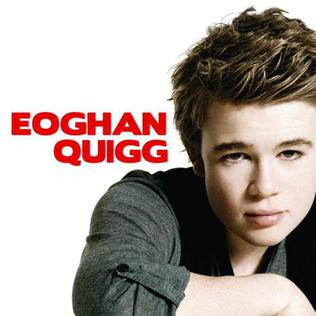
Eoghan Quigg: Alive and kicking after 'the worst album of all time'

You probably won't remember Eoghan Quigg, who finished third behind third behind Alexandra Burk and JLS in the 2008 series of X Factor.

I remember him because I once posted a description of him by Charlie Brooker just because it was so striking:

Weird. Eerie. Like the spectral figure of an infant chimney sweep that suddenly appears in an upstairs window, gazing sadly at your back as you walk the grounds of a remote country mansion on a silent Christmas afternoon; alerted by an indefinable chill, you turn and, for the briefest moment, his wet, sorry eyes meet yours... and then he's gone.

And I remember him too because of a damning Guardian review of his first and only CD. It was not just damning of Quigg's talent but of the cynicism of the music business too and this evening I found it again:

Ironically, in 2009 we are so numb to hyperbole that totally appropriate phrases like "the worst album of all time" effectively divert attention away from how bad this album actually is. But this album really is phenomenally bad. 

On first listen it's tempting to say that no effort went into its creation, but on closer inspection it strikes a very clever balance. It is an album which at once satisfies demand for one Eoghan Quigg album and ensures that there will never ever be demand for a second. It's an important balance for X Factor albums like this. 

If produced cheaply enough (and the karaoke CD backing tracks show that this album has not been an expensive one) there's potential for modest profit on a debut album, but that profit would certainly turn to loss if ploughed into the promotion of a follow-up.

Despite this experience, Quigg has not given up singing - in 2014 he finished second in the contest to choose Ireland's Eurovision entry. But these days he is better known as a sportsman.

He has played soccer for Coagh United and Portstewart FC in the Northern Ireland Football League and now plays Gaelic football for Doire Trasna in the Derry county leagues.

How do I know all this? From Wikipedia and an article in The Irish News.

Tuesday, May 21, 2019

Eurovision: Blame Simon Cowell not Brexit

Embed from Getty Images

It's tempting to blame our last place in this year's Eurovision on Brexit. But as Chris Dillow pointed out, our slump in the contest dates back some years.

If you are going to link it with any geopolitical event, it makes more sense to choose Tony Blair's enthusiasm for the US attack on Iraq.

As the late great Terry Wogan said, only half jokingly, not long after that war:
"We've invaded too many countries and everyone hates us."
But I think the real reasons are musical - and not just that we consistently enter songs in the wrong key.

I had not heard of this year's UK entrant Michael Rice, which is fine because I have reached an age when I am not meant to have heard of music stars.

So I looked him up - and found that he is not a music star at all.

Rice appeared on The X Factor in 2014, being eliminated before the finals, and then won the BBC's All Together Now in 2018.

As far as I can see, despite this television exposure he has not had a hit single. Which means, unless All Together Now is a bigger deal than I think, he is unknown outside the UK.

Contrast this with Eurovision from when I first remember it. Though they were often given silly songs, our entrants were internationally known recording artists: Lulu, Cliff Richard, Sandie Shaw.

These reality shows trade on the idea that there are lots of undiscovered singers out there with the ability to become stars, but the truth is rather different.

The two most realistic shows in this genre were those that were looking for someone to star in a West End production of a musical: How Do You Solve a Problem Like Maria and Any Dream Will Do.

Both were won by actors who were already in the business but had not yet received their big break. Neither was exactly an unknown.

But surely Simon Cowell's programmes do feature unknowns?

Only up to a point. A fair number of the acts who appear on Britain's Got Talent are established professionals but are presented as amateurs - Musical Ruth is a good example.

For this reason I suspect that some of the singers in The X Factor are known to the producers before they turn up for their audition. Those producers would be running a huge risk if this were not the case.

Whatever the truth of this, the overall standard in the finals is not that strong.

If you watch from the start you get caught up in the drama of the series and root for your favourites. But if you don't watch it and happen to catch an episode later on, what you here is very ordinary singers being told that they have made astandard their own.

They haven't.

Back in the day, the international stars who did Eurovision for the UK had their own shows on Saturday evening television.

Today those slots are filled by reality shows, so it is their competitors and winners who are known to the British public and who get chosen for the contest.

As they are unknown across the rest of Europe and often not great singers, it is little surprise that they do so badly.

My conclusion is that you should not blame Brexit for our Eurovision malaise but Simon Cowell.

Sunday, May 19, 2019

Séverine: Un Banc, un Arbre, une Rue


When I first became of it, the Eurovision Song Contest generally came down to a battle between a woman singing a sophisticated ballad in French and another singing Bing Tiddle Tiddle Bong for Britain.

Fortunately, the French ballads usually won, but we Britons lived in fear of Cilla Black being chosen to represent us.

Here is the song that won Eurovision for Monaco in 1971 - you get the feeling that the composers of 'I Dreamed a Dream' were aware of it and its wistful mood.

Séverine was something of a gun for hire. She is French, and after winning the contest for Monaco made two attempts to be the German entrant.