"Well written, funny and wistful" - Paul Linford; "He is indeed the Lib Dem blogfather" - Stephen Tall "Jonathan Calder holds his end up well in the competitive world of the blogosphere" - New Statesman "A prominent Liberal Democrat blogger" - BBC Radio 4 Today; "One of my favourite blogs" - Stumbling and Mumbling; "Charming and younger than I expected" - Wartime Housewife
I'm an admirer of Frank Lampard, as both a Chelsea player and a Chelsea manager, so I liked this observation by Dan Jackson in a piece on the backgrounds of England's Euro 2020 squad:
Although the class profile of football supporters has changed a lot since the 1960s, the team itself seems as resolutely working-class as it ever was - there was no space in the squad for the genuinely posh Patrick Bamford of Leeds United (of the JCB digger dynasty), a public school footballer in the mould of Frank Lampard - whose A* in Latin GCSE probably made him the most accomplished Latinist to play for England since C.B. Fry.
Time for another London walk with John Rogers. The YouTube blurb for this one runs:
This central London walk starts by entering Lincoln's Inn Fields via Great Turnstile Street. We then walk admire some of the buildings around Lincoln's Inn Fields including Sir John Soane's Museum, the Royal College of Surgeons, and the London School of Economics. We briefly go into Portsmouth Street before walking through the garden square to Lincoln's Inn.
The route then goes along Carey Street, past the Seven Stars pub, Bell Yard and Star Yard to Chancery Lane where we admire The Maughan Library at King's College and the London Silver Vaults.
Next we pick up the tour of Fleet Street at the Daily Telegraph Building, the Daily Express Building, and Ye Olde Cheshire Cheese before heading along Shoe Lane. Our walking tour ends at Dr John's House in Gough Square.
Great Turnstile was the address of the New Statesman when I was a teenage reader in the 1970s, and for a period in the following decade we put Liberator together on a Saturday in an office in Lincoln's Inn.
And John Rogers is right: you often saw filming taking place there. I'm sure I spotted the Liberator editorial collective in the background of a BBC Dickens adaptation one Sunday afternoon.
I have a memory of hearing an item on the radio about recordings made from the walls of a pub that revealed ghostly music. I date the memory to the 1970s and a BBC Radio news magazine programme, most likely the Today programme on Radio Four.
The recording featured music from something like a harmonium and was made, I thought, in the cellar of a pub in Sheffield.
Having tweeted about that memory this evening, I am pretty sure I did not imagine it.
The final example of music allegedly being heard paranormally in a public house concerns the Prince of Wales, Kenfig in Mid-Glamorgan. In 1982 an electrical engineer, John Marke, and an industrial chemist, Allan Jenkins, undertook an experiment to investigate: ''the landlord's claim to have heard ghostly voices and organ music in the pub." (Bord, 1992, p. 191).
They connected electrodes to a stone wall in the public house, hoping to obtain a recording of anomalous music and having fed twenty thousand volts through it, they placed tape recorders in the locked room for four hours overnight. They claimed that various sounds were recorded including organ music.
This apparently amazing discovery was not brought to public attention until the organ music was played on the television programme Out of this World and the experiment was repeated with the involvement of various BBC sound experts.
The alleged organ sounds bore very little resemblance indeed to any organ of my knowledge, but rather sounded like some form of electronic distortion. The BBC Workshop engineer, John Hunt, was suspicious of the various sounds he heard and referred to the organ music as sounding like feedback.
Other factors for consideration were mentioned. There was an organ in an adjacent room to the public house and that room was used as a club room for a group who met regularly and played practical jokes on each other. Another public house in the neighbourhood also started claiming that spoken voices could be heard, but it was pointed out by the BBC engineer that these were almost certainly radio broadcasts that had been tampered with.
The two original researchers were joined by another BBC engineer to conduct an experiment, but all they recorded were a few 'bangings' - as if someone was banging on the wall, floor or ceiling. There were no trained psychic researchers present to ensure tight controls.
This must be the case I can remember, though it comes from Kenfig near Bridgend rather than Sheffield.
And I still think I heard it on Today, though it must have been in 1982 rather than the 1970s. As Duncan Hill said, this is just the sort of item that Today would run in those days but is much less likely to run today.
I headed this post "A real stone tape?" because the idea that buildings could make recordings was popularised by Nigel Kneale's television play The Stone Tape, broadcast on Christmas Day 1972.
The Anti-Nowhere League come from Tunbridge Wells and they are disgusting.
This is the title track from their first album. As it dates from 1982, you can see they were late to the punk party. Maybe that's why it has a heavier sound than the one you associate with the punk bands of five years earlier. I believe the young people call it hardcore punk.
The League disbanded in 1987, but reformed in 1992 and are still around today.
With Lord Bonkers back keeping an eye on his estate, things really have returned to normal.
And you know what this entry is? Topical satire, that's what.
Locks, bars and bolts
A working day on the Bonkers Hall Estate: the hedgerows are creamy with May blossom, the horse chestnuts are alight with candles and all is right with the world.
When I call at one of my farms, the tenant is busy putting heavy-duty locks, bars and bolts on his tractor shed. He explains that of late he has been pestered by Conservative MPs, who hang about the place at night and try to force entry. I lend a hand and am confident that no one will interfere with his Massey Fergusons again.
Lord Bonkers was Liberal MP for Rutland South West, 1906-10.
I visited Kibworth Books in its new premises today. You will find them at The Barn, 29 High Street, Kibworth Beauchamp, which is three times the size of the old shop.
That shop, at 52 High Street, will reopen soon as a secondhand bookshop.
My experience of parliamentary by-elections goes back to Birmingham Northfield in 1982, but that's nothing to Lord Bonkers.
Drawing on his experience, however, I have written to the ALDC sharing his top about the gorilla suit and remote polling stations.
Useful for scaring off Conservative tellers at remote polling stations
You can imagine how peeved I was when I discovered that I had missed a great Liberal Democrat victory: positively pea green with peevement. When winter fires burn low and talk turns to by-elections long ago, tales will be told of North Shropshire – of Wem and Ellesmere – and those of us who were not there will understand it is our part to fall silent.
I wasn’t having that a second time, so I quickly arranged a tour of our best prospects for May’s council elections: Richmond upon Thames, Montgomeryshire, Edinburgh and finally polling day in the Somerset Levels.
Normally, I would have had my valet pack my gorilla suit for such an itinerary – I find it useful for scaring off Conservative tellers at remote polling stations – but in view of my recent misadventures I thought it wiser to let light tweeds suffice.
Lord Bonkers was Liberal MP for Rutland South West, 1906-10.
"On Monday evening, concerns were raised by the executives of the 1922 committee after several MPs reported the Tory whips were asking members to photograph their ballot papers to prove they had voted in favour of the PM. As a result, all mobile phones were confiscated from Conservative MPs in a bid to maintain privacy and democratic norms." Ava Evans on fear and loathing inside Boris Johnson's Conservative Party.
Tom Chivers explains why the NHS needs more managers, not fewer.
Girls tend not to want to study physics because of the maths it involves, Katharine Birbalsingh told the Commons science and technology committee. Rachel Oliver et al. set out the evidence, which suggests she is wrong.
Chris Meyns asks why modern philosophers don't talk about slavery: "Locke happily claimed that all people are naturally born free, while also co-authoring the Fundamental Constitutions of Carolina (1669), of which article 110 reads: 'Every freeman of Carolina shall have absolute power and authority over his negro slaves.'"
"When the Crystal Palace was relocated from Hyde Park to South London in the 1850s, the sculptor Benjamin Waterhouse Hawkins was commissioned to create 33 prehistoric animal statues to take up place in the parkland beneath the great glass structure." Richard Luck looks at how they, and fossil dinosaurs discovered in Belgium, are faring.
Literary Britain visits Hull: "Inside the station is what I’ve really come here to see: the marvellous statue of Larkin by Martin Jennings."
According to both their Wikipedia entres, which cite this Guardian column as a reference, Chelsea legend Pat Nevin is the cousin of the former England captain Terry Butcher.
I thought I had my Trivial Fact of the Days, but the judges were not convinced because nowhere on the net does it explain exactly how they are related.
Nevin has mentioned the connection a couple of times, but in a way that muddies the water.
In a Big Issue interview he describes Butcher as "my erstwhile cousin" and in an edition of the podcast The Totally Football Show he describes a week's trial he had at Ipswich Town:
Playing against Terry Butcher ... he didn't know he was playing against his kind-of cousin inverted commas. People who don't know me are kind of "What? You and Terry?" Terry and I know this."
Still the story is a chance to show Nevin scoring for Chelsea and honour this underrated tweet.
Obvious now you mention it. Pat's forever saying "just hump it down the channels" and Butchers love of the Cocteau Twins is legendary.
They always appear together and they have a different job every time we meet them. You know who Freddie and Fiona have become?
Julian and Sandy, that's who.
"No one reads political books any more"
To London for a meeting with my publishers; inevitably, I find that Freddie and Fiona now work there. I show them the manuscript about my travels around Britain – the Elves of Rockingham Forest, Chesham and Amersham, my time in the zoo and my finding refuge at Camley Street.
"No one reads political books any more," says Freddie. "But," continues Fiona, "we think magic realism is due for a revival, so we’d like your book to lead our autumn fiction list."
Lord Bonkers was Liberal MP for Rutland South West, 1906-10.
It's fair to say the Conservative candidate in the Tiverton and Honiton by-election is proving elusive. So much so that the Guardian political correspondent Peter Walker has been reduced to tweeting to ask if anyone knows where she might be:
Attn Tiverton/Honiton residents! Could you help me track down the Conservative candidate, Helen Hurford – more specifically if you happen to know where she might be tomorrow, when I'll be in the area? More formal attempts to establish contact have been.... inconclusive so far.
Still, Helen Hurford has emerged, blinking like a timid forest creature, to say the one thing that those producing the Lib Dem literature wanted to hear.
The Conservative candidate for the upcoming Tiverton and Honiton by-election is backing prime minister Boris Johnson, after he survived a vote of confidence by his own MPs – and says he has a new mandate to lead.
Helen Hurford says she “welcomed” the vote on Monday night, which the prime minister won by a margin of 211 to 148 to remain in office, as it “draws a line under what’s been happening.”
Elsewhere, she has declined to say how she would have voted in Monday's no confidence vote, but I think she's given us more than enough to work with.
They may not have a visible candidate in Tiverton and Honiton, but the Tories have been delivering leaflets.
The blogger Jack Montgomery describes receiving one of them:
It had ‘Thinking of Voting Liberal Democrat?’ in big, bold black letters on a yellow background. I don’t know why, but this time I opened it.
Inside were five points under a heading ‘Key Things to Know About the Liberal Democrats.’
The first was that they want to re-join the EU. At this point, I thought it was a leaflet from the Lib Dems.
The second point about voting against plans to strengthen borders didn’t change that view. But the third point, which referenced child murderers and sex offenders, had the alarm bells sounding and I realised I was supposed to be shocked and outraged at the previous points, not nodding in favour.
And he concludes:
as political leaflets go it was highly effective. It completely swayed me, but not in the way its author wanted.
I haven’t made up my mind who I’ll vote for in the Tiverton and Honiton by-election. But it sure as hell won’t be for anyone who produces leaflets like this.
If the Tories can't manage a decent nasty leaflet, what do they have left?
Polling day in Tiverton and Honiton is 23 June and the Liberal Democrat candidate is Richard Foord. His campaign offices are at:
Yvette Cooper is about the sharpest politician on the Labour front bench. I'm sure the Conservatives would fear her more as Labour leader than they fear Keir Starmer.
Yet her performance here is pitiful.
Marr's questions were perfectly fair and wholly predictable - Labour has had six years to sort out its response to the referendum result - yet Cooper had nothing useful to say in reply to them.
Come the next election, if they can't do better than this Labour will lose and deserve to lose.
Labour's moderate, sensible shadow cabinet should remember why Jeremy Corbyn won the Labour leadership. It was because the moderate, sensible candidates arrayed against him barely had an interesting sentence to say between them.
And they should remember how ineffective the moderate, sensible Remain campaign was too.
It's easy for those of us who oppose them to work ourselves up into a state where we believe the Tories' wickedness is bound to see them swept from power, but moral indignation will not be enough to win the next general election. Opposition parties will need to be able to answer uncomfortable questions too.
He made it! He's back at the Hall and all is right with the world, or at least with his little corner of Rutland.
Though to be honest, it's rather a large corner of Rutland.
A Whig in a wig
So here I am back at the Hall. I am delighted to find that a whole wing has been given over to Ukrainian refugees - before I departed I left firm instructions that this was to be done if the balloon went up in Europe - but, to be honest, I am just delighted to find the wing.
I had not come across it for simply years and was beginning to fear it was the one I accidentally burnt down as a boy. (So large and rambling is the old place that no one noticed.) However, all is well with it and I am able to reacquaint myself with another wall of family portraits, a particularly fine one of my great-great-grandfather (a Whig in a wig) by the Dutch master Van Morrison among them.
When I call at the Bonkers’ Home for Well-Behaved Orphans the young inmates press upon me a newspaper cutting about a Rwandan orphanage that was cleared to make room for the poor people our own home secretary intends to traffic there. I put their minds at rest and assure them there is no question of it happening here in Rutland.
Lord Bonkers was Liberal MP for Rutland South West, 1906-10.
Eric Ravilious: Drawn to War is a true story. Eric Ravilious is as compelling and enigmatic as his art. Set against the dramatic wartime locations that inspire him, Margy Kinmonth’s film brings to life this brilliant but still grossly undervalued British artist. Caught in the crossfire of war 80 years ago, Ravilious’s legacy largely sank without trace, until now.
Made with the blessing of the Ravilious Estate, this first full length feature documentary about Ravilious unfolds in his own words, through previously unseen private correspondence and rare archive film.
Shot entirely on location in the UK, Portugal and Ireland, the film features Ai Weiwei, Alan Bennett, Grayson Perry, Robert Macfarlane with Freddie Fox, Tamsin Greig and many more.
The same page will give you an impressive list of cinemas that are showing the film from 1 July, including the Phoenix in Leicester.
My new favourite actress Freda Jackson didn't just play termagants like Mrs Joe (Great Expectations) or Mrs Voray (No Room at the Inn). Here she is as Mistress Quickly in Laurence Olivier's Henry V from 1944.
The other actors in the scene are Robert Newton as Pistol and two who were to be dead within months of shooting it: Frederick Cooper (with the nose) as Nym and Roy Emerton as Bardolph. The boy is unmistakably a young George Cole.
I saw this film at the cinema when I was only eight or nine. I remember it was judged that it would be too grown up for my sisters' friend's younger brother but not for me, which pleased me no end. What I made of it I can't recall, though I do remember the battle scenes.
Henry V was not a play I studied at school, so it remained a private enthusiasm.
It looks as though Lord Bonkers has escaped from Camley Street Natural Park, but I won't relax until he's back at the Hall.
Incidentally, I once wrote an article about Camley Street for the New Statesman, but it's no longer on their website. "That's Socialism for you," as Lord B. would say.
I miss the old brute.
The little girl who asked for my autograph and then demanded I sing 'The Way I Feel Inside'
I will not deny that I did well for myself. It’s not just that the visiting schoolchildren were generous with their sandwiches - I fear that more than one will have been marked down for listing a gorilla among the wildlife they spotted that day, though I rather fell for the little girl who asked for my autograph and then demanded I sing ‘The Way I Feel Inside’ - it’s that the neighbourhood proved to be thronged with pop-up restaurants that offered every cuisine known to man. So enticing were they that I had to have my costume let out twice during my stay there.
Then, one evening as I rolled home from a favourite eatery, I spied a familiar van: the fellow was delivering the East Midlands’ most prized product to an all-night delicatessen! We fell into conversation and it transpired that his grandfather had been a deputy in one of my own Stilton mines. He kindly agreed to give me a lift home as the Hall was not far off his route back to Cropwell Bishop.
One thing worried me: "What about the smell?" I inquired. "Don’t worry, your lordship," came the reply, "it won’t affect the cheese."
Lord Bonkers was Liberal MP for Rutland South West, 1906-10.
"It is already clear (I fear) that the next round of the contest between imperial Russia and its reluctant Western adversaries will take place in the Baltics. The rule book for that tussle is being written now. Bold letters, in thick black ink, please." Ed Lucas argues that Ukraine is buying the West time and we must use it wisely.
"The government’s steadfast adherence to a policy that fails to achieve its objectives while devastating the population of a beloved native mammal with potential knock-on effects for the broader ecology indicates the stranglehold that 'simple' lethal controls have on public authorities." Mark Jones says the badger cull is not affecting the rate of tuberculosis in cattle.
Kelli María Korducki looks at the rise in the number of adults looking to be diagnosed with ADHD.
"What good is it making someone safer if it merely makes them miserable?" Celia Kitzinger attends a contested hearing in the Court of Protection.
Imogen West-Knights watches the slow-motion humiliation of Piers Morgan: "By trying to aim at a global audience, the show ends up being directionless: Morgan can’t get into detail about contemporary British political talking points, so he’s restricted to a tired deck of cards from the culture war starter pack."
Pamela Thom-Rowe on the history of morris dancing in the Shropshire hills: "According to the court records ... Nicholas Millichap and Thomas Chelmicke had gone to the village of Abdon to fetch the communion cloth from the church to use as a flag for the morris dance."
He's so nearly home. As long as the British Transport Police don't plug him with a tranquilliser dart he'll be holding court in the Bonkers' Arms tonight.
So I wrote last November, introducing the most diary entry from Lord Bonkers to appear on this blog. Would you believe that is precisely what happened?
The new Liberator is out (you can download it from the magazine's website - it's issue 413 - for free) and there you will find the old boy's first diary of 2022.
If you can't stand the suspense - will he get back to Bonkers Hall or not? - then read the whole diary in Liberator.
Refuge to the wanted gorilla
You left me at St Pancras station, dressed in a gorilla costume as it happens, enjoying a coffee in one of the many refreshment rooms there and looking forward to boarding the next train to Market Harborough after months away from the Hall discovering the real Britain – wandering in ancient woodlands with elves, helping win a parliamentary by-election…. You know the sort of thing.
All at once the door burst open and a voice shouted “That’s him!” I recognised a customer who had left the establishment a few minutes before and I also recognised a rifle primed with tranquilliser darts in the hands of the officer of the British Transport Police who accompanied her.
With characteristic quick thinking, I overturned the table to give myself cover and the act so disconcerted the police office that he missed his shot completely and winged the poor girl who was in charge of the espresso machine. Taking advantage of the resultant confusion (they were plying her with black coffee as I left), I made good my escape from the station, finally taking refuge in an area of wild country I found close by.
So it is that I have spent several months at what turned out to be Camley Street Natural Park. Apparently the site used to be a depot, served by the railway, from which London’s coal merchants would collect their wares. What with the Clean Air Act, central heating and so forth, the place fell into desuetude. Nature took it over and the local green types – fine fellows to man and, indeed, a woman – fought off the developers when they started slavering over it. Today it is a splendid place that can offer peace to the jaded Londoner, educational outings to school children and refuge to the wanted gorilla.
Lord Bonkers was Liberal MP for Rutland South West, 1906-10.
A briefing aimed at Conservative MPs opposed to Boris Johnson continuing as leader has been published by The Pavlovic Today.
In a blog post there Andrew Bridgen, Tory MP for North West Leicestershire, writes:
The disapproval ratings of Boris Johnson are on the trajectory of Jeremy Corbyn’s. Those who are still supporting Prime Minister Johnson are starting to sound like the hardcore Corbynites who, for all their love of their leader, could not see the negative feeling towards him outside their echo chambers.
But when he goes on to discuss who should succeed Johnson he loses interest in the mood of the nation and is interested only in the mood of Conservative members. And that mood, he says, means their next leader must be a Brexit true believer.
I suppose that as our political parties become smaller their members become less representative of their voters as a whole. There are clear signs of buyer's remorse when it comes to support for Brexit among the wider electorate.
Anyway, here is the briefing, which Bridgen posted in full. You can download it as a pdf from The Pavlovic Today.
If you remember Roger Whittaker at all, it will be as the ultimate middle-of-the-road, Radio 2 singer. You may even remember that he fronted Whistle Stop, a children's programme for the BBC, in the 1960s. (You see, he could whistle as well as sing.)
But this from 1964 is something different, like Gene Pitney after a long holiday in France.
Jenny's Gone was written by Mike Settle and Alan Ribback.
You know that film I'm always going on about? Well a version of it has appeared on YouTube.
I say "a version" because this one last only an hour, whereas Talking Pictures TV has shown one ("with previously lost scenes restored") that lasts at least 20 minutes longer.
It's a dark film - in both senses of the word. As I blogged recently, like Agatha Christie's The Mousetrap, No Room at the Inn was inspired by the death of Dennis O'Neill in 1945.
You can see this in the way that at least some of the children are not, as even the film seems to think, wartime evacuees but in local authority care and fostered. At the start of the film one of them is living in the town where she lived with her mother, while others - as the O'Neill brothers were - have been sent far from home.
You can also see it in the way the local councillors are pictured. In the case of Dennis O'Neill, it was the education committee of Newport council in South Wales, which had sent him and his brothers to Shropshire, that aroused the anger of the press.
And, in the film, the detail of Ronnie being locked in the coal shed is obviously inspired by the abuse of Dennis O'Neill too.
The film is dominated by the performance of Freda Jackson, a ferocious actress who was Mrs Joe in David Lean's Great Expectations and still around to appear in Blakes 7 more than thirty years later.
I've already told the story about audiences of the original play standing and cheering when her character, Mrs Voray, met her fate.
A Guardian interview with her son Julian Bird, who became an actor in his sixties, went further:
She was the lead in the play No Room at the Inn, about the abuse of evacuees during the second world war, which was so scandalous that she needed police protection when it transferred to the West End in 1946. "There were always women at the stage door wanting to kill her."
Notable too is Joan Dowling as Norma Bates. I find that I posted a film about her before I'd ever heard of No Room at the Inn. She was to marry her co-star from Hue and Cry, Harry Fowler, and take her own life when she was 26.
On a happier note, you can enjoy Dora Bryan's film debut. As the girl in the bar she steals Freda Jackson's date and the scene.
The original play No Room at the Inn was written by Joan Temple, but the film's screenplay is by Ivan Foxwell and Dylan Thomas. Temple's best line survives almost intact though.
In the film Mrs Voray says:
"There ain't much you can tell me about kids. I've buried two of my own."
Whereas in the play it was three., but then jokes in the theatre tend to be broader.
No Room at the Inn is an extraordinary film and certainly not, in that critical cliché, ahead of its time. It's overwhelmingly of its time. What we need now is a DVD of the longer version of the film.
The royalists are right: it has brought the country together.
And there won't have been many Corbynites in the crowd outside St Paul's.
Later. He was booed as he left too.
UK prime minister Boris Johnson booed relentlessly as he left St Paul's cathedral following the jubilee Thanksgiving this lunchtime 👀 pic.twitter.com/Pj4jCTHmD0
— 𝕰𝖗𝖎𝖈 𝕬𝖗𝖙𝖍𝖚𝖗 𝕭𝖑𝖆𝖎𝖗 乔治奥威尔 (@George62989794) June 3, 2022
This converted canal warehouse forms part of Leicester College's Abbey Park Campus and stands beside what was once, and may be again, Memory Lane Wharf.
I say "may be again" because pontoon moorings have been installed and, says Towpath Talk, there are greater ambitions:
Waterways and wellbeing charity, Canal & River Trust, working in partnership with Leicester City Council, has submitted plans for new boat moorings to be created at the city’s historic Memory Lane Wharf, enabling boaters to stop off and explore the city.
The plans, which have been drawn up in consultation with the Inland Waterways Association, would see 6-8 residential moorings and 4-6 secure visitor moorings created with electric hook-ups, water point and waste facilities. If approved works would begin in October with the moorings available for use in 2021.
Maybe those pontoons are the new moorings, but there was little sign of the other facilities and no pleasure boats when I was there last week.
At one time Memory Lane was a busy commercial wharf, but that must be a good while ago. The Inland Waterways Association's National Rally of Boats took place on this stretch of the Grand Union in 1967, yet two articles about it in the association's bulletin for September of that year make no mention of the wharf.
A photograph of it published in the Leicester Mercury in 1974 shows why.
This was once a very industrial area of Leicester that even had its own railway terminus: the Great Northern's Belgrave Road. And Memory Lane was not the only canal wharf here.
Parallel to it ran one owned by Fellows, Morton & Clayton, the most important canal carriers in the early 20th century. You can see the entrance to it in the photo below, as well as the reflection of the former St Mark's church.
I have even seen the end of the Willow Brook described as the "Belgrave Circle Arm".
This final length of the brook is clearly man made, and it would have been a good place to site another wharf, but looking at an early OS map I found no sign of the brook here at all. Having run alongside Belgrave Road station, it disappears from the map.
There is a hint that in those days it met the canal on the other side of the bridge on Abbey Park Road, but I wonder if this culvert near the wharves is where Willow Brook really ended or ends.
There is plenty of derelict land around Memory Lane, which means that it might be possible to dig out a new marina here. Moorings here would give boaters access to Melton Road's "Golden Mile" and Indian restaurants - an exciting prospect.
Jonathan Meades reviews Tina Brown's book on the royal family: "They are out of their depth. The prurient, hypocritical red-top mentality leaves them incredulous and perplexed. They would rather not touch. When they do touch they find they are tiny pions in the dripping maw of cannibalistic brutes."
"Emanuel Gomes was an outsourced Ministry of Justice cleaner. He died after working for five days with suspected COVID symptoms in a near-empty office, because he believed he could not afford to lose income." Caroline Molloy on the government's treatment of low-paid staff.
Tideline Art goes mudlarking in New York, finds an ID tag and opens up a chilling account of the fear of nuclear attack.
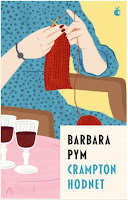
"While many mid-20th century writers have fallen in and out of fashion over the past seventy years, Pym has always enjoyed the ardent support of various literary luminaries, including Philip Larkin, Lord David Cecil, Jilly Cooper, Anne Tyler and Alexander McCall Smith - even during the wilderness years." JacquiWine's Journal welcomes Virago Press's glamorous makeover of Barbara Pym.
"Captain Tyler returned in mid-April 1874 for a second inspection. This time four 40 ton engines passed over the viaduct at speeds of up to 40 miles per hour. Although there seemed little in the way of vibrations, when he inspected the upright timbers at ground level, he found many were rotten. Even those which 'appeared sound to the eye, when chopped by the axe, displayed a rotten or hollow core'." Huddersfield Exposed looks at the history of Denby Dale Viaduct.
Dominic Cummings' interview with Suzanne Moore has garnered plenty of attention, but for me the most remarkable thing about it is the hole at its centre.
Do you still think it was right to leave Europe?
A lot of people, especially the centre-Left in London, thought joining the Euro would be a success. Now we know we are best off out of it. When the Euro came under pressure it completely wrecked the Greek economy.
That took the blinkers off for me.
Especially now, when you look at how history worked out, and knowing that Covid was coming, it’s very hard to make the case that things could have been different.
I find Cummings' reasoning bizarre.
Moore asks him about British membership of the European Union and he replies by talking joining the Euro.
But Britain joining the Euro hasn't been a serious prospect for 20 years. Tony Blair was attracted to the idea in the early years of his premiership, but his chancellor Gordon Brown wasn't and the idea went nowhere. Since then it has hardly been mentioned.
And then there is his idea that the coming of Covid showed that Brexit was the right decision.
I suppose this rests on the belief that having shaken off EU Britain was able to race ahead with its vaccination programme. But EU law would not have held us back and, though the percentage of the British population who had been vaccinated was impressive for a while, our performance soon dropped back to the European average.
So no benefit from Brexit there either.
Elsewhere in the interview I see the polishing of the Cummings myth: he is the disruptive outsider who shakes up systems and gets results. Except there is little sign of any results from his time at Downing Street.
And behind it all somewhere is another myth: that public schools and Oxbridge and foster a "brilliance" that must be tapped at the heart of government. The result is that contrarianism is valued over knowledge and competence, with results we see all around us.
I've just watched the 1945 Ealing film Painted Boats. It's not an Ealing comedy, but it is hardly a drama either as the plot is so weak and the film wants to educate as well as entertain. Yet there is much to enjoy.
Above all you would watch it today for the footage of the canals in wartime. You could frame many of the shots and put them on your wall.
It is very much of its period, or a slightly earlier period, in that the narrator Louis MacNeice wrote some verse specially for the film. The nearest thing to this I can think of is Auden's contribution to some GPO Film Unit productions.
The real weakness of Painted Boats is the way it has asked upper-class actors to play boating families. Some manage better than others and the worst is Robert Griffiths, the romantic lead as far as there is a romance. You can see why he made just three films.
More familiar faces in the cast are Megs Jenkins and Harry Fowler.
With its uneasy combination of drama and education, Painted Boats reminded me to a surprising extent of Flower of Gloster, a children's television serial from the 1960s I once blogged about.
I suspect you have to be a canal enthusiast or a lover of obscure British films to enjoy Painted Boats. I am both, so I enjoyed it very much.
Painted Boars is on the Talking Pictures TV Encore site, but hurry if you want to watch it because it will come down on 7 June.
You've heard of Operation Save Big Dog, the push (prop. B. Johnson) to safeguard the position of the prime minister.
So it's natural that the Conservative MPs who want to see Boris Johnson go have named their campaign Operation Rinka.
Rinka, you will recall, was the Great Dane owned by Norman Scott, the man Jeremy Thorpe was tried with conspiring to murder. She was shot dead in what the jury apparently believed was an attempt to frighten Scott.
The Guardian has heard that Johnson now has opponents from across the party:
The source said multiple groups were angry with Johnson: lockdown sceptics, disgruntled ex-ministers and MPs from former Labour red wall seats who judged him to be failing to deliver on the levelling-up agenda.
"It only takes a dozen letters from each group to get you close to the 54 you need [to trigger a no confidence vote in the prime minister], so it’s harder to keep them all down at once." the source said.
It's good to see poor Rinka is still remembered 47 years after her death.
Last December there was a political earthquake in North Shropshire as Helen Morgan gained the seat for the Liberal Democrats with a 34 per cent swing from the Conservatives.
But there was nothing metaphorical about yesterday's earthquake. Centred on Wem, it measured 3.8 on the Richter scale.
People across the north of the county, as well as parts of Telford, reported doors slamming and furniture moving for a few seconds when shocks were felt just after 3.30pm.
And the paper's photo caption adds that "homes in Whitchurch wobbled".
In the days when I was on the Liberal Democrats' federal policy committee, the members were invited to a breakfast meeting with Channel 4 at party conference each year.
At one of these events I asked someone from the network why it didn't bring back the open-ended Saturday night discussion programme After Dark.
He replied snootily: "We like to retire formats become they become tired."
I should have replied: "What about the format where Z list comedians look at old TV clips and say 'Blue Peter was for posh kids. We watched Magpie.' That got tired years ago, didn't it? Eh? Eh? Eh? But you've still gone on using it, haven't you? Eh? Eh? Eh?"
Unfortunately, I didn't think of that retort in time.
But at its best After Dark was really good. You can see above its celebrated programme on the British intelligence services from 1988.
It lasts three hours, which was one of the points of the programme, so you may prefer to dip into it.
Or you could read this 2017 blog post from the chief executive of Open Media, the company that made After Dark:
One of the programme’s unshakeable principles was that After Dark is always live, really live, the discussion being transmitted as it takes place, without prerecording or delay. This is rarer than one might think, "live" being a word broadcasters use with promiscuous frequency to describe everything from theatrical events recorded long in advance to political debate edited before transmission.
For example, the BBC’s Question Time – on air when After Dark started in 1987 and still going today – while pre-recorded still claims, disappointingly, that it is "live". The BAFTA TV Awards were transmitted this year with a seven second delay, just in case anything "dodgy" was said in the heat of the moment.
But After Dark was actually live, whatever the consequences. What the guests said was transmitted. No delay, no editing, no hidden manipulation, and no censorship: what one might call freedom of speech.
Earlier this month the rail union RMT revealed plans by the rail industry for a cull of ticket offices across the network. It said over 1000 ticket offices are at impending risk of closure.
I looked at their list for the Midland main line and, sure enough, Market Harborough is on the list of ticket offices due to go. But so are Leicester, Nottingham, Sheffield and St Pancras.
It looks as though pretty much all ticket offices are to be closed.
But isn't this what has already happened on the London Underground? Does it really matter.
The independent campaign group Railfuture thinks it does. On its website Nigel Middleton lists five unique services a ticket office can offer:
They can be the friendly face to explain fares to customers new to the railway (or for regulars, making a very occasional journey) the fearsomely complex fares system and what type of ticket is best for their intended journey. At a time when Penalty Fares are about to increase, there will be a natural concern that the right rail ticket is about to be purchased.
They sell tickets to those that are uncomfortable with technology (and although any journey can be bought from any rail retailer [in broad terms], in practice, nervous purchasers need to get to grips with many different rail retailer websites).
They may be the only option for someone wanting to pay cash.
They are the only way to buy some types of ticket – e.g .some Rail Rovers.
They can help travellers out and about who do not have Smartphones and therefore cannot self-serve on needs such as new/changed seat reservations.
Meanwhile, the British Transport Police have become the first force in the UK to arm its special constables with tasers.
"Allowing them to carry the device is a positive step both in recognising the skills and competence of our part-time, volunteer officers and further strengthens our commitment to ensuring the railway is a safe environment for passengers and rail workers."
When tasers were first introduced, we were told they would be used as a last resort to prevent the police having to draw firearms. Today they are rapidly becoming standard issue.
I don't suppose anyone beyond Priti Patel wants a future in which stations have few railway staff and are patrolled by police with what can be lethal weapons, but it's where we are rapidly heading.
Adam Mugridge was a 13-year-old boy from Lubenham who was killed cycling to school in Market Harborough in 2006.
In his memory, the old railway between the two places has recently been opened as a footpath and will one day become a cycle path - it is already surfaced at the Harborough end.
This memorial is the result of intensive fund raising by Adam's family and the wider community. You can follow developments on the AdamSmile website.
I walked to Lubenham yesterday. The new path runs through lovely country - there were buttercups in the fields - and includes a bridge over the Welland.
When I was 13 (this was back in 1973) I wanted to explore the old railway, which went to Rugby and had closed only six years before. But if you tried to climb up the embankment behind the last house on Willow Crescent in Market Harborough, its owner would come out and tell you off.
Today a County Select XI, made up of promising young England-qualified players, beat the world test champions New Zealand by seven wickets. Yesterday, in New Zealand's second innings, they reduced the visitors to 18-6 at one point.
The match did not have first-class status: these days, because of the lack of warm-up games they are granted, visiting teams like to be able to give more than 11 players a chance to bat or bowl in the games they do play.
This robbed Ben Compton, who completed his fifth century of the season today, of the accolade of being the first player to scoring a thousand first-class runs before the end of May since Graeme Hick in 1988..
But the game seems to have been a serious affair, so victory was a considerable achievement for the young English team.
Something even more impressive happened last summer. Pakistan's tour of England began with a three-match 50-over series, but the England squad was struck down by Covid. The result that was Ben Stokes found himself leading what was effectively an England third or fourth XI.
It didn't matter: England won the series 3-0.
You could conclude from this that the county game in England is in pretty good shape, but for some reason that is never something you hear from the authorities.
The talk is all of reducing the number of first-class counties and often of abolishing all the counties and replacing them with "franchises" based at England's test grounds.
As this would mean the demise of both Leicestershire and Northamptonshire, you will not be surprised to hear I am against this move.
There are problems with domestic cricket in England, chiefly with the way the county championship takes place in the spring and autumn, with high summer given over to one-day cricket. And there is an awful lot of one-day cricket, with the Hundred doing its best to eclipse the counties' Twenty20 competition.
But I find it hard to believe that the problems with the England test team have arisen because we play too much first-class cricket.
Group therapy in Glasgow keeps the music moving in Belle and Sebastian’s new video, 'Unnecessary Drama'. The band returns to form with this barn-burner of a song from their first full-length album in seven years titled 'A Bit of Previous'.
Under the watchful eye of a therapist, the members of the group are seen struggling through rehearsal and a number of trust-building exercises until they finally align and bring it all home during the final chorus. (Some additional harmonica-related therapy may be needed.)
That last comment is odd: it's the harmonica that makes this.
"This sense that they are stuck with Johnson, whose personal approval ratings have been sinking since the start of the scandal last year, is freaking out Conservatives. They worry that Johnson has done irreversible damage to his own image in the eyes of most voters, who have finally seen 'what he's really like,' as one senior Conservative put it. The only thing left is for his reputation to now tarnish the rest of the party - something that opinion polls and recent election results suggest has started already." Luke McGee explains British politics for CNN.
The civil service needs to act in response to Sue Gray's Partygate report too, argues Jill Rutter.
Hugh Ellis is critical of the government's Levelling Up and Regeneration Bill: "The reality of the Bill is that communities will have no control over important strategic decisions or site specific design requirements. They may have new and exciting opportunities to be digitally informed about these new documents, but they will have no meaningful way of testing the quality or content because they have no right of access to the key decision making forum of the examination."
Jodi S. Cohen and Jennifer Smith Richards find that the practice in Illinois of involving the police in minor school disciplinary matters has had disastrous consequences: "Susan McCoy's son took one of Nichols’ deals to pay $350.50 in fines and fees for consumption of alcohol. The 17-year-old later said school workers had questioned him after he threw up at the bus stop, and he admitted that he'd drunk whiskey at home during the night."
The Black Death gave rise to British pub culture, or so Richard Collett claims.
Little Peak District Moments looks at the rescue and restoration of a ruuned lock-keeper’s cottage on the Cromford Canal.
You sometimes hear the claim that Market Harborough was the first town in England (or Britain or possibly the world) to install cat's eyes in its roads.
When I looked into this I found that a book that said the urban district council had laid "Follsain Glowworm studs, patented by Jesse Neuhaus" in 1934. (Percy Shaw's cat's eyes were not patented until the following year. Their USP was that they were self cleaning.)
I've now found a bit more evidence. The Market Harborough Advertiser and Midland Mail for Friday 11 May 1934 carried this paragraph:
Mrs. Dare, who is a daughter of Mr. and Mrs. G. H. Saunders, of Market Harborough, writing home from India (Bombay) says that she has seen reference in the "Times of India," to the novel road studs which have been placed on the Leicester-road at Market Harborough.
In those days we were so go-ahead they even talked about us in India.
I will get back to the Shropshire hills soon - if not this summer, then next. And when I do I shall use my favourite buses - the Shropshire Hills Shuttle.
They used to be called the Secret Hills Shuttle, but I guess the hills are better known these days. If they are not, it's no fault of mine.
I can remember when three different routes were timed to coincide at The Bridges pub at Ratlinghope, giving visitors a wonderful choice of destinations.
In 2012 it was possible to reach Much Wenlock, which has some claim to be the cradle of the modern Olympic movement, and I can recall dropping in on Aardvark Books at Brampton Bryan, which is in Herefordshire.
As in recent years, in 2022 there is only one route. And it has been cut back.
I can see why this has been done. Once the bus left Snailbeach and the remains of its lead mine, the ride back to Church Stretton was scenic but did not pass through anywhere people were likely to want to alight.
Now the bus turns back at the Stiperstones Inn (where I once posted a Britblog Round Up), which means it does not even reach Snailbeach.
I trust I shall still be able to walk there from the Stiperstones Inn (sorry if this is getting technical), but there are many people who cannot.
The decline in this bus service, which allows people access to these lovely hills without a car, is a measure of our decline as a nation since I stated vising the Shropshire hills 36 years ago.
Nick Clegg these days reminds me of the episode of The Simpsons where Homer gets a new job and doesn't realise he's working for a Bond villain bent on world domination.
But he does feature in this blog's Trivial Fact of the Day.
Previewing a local by-election today in Lincolnshire, Andrew Teale writes:
Quarrington and Mareham is Sleaford’s southern ward, taking in the Quarrington and New Quarrington areas on the southern fringe of the town. Also here is Greylees, a large and very new housing development on the site of a former asylum next to Rauceby railway station.
This station, which was built primarily to serve the former hospital, was where the former Liberal Democrat leader Nick Clegg proposed to his wife Miriam while they were waiting for a train to Sleaford.
Claudia Webbe, the MP for Leicester East, today lost her appeal against a conviction for harassing a love rival. But her sentence was reduced to a community order for 80 hours' unpaid work with no custodial element, so there will be no recall petition.
She was elected for Labour in 2019. Though she was born in Leicester, many regarded the Islington councillor Webbe as a candidate imposed on the local party by the Corbyn leadership.
Resigning from the Labour after her selection, the Leicester East constituency chair called it "a fix and a disgrace".
Webbe was expelled from Labour after her conviction and has since sat as an Independent.
Before she was elected in Leicester, Webbe - and I'm not making this up - was chair of the panel that oversees Labour’s disciplinary cases.